Thousands of care leavers in England ‘locked out’ of work as firms slow to adapt

Thousands of young people leaving care in England are being left “locked out” of work by employers who say they are open to hiring but make few changes to adapt, a charity has warned.Calling on employers to act on their promises, the Drive Forward Foundation said care leavers were almost three times more likely to be out of work than their peers.As ministers push to tackle a youth jobs crisis, the charity, which helps care leavers to find work, said this employment gap had remained “stubbornly consistent” despite a decade of youth jobs initiatives.Figures from the Office for National Statistics show that 40% of care-experienced people aged 19 to 21 are not in employment, education or training (Neet), compared with 12.7% of their non-care-experienced peers.
The overall number of 16- to 24-year-olds who are Neet has increased to almost 1 million across the UK, the highest level in more than a decade,The government is battling to bring down youth unemployment, with pledges to undertake welfare reform and to provide subsidies for employers to encourage them to hire young adults,Pat McFadden, the work and pensions secretary, last week announced a £1bn youth employment scheme,Companies will receive a £3,000 grant for each hire of a person aged 18 to 24 who is on benefits and has been looking for a job for at least six months,Ministers have also paved the way for a slower rise in the minimum wage for younger workers.
However, the report from Drive Forward highlighted that, while many employers say they want to help young people leaving care, they then often make very few changes to their hiring processes.A survey of 500 employers commissioned by the charity found that although more than 80% said they would consider hiring care-experienced young people, relatively few had adapted recruitment processes to account for non-linear work histories or gaps in CVs.Almost half of employers said they never adjusted job descriptions or recruitment language to remove unnecessary barriers, and one in four reported having no specific measures in place to support care-experienced candidates into work.Russell Winnard, the chief executive of the Drive Forward Foundation, said: “Care-experienced young people are often assessed against assumptions that simply don’t reflect their lived reality.When recruitment systems aren’t designed with this in mind, capable and motivated people are screened out before they ever get a chance.
”In response to its findings, the charity said it was publishing a new toolkit to help employers looking to improve access to work for care leavers.Drive Forward has partnerships with more than 40 employers working to employ care-experienced young people, including John Lewis, Camden council, the Salad Kitchen, the civil service, Candyspace and the crown estate.Winnard said: “Employers who adapted their practices often saw strong results.When businesses take a more flexible and informed approach, they don’t just change outcomes for young people – they strengthen their own workforce”.A government spokesperson said: “We are committed to ensuring every young person has the opportunity to earn or learn.
We provide targeted support for care leavers, including access to higher housing allowance rates up to age 25 and tailored Jobcentre Plus support.“Our latest major intervention will help to create 200,000 jobs for young people, backed by almost £1bn.The broader support package, totalling £2.5bn, will support almost 1 million young people and help deliver up to 500,000 opportunities to earn and learn.”

US man pleads guilty to defrauding music streamers out of millions using AI
A North Carolina man has pleaded guilty to defrauding music streaming platforms and his fellow musicians out of millions in royalties by flooding the services with thousands of AI-generated songs – and using automated “bots” to artificially boost the number of listens into the billions.As part of a deal with federal prosecutors in New York’s southern district, 52-year-old Michael Smith pleaded guilty on Friday to conspiracy to commit wire fraud.The case against the Cornelius, North Carolina, resident is one of the first successful prosecutions of AI-related fraud in the music business, which is being hammered by fake music that threatens to swamp streaming services and deprive earnings from human musicians and copyright holders.“Michael Smith generated thousands of fake songs using artificial intelligence and then streamed those fake songs billions of times,” US attorney Jay Clayton said in a statement.“Although the songs and listeners were fake, the millions of dollars Smith stole was real
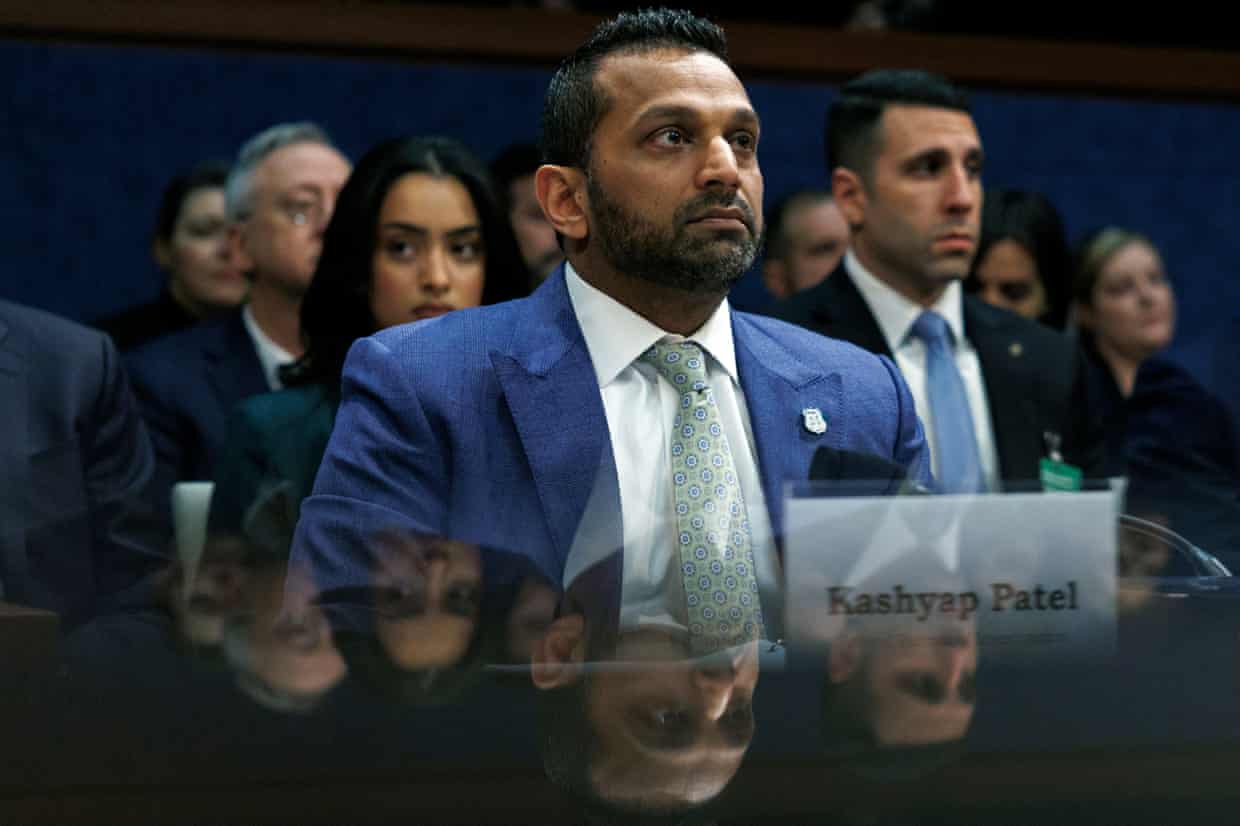
How the FBI can conduct mass surveillance – even without AI
The FBI declares it can conduct mass surveillance without AI, despite Anthropic’s protest.A central part of the standoff between Anthropic and the Department of Defense has revolved around the artificial intelligence firm’s refusal to allow its technology to be used for mass domestic surveillance. Yet even without the cooperation of AI firms, remarks this week from Kash Patel, FBI director, show how authorities are by any reasonable measure already operating a system that can surveil citizens at scale.On Wednesday, Patel confirmed to a Senate intelligence committee hearing that the FBI is actively buying commercially available data on Americans. Patel’s answer, which was under oath, was in response to a question from senator Ron Wyden on whether the agency was purchasing location data on citizens, as it had previously admitted to doing in 2023
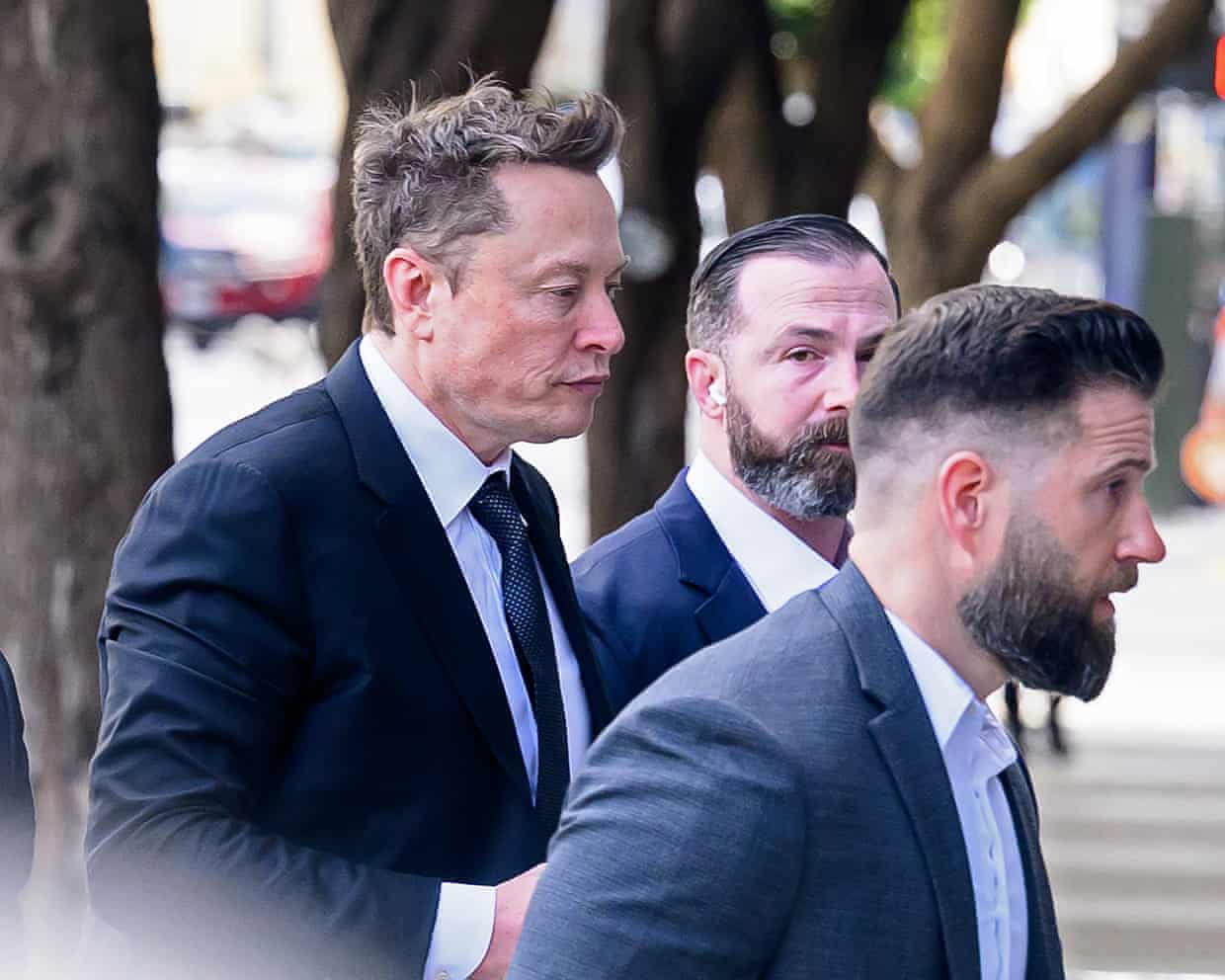
Musk responsible for Twitter investors’ stock dropping when he bought company, jury rules
A California jury has ruled that Elon Musk is responsible for Twitter investors’ stock plummeting when he sought to buy the social media platform for $44bn in 2022. Jurors handed the win to a group of investors who sued the billionaire saying he publicly disparaged the company with the aim of bringing down Twitter’s stock price to get a better bargain.The trial, which began earlier this month in federal court in San Francisco, focused on whether Musk intended to move the market with his comments. During a six-month period in 2022, after his offer to buy Twitter, he posted constantly to his millions of followers that the social network was rife with bots that produced spam and created fake accounts.Musk did eventually buy Twitter for $54

Senior European journalist suspended over AI-generated quotes
The publisher of the Dutch newspaper De Telegraaf and the Irish Independent has suspended one of its senior journalists after he admitted using AI to “wrongly put words into people’s mouths”.Peter Vandermeersch, the former head of the Irish operations at Mediahuis, said he “fell into the trap of hallucinations” – the term for AI-generated errors – when using the technology.Vandermeersch, a fellow of “journalism and society” at the European publishing group, has been suspended from his role.The experienced journalist said he had summarised reports using AI tools such as ChatGPT, Perplexity and Google’s NotebookLM, and not checked whether the quotes from those summaries were accurate. He subsequently published them in his Substack newsletter

First came the AI ‘teammates’, then the layoffs: the new reality for Atlassian staff now looking for work
Sacked from his “dream job” at software giant Atlassian, Rubio* wants just one thing – closure.“We were probably exceeding expectations and there’s no explanation from the company as a whole as to why any of this happened,” he says.“The only desire that I have, outside of receiving my severance package, is closure as to why I was selected.”On Thursday morning last week, Atlassian laid off 1,600 workers – about 10% of its total workforce. Nearly 500 Australian staff were among them

Fire experts ‘kept awake’ over growing hazard of lithium-ion batteries
Lithium-ion batteries represent a new technological hazard that one fire science expert has said keeps him awake at night, as fire service chiefs warn the ubiquity of the batteries in everyday products is outpacing public understanding and safety regulations.The blaze that devastated a historic building in Glasgow and resulted in the closure of Central Station, Scotland’s largest rail interchange, is believed to have started in a shop selling vapes, which are powered by lithium-ion batteries. Glasgow’s Central Station has since reopened.The latest data reveals a sharp increase in battery-related fires across Scotland, while firefighters in London attend an e-bike or e-scooter fire every other day.Paul Christensen, a professor of pure and applied electrochemistry at the University of Newcastle, underlined that, while the probability of a fire from a lithium-ion battery is very low, the hazard is “very, very high, as we’ve seen with this fire in Glasgow”

Stock markets rocked by Trump’s Iran ultimatum, as UK economy faces growth hit – business live

HS2 firm says new steel tariffs will ‘exacerbate’ cost pressures for UK construction industry

iPhone 17e review: Apple upgrades its cheapest new smartphone

Campaign groups rail against Palantir, but the UK contracts keep coming

Resilient Korda stuns Alcaraz in Miami Open after almost letting advantage slip

US high school student Cooper Lutkenhaus wins 800m to become youngest ever indoor world champion