Campaign groups rail against Palantir, but the UK contracts keep coming
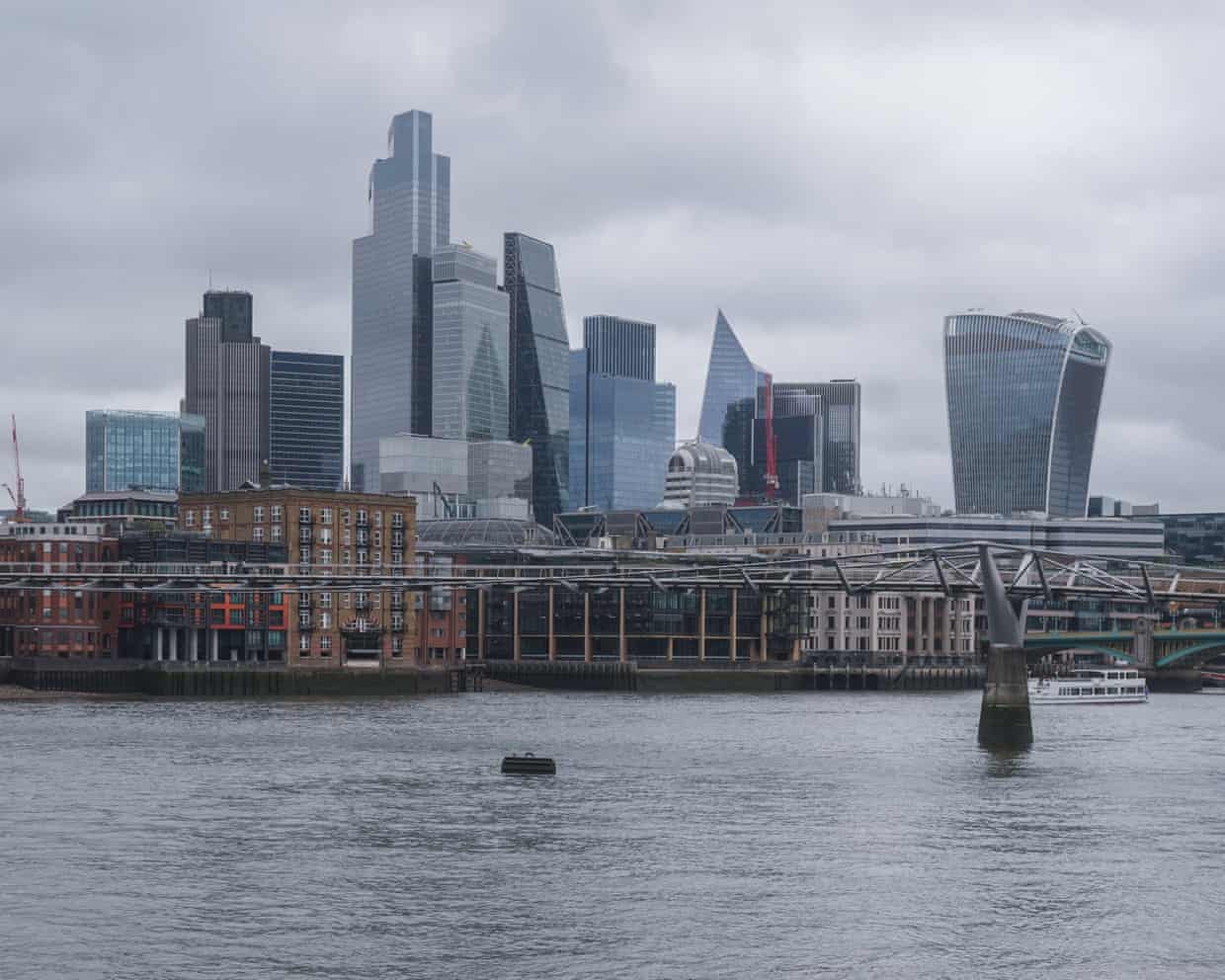
Palantir’s latest UK contract takes the AI and data analytics company into the heart of one of Britain’s biggest industries: financial services, which accounts for 9% of the economy.The Miami-based company embedded its technology in the NHS in 2023, the police in 2024 and the military in 2025.Land and expand, they say in the tech industry.Palantir has followed the script, building contracts worth more than £500m.Now in 2026, its deal with the Financial Conduct Authority (FCA) to dive into the terabytes of information it gathers gives it yet another unparalleled view of the inner workings of the British authorities.
It also gives it sight of a trove of data about the workings of one of the most important global centres of finance, the City of London,The appeal of companies such as Palantir to public authorities is driven by three forces: the push to find more efficient ways to use human resources amid strained public finances; the existence of lakes of data swollen by society’s increased tendency to digitise transactions and communications; and the dawn of AI and the Labour government’s unbridled enthusiasm for its potential to unlock elusive economic growth,Notwithstanding its former use of Peter Mandelson’s lobbying company, Global Counsel, Palantir has become an influential voice in Whitehall,With earnings of $1,4bn in the last three months of last year alone, it can afford top talent and its AI-enabled data analysis systems impress many who see them, in demonstrations at least.
Campaign groups rail against Palantir’s work with the US Department of Homeland Security and its ICE operations, and its service to the Israel Defense Forces, but the contracts keep coming.Its technologists will arrive at the FCA headquarters in east London and find a regulator worried it is devoting too much energy to pursuing possible financial crime cases that go nowhere.It wants to use AI to better detect signs of wrongdoing so it can crack down on the serious crime of money laundering, which underpins social ills such as human trafficking and the drugs trade, as well as fraud, which affects many people and accounts for about 40% of all crimes in the UK.Its workplan for 2025-26 set out an ambition to “expand the use of data and intelligence to identify and act on the riskiest firms and/or individuals” and use “network analytics to identify harmful networks of firms and/or individuals”.But as it moves to AI detection of financial wrongdoing, criminals may well respond with their own ways of beating the bots.
“If the FCA relies on an AI-based detection model, a bad actor could take steps to influence that system when it reviews material,” said Christopher Houssemayne du Boulay, a partner and barrister at the law firm Hickman & Rose who specialises in serious and complex financial crime.For example, they might use invisible “white text” in documents to instruct the AI to ignore anything in that document that might be incriminating.“You can absolutely see that being used in a financial crime context because developments in technological capabilities for good can equally well be exploited by criminals and frequently are exploited very well,” he said.The arrival of AI as a weapon to fight money laundering has been long anticipated.“People have talked about using machine learning and earlier forms of artificial intelligence to spot patterns of money laundering] since the 1990s,” said Prof Michael Levi, an internationally recognised expert in money laundering at Cardiff University.
“Now that technology is available, we have to make decisions about how to use it, what the risks are.”He said it was understandable that some people might fear the consequences of data companies being able to integrate different datasets in a way that could threaten privacy.But he added: “Criminals are also afraid of it [and] also some elites might be afraid, because corporate holdings through shell companies and through real companies with obscured ownership should be part of the target for these kinds of technologies.”

Minister claimed thousands of pounds on expenses for promotional videos
Labour minister Al Carns has claimed thousands of pounds on parliamentary expenses for promotional videos including one showing him doing pull-ups at a fire station in competition with a firefighter.The veterans minister and former Royal Marine, who is tipped by some MPs as a leadership hopeful, claimed about £3,000, approved by the Independent Parliamentary Standards Authority (Ipsa), for the production of 17 videos that show him interacting with local businesses.In the series of films, Carns is shown chatting with fire officers and taking part in a “MP v firefighter pull up challenge”, as well as visiting a local brewery where he is filmed having a pint, saying: “It’s really important we in government help companies like this thrive.”Another video shows him at a museum about life in history, where he mentions he spent “weeks, if not months in the field in the marines where it was hard going being outside for that amount of time”. He is also shown handling armour, saying: “I’ve worn body armour my whole life – for 24 years

Anger grows among UK ministers amid fears Iran war could jeopardise Britain’s fragile finances
Donald Trump has branded the UK and other Nato allies “cowards” as anger grows among cabinet ministers that his war in Iran could jeopardise Britain’s fragile finances.Senior members of the UK government are in despair about the potential effects on the economy, with experts warning of higher energy prices and increased mortgage and borrowing costs.They have already begun contingency planning in case the conflict is protracted, including considering lowering speed limits to minimise fuel consumption.With the conflict continuing to escalate, the UK confirmed it was authorising the use of British military bases to strike Iranian missile launchers that are targeting commercial ships in the strait of Hormuz. Previously, UK bases were only being used to strike Iranian sites targeting British allies and interests in Gulf states
UK government yet to trial OpenAI tech months after signing partnership
When the UK government signed a memorandum of understanding with OpenAI, the tech firm behind ChatGPT, the partnership was hailed as one that could harness artificial intelligence to “address society’s greatest challenges”.But eight months on from the fanfare of that announcement, the government has yet to hold any trials involving the firm’s tech.A freedom of information (FoI) request asked the Department for Science, Innovation and Technology (DSIT) for information about trials conducted under the memorandum, which said the company would work with civil servants to “identify opportunities for how advanced AI models can be deployed throughout government and the private sector”.The department replied that it held none of this information and had “not undertaken any trials under the memorandum of understanding with OpenAI”.In response to a query from the Guardian, DSIT pointed to an agreement under which the Ministry of Justice (MoJ) last October enabled civil servants to use ChatGPT “with an option for UK-based data storage for customers”
Tory peer accuses Nick Timothy of ‘instilling fear’ over Islamic prayers
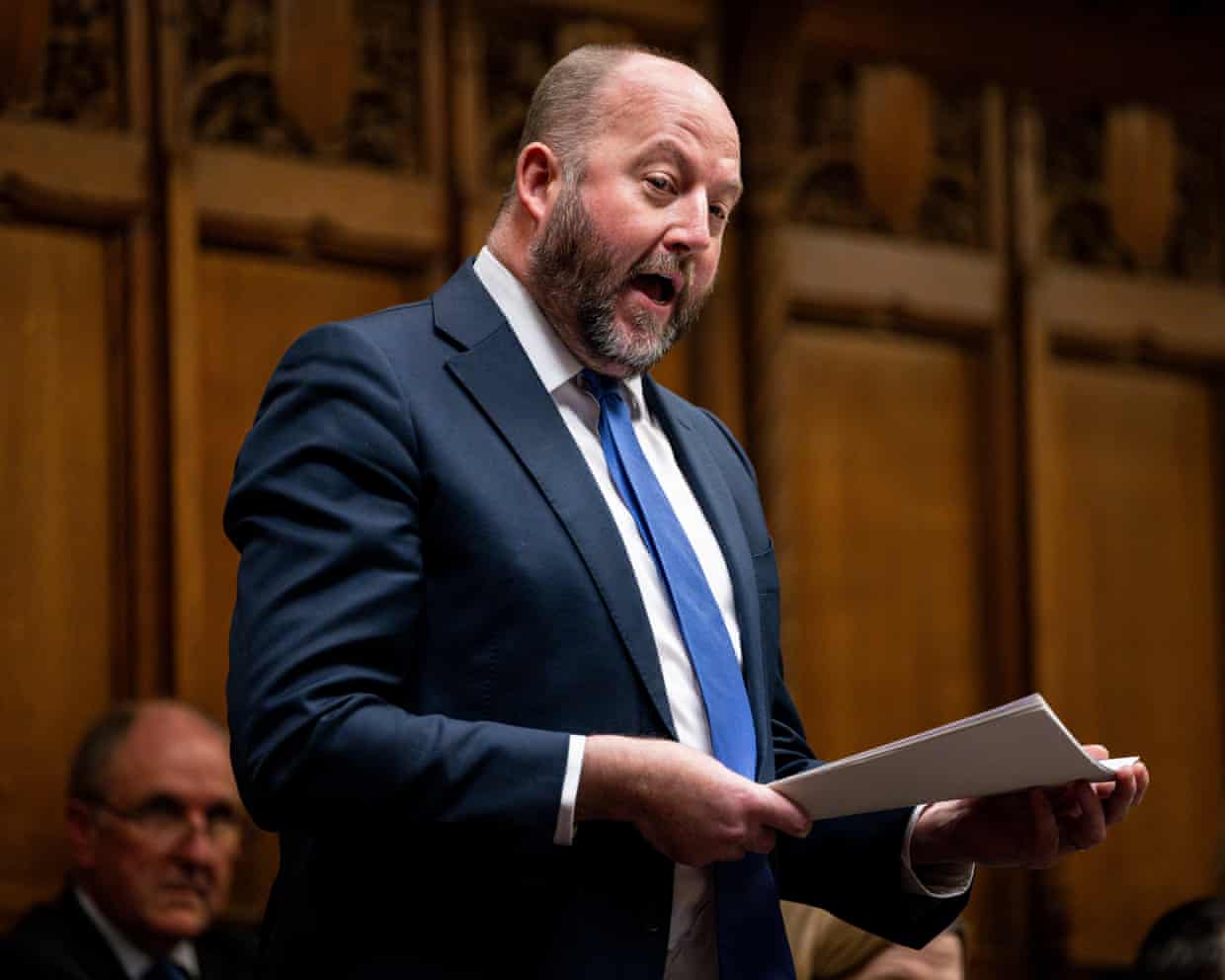
The shadow justice secretary, Nick Timothy, has been accused by a Conservative peer and former counter-extremism minister of “instilling fear” among Muslims with his comments about public prayer.British Muslims were openly talking about leaving the Conservative party, added Tariq Ahmad, who said he had raised his concerns with the party leadership and expected action to be taken.“I have known Nick for a long time and am deeply disappointed by his divisive comments. He needs to reflect carefully on his own words,” Lord Ahmad told the Guardian.“If he is aspiring to be lord chancellor, he has to stand up for the principles of equality and justice before the law for all, that comes with that responsibility

Department of Health retracts claim sunbeds are as dangerous as smoking
The Department of Health and Social Care (DHSC) has had to retract a misleading claim that sunbeds are as dangerous a cancer risk as smoking.In January, health officials announced stricter rules for sunbeds, incorrectly claiming they were “as dangerous as smoking”. The comparison was repeated in social media posts shared by the health secretary and NHS England and was reported by a number of media outlets.But the factchecking organisation Full Fact said the claim was wrong, concluding “misleading information about the risk of cancer … risks making smoking seem less harmful than it is”.While both smoking and sunbeds cause cancer, the risks are not equal
More British teenagers stranded abroad as result of new rules on dual nationals
Two more British teenagers have found themselves unable to return to the UK because of new Home Office border rules on British dual nationals.Their cases emerged just hours after reports a 16-year-old British schoolgirl was blocked from boarding a flight in Denmark home to the UK because she was a dual national and did not have a British passport. She has missed two weeks of school so far.A 19-year-old student, Anna*, from Oxfordshire is stuck in Madrid after a university-organised trip to the Spanish capital.She is part French and had not yet obtained a British passport to comply with the new rules, which require British dual nationals to present a passport, new or expired, or certificate of entitlement to airlines before boarding flights to the UK

Lamb shanks with orzo and rhubarb galette: Anna Tobias’ Easter recipes

Best thing I ever ate? My first In-N-Out burger in LA

Reheated rivalry: why I’m the champion of leftovers

Helen Goh’s recipe for peanut and blackcurrant thumbprint cookies | The sweet spot

Spring has officially sprung – reawaken your palate with zingy, zesty seasonal ingredients

There’s more to Mexican spirits than tequila