Gina Rinehart has been forced to share her riches. But will she fight on or end the family feud?
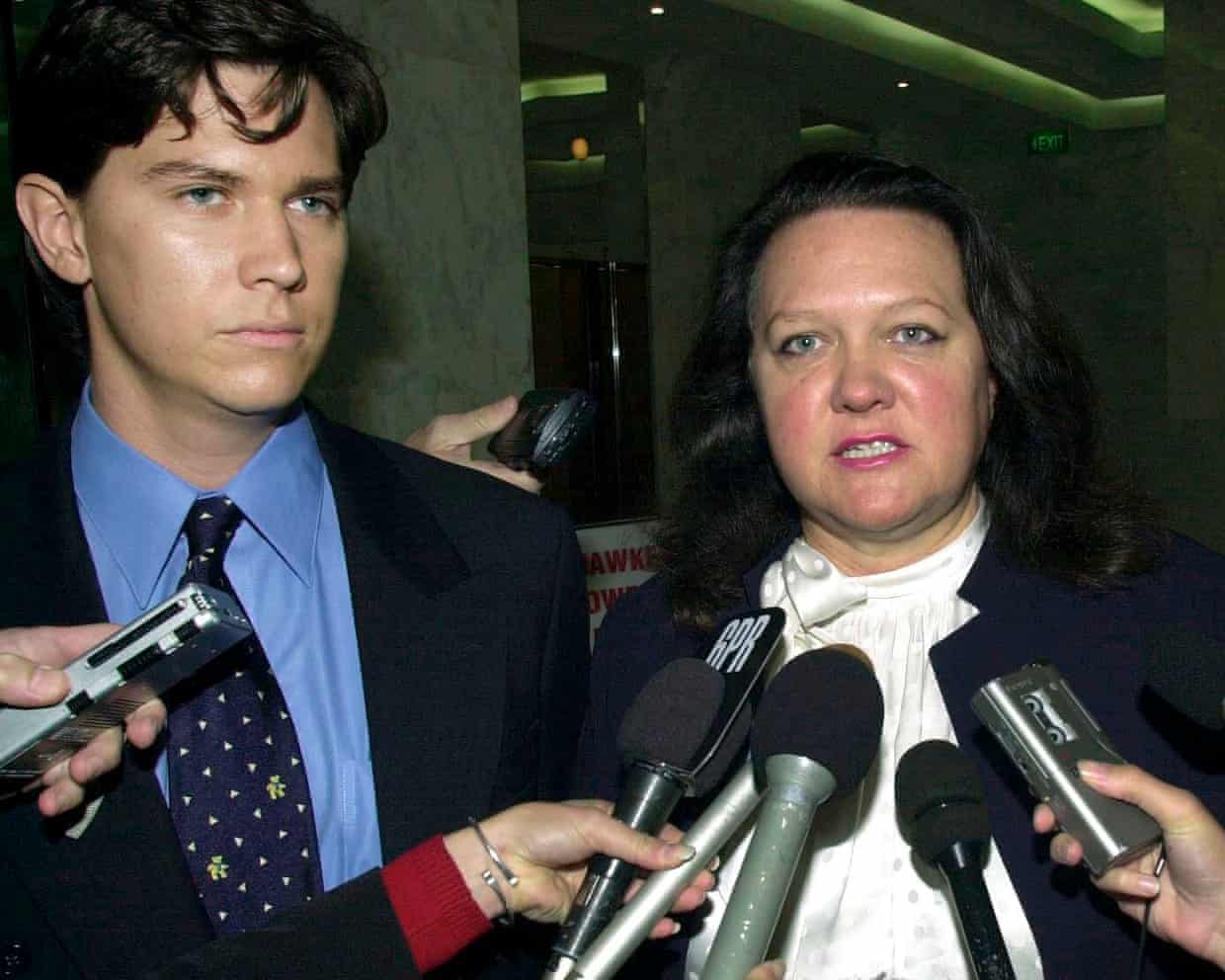
Gina Rinehart does not like to lose,Engaged in bitter legal battles for most of the past 35 years, Australia’s richest person has shown her propensity to fight tooth and nail to retain control of her family’s iron ore empire – and the riches that flow from it,Even as her own children were due to receive their inheritance from their grandfather Lang Hancock more than 20 years ago, Rinehart sought to block them in an ugly legal dispute that showed the lengths she was prepared to go to retain control,But as rain drizzled down on Perth’s central business district on Wednesday, Justice Jennifer Smith handed down a judgment that will force Rinehart to share,Not just hundreds of millions of dollars in royalty payments pocketed by Hancock Prospecting, but also some of the credit for the making of the Pilbara iron ore industry.
The atmosphere in the courtroom was tense as dozens of sharply-dressed lawyers and the West Australian media pack awaited a verdict that came almost two decades after the Wright family first launched a claim against Hancock Prospecting for its share of royalties from the Hope Downs mine complex.In a dry and cursory judgment, Smith read out a short summary of her findings, drawn from a 1,655 page judgment on the 51-day trial that saw 4,000 documents submitted in argument.In the front row of the courtroom, which had to be revamped to manage the trial in 2023, sat three of Rinehart’s most loyal lieutenants, Sanjiv Manchanda, Garry Korte and Jay Newby.In a sign of the case’s complexity – and the divisions within Rinehart’s family – the five member clan had four separate legal representatives joining to hear the verdict via videolink.At the crux of the dispute was whether an agreement between Peter Wright and Lang Hancock signed in the 1980s entitled the family to a share of the royalties flowing from the lucrative Rio Tinto – Hancock Prospecting joint venture project.
Smith upheld this claim.Wright Prospecting was unsuccessful in claiming an equity stake in other Hancock projects, but the verdict on royalties means Hancock and Rio Tinto are on the hook for hundreds of millions of dollars to the family of Peter Wright, going back to when the mine first began operating in 2007.The final amount will be determined in yet another trial and the decision may yet be appealed.The verdict is a blow to Rinehart and Hancock Prospecting who had dismissed the Wright claim as baseless, spending tens of millions of dollars and countless court hours fighting them.In another loss, Hancock will also be forced to pay a smaller share of royalties to the family business of the late Don Rhodes, another of the Pilbara pioneers who was instrumental in helping Hancock open up vast swathes of WA for development.
Following the verdict, Matt Keady, the current chief executive of DFD Rhodes, described the result as a win, saying Hancock Prospecting and Rinehart had been “formidable opponents”,“We are very, very pleased that the court has recognised the contribution of Don Rhodes to the iron ore industry,” Keady said,Within minutes of the verdict, Hancock Prospecting and Wright Prospecting were both claiming victory,As Smith noted when discussing costs, both parties had arguably “won half of its case and lost half of its case,”Hancock Prospecting was happy that Wright’s ownership claims had been dismissed, but reserved most of its glee for the court’s rejection of what it called the “abusive claims of serious wrongdoing” made against Rinehart by her eldest children, John Hancock and Bianca Rinehart.
Smith found that their claim to a share of the Hope Downs royalty stream “failed at the first hurdle”, blaming the “fraudulent” actions of Lang Hancock for shifting assets away from Hancock Prospecting in the first place and clearing Rinehart of the “egregious” fraud her children had alleged.Smith handballed most of the family dispute back to a separate confidential arbitration that is still to determine how billions of dollars of Hancock Prospecting shares are divided between the family.This matter is likely to be more consequential to Rinehart’s standing as Australia’s richest person given it may yet substantially reduce her stake in the company.Following the ruling, John Hancock took a conciliatory tone, asking his mother – with whom he has been feuding for more than two decades – for reconciliation.The Wright-Hancock trial has exposed the Hancock dynasty to be a family wracked by intergenerational infighting, with no shortage of vicious claims made between the parties.
John Hancock’s challenge to his mother to bury the hatchet and return to a level of familial harmony has given Rinehart the ultimate challenge.Does she keep fighting to win? Or does she agree to share?If the family matriarch accepts the invitation from her son, then Wednesday’s judgment will be truly consequential – it will have forced a backdown from a woman who is notoriously unyielding.And while billions of dollars may yet be at stake, a decision from Rinehart to stop fighting – well, that would be priceless.

UK’s largest housebuilder to buy less land in blow to Labour’s homes target
Britain’s largest housebuilder is planning to dramatically cut back on buying new land, blaming the impact of the conflict in the Middle East and putting Labour’s ambitious housing target under more pressure.Barratt Redrow said it intended to approve between 7,000 and 9,000 plots of land for purchase in its current financial year, far lower than previous guidance of between 10,000 and 12,000.The company, which had already committed to buying less land this year than the previous year, said “geopolitical events” had prompted the further reduction.“Now, with a less certain backdrop, given recent geopolitical events and their likely impact on mortgage rates and build cost, we are being even more selective,” the company said.As a result, Barratt Redrow now expects to spend between £700m and £800m on land this year, down from previous guidance of between £800m and £900m
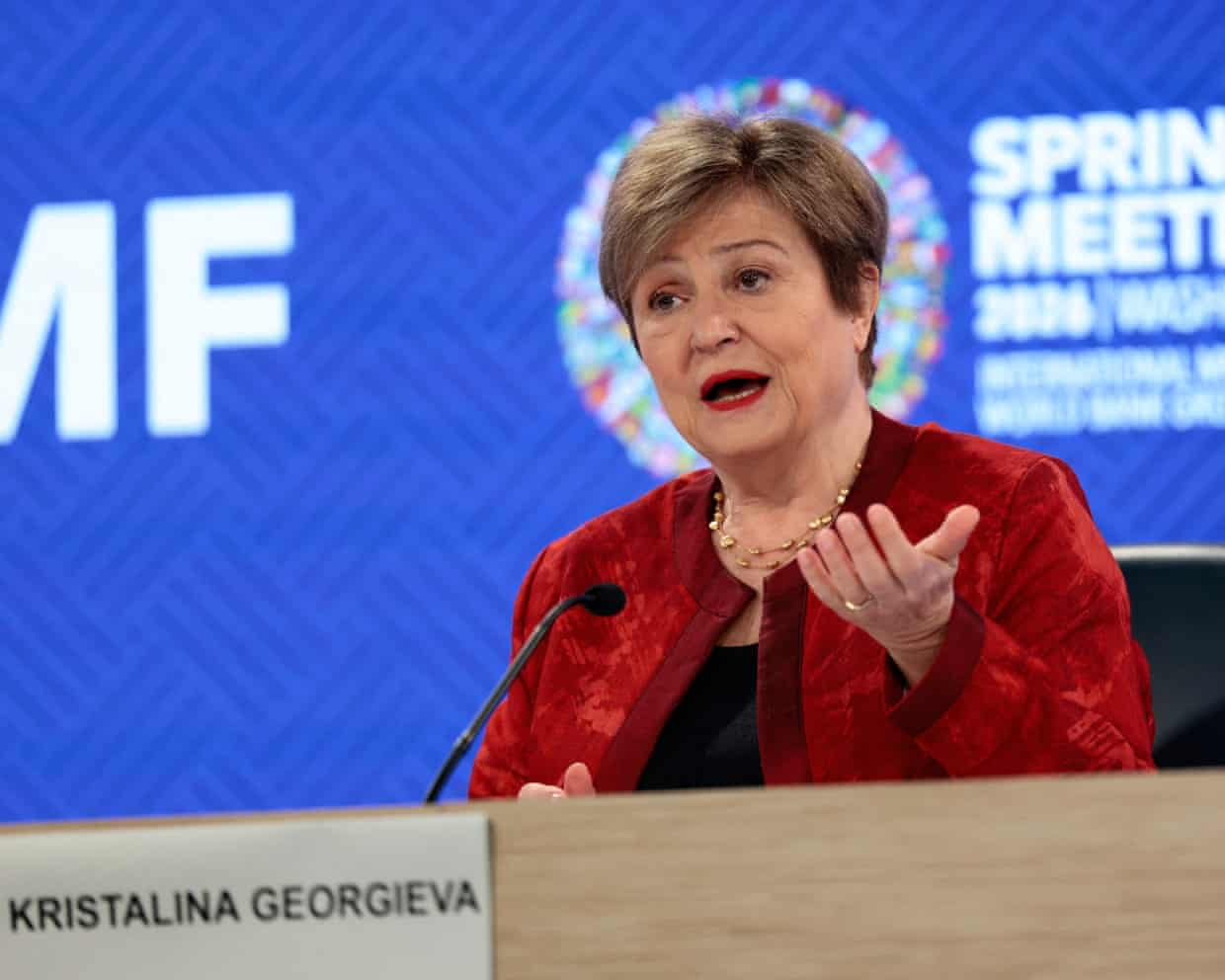
IMF calls for countries to economise on energy supplies, and hails UK’s budget deficit improvement – as it happened
Newsflash: The International Monetary Fund has applauded the UK’s progress in reducing its budget deficit last year.A day after slashing the UK’s growth forecasts, the IMF cited Britain as an example of an major economy which managed to trim its borrowings, after the UK’s deficit fell from 6.1% of GDP in 2024 to 5.4% in 2025.In its latest Fiscal Monitor report, just released at its spring meeting in Washington, the IMF says:double quotation markIn 2025, the headline deficit for advanced economies excluding the United States held broadly steady at 2

Fisa surveillance vote sparks fierce debate as Congress splits on warrantless monitoring
A controversial law that grants the US government sweeping powers for warrantless surveillance is set to expire next week. Replacing it has inspired fierce debate within the White House and Congress, including a scheduled vote cancelled the day of.A coalition of progressive Democrats and far-right Republicans is pushing for reform of Section 702 of the Foreign Intelligence Surveillance Act (Fisa), but they face strong bipartisan opposition from lawmakers advocating for an 18-month renewal with no changes, in line with Donald Trump’s demands. House GOP leaders delayed a procedural vote on a clean extension of Section 702 on Wednesday, after the chamber’s rules committee approved the measure on Tuesday night. Republican leadership was expected to bring the measure to the floor on Wednesday but canceled the scheduled vote, amid dissent from privacy advocates in their own party

Snap Inc blames AI as it lays off 1,000 workers
Snapchat’s parent company plans to lay off 16% of its employees, around 1,000 people, citing “rapid advancements in artificial intelligence”, the social media company told staff on Wednesday in an internal memo. The staff reduction is part of a wave of tech industry layoffs in the past year, with many firms blaming AI for the cuts.Snap Inc’s layoffs follow demands last month from Irenic Capital Management, an activist investor whose portfolio manager wrote a letter to the Snap Inc CEO, Evan Spiegel, calling on him to reduce costs and headcount while criticizing the company’s current strategy. In Spiegel’s memo to staff, he claimed that the layoffs would move Snap towards profitability and suggested that artificial intelligence could fill the lack of human labor.“While these changes are necessary to realize Snap’s long-term potential, we believe that rapid advancements in artificial intelligence enable our teams to reduce repetitive work, increase velocity, and better support our community, partners, and advertisers,” Spiegel wrote
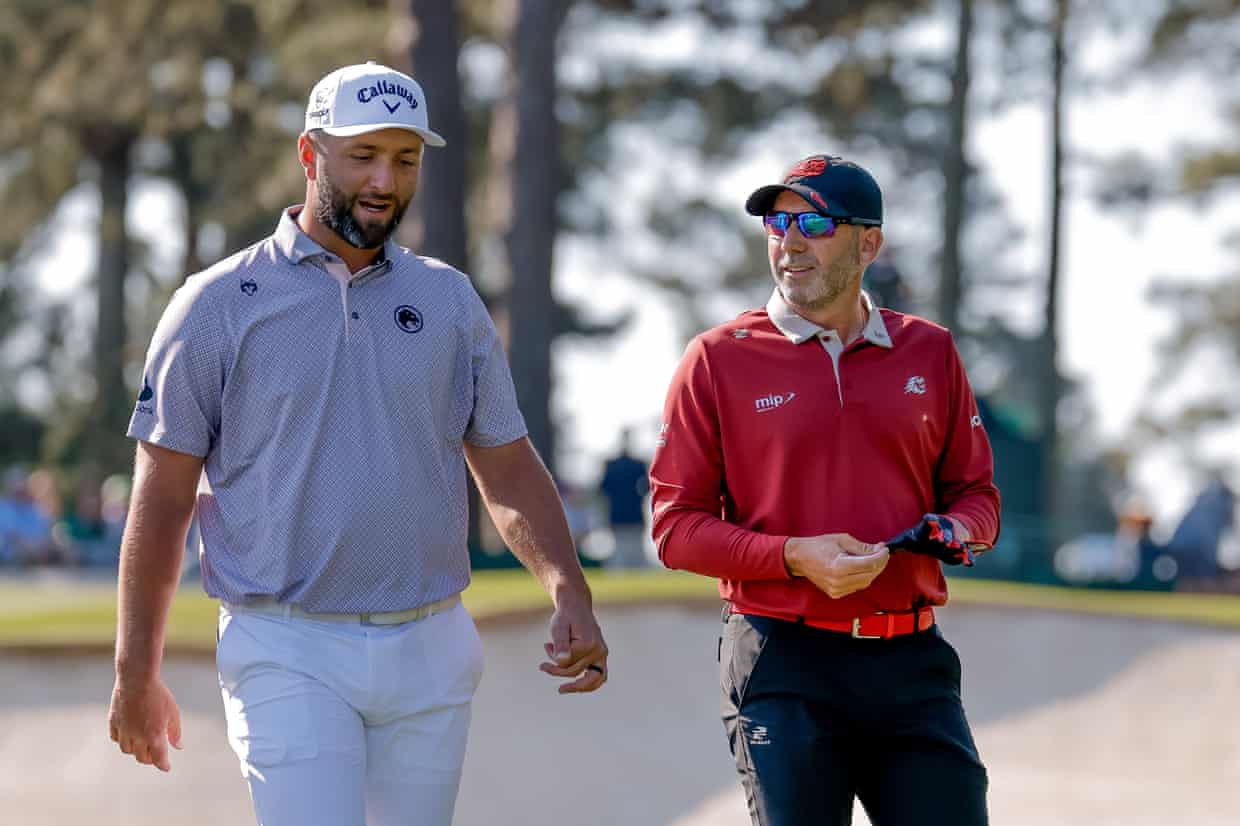
LIV Golf meeting in New York fuels speculation over rebel tour’s future
LIV Golf executives have been called to a meeting in New York amid growing speculation over the future of the Saudi Arabia-funded rebel tour.Rumours that LIV could soon be shut down had begun to circulate on social media on Tuesday evening with officials from the tour declining to respond. LIV’s next event in Mexico City will begin as planned on Thursday, although as first reported by the Daily Telegraph, the tour’s senior leadership were all absent having been diverted to New York. Many of LIV’s senior personnel, including the chief executive, Scott O’Neil, were at Augusta for the Masters last week and have stayed in the US.LIV has been under pressure for some time owing to its inability to agree a merger with the PGA Tour three years after signing a so-called “framework agreement”, with that stand-off compounded by the desire of the Saudi Public Investment Fund (PIF) to cut costs
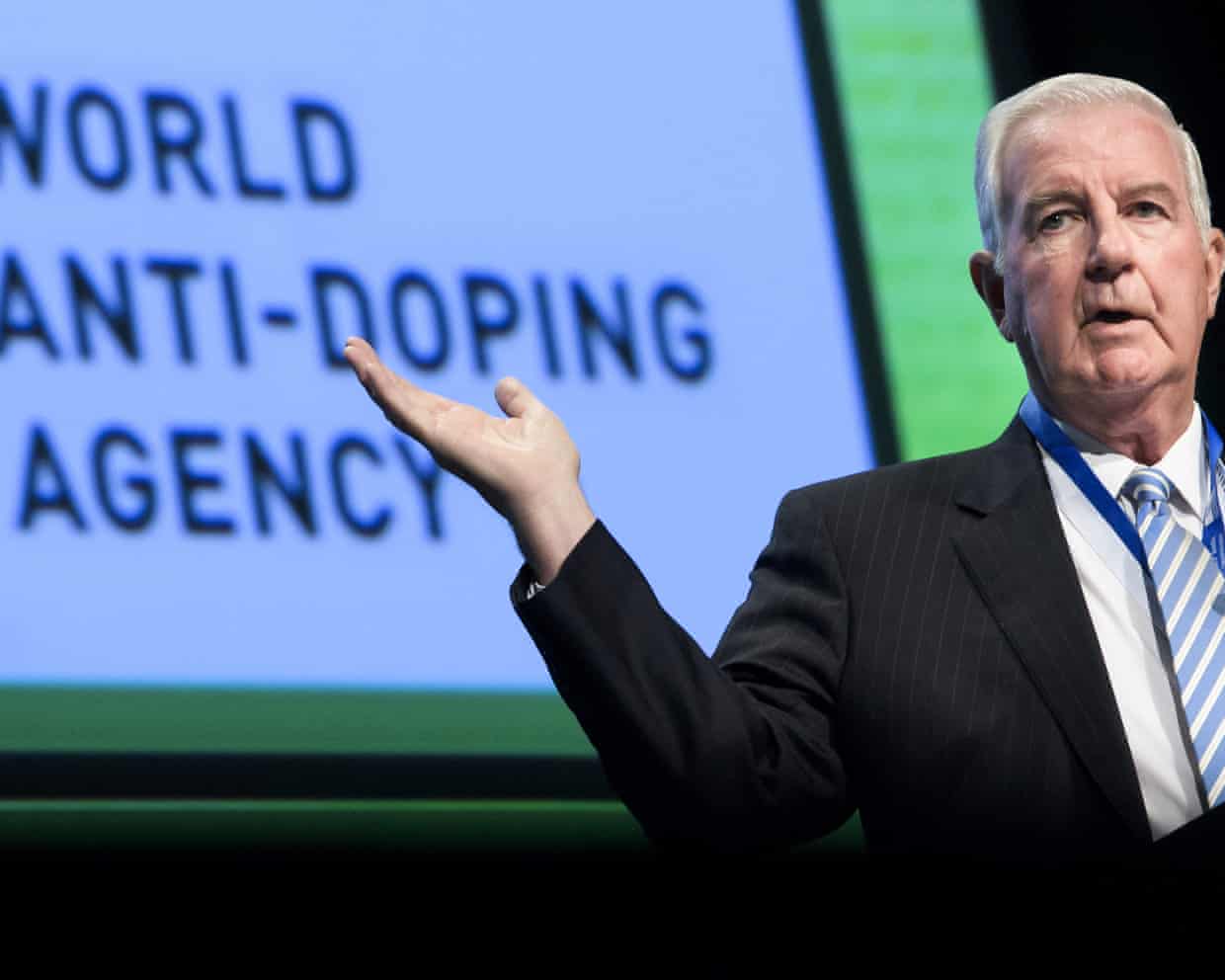
Sir Craig Reedie obituary
Sir Craig Reedie, who has died aged 84, was a key figure in London’s successful bid to stage the 2012 Olympics. As a member of the London Organising Committee for the Olympic Games from 2005 to 2013, he formed a brilliantly effective campaign partnership with Sebastian Coe, the bid leader, doing much crucial work behind the scenes, first by helping to win the support of British politicians and then by marshalling the all-important votes of Olympic delegates who would determine where the Games would go.Coe, to whom Reedie was a long-time mentor, was under no illusion that without the older man’s diplomatic skills and influential presence within the Olympic and Paralympic movement, which he had developed earlier as chair of the British Olympic Association (BOA), London might never have won the right to host the 2012 Games.Reedie chaired the BOA between 1992 and 2005, and from 1994 was also a member of the International Olympic Committee (IOC), ultimately serving as its vice-president from 2012 to 2016. A passionate advocate of drug-free competition (“there’s no point in any of it if the sport is not clean”), he became a founder board member of the World Anti-Doping Agency (Wada) in 2000, rising to be its president from 2014 to 2019, and a thorn in the side of those who tried to gain advantage by taking performance enhancing substances
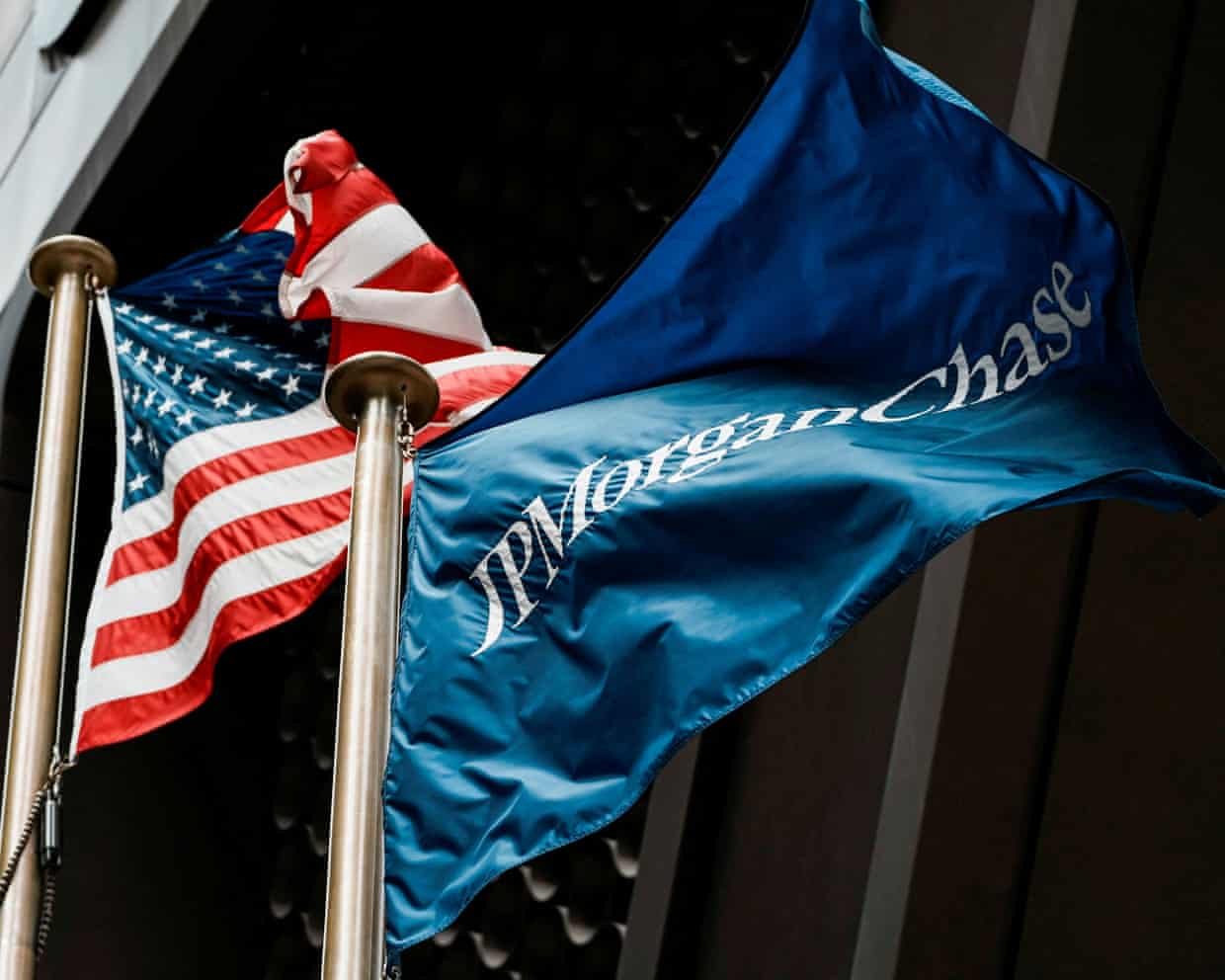
Big US banks rake in near $50bn profit as Iran war shakes markets
Gina Rinehart has been forced to share her riches. But will she fight on or end the family feud?

Amazon enters agreements for nine Australian renewable projects to power datacentres

MacBook Air M5 review: Apple’s best consumer laptop speeds up

Unhappy Verstappen ‘has to be listened to’ over new rules, says F1 chief Domenicali

The Dianna Russini fallout is less about scandal than who carries blame in the NFL | Melissa Jacobs