Trump heads to China to spread the gospel of American tech while emulating Xi Jinping on AI
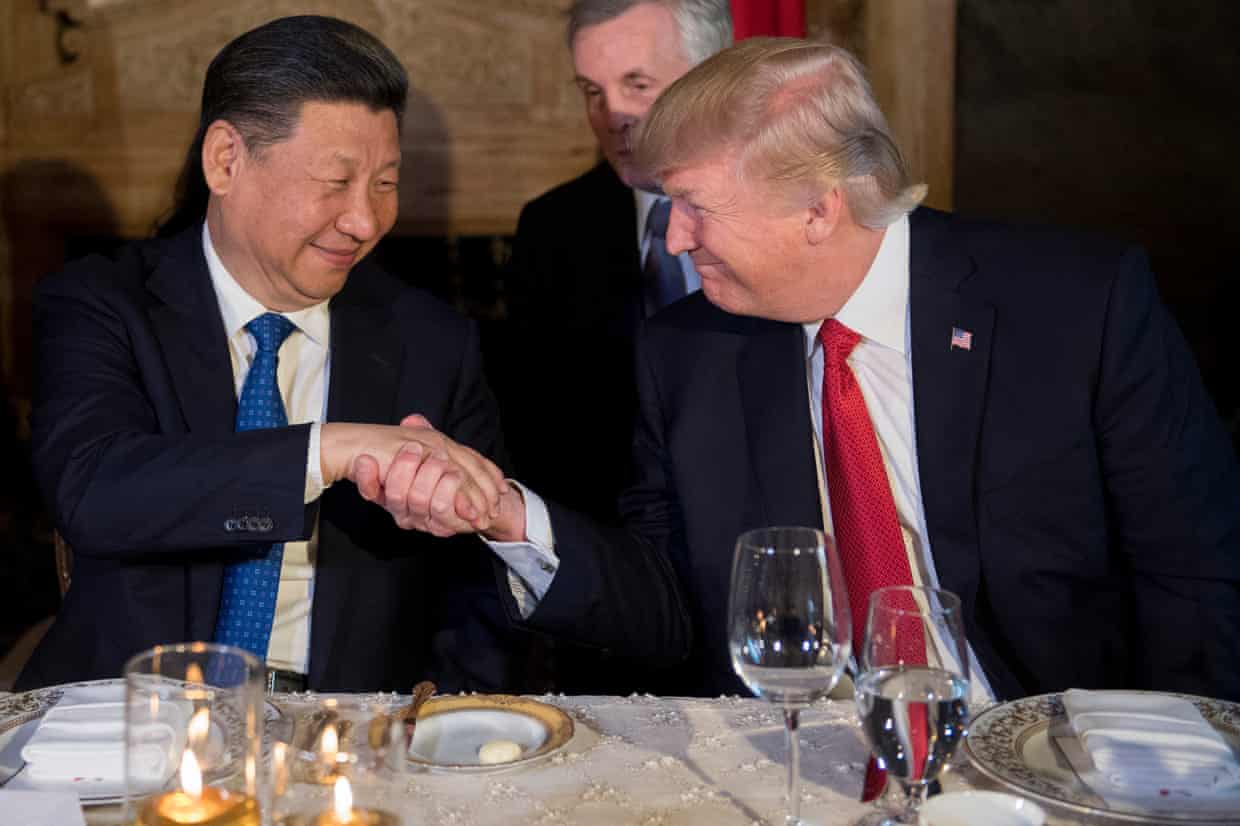
Donald Trump is heading to China this week.If his guest list is any clue, he wants to discuss technology with Xi Jinping, though perhaps after the war in Iran.On Monday, news broke that outgoing Apple CEO, Tim Cook, as well as SpaceX and Tesla CEO, Elon Musk, would join the US president.Other guests from the tech sphere include Meta’s recently appointed president, Dina Powell McCormick; Sanjay Mehrotra, CEO of computer memory maker Micron; Chuck Robbins, CEO of longtime telecom giant Cisco; and Cristiano Amon, CEO of semiconductor maker Qualcomm, according to a White House official.Jensen Huang, Nvidia’s CEO – who is close to Trump but criticized the US’s limitations on chip sales to China in an April interview, saying that he didn’t want a “loser mentality” to cost the US its edge in AI – will not be joining the president.
A major deal on semiconductors seems less likely without the world’s most important chip maker, though an announcement from Micron seems possible.In Cook, Trump likely also wants to bring a friendly, familiar face to high-stakes negotiations.Apple’s iPhone 17 has proved enormously successful in China, boosting the company’s quarterly earnings to their highest point ever.Apple still manufactures most of its products in China, though it has moved a significant percentage of those operations to India and Vietnam.In Apple’s announcement of Cook’s retirement, the company highlighted his diplomatic skills and said his responsibilities would include dealing with leaders around the world, so visits like this may become a mainstay of his schedule in the future.
Whether Trump’s trip will foster a flurry of tech deals, as his Middle East visit did in May 2025, will have to be seen.But while Trump trots out the US’s best and brightest business people – products of his hands-free policy for fostering technological innovation – his administration is taking cues from China’s more stringent approach to AI.China’s laws require AI companies to submit their models to Beijing for review on both security and political sensitivity grounds.The stringent policies prohibit not only threats to national security but also the generation of content that Beijing finds objectionable.In the same vein, the White House is getting more involved in the work of frontier labs in the US.
Trump is mulling an executive order that would require AI companies to submit their newest models for White House review.The administration has already announced deals with a growing number of big players in the field for national security reviews of their latest releases, including Google DeepMind, Microsoft and xAI last week.The reviews will be conducted by the Center for AI Standards and Innovation (CAISI), part of the US Department of Commerce.The Pentagon’s standoff with Anthropic continues in court over the startup’s qualms about military usage and the bureau’s designation of the company as a supply chain risk.Vice-president, JD Vance, has requested that Anthropic not expand access to its powerful cybersecurity-focused model Mythos beyond its initial list of partners, according to the Wall Street Journal.

Global oil inventories falling at record pace amid Iran war; US producer price inflation hits four-year high – as it happened
Global oil stocks are being run down at a record pace as supply losses mount due to the ongoing Iran war, the International Energy Agency has warned.In its latest outlook report, the IEA reports that global oil inventories fell by 129 million barrels in March, and by a further 117 million barrels in April, as countries dipped into their reserves to cover the shortfall following the Middle East conflict.The IEA, which ordered the largest release of government oil reserves in its history in mid-March, reports:double quotation markMore than ten weeks after the war in the Middle East began, mounting supply losses from the Strait of Hormuz are depleting global oil inventories at a record pace.The IEA also forecasts weaker demand this year, as the jump in prices for crude oil and refined products leads to demand destruction.World oil demand is forecast to contract by 420,000 barrels per day this year, to 104m bpd, which is 1

Lab testing group Intertek to back £10.6bn takeover by Swedish firm EQT
The laboratory testing company Intertek has become the latest FTSE 100 business to agree to a takeover, backing a £10.6bn approach from a private equity firm owned by Sweden’s billionaire Wallenberg family.After rebuffing three previous approaches, Intertek’s board said it was “minded to recommend” the £60-a-share tilt from the Swedish buyout firm EQT to shareholders, if there was a firm offer.The deal is worth £10.6bn including debt, or £9

Fortescue ordered to pay Yindjibarndi traditional owners $150m in record native title payout
Mining company Fortescue has been ordered to pay $150m in compensation to traditional owners over cultural losses caused by the multibillion-dollar Solomon Hub iron ore mine – the largest compensation payout in native title history.The mine, which has extracted millions of tonnes of iron ore and generated an estimated $80bn in revenue for Fortescue since operations began in 2013, was approved by the Western Australian government without the consent of the Yindjibarndi traditional owners.The Yindjibarndi Ngurra Aboriginal Corporation (YNAC) launched the compensation claim in 2022 and sought $1.8bn, including $1bn for cultural damage, $678m for economic loss, $34.85m for the destruction of sites, and $112
British Steel: more questions than answers on the future | Nils Pratley
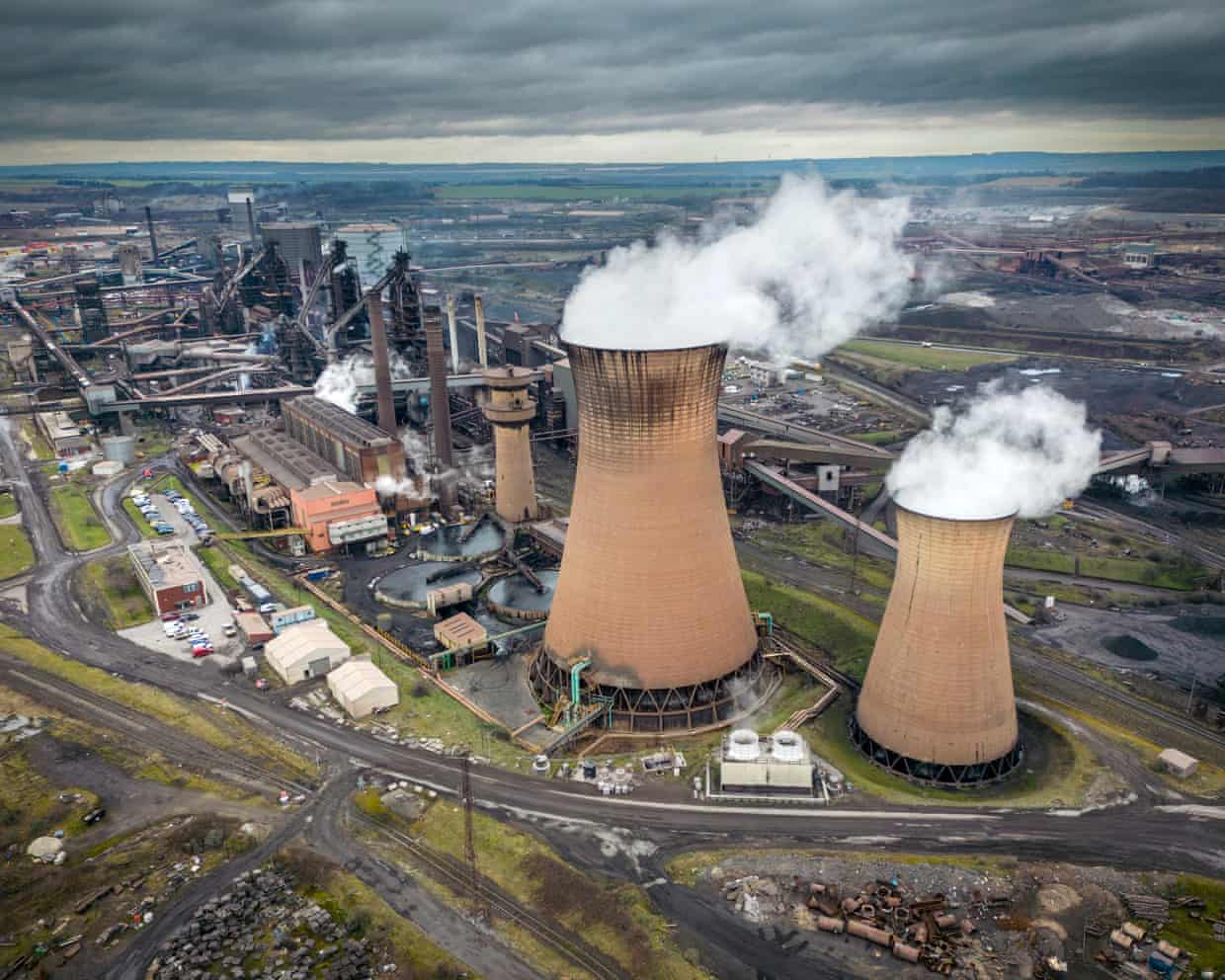
“One of the proudest things we have done in government,” said Keir Starmer in Monday’s big speech about the decision a year ago to recall parliament in order to take control of British Steel at Scunthorpe.It was an odd boast because last year’s action was merely an emergency exercise in saving the patient, as opposed to getting British Steel on its feet and out of the hospital. Taking control meant the Chinese owner, Jingye, could not turn off the two blast furnaces but meant the government was on the hook for operational losses, which will be £615m and counting by next month according to the National Audit Office (NAO).Full nationalisation is now on the cards, which will end the limbo-land state of ownership and give some comfort for 4,000 workers. But it is also the point at which the government will have to choose between its barely described “potential future options” for British Steel
E.ON agrees to buy Ovo in deal to create UK’s biggest energy supplier
The German energy group E.ON has agreed to buy struggling UK rival Ovo in a deal that would create Britain’s biggest gas and electricity supplier by number of households served.The combined company will supply about 9.6 million customers, overtaking the market leader, Octopus, which serves almost 8m homes in the UK.The value of the deal was not disclosed, but reports have estimated it at £600m

Thinktank calls for ‘double lock’ England private rent cap to ease living costs
One of the thinktanks closest to the Labour government is urging ministers to introduce private sector rent controls in England, as the chancellor weighs up how to ease a surge in living costs caused by the Iran war.The Institute for Public Policy Research (IPPR) has published a paper calling for a rent “double lock”, which would link rent increases to either wages or inflation, depending on which was lower.While others on the left have previously called for rent controls, the IPPR’s extensive links inside government will increase pressure on ministers to include the idea in a cost of living package to be announced by Rachel Reeves later in May.The Guardian revealed last month that Reeves had been considering a one-year rent freeze to deal with a rise in inflation which economists say is now inevitable, but the idea was quickly dismissed by Downing Street.Maya Singer Hobbs, the author of the paper, said: “There are millions of people living with unaffordable housing costs, and if you want to bring those down quickly there are not many options

Did breakthrough in US fentanyl crisis start in China?

Older people risk mental decline if they do long hours of caring, UK study shows

Steve Lismore obituary

Renters’ Rights Act could worsen court delays without proper funding | Letters

‘Everyone was in tears’: the tenants given eviction notices just before ban in England

Ash scattering is a risky business | Brief letters