Older people risk mental decline if they do long hours of caring, UK study shows
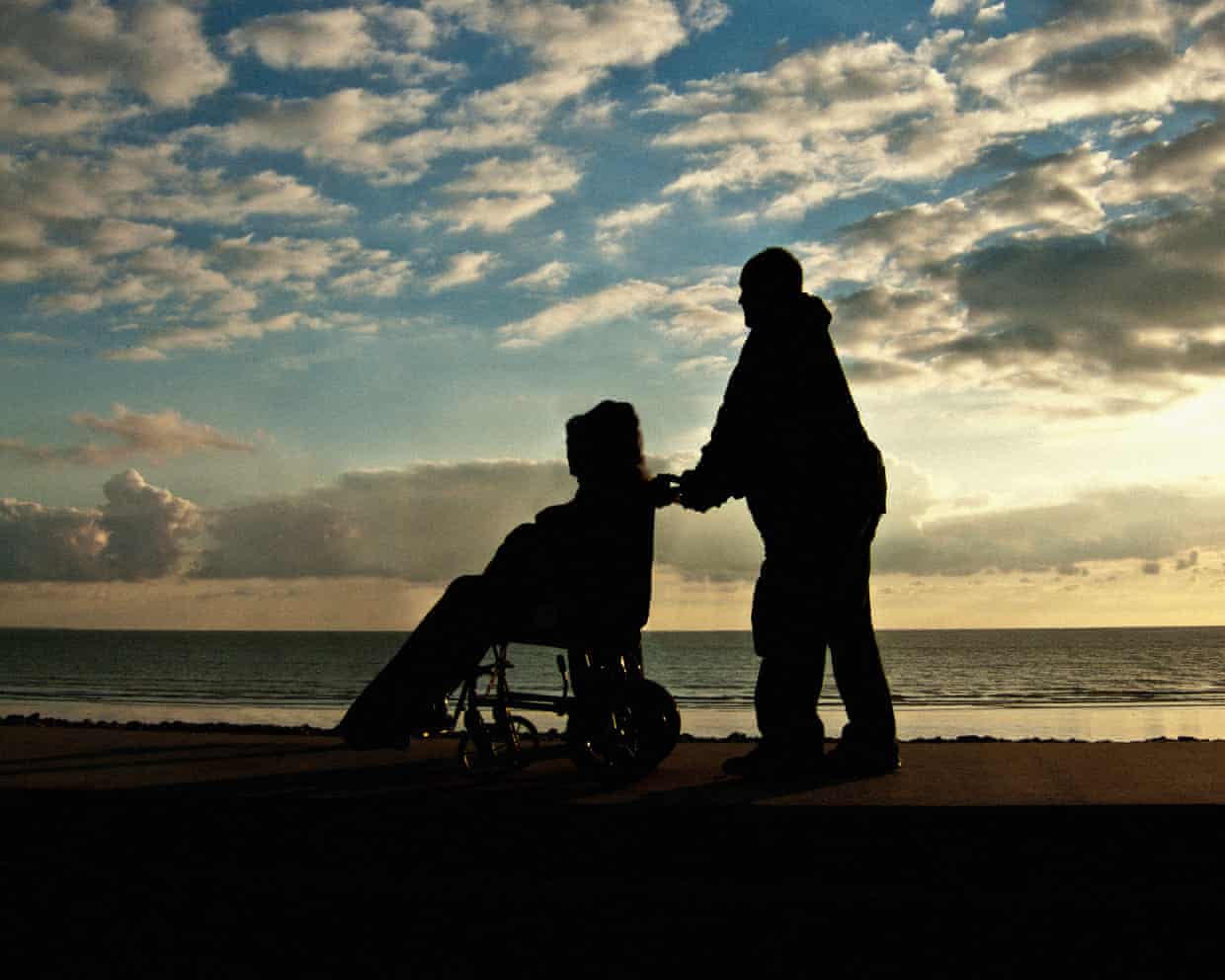
The stresses and strains of caring for someone for 50 hours or more a week leads to “accelerated cognitive decline” in middle-aged and older people, research shows.However, providing care for only five to nine hours a week has the opposite effect, boosting brain health so much that the benefits last until older age.Carers UK called the findings “extremely worrying” and said they highlight how long hours spent providing care raises the risk of social isolation and burnout.Dr Baowen Xue, an academic at University College London and the lead author of the paper, said: “Our study shows that the caring responsibilities many people take on in later life can be a double-edged sword.“On the one hand, lighter caring responsibilities can be good for you by providing mental stimulation from interacting with loved ones or others you’re helping and a sense of purpose and usefulness.
“But being overloaded with caring tasks has exactly the opposite effect and can accelerate people’s mental decline in terms of not being as mentally sharp or quick-thinking as they used to be.”Researchers compared the cognitive health of 2,765 carers aged 50 or over with that of 2,765 non-carers the same age who are part of the English Longitudinal Study on Ageing.They focused in particular on their executive function – such as their ability to make decisions and juggle competing tasks – and their memory.Participants were 60 years old on average and women comprised 56% of the group.The paper, published in the journal Age and Ageing, said: “Taking on manageable levels of caregiving may provide cognitively stimulating activities and coordinating care that helps maintain executive function in later life.
“Providing a few hours of support outside the household may help caregivers maintain their cognitive health as they age.”In contrast, though, “carers providing 50+ hours of care a week exhibited accelerated cognitive decline, indicating that the cognitive stimulation associated with caring is overshadowed by the demands of high-intensity care”, the researchers wrote.People who care for such long hours are usually full-time carers who as a result have little opportunity to work or enjoy a social life, they point out.“The intensity of such care may lead to feelings of loneliness and disrupt sleep, further compounding its negative effects on cognition.”The UK’s last census in 2021 found that 5.
8 million people provide unpaid care and that 1.7 million of them do so for at least 50 hours a week.Just over half of all carers have increased the amount of time they provide care, according to Carers UK research last year.“Caring has a profound impact on carers’ health and wellbeing,” it added.The charity’s research found that 74% of carers feel stressed or anxious, 40% feel depressed and 35% say their mental health is bad or very bad.
Helen Walker, the Carers UK chief executive, said: “These findings are extremely worrying, showing that many hours of caring could contribute to cognitive decline.” The government, local councils and the NHS need to do more to give family carers more support, she added.The proportion of adults providing care for more than 35 hours a week rose by 71% between 2003-04 and 2023-24, according to Joseph Rowntree Foundation research last year for the IPPR thinktank.The UCL researchers also found that caring for someone within the carer’s household led to a quicker decline in cognitive function than if caring for someone outside the household.The paper’s authors urged the government to do more to help “intensive” carers – those with high caring workloads – through better access to funded formal and replacement care.
“By 2040, around 20% of adults in England will be living with major illnesses.With the NHS struggling to cope and social care in crisis, much of this growing demand for care will fall on family members and friends who step in as unpaid carers.“Our findings show that this shift has profound implications: carers’ wellbeing is often overlooked and there is a real danger that many people overburdened with caring responsibilities will suffer the consequences.”Caroline Abrahams, the charity director at Age UK, said: “Anyone who cares intensively is likely to struggle to fit in the time for enough rest, sleep and time away doing things they enjoy.These are essential human needs which, when met, set you up for good mental and physical health.
“In most cases people care because they want to and because they are deeply committed to someone they love,Caring in and of itself is not the problem here,But we need to do a lot more to support people in this position so they can continue to stay fit and well, and so they have the time and space to enjoy living their own lives, while helping someone else to live theirs,”

‘Hold the line’: Burnham tells allies in parliament he still has options to return
Andy Burnham has told Labour MPs they should hold the line and that he has options to return to parliament after several seats identified by his allies failed to materialise.Two seats that backers of the Greater Manchester mayor had described as “nailed on” as recently as Monday night are now out of contention after the MPs concerned got cold feet.Burnham spoke to a number of MPs by phone on Tuesday and assured them that he still intended to seek an imminent return to parliament.The Guardian was told by two MPs on Wednesday that Jeff Smith, who represents Manchester Withington, an affluent suburb of the city, was in talks about stepping aside for Burnham, but his friends denied it. Asked whether he was about to make way, Smith told the Press Association he was not

EU proposes end to ‘five tabs, three apps and a prayer’ for cross-border train bookings
Cross-border train journeys through several European countries are the stuff of many a holidaymaker’s dreams.But the reality of trying to buy the tickets, navigating multiple websites without knowing who can help if a connection is missed, can prove less than relaxing. As one MEP puts it, it can often require “five tabs, three apps and a prayer”.Now, however, the European Commission has proposed that before the end of the decade passengers should be able to buy one ticket for one journey and be better protected when trains are late or cancelled.“Europeans will be able with the click of a button to plan, compare and purchase multimodal journeys across borders while benefiting from stronger rail passenger rights, greater transparency and better protection every step of the way,” the EU transport commissioner, Apostolos Tzitzikostas, said on Wednesday, as he published new rules intended to transform the “excessively complex” experience he said rail travellers met when booking tickets

What is the king’s speech and what is the state opening of parliament?
The king’s speech is the centrepiece of the state opening of parliament, the main ceremonial event of the parliamentary calendar, and the only regular occasion when the three constituent parts of parliament – the sovereign, the House of Lords and the House of Commons – meet. It marks the start of the new parliamentary year,Although delivered by the monarch in their constitutional role as the UK head of state, the speech is written by the government to outline its policies and proposed legislation for the new parliamentary session. Formally called the “speech from the throne” because it is delivered from the throne of the House of Lords, the monarch reads it out in a neutral tone. Whatever their private feelings the monarch must not show any preference for any political party or its policies.The event is taking place as the prime minister, Keir Starmer, fights for his future in Downing Street after heavy losses in the 7 May elections
Online safety campaigners reveal Starmer frustrations after Phillips exit
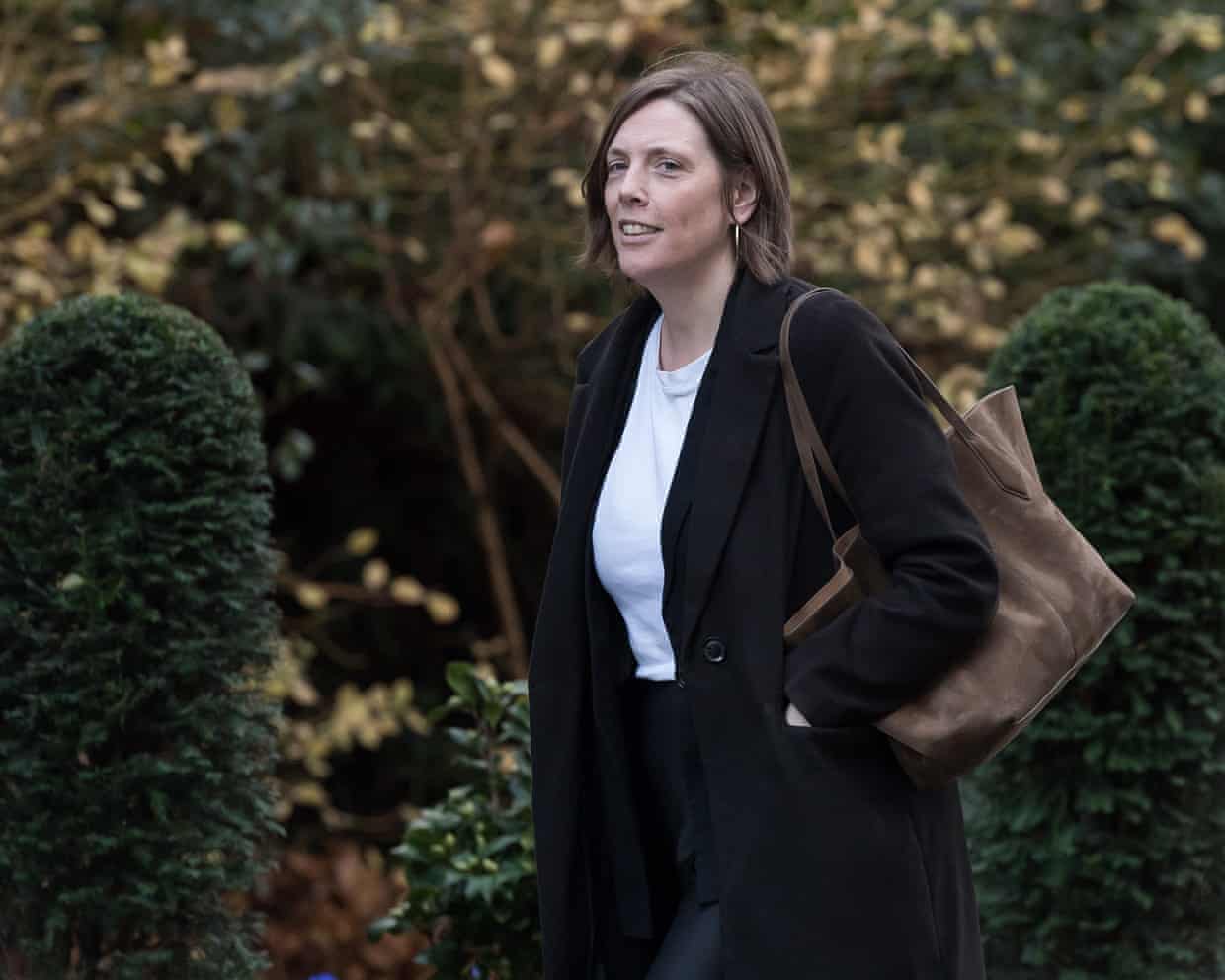
Internet safety and children’s rights campaigners have accused Keir Starmer of failing to act on proposals to stop children sending and receiving nude images on their phones, after Jess Phillips resigned from the government saying she was tired of seeing “opportunities for progress stalled and delayed”.The Labour politician was one of four ministers who quit on Tuesday and joined more than 80 MPs calling for the prime minister to go.In a coruscating letter she focused on a lack of urgency and boldness in tackling child abuse images, accusing Starmer of failing to take action to stop children being able to take or send naked pictures.She said: “Over a year ago I presented solutions, long worked on by brilliant civil servants, that would end the ability for children in the UK to take naked images of themselves.“We could stop this abuse

Are working-class voters lost to Labour for good? | Letters
It would be helpful for progressive parties and the media to focus more on why so many people voted for Reform UK. Your article (What’s behind surge in support for Reform and Greens across England? Five key takeaways, 10 May) indicates that it gained more support in deprived areas – but this doesn’t answer the question why.What sort of UK do Reform voters want? Do they want councils that reduce local care services for their vulnerable elderly relatives and children, to save a few pennies off council tax? The ending of environmental protections? The scrapping of equal-opportunities policies that protect women and minority groups?When Reform voters are asked about the party’s policies, they fail to articulate much apart from “stop the boats” – because Reform’s plans have very little detail or real‑world application.The Labour government has been in power for less than two years and has delivered the Renters’ Rights Act and the Employment Rights Act, removed the two-child cap on universal credit, increased provision of free school meals and facilitated millions more NHS appointments.The focus on personality-driven politics has left the door open for local governments to be led by privately educated multimillionaires who dismiss the climate crisis and favour cryptocurrency

Labour MPs channel Tory psychodrama as Starmer keeps hiding in plain sight | John Crace
It used to be football managers who measured their time at a club in months. Or even days at Spurs. Anything over two years qualifies you for a long service medal. Now it’s prime ministers. In fact it’s worse than that

How to make arancini – recipe | Felicity Cloake's Masterclass

Navel gazing: oranges, mandarins and persimmons top Australia’s best-value fruit and veg for May

Australian supermarket sauerkraut taste test: one is ‘like eating the smell of McDonald’s pickle’

Spring soup and bean and cheese quesadillas: Thomasina Miers’ Mexican-inspired seasonal recipes

Willy’s, Margate, Kent: ‘It chortles in the face of small plates’ – restaurant review | Grace Dent on restaurants

Why sweet, chewy dates go perfectly with chocolate – and the best ones to try