Palantir extends reach into British state as it gets access to sensitive FCA data

Palantir is to be granted access to a trove of highly sensitive UK financial regulation data, in a deal that has prompted fresh concerns about the US AI company’s deepening reach into the British state, the Guardian can reveal.The Financial Conduct Authority (FCA) has awarded Palantir a contract to investigate the watchdog’s internal intelligence data in an effort to help it tackle financial crime, which includes investigating fraud, money laundering and insider trading.The Miami-based company, co-founded by the billionaire Donald Trump donor Peter Thiel, has been appointed for a three-month trial, paying more than £30,000 a week to analyse the FCA’s vast “data lake”, which could lead to a full procurement of an AI system.The deal is part of the FCA’s drive to use digital intelligence to better focus resources on rule-breaking among the 42,000 financial services firms it regulates, from major banks to crypto exchanges.There was only one other, unnamed competitor for the contract.
Palantir already has more than £500m in UK public deals, including with the NHS, military and police.The contract has prompted warnings of “very significant privacy concerns”.Palantir is expected to apply its AI system, known as Foundry, to huge quantities of information held by the watchdog, including case intelligence files marked highly sensitive; information on so-called problem firms; reports from lenders about proven and suspected frauds; and data about the public, including consumer complaints to the financial ombudsman.The data includes recordings of phone calls, emails and trawls of social media posts, the Guardian understands.The FCA is one of several UK agencies which aim to stop financial crimes that underpin harms such as the drug trade and human trafficking.
The deal has raised concerns inside the FCA.One source said: “Once Palantir understands how we detect money-laundering threats, how do we know that they are ethically reliable enough not to go to share that information?”Palantir’s technology is used by the Israeli military and in the US president’s ICE immigration crackdown, leading to leftwing MPs in the House of Commons last month to call it a “highly questionable” and “ghastly” company.In 2023 it signed a £330m deal with the NHS, which has sparked resistance from doctors, and a £240m contract with the Ministry of Defence in December 2025, which prompted MPs to highlight “reports of serious allegations of complicity in human rights violations and the undermining of democratic processes made against Palantir”.Palantir has previously defended its work, saying it has led to about 99,000 extra operations being scheduled in the NHS, helped UK police tackle domestic violence and that it “takes a rigorous approach to respecting human rights”.Prof Michael Levi, an internationally recognised expert in money laundering at Cardiff University, said there was “serious under-exploitation” of data held by financial regulators, so AI is a potentially valuable technology to tackle financial crimes.
But he said it was “a relevant question as to whether Palantir’s owners might tipoff their friends about methodologies”.“What are the protocols agreed between the FCA and Palantir about the onward use of things that they have learned in that process?” he said.The FCA said that the terms of the contract meant Palantir would be a “data processor” not a “data controller” – meaning that it could only act on instruction from the regulator, which said it would retain exclusive control over the encryption keys for the most sensitive files and the data would be hosted and stored solely in the UK.Palantir will have to destroy data after completion of the contract and any intellectual property derived from the data trawling should be retained by the FCA.The FCA considered using dummy data or scrambling company and individual names but decided using real data was the only worthwhile test, even though guidelines encourage the use of synthetic data in pilots.
“When the FCA carries out an enforcement investigation, it has powers to compel firms to hand over vast quantities of data,” said Christopher Houssemayne du Boulay, a partner and barrister at the law firm Hickman & Rose who specialises in defending serious and complex financial crime cases,“We could be talking about hundreds of whole email accounts and full financial records,Many innocent people will be caught up in that and the data may contain bank account details, email addresses, telephone numbers and other personal information,“If you ingest that data and use it to train an AI system, there are very significant privacy concerns,There should be serious confidentiality requirements regarding what Palantir does with the data.
”The FCA said Palantir could not copy the data to train its products.Palantir referred a request for comment to the FCA.A spokesperson for the FCA said: “Effective use of technology is vital in the fight against financial crime and helps us identify risks to the consumers we serve and markets we oversee.We ran a competitive procurement process and have strict controls in place to ensure data is protected.”

Family courts in England and Wales ‘not good enough’ for women and children, minister says
Family courts are “not good enough” and have treated women and children unfairly for decades, a government minister has said.Announcing a major overhaul of the family justice system in England and Wales that will play a central role in “rebalancing” the family courts, Alison Levitt said often brutal legal showdowns will be replaced with a “problem-solving”, child-focused model.Part of a move across the Ministry of Justice to tackle court backlogs, the department said child focused courts – which centre on child welfare and seeks out-of-court resolutions – have reduced child trauma, cut a backlog of cases and reduced waiting times.They will now become the standard model for all section 8 cases, which involve child arrangements including where that child lives, who they have contact with and how long they spend with each parent.The Labour peer, who was Keir Starmer’s principal legal adviser when he was the director of public prosecutions, said that she had been repeatedly accused of sexism since she became a minister last autumn, including as a result of the proposed repeal of the legal presumption that both parents should be involved in their children’s lives in the Courts and Tribunal bill, which passed its second reading earlier this month

Experts consider expanding meningitis vaccine eligibility after Kent outbreak
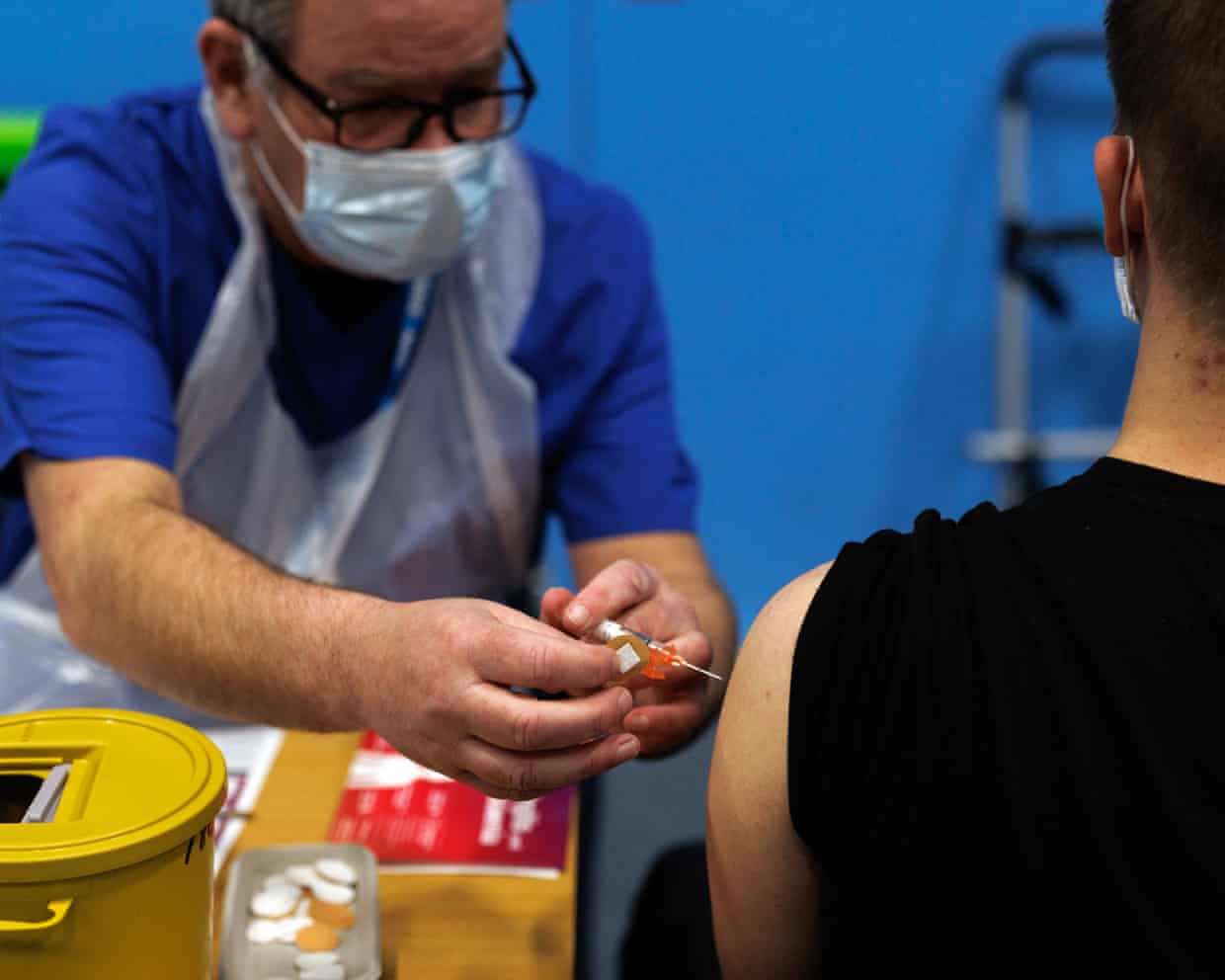
Experts are considering the case for routinely vaccinating more people against meningitis B in response to the fatal outbreak in Kent.The Joint Committee on Vaccination and Immunisation’s review was announced after the health secretary, Wes Streeting, asked it to “re-examine eligibility for meningitis vaccines” for a wider range of people than those who now qualify.Health officials in Kent, where there have been two fatalities, said cases could spread outside the county as students return home for Easter. On Friday the UK Health Security Agency said there were 18 confirmed cases, and 11 more under investigation.The Guardian understands the JCVI started a review of the outbreak in Kent and is considering a wider review of eligibility for routine meningitis B vaccinations

Volunteers in the UK: what happened when your local charity shut down?
Across the UK, many small charities face increasing financial pressures, forcing some to shut their doors. When this happens, it can leave the people who relied on those services without support - and volunteers and communities trying to step in and keep things going.We’d like to hear from volunteers who have experienced a charity closing. Have you or others tried to continue the work informally and what were the challenges of doing that? Did you try to keep it going - and what difficulties did you face? What happened to the people who depended on the service?You can share your experience using this form.Please include as much detail as possible

‘It all feels very natural’: Britain’s sauna boom heats up as people seek warmth of human connection
From fields to floating pontoons, in horseboxes, barrels and beach huts, saunas are springing up across Britain. The British Sauna Society now lists about 640 saunas – up from 540 at the start of the year – while a recent report predicted that the UK could become the world’s largest sauna market by 2033, outpacing even Finland and Germany.“The continuing growth suggests that the peak has still yet to come – if there is one,” said Gabrielle Reason, the society’s director. But are saunas a tonic for the nation’s health – or a wellness fad with hidden risks?When it comes to measurable health effects, the strongest evidence relates to the cardiovascular benefits of sauna use. These are “substantial”, said Prof Setor Kunutsor, the Evelyn Wyrzykowski research chair in cardiology at the University of Manitoba in Canada
Kent meningitis outbreak may have peaked as UKHSA reports slowdown in cases
The Kent meningitis outbreak may have reached its peak after only two new cases were reported by officials on Friday.The UK Health and Security Agency said that as of 12.30pm on Thursday, there were 18 confirmed and 11 probable cases of meningitis linked to the Kent outbreak, taking the total number of people with the disease to 29. Of the confirmed cases, 13 were meningitis B.While the growth in cases may have slowed, the situation remains serious, with all cases requiring hospital admission

The Kent meningitis outbreak: what is happening and why?
The deadly outbreak of meningitis in Kent has fuelled concerns about how far the disease will spread and seen the return of people wearing masks and queueing for vaccines. The scenes are reminiscent of the Covid crisis, but meningitis is very different. Here we look at how the outbreak has unfolded.Meningitis is a potentially lethal but uncommon disease caused by viruses and bacteria that trigger inflammation of the meninges, the protective linings that cover the brain. The Kent outbreak is driven by meningococcal bacteria which are found in the nose and throat of about 10% of the population

From Project Hail Mary to Saturday Night Live UK: your complete entertainment guide to the week ahead

‘The dream is to be a standup, but everyone who knows me says: Please don’t’ – Riz Ahmed on chaos, comedy, and defying categorisation

‘A fascinating discovery’: research challenges Battle of Hastings narrative

Driven to the right side of the road? | Brief letters

Jimmy Kimmel on Trump Pearl Harbor joke: ‘Everything he knows about it begins and ends with the Ben Affleck movie’

A bust of Barbra Streisand and beautiful memories: Richard E Grant’s garden – in seven extraordinary items