Campaign groups rail against Palantir, but the UK contracts keep coming
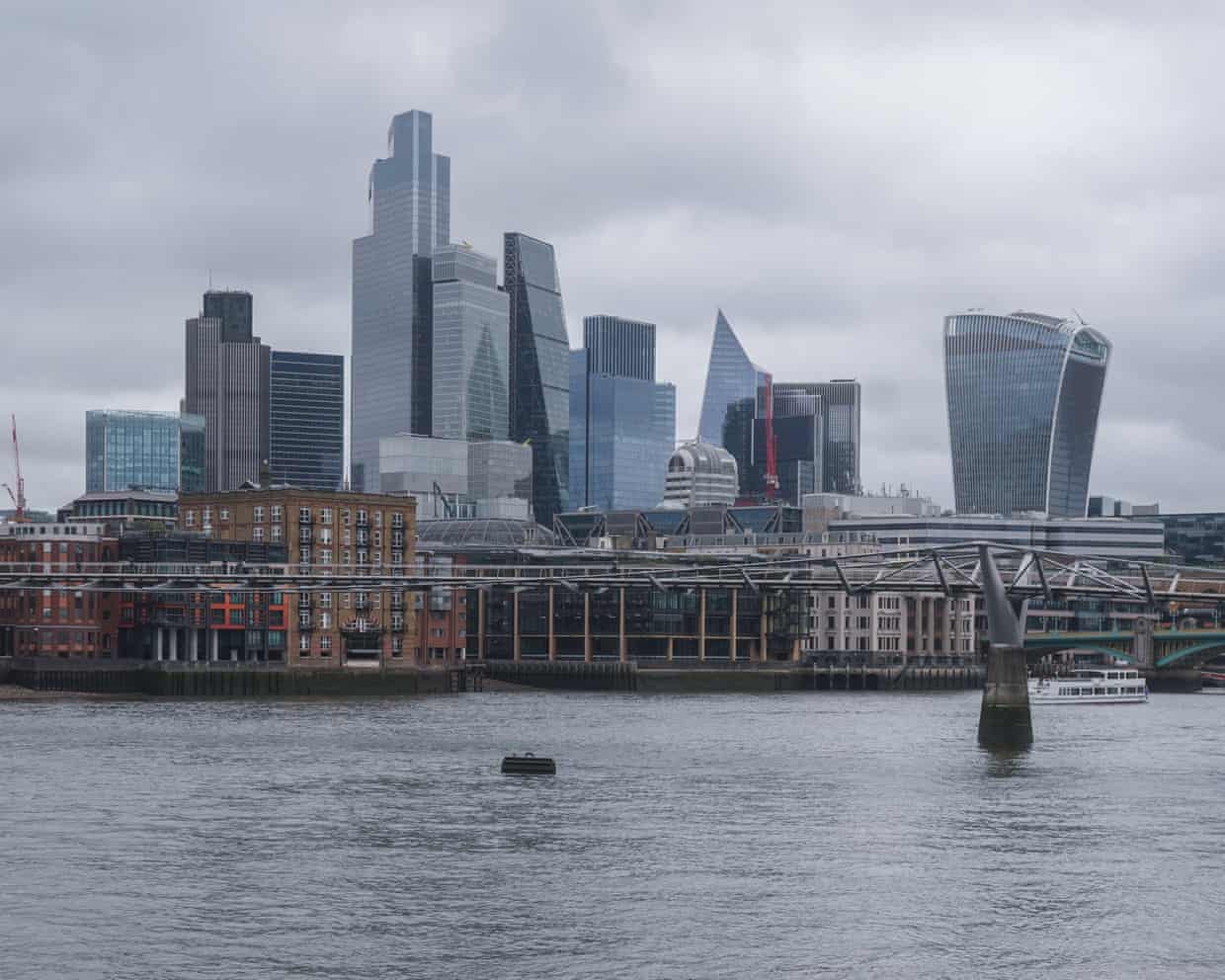
Palantir’s latest UK contract takes the AI and data analytics company into the heart of one of Britain’s biggest industries: financial services, which accounts for 9% of the economy.The Miami-based company embedded its technology in the NHS in 2023, the police in 2024 and the military in 2025.Land and expand, they say in the tech industry.Palantir has followed the script, building contracts worth more than £500m.Now in 2026, its deal with the Financial Conduct Authority (FCA) to dive into the terabytes of information it gathers gives it yet another unparalleled view of the inner workings of the British authorities.
It also gives it sight of a trove of data about the workings of one of the most important global centres of finance, the City of London.The appeal of companies such as Palantir to public authorities is driven by three forces: the push to find more efficient ways to use human resources amid strained public finances; the existence of lakes of data swollen by society’s increased tendency to digitise transactions and communications; and the dawn of AI and the Labour government’s unbridled enthusiasm for its potential to unlock elusive economic growth.Notwithstanding its former use of Peter Mandelson’s lobbying company, Global Counsel, Palantir has become an influential voice in Whitehall.With earnings of $1.4bn in the last three months of last year alone, it can afford top talent and its AI-enabled data analysis systems impress many who see them, in demonstrations at least.
Campaign groups rail against Palantir’s work with the US Department of Homeland Security and its ICE operations, and its service to the Israel Defense Forces, but the contracts keep coming.Its technologists will arrive at the FCA headquarters in east London and find a regulator worried it is devoting too much energy to pursuing possible financial crime cases that go nowhere.It wants to use AI to better detect signs of wrongdoing so it can crack down on the serious crime of money laundering, which underpins social ills such as human trafficking and the drugs trade, as well as fraud, which affects many people and accounts for about 40% of all crimes in the UK.Its workplan for 2025-26 set out an ambition to “expand the use of data and intelligence to identify and act on the riskiest firms and/or individuals” and use “network analytics to identify harmful networks of firms and/or individuals”.But as it moves to AI detection of financial wrongdoing, criminals may well respond with their own ways of beating the bots.
“If the FCA relies on an AI-based detection model, a bad actor could take steps to influence that system when it reviews material,” said Christopher Houssemayne du Boulay, a partner and barrister at the law firm Hickman & Rose who specialises in serious and complex financial crime,For example, they might use invisible “white text” in documents to instruct the AI to ignore anything in that document that might be incriminating,“You can absolutely see that being used in a financial crime context because developments in technological capabilities for good can equally well be exploited by criminals and frequently are exploited very well,” he said,The arrival of AI as a weapon to fight money laundering has been long anticipated,“People have talked about using machine learning and earlier forms of artificial intelligence to spot patterns of money laundering] since the 1990s,” said Prof Michael Levi, an internationally recognised expert in money laundering at Cardiff University.
“Now that technology is available, we have to make decisions about how to use it, what the risks are.”He said it was understandable that some people might fear the consequences of data companies being able to integrate different datasets in a way that could threaten privacy.But he added: “Criminals are also afraid of it [and] also some elites might be afraid, because corporate holdings through shell companies and through real companies with obscured ownership should be part of the target for these kinds of technologies.”

Thank you, Keir, for keeping calm | Brief letters
Let’s praise Keir Starmer (UK will not be drawn into wider war in Middle East, says Keir Starmer, 16 March) for remaining calm and statesmanlike in the face of infantile insults and playground bullying, in order to bring about a cessation of Donald Trump’s recklessness.Martin DattaLincoln Moby (‘The lyrics to Lola by the Kinks are gross – I was really taken aback’: Moby’s honest playlist, 22 March) describes the lyrics of Lola as “gross and transphobic”. He says he was “taken aback at how unevolved the lyrics are”. This Kinks’ song came out in 1970, when transitioning wasn’t as openly talked about. Lola was groundbreaking in celebrating a trans character over 50 years ago
What’s at stake for UK in May’s elections: six key questions
On 7 May, three of the UK’s four nations go to the polls in a series of elections with much potential significance, not just for who ends up governing various bodies, but also for the future political direction of the country.Here is what is at stake.In Scotland, voters will select 129 members of the country’s parliament, via a mix of first-past-the-post constituency voting and proportional regional voting. In Wales, a revised proportional system will pick 96 members of an expanded Senedd.In England, there are first-past-the-post votes for members of more than 130 councils of various types – metropolitan, unitary, county, district and 32 London boroughs – as well as for six mayors
‘Unprecedented territory’: are UK polls as volatile as they seem? – in charts
Cabinet reshuffles, party infighting, policy reversals, byelections, defections and apparently huge swings in support – the UK’s political news cycle feels especially relentless at the moment.But if you look closely at the polls since last year’s local elections, remarkably little has changed.While there have been some noticeable individual polls, most movements have been limited to a small number of percentage points. The big parties are roughly where they were. Reform has had a comfortable lead for almost a year
‘Anyone but Labour’ or ‘anyone but Reform’? Clash of animosities likely to define May local elections
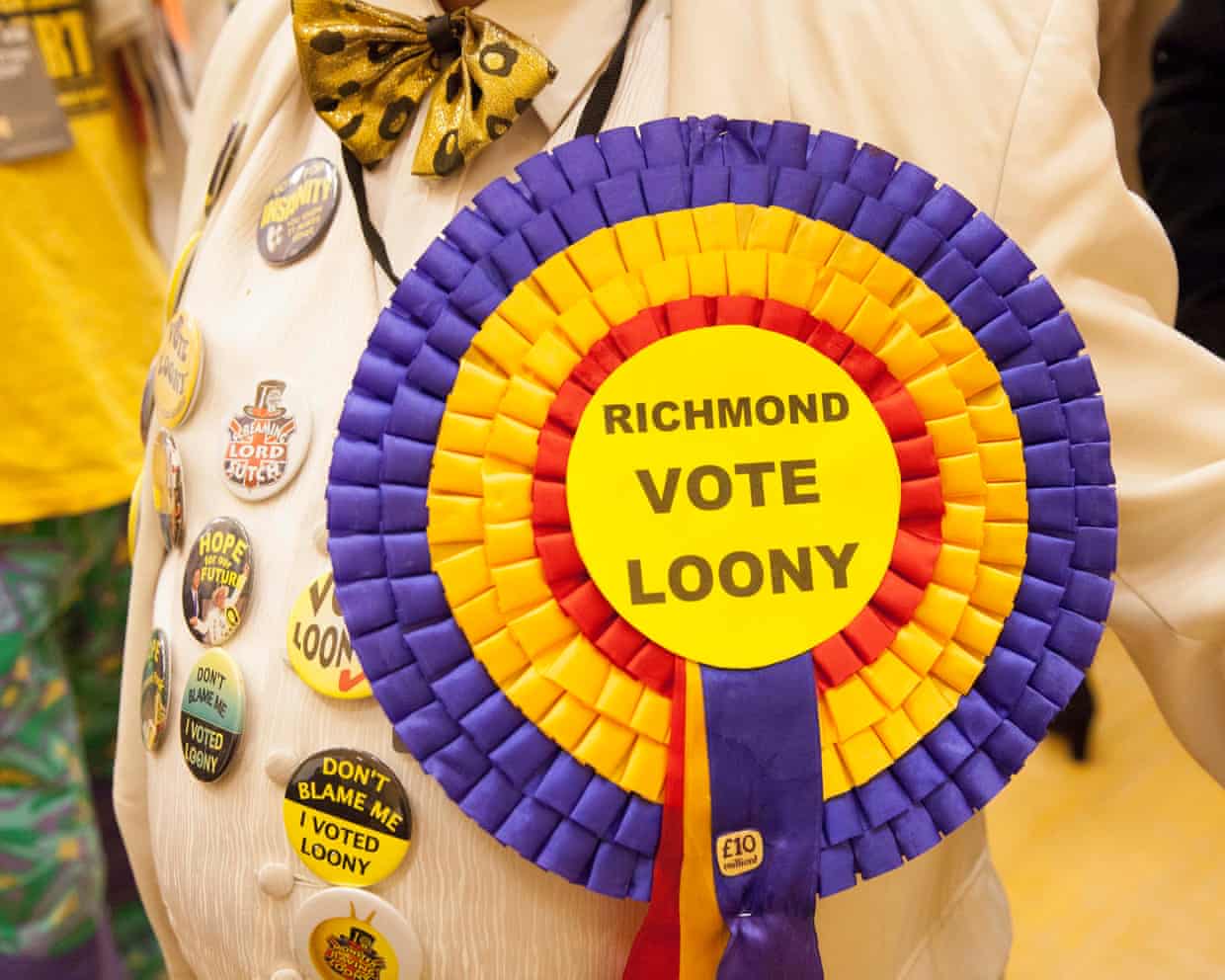
Local elections are often regarded as a referendum on the sitting government, with many previous administrations taking a bloody nose from the electorate but successfully fighting back by the next general election.Senior Labour figures have taken to reeling off a list of midterm results – 1999, 2003, 2012 – to prove that point. “As we get closer to the general election, it will be less about people’s view of the parties generally and more about the actual choice in front of them,” one said.But even against that backdrop, this May’s local and devolved elections look to be a uniquely negative series of contests, in part because Nigel Farage now generates as much ill feeling across the country as Keir Starmer.Some voters are urgently hoping to teach the government a lesson, but others want just as strongly to keep Reform UK out of power

The trope of ‘choosing pets over people’ is not new | Letter
Jonn Elledge (What’s worth more: Churchill or a woke badger? Welcome to Britain’s banknote culture war, 16 March) is right that the debate over whether wildlife might replace figures such as Winston Churchill on Bank of England banknotes has become another front in Britain’s culture wars. As he notes, proposals to feature animals are neither unprecedented nor unpopular, with public consultation showing majority support for nature-themed designs.But the backlash relies on a familiar claim: that attention to wildlife represents a misplaced priority – “the definition of woke”, as Nigel Farage put it. This framing is not new. During the 2021 evacuation efforts of animal charity Nowzad in Kabul, the story was reduced to “pets over people”, despite the fact that both animals and staff were saved
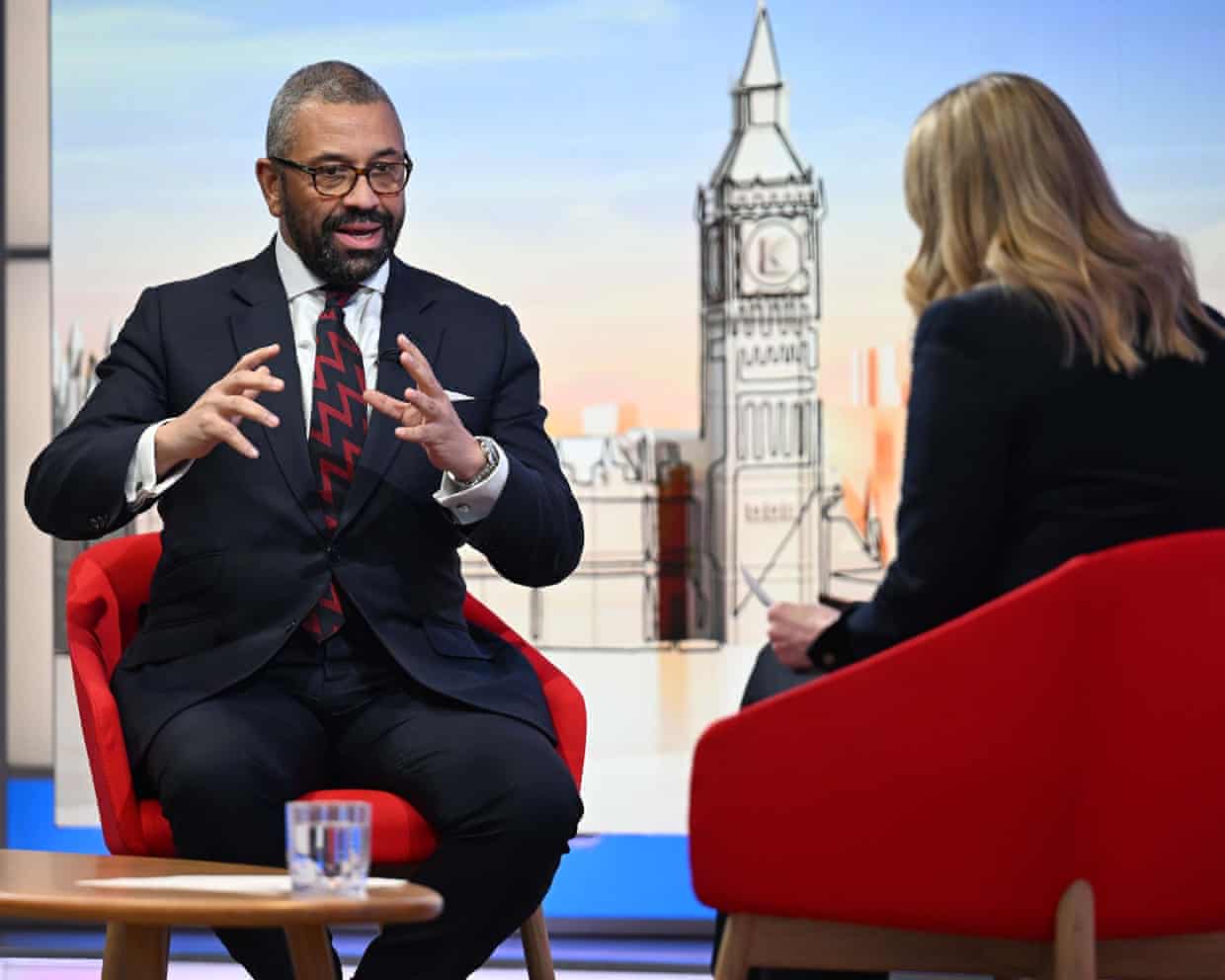
James Cleverly says he disagrees with Nick Timothy about Islamic public prayer
James Cleverly has said he disagrees with his Conservative frontbench colleague Nick Timothy’s assertion that public Muslim prayers are an act of domination, as another senior Tory called for the party to respect the right to worship.Kemi Badenoch has defended Timothy, the shadow justice secretary, after he posted images of mass prayer at a Ramadan event on Monday evening in Trafalgar Square, calling it “an act of domination” and “straight from the Islamist playbook”.His remarks sparked significant condemnation, with Keir Starmer calling for Badenoch to sack Timothy; while Richard Hermer, the attorney general, has challenged the Conservative leader to say whether she would object to Jewish prayer in public.In the most open criticism of Timothy by a senior Tory so far, Emma Best, the party’s deputy leader on the London assembly, said prayer was “a fundamental right of every UK citizen” and that if people did not like this, it was their problem.Speaking on BBC One’s Sunday with Laura Kuenssberg, Cleverly, the shadow communities secretary, said Timothy had been correct to begin a debate about Monday’s “Open Iftar”, the last of 18 such public events at which anyone can join the breaking of the Ramadan fast at dusk

Slop it like it’s hot: the rise of build-your-own takeaway salad bowls

Osteria Vibrato, London W1: “Worth singing loudly about” – restaurant review | Grace Dent on restaurants

I lost my love of cooking after 12 years as a chef. Moving to a pig farm restored it

Lamb shanks with orzo and rhubarb galette: Anna Tobias’ Easter recipes

Best thing I ever ate? My first In-N-Out burger in LA

Reheated rivalry: why I’m the champion of leftovers