We have lost so much of ourselves to smartphones: can we get it back?

In 2003, the Stanford social scientist BJ Fogg published an extraordinarily prescient book,Persuasive Technology: Using Computers to Change What We Think and Do predicted a future in which a student “sits in a college library and removes an electronic device from her purse”,It serves as her “mobile phone, information portal, entertainment platform, and personal organiser,She takes this device almost everywhere and feels lost without it,”Such devices, Fogg argued, would be “persuasive technology systems … the device can suggest, encourage, and reward.
” Those rewards could have a powerful effect on our relationship with these devices, akin to gamblers pumping quarters into slot machines,Four years later, Apple launched the first iPhone,At Stanford University, Fogg taught Behavior Design Boot Camps that Wired magazine called “a toll booth for entrepreneurs and product designers on their way to Facebook and Google”,There, Fogg proved his theory to be spectacularly true: portable computers really could be used to “change what we think and do”,As it turns out, one of the main ways they do so is by compelling us to spend hours and hours in front of them.
Today, anxiety around screen time is ubiquitous throughout the generations.Ofcom found nearly a quarter of UK five- to seven-year-olds have their own phone, with 38% using social media.But it’s just as likely the oldies among us will be spending hours on ours.I was shocked to find my daily average was over four hours: mostly before and after sleeping, spent on news websites and YouTube.There is huge debate in academia as to the effect smartphones, and their social media apps, are having on us.
While psychologists such as Jonathan Haidt and Jean Twenge argue that they make children more anxious, fragile and depressed, and amplify political polarisation, others, including Pete Etchells and Amy Orben, believe the evidence for this is thin.I am inclined to think the effect of Apple’s brilliant invention, plus Fogg’s dark genius, has been profound.My use of these machines has been compulsive: when I walk my dogs having left my phone at home, I find myself repeatedly grabbing for an empty coat pocket, my arm moving independently of free will.I read fewer books because of social media; I concentrate less in front of films and TV shows.I watch YouTube more than the BBC, ITV or Channel 4.
I have been through phases of forcing myself on to a virtually app-less dumb phone, but the convenience and often necessity of maps, parking apps and train tickets pushed me back.Yet my smartphone has affected my life in often negative ways.The world I disappear to inside it has made me – and probably you – angrier.That’s my main impression of how the world has changed since 2007: we’re all a lot more pissed off with each other.And I really do blame phones.
Humans are profoundly social and wired to solve the problems of existence by forming into collaborative groups,When we feel we belong and are valued, we’re happy; when we feel isolated and worthless, we become anxious and depressed,Smartphones have gamified and monetised these powerful aspects of human nature,They don’t benignly offer us the connection and status we desire: they strategically withdraw it in order to drive engagement,Whenever we’re outraged by the behaviour of an identity group that’s not our own, it’s an attack on our status: we are drawn further into our phones to find out more and perhaps take part in a counterattack – an attempt to restore our threatened status and reinforce the connection with our team.
We’re made to feel good or bad by likes, reposts, comments or follower-counts, but our phone issues these precious rewards unpredictably, just as a slot machine does – and just as Fogg described.It’s this unpredictability that helps make them compulsive.For us deeply social animals, much of our social life now takes place inside apps designed to manipulate via the manufacturing of social competition and tribal conflict.Of course we’re tired and angry and suspicious of each other.But at least we have a greater awareness of this now.
More than 60 Labour MPs have recently urged the prime minister to follow the example of Australia where under-16s have been prohibited from using social media sites.My own social media habit has been mostly vanquished by dint of the sites becoming dreadful.Instagram – where I used to post photos and enjoy those of friends and colleagues – now forces me to watch endless short videos by annoying people I have no interest in.Facebook is mostly absent of news from friends and family, and is instead a stinking river of dreadful memes and inane arguments.What was Twitter – a useful tool for promoting my work – has been superseded by X and Bluesky, both useless for this and petri dishes for the worst of human behaviour.
I do worry, however, about what is coming.The heavy-handed way in which large language models (LLMs), such as ChatGPT, flatter egos to give users a sense of status is currently a bit of a joke.But LLMs are new, and will rapidly improve.Human psychology is eminently hackable – as dogs have learned over tens of thousands of years, and romance scammers have figured out in 20.As BJ Fogg predicted, “suggest, encourage, and reward” and we will be yours.
The device Sam Altman and Jony Ive are rumoured to be making, in which a wearable AI buddy will accompany us all day, learning about us and helping us and telling us we’re great, has the potential to burrow into our minds and become a relationship that feels essential and profound – the ultimate example of a technology that can “change what we think and do”,Will Storr’s book And You’ll Be Okay Forever: Selected Essays is out now,
Real estate agents in Australia using apps that leave millions of lease documents at risk, digital researcher says
Australian platforms used by real estate agents to upload documentation for renters and landlords are leaving people’s personal information exposed in hyperlinks accessible online.An analysis of seven rent platforms provided to Guardian Australia by a researcher, who wished to remain anonymous, revealed millions of leasing documents could be accessed by threat actors.Sign up: AU Breaking News emailReal estate agents manage sensitive tenant and landlord data on a daily basis, including lease agreements, identification documents, payslips and personal references. Online platforms enable agents to store these documents in the cloud and make them accessible via hyperlinks.The researcher found these links can be scanned by web crawlers and cached

Price of consumer goods could surge as shipping costs soar, industry body says
The price of consumer goods including computers, electrical machinery and transport equipment could surge this year as a result of soaring shipping costs, an industry body has said, adding that “cracks [are] forming in the global trading system”.The cost of transport, energy and raw materials continues to rise and prices remain volatile, which could feed through to businesses and consumers during 2026, according to a study by the Chartered Institute of Procurement and Supply (CIPS).Concerns about disruption to supply chains during the next three months reached the highest level in two years, suggesting growing worries among procurement teams. The concerns were reported in a survey conducted in late 2025 by CIPS, an international trade body that represents 64,000 member organisations in procurement and supply chains across 180 countries.Bosses responsible for procurement said they were often the first within companies to notice rising prices or problems getting hold of goods
The long-term cost of high student debt in the UK is not just for graduates | Heather Stewart
“It is not right that people who don’t go to university are having to bear all the cost for others to do so,” Rachel Reeves remarked this week, amid the increasingly angry row about student loans.But if something is “not right” here, it’s the complex and confusing loan system, and the debt burden borne by some recent graduates of English and Welsh universities.Since the chancellor slapped a three-year freeze on the repayment threshold for Plan 2 loans at November’s budget – covering students whose courses kicked off in the decade following 2012 – longstanding frustration about the system has erupted into full-blown fury. The personal finance guru Martin Lewis told Reeves recently: “I do not think this is a moral thing for you to do.”After the threshold freeze, the latest annual report on education spending in England from the Institute for Fiscal Studies (IFS) forecast that for the 2022-23 intake, for example, “the long-run cost of issuing loans … will be negative, with graduates repaying more than they borrowed”

US, UK, EU, Australia and more to meet to discuss critical minerals alliance
Ministers from the US, EU, UK, Japan, Australia and New Zealand will meet in Washington this week to discuss a strategic alliance over critical minerals.The summit is being seen as a step to repair transatlantic ties fractured by a year of conflict with Donald Trump and pave the way for other alliances to help countries de-risk from China, including one centred on steel.Australia said on Friday it would establish a A$1.2bn (£610m) strategic reserve of minerals it believes are vulnerable to supply disruption from China, which last April restricted exports on rare earths in response to Trump’s “liberation day” tariffs.It is the second summit on the matter within a month and involves about 20 countries including the G7 members – the UK, US, Japan, France, Germany, Italy, and Canada – along with India and South Korea and Mexico, Australia, New Zealand and possibly Argentina

Can French Connection make FCUK fashionable again?
French Connection is back on the trail of global expansion with the aid of its cheeky initials-based slogan that made it so popular in the late 1990s.The label once known for clothes bearing FCUK is seeking to reinvent itself again under the ownership of a group of British entrepreneurs based in the north of England who rescued it in 2021.This week, the former high street darling signed a licensing agreement to develop and distribute men’s and women’s apparel and accessories across North America, which is understood to include plans to revive the FCUK branding.It is the latest chapter in a rollercoaster story of success and setback. French Connection was founded in 1972 by Stephen Marks, who named it after the film starring Gene Hackman released the previous year

Impose sanctions on refineries that buy Russian crude oil to end war, says Bill Browder
Bill Browder’s fight against Vladimir Putin has seen him face threats, lawsuits, false accusations of murder and Interpol arrest warrants. A disinformation-laden film was even made about him.But 16 years after the death of his friend and lawyer Sergei Magnitsky at the hands of Putin’s regime, Browder is unrelenting in his fight for justice. It is an endeavour that, by his estimation, has cost Putin and his cronies billions of dollars already, via asset freezes and sanctions. Hence the considerable risk to his safety
Why TikTok’s first week of American ownership was a disaster

US authorities reportedly investigate claims that Meta can read encrypted WhatsApp messages
We have lost so much of ourselves to smartphones: can we get it back?

Elon Musk had more extensive ties to Epstein than previously known, emails show
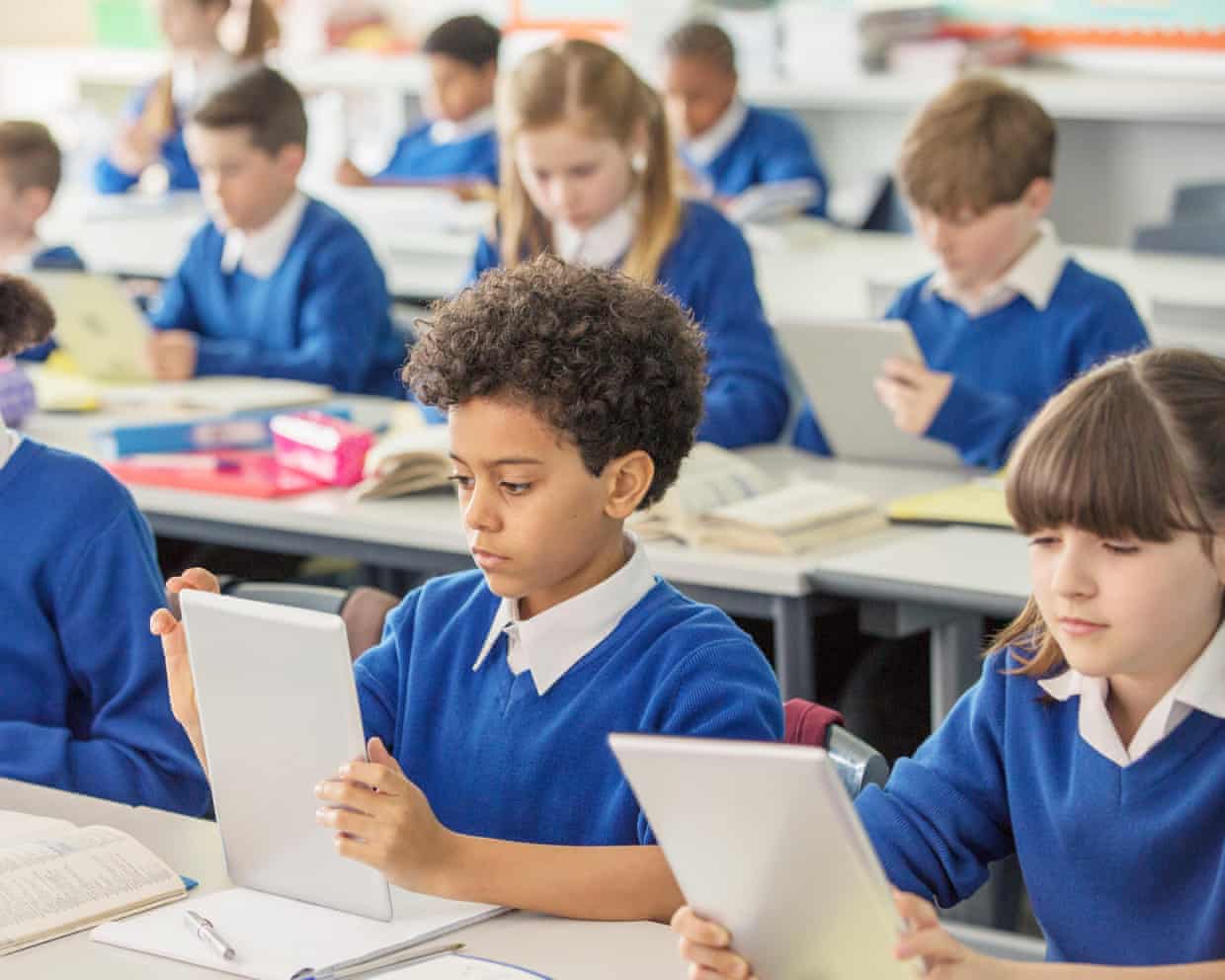
What good is a social media ban when screens are rife in classrooms? | Letters

AI-generated news should carry ‘nutrition’ labels, thinktank says