Fifteen years after Steve Jobs, Tim Cook leaves a dramatically different Apple
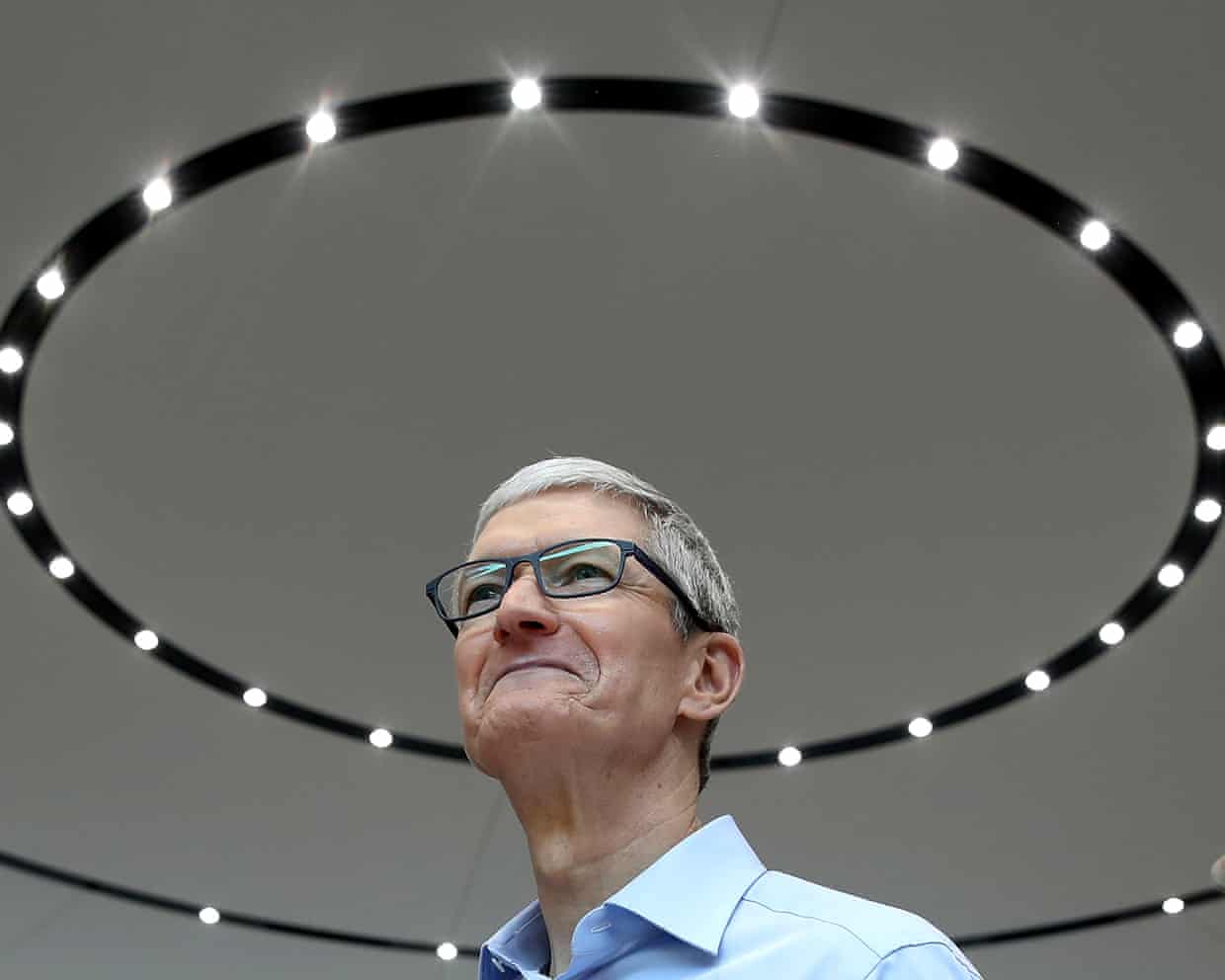
After 15 years, Tim Cook is stepping down as Apple’s top executive.At age 65, he leaves behind a hardware juggernaut that, under his leadership, brought about a global smartphone revolution and transformed Apple into one of the most profitable publicly traded companies in history.With a reputation for logistical management, Cook first joined Apple in 1998, overseeing its worldwide sales and operations.In 2009, he temporarily began running day-to-day operations when the company’s legendary co-founder, Steve Jobs, took medical leave due to complications from pancreatic cancer.In 2011, just a few months before Jobs’s death, Cook took over as CEO.
Filling Jobs’s shoes was seen as a tremendous task, but company observers say that despite a more subdued demeanor, especially on stage, Cook met the challenge.“Steve Jobs was never going to be an easy act to follow,” said Dipanjan Chatterjee, a principal analyst for market research firm Forrester.“Yet Tim Cook took Jobs’s legacy and transformed Apple into a durable, resilient financial powerhouse with explosive market-cap growth.”In Apple’s announcement on Monday, Cook said he loves the company “with all of my being” and that leading it was the “greatest privilege of my life”.In a goodbye note specifically to Apple fans, Cook thanked them, saying he feels “a gratitude that I cannot put into words”.
He will stay on as the executive chair of Apple’s board of directors, and John Ternus, 50, the company’s senior-vice president of hardware engineering, will replace Cook as CEO.During his tenure, Cook made the already-successful tech hardware giant nearly untouchable by its competitors.He carried Jobs’s enthusiasm for well-designed, high-end consumer tech products and oversaw the explosive growth of the iPhone, iPad, and Mac computer lines, as well as the introduction of the Apple Watch and AirPods headphones.The company also waded into services while he was in charge, including Apple Pay, Apple TV and Apple Music, weaving together a network of devices with its proprietary operating system software, including macOS and iOS.Under Cook’s leadership, Apple became the first publicly traded company to reach a valuation of $1tn – ballooning from $350bn in 2011 to $4tn today.
“After a lot of initial questions about an operations guy becoming CEO, Tim Cook unquestionably brought Apple into a new era that was driven by his vision to build a connected ecosystem of billions of devices,” said Bob O’Donnell, the president and chief analyst of Technalysis Research.“He didn’t need to know exactly what products were required, but he did understand the interconnectedness of it all and that, ultimately, is what brought Apple to where it is today.”The Apple that Cook took over in 2011 was a different company from the behemoth the world is familiar with today.In the years before Jobs’s death, the two men and other executives worked together to put a financially struggling company back on its feet after Apple nearly faced bankruptcy in the late 1990s.Jobs was the face of the reinvention, which brought flashy live product announcements where hordes of Apple enthusiasts would jam into convention centers to see the unveiling of the company’s new electronics.
Jobs would pace back-and-forth on the stage, in his signature black turtleneck tucked into blue jeans, while suspensefully extolling the wonders of Apple’s products.The hype hit a frenzy in 2007, when Jobs introduced the first iPhone saying: “Every once in a while, a revolutionary product comes along that changes everything,” calling it a “breakthrough internet communications device”.The crowd whooped and hollered.By the time Cook took the helm, the iPhone had taken off in popularity along with many other devices.Jobs had introduced the iPad the year before.
While Cook became the host of the live product announcements, which have continued to be a mainstay for Apple’s branding and showcasing, he didn’t exude the same visionary charisma as Jobs.Cook would have to contend with comparisons to the late co-founder and his glamorous keynotes for his entire term as CEO.Throughout Cook’s tenure, he also oversaw some missteps.Apple has been slow to invest in generative artificial intelligence and integrate the technology into its products, something shareholders have been clamoring for.And there have been hardware misses, including the lackluster $3,500 Vision Pro mixed reality headset, a possibly delayed folding smartphone that could have a “crease” problem, and a scuttled self-driving car project that cost the company about $10bn.
For the most part, however, Cook has continued to do what he started under Jobs – methodically building up the company’s market share and profitability and working to safeguard it from volatility.In that sense, he’s overseen Apple go from a disruptive and innovative Silicon Valley startup to a financially secure heavyweight that habitually delivers what an ever-growing number of consumers worldwide expect.“While Cook has kept Apple’s growth trajectory moving at a steady clip, he has not overseen a step-change innovation that would reset Apple’s competitive position for the next two decades, as Jobs did with the iPhone,” Chatterjee said.“Cook’s legacy will be defined by steady, disciplined operational stewardship–proof that a company can be more than just exciting and visionary; it can also be immensely valuable to all its stakeholders.”
V&A East Storehouse and Norwich Castle among finalists for museum of the year
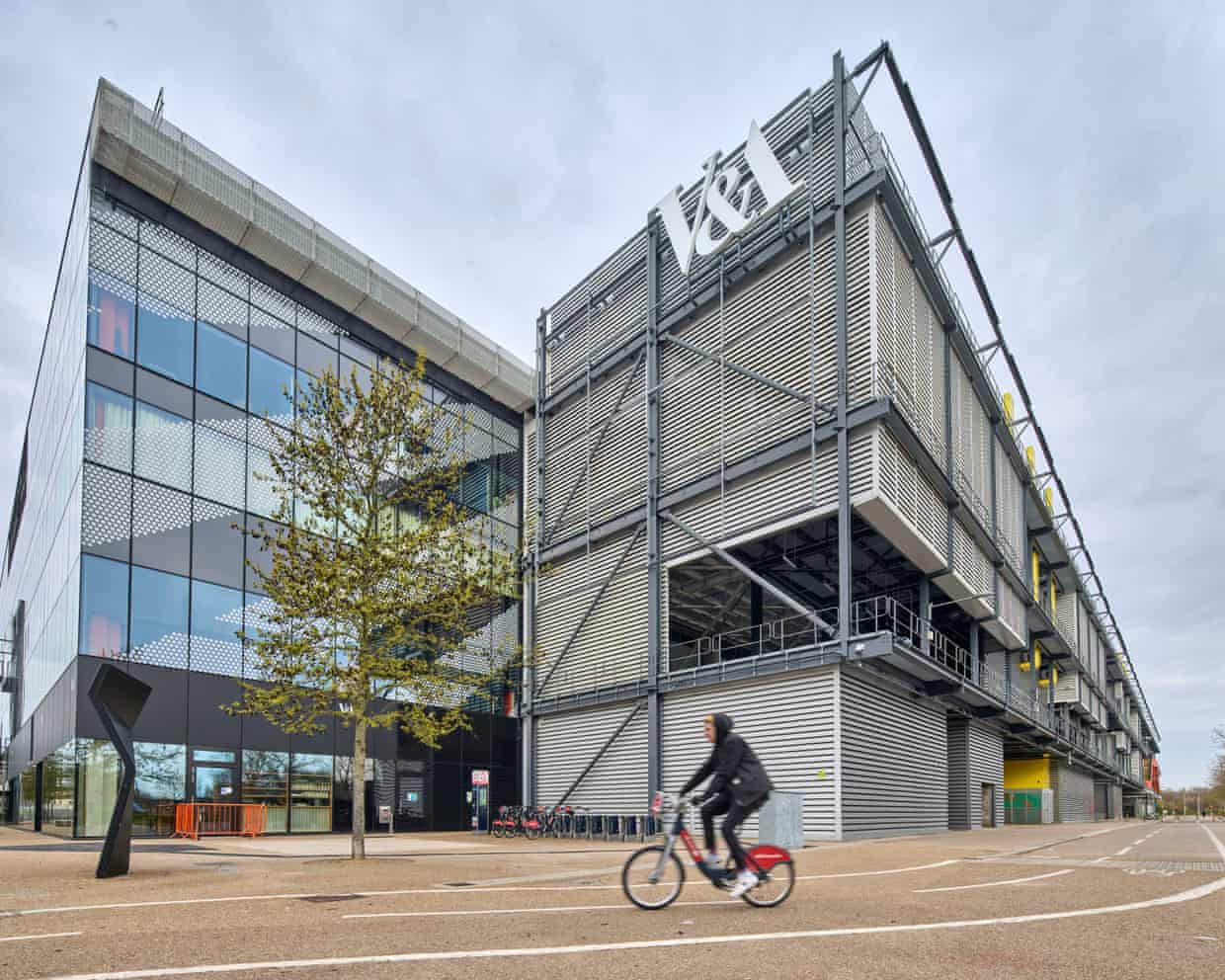
The V&A East Storehouse, the National Gallery and an accessible castle in Norwich are among the contenders for this year’s Art Fund museum of the year award, the most prestigious UK prize in the sector.The annual prize offers the winner £120,000, with £20,000 going to each of the other finalists, who the Art Fund’s director, Jenny Waldman, said had all “innovated in different ways”.This year’s list is dominated by some of the biggest names in the cultural sector that have undergone big refurbishments or invested in significant new outposts, such as the V&A’s East Storehouse, which will be seen by many as a frontrunner.Based in the Olympic Park in Stratford, east London, the space aims to reimagine what a storeroom can be, with partitions removed so visitors can see “and breathe the same air” as the objects. Waldman said the V&A Storehouse, which opened in spring 2025 at a cost of £65m, had broken the boundaries of what a store could be
Letter: Sir Neil Cossons obituary
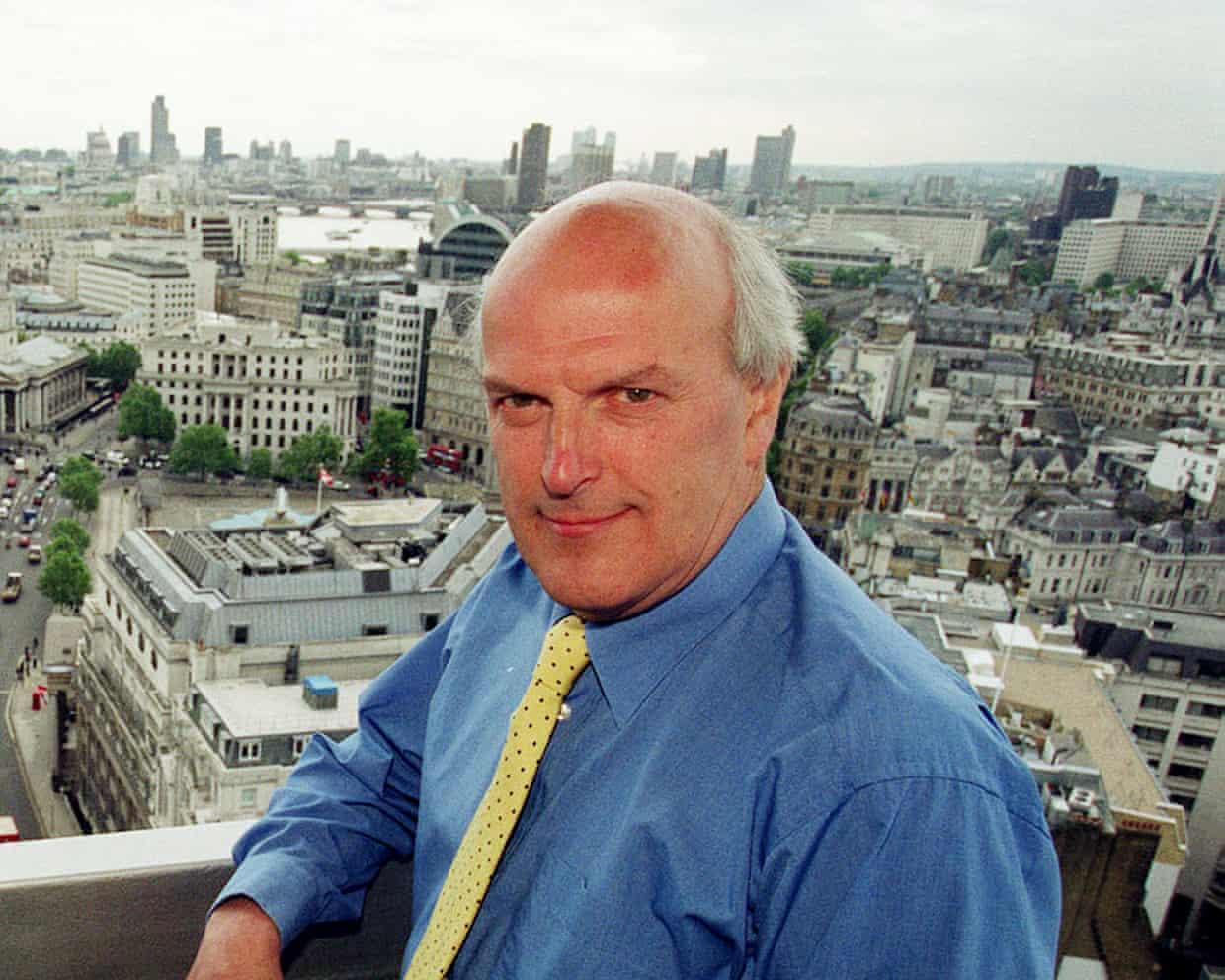
In 1971, Neil Cossons and I were on the staff of Liverpool Museum, and he invited me to accompany him on a visit to Ironbridge Gorge in Shropshire. We admired Blists Hill furnace, the bridge, the surrounding buildings and their setting, and shortly afterwards he became its director.The appeal it had as a monument to the industrial revolution lay in it being a complete entity. Many other site-based museums rely on translocating buildings, often into a replicated local landscape. History occurs in places, and Neil knew that raising one’s gaze from the built artefacts to the landscape enables understanding: preserving the place was crucial
‘Women want to experience pleasure’: how the female gaze caught the attention of film, TV and fiction
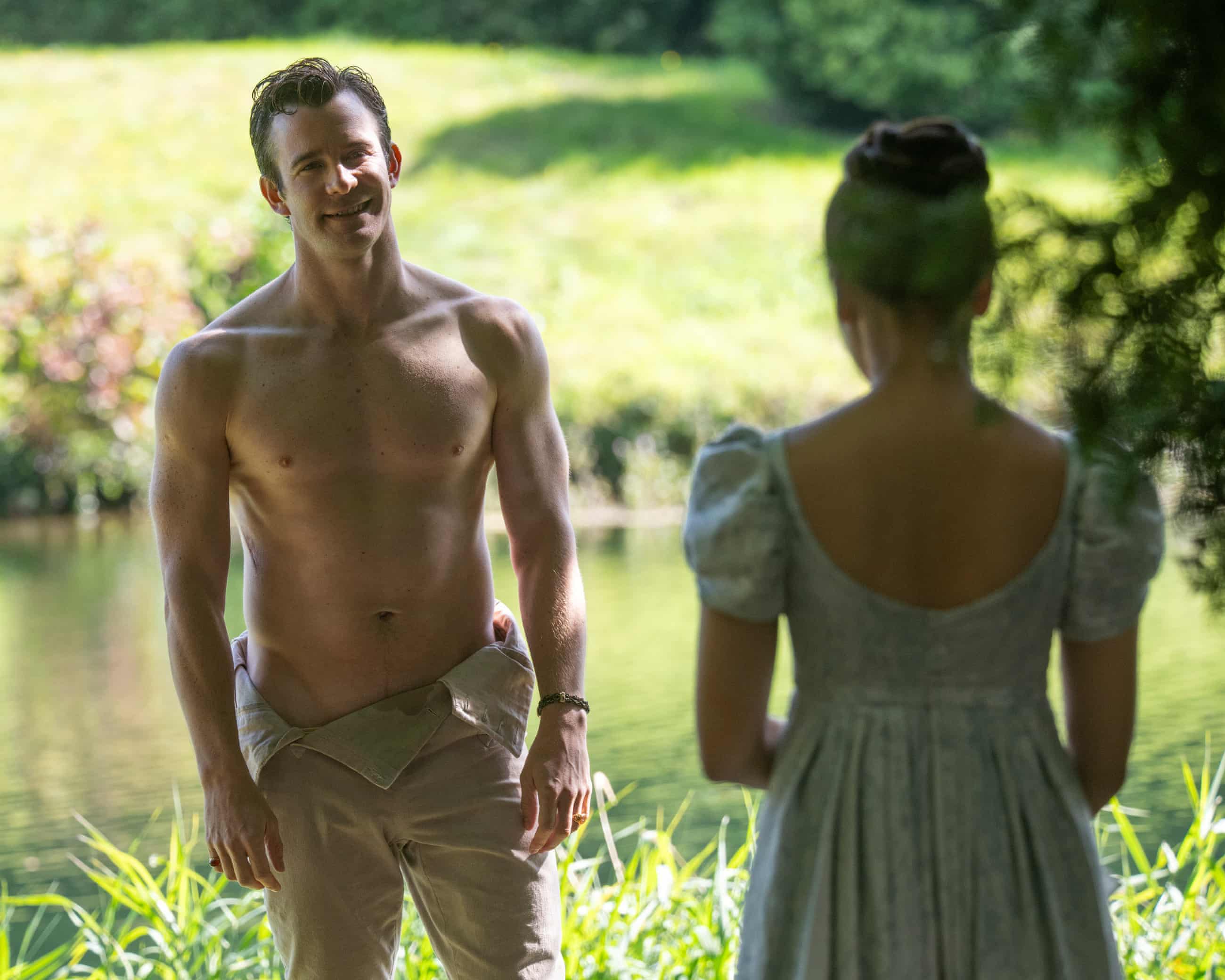
From passionate romantasy novels to premium television dramas, culture is bringing the agency, desires and interior lives of women to the fore. It’s proving good for business, but is this a permanent revolution?Do you voraciously read the pages of steamy romantasy bestsellers by Sarah J Maas or Rebecca Yarros? Or flood your group chat with breathless recaps of the latest goings-on in TV series such as Heated Rivalry or Bridgerton? Or even immerse yourself in the divisive and challenging cinematic worlds of Emerald Fennell? If so, you surely can’t have failed to notice that in pop culture, the female gaze – storytelling that highlights the meandering, textured, sublimely messy inner worlds and wants of women – is enjoying an explosion.On TV, you can see it everywhere, in the interior lives and desires taken up by Big Little Lies, Sirens or Reese Witherspoon and Kerry Washington’s Little Fires Everywhere. Romantasy harbours it in the shape of powerful maidens and sex in fae (fairy) realms, while Fennell’s Wuthering Heights and Promising Young Woman are marketed with the promise of converting women’s experiences into dark beauty on the big screen.A shift, a moment or a commercial juggernaut? That depends how deeply you look

Yann Martel: ‘I hate the rich people of this world – of which I’m one, because of Life of Pi’
Your novels Life of Pi, Beatrice and Virgil, and The High Mountains of Portugal all feature animals in starring roles. If you could be any animal, which would it be, and why?A sloth, because it has a peaceful, long life. Or maybe a koala. They both look like stoners. A sloth just hangs there in its tree, it sleeps 22 hours a day – or maybe it’s meditating

The Guide #239: Two successful seasons in, The Pitt has resuscitated the medical drama
After a wait more interminable than most spells in an A&E reception area, medical-drama-of-the-moment The Pitt finally made it on to UK screens last month, via the arrival of streaming service HBO Max, and just about everyone I know has spent the following weeks hoovering it up. Some, in fact, are already up to speed with its second season (the finale aired last night on US TV) and so are trying very, very hard not to blurt out major plot points at the office tea point/on public transport/in an actual hospital waiting room – we’re in a post-spoiler age, remember.I’ve been a little bit slower off the mark – mainly because it took so long to figure out if I actually had access to HBO Max as part of my bafflingly arcane Sky TV package – but I’m racing through it now, and so am ready to share the same observations that everyone else made weeks, or in the case of the US, a full year ago. The main one being: how did not one TV producer have the idea to mash together ER and 24 before? It was right there, staring you all in the face! (Jed Mercurio, whose forgotten 2015 medical drama, Critical, also had a real-time element, might have a finger raised in objection at this point.)Beyond The Pitt’s formal innovation (each season follows, to the second, a 15-hour shift at an under-resourced teaching hospital in Pittsburgh), what’s striking is how familiar it feels

Winners and judges out of pocket as £20,000 writing awards appear to have closed
A competition for new writers that promised a £20,000 prize fund appears to have shut down, leaving winners and judges, including a Booker prize-winning novelist, out of pocket.Established in 2022, the Plaza Prizes last year offered 10 awards that were judged by the “finest poets and writers in the world”.However, some of the judges for the 2025 competition say they were not paid, and a number of winners say they had their entries withdrawn after being accused of using AI to create their work – allegations they strenuously denied.One judge, the 2021 Booker prize winner Damon Galgut, described the competition as a “scam” after he did not get paid for his work judging a fiction section of the annual competition.Anthony Joseph, who won the 2022 TS Eliot poetry prize, also says he was not paid for his work

Gut microbiome can reveal risk of Parkinson’s, scientists say

Trustpilot hosts reviews of illegal casinos, raising concern among MPs

England left with ‘toilet deserts’ as public facilities decline by 14% in a decade

‘A white man’s fantasy’: if we want to rebuild social cohesion, we need to acknowledge where it all started to unravel

‘Labels protect us’: Olivia Nervo wants reproductive coercion to be a standalone offence – she is not alone

Tell us: have you ever been concerned about the behaviour of a child you know?