Steve Borthwick under increasing scrutiny after England lose to Italy for first time

Steve Borthwick’s role is coming under increasing scrutiny after he became the first England head coach to lose to Italy.England will have suffered four championship defeats in the same season for the first time in 50 years if they lose to France in Paris next week and the Borthwick project is coming under the microscope.Among those concerned about the direction of the team, beaten 23-18 by opponents who had lost all 32 of the previous meetings between the countries, is the former British & Irish Lions winger Ugo Monye, a Guardian columnist, who said the result raised significant questions.“The conversation about Borthwick’s future has to start now,” Monye told ITV Sport.“You look at the last couple of weeks.
He gave faith to players before the loss to Ireland – then he rang a load of changes, and that didn’t work.“France are top and tracking pretty well.Scotland are getting better.Italy are getting better.Wales are getting better.
England are on the slide.How do you arrest it? It’s only ever one of two things.It’s the players or the coach.At the moment, I don’t think the potential of the players is being met by the vision of the coach.”The result in Rome also meant England slipped down to sixth in the world rankings but Borthwick has brushed aside questions about his role and said he still believed he could guide his team to a brighter future.
“It is tough right now, we are not hiding away from that fact,” said Borthwick.“We are not where we want to be in terms of results and in terms of performances.“[But] the team’s growth in the last 12 months has been very, very strong and you can see the vision of where the team is going to be and you see the players coming through.Right now this is a tough period but what we will do is learn from it and make sure we are stronger going forward.”Asked directly if he still felt he was the man to steer England to next year’s World Cup, Borthwick replied: “Absolutely,” and pointed out that form can swiftly improve.
“The Six Nations before a World Cup we have seen it before with England teams.Go back to 2018 and the team was in a very good place the following year at the World Cup.“The RFU, myself, Conor O’Shea and Bill Sweeney [the Rugby Football Union’s executive director of performance and chief executive respectively], we speak regularly and discuss the vision of the team going forward.We know the team have accelerated development over the last 12 months and also understanding that right now in this Six Nations there are going to be some tough challenges ahead.We have been very clear in the communication about the long-term vision of this England team.
”Borthwick did concede, however, that England’s discipline needed to improve.“We had seven yellow cards and a red card in four games.Ultimately that period of 60/65 minutes was the key turning point today.I think the team, up to that point, had done a lot of very good things and got themselves into a winning position and looked to be controlling the game very well.“The standard of this competition, the opposition are so good.
If you drop off a couple of per cent for a couple of minutes, then it hurts you and costs you a game.We’ve seen that again today.”Maro Itoje, one of the two players sent to the sin-bin in the second half, was similarly downcast.“It’s obviously disappointing,” the captain said.“It’s on us as players.
We have to wear the performance.This team over the last year has put in good performances.We haven’t recently.We have to face that and get back to work.“We have to figure it out.
If we knew why we wouldn’t be in this position,Teams go through tough periods,We’re in a tough period now,We’re in a results based business and we have to own the result,As captain I take responsibility for that.
”Italy’s captain, Michele Lamaro, praised his side’s resolve and collective spirit.“There are two main turning points.One in the first half when they scored their try.We stuck together when they got momentum and we were a wall.And straight after that we scored after that and the second yellow card.
Imagine the celebrations in that dressing room,I’m not sure there is enough Frascati in all of Rome,”

Has dinner been served with a side of romance? | Brief letters
I can’t be the only person wondering if Dining across the divide (1 March) is possibly resulting in more romantic liaisons than Blind date? Some of them are heartwarming.Ed ClarkeManchester Why all the excitement about a cricket ground within the boundaries of a World Heritage Site (Letters, 27 February)? Derwent Valley Mills has five (viz Cromford Meadows, Ambergate, Belper Meadows, Duffield Meadows and Darley Abbey).Paul EnglishBelper, Derbyshire My anorak has a “funnel” neck (Hiding in plain sight: everyone from Meghan to the Beckhams wants a funnel neck, 27 February). Fortunately, it doesn’t allow rain to cascade through it.Theresa GrahamClevedon, Somerset I was surprised and pleased to see Felicity Cloake’s reference to Farmhouse Fare (How to make the perfect bara brith – recipe, 1 March)
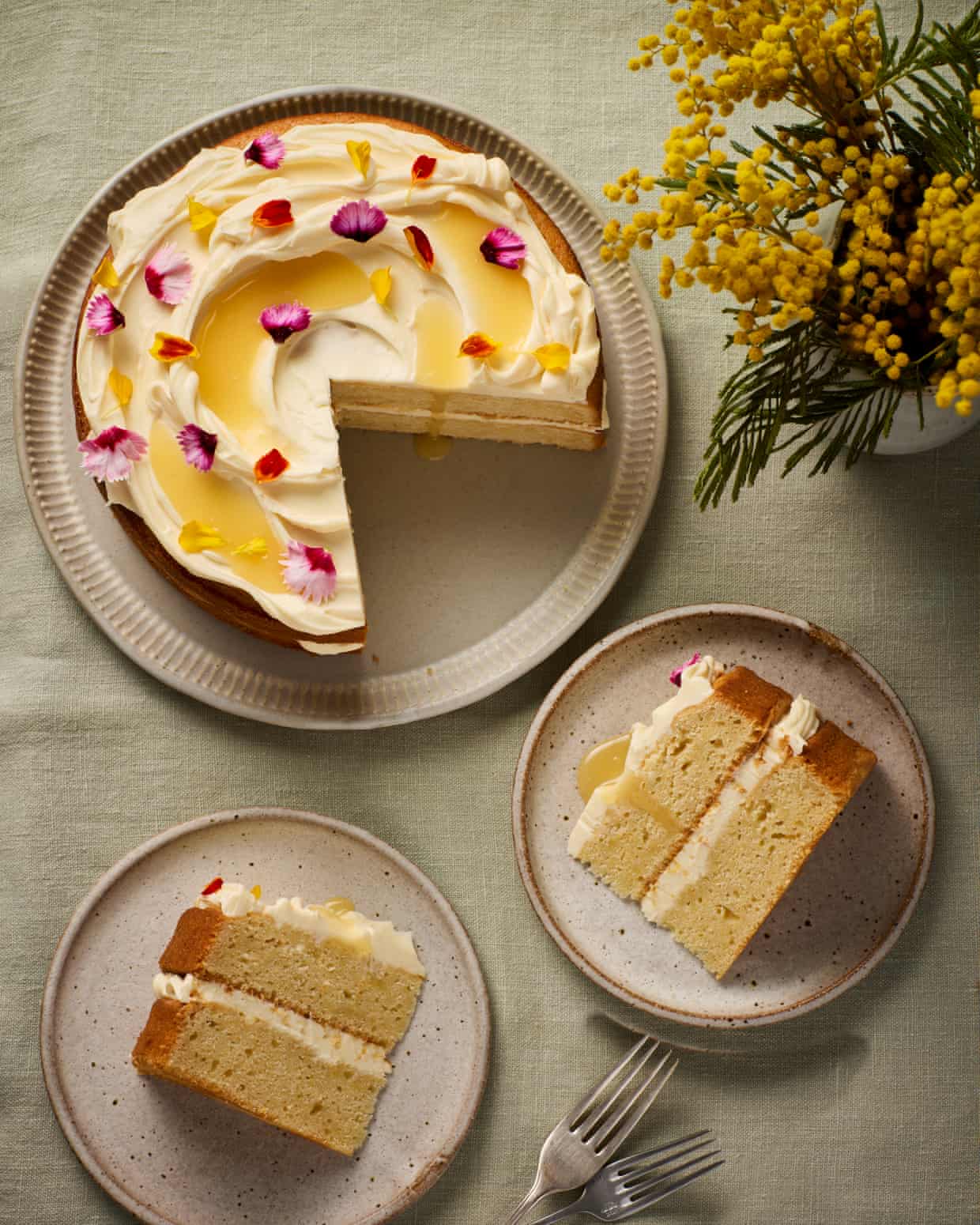
Helen Goh’s recipe for lemon curd layer cake | The sweet spot
This is both simple and celebratory, which in my book makes it just right for Mother’s Day next weekend. It has a fine, tender crumb, which pairs beautifully with the soft, creamy tang of lemon mascarpone, and I use lemon curd in the batter (shop-bought for ease) to bring a particular smoothness and depth of lemon flavour. Finished with a little extra curd and a scattering of edible flowers, it is pretty and unfussy and will hopefully make your own mother’s day.Prep 5 min Cook 1 hr Serves 8-10330g plain flour 2½ tsp baking powder ½ tsp fine sea salt 225g room-temperature unsalted butter225g caster sugar Finely grated zest of 2 lemons 3 large eggs, at room temperature160g lemon curd 250ml whole milk Small edible flowers, to decorateFor the lemon mascarpone 250g lemon curd, plus extra to decorate250g mascarponeHeat the oven to 180C (160C fan)/350F/gas 4 and line the base and sides of two 20cm round cake tins with baking paper.Sift the flour, baking powder and salt into a medium bowl
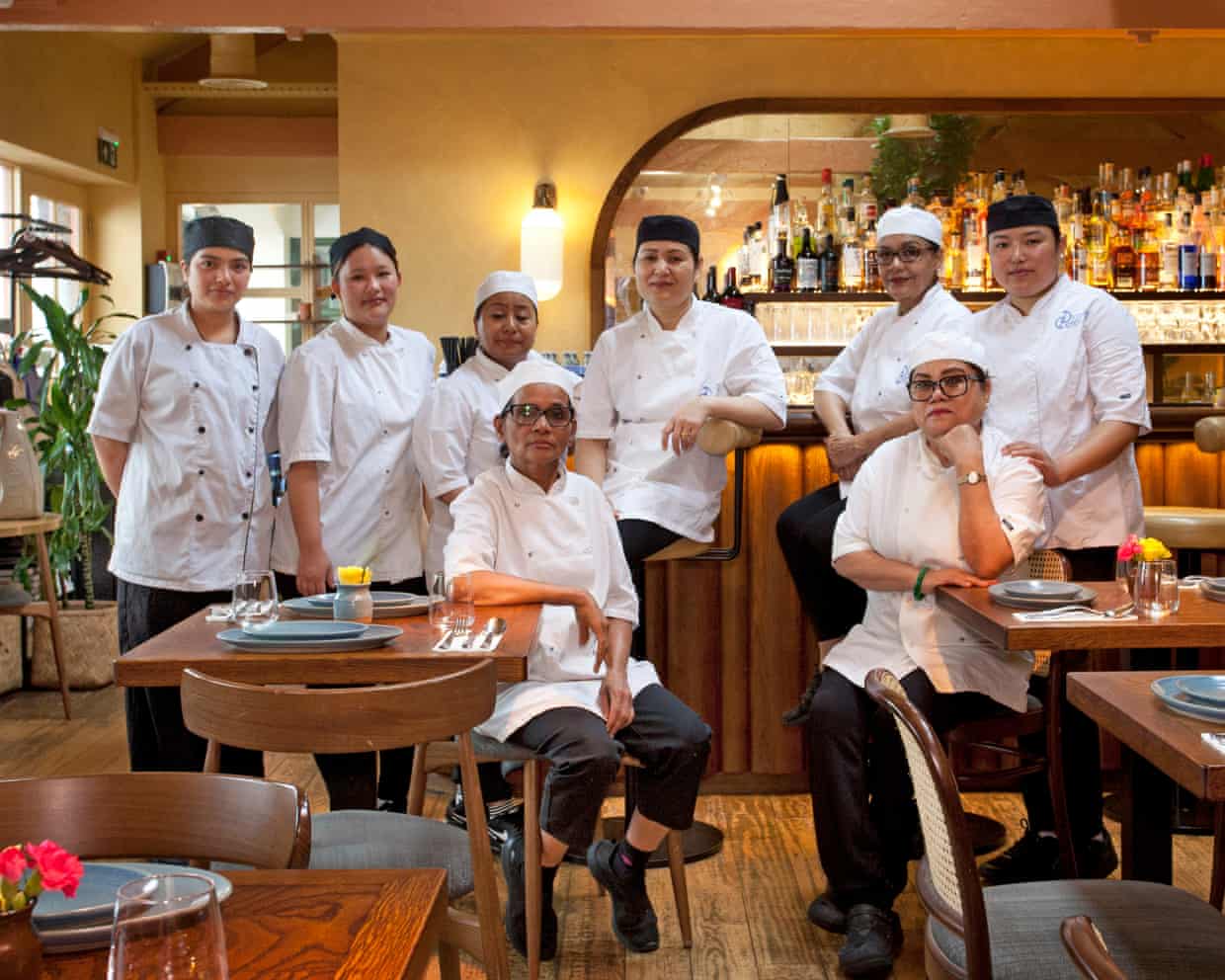
Women built, and still shape, our culinary culture every day
On 8 March each year, the calendar lights up: dinners celebrating women, panel talks, articles and online events amplifying female voices. The mood on International Women’s Day is joyful, the conversations energised and it feels as if the world is finally paying attention. But then 9 March arrives. Do the celebrations stop? Do we tuck away the banners with the last of the desserts? When the events conclude, are women no longer worth celebrating? The sad truth is that many International Women’s Day events can feel like lip service.Less so in the food world – or at least in our corner of it

The future is rosy for English red wines
When did you last buy a bottle of English red wine? Chances are, you never have. Though increasingly available on the high street – Ocado and Waitrose Cellar both stock a couple – reds grown in Blighty have struggled to shift a reputation for being overpriced: the vast majority still cost £15-25 a bottle, which is well outside what most people might consider “everyday drinking”.The Guardian’s journalism is independent. We will earn a commission if you buy something through an affiliate link. Learn more
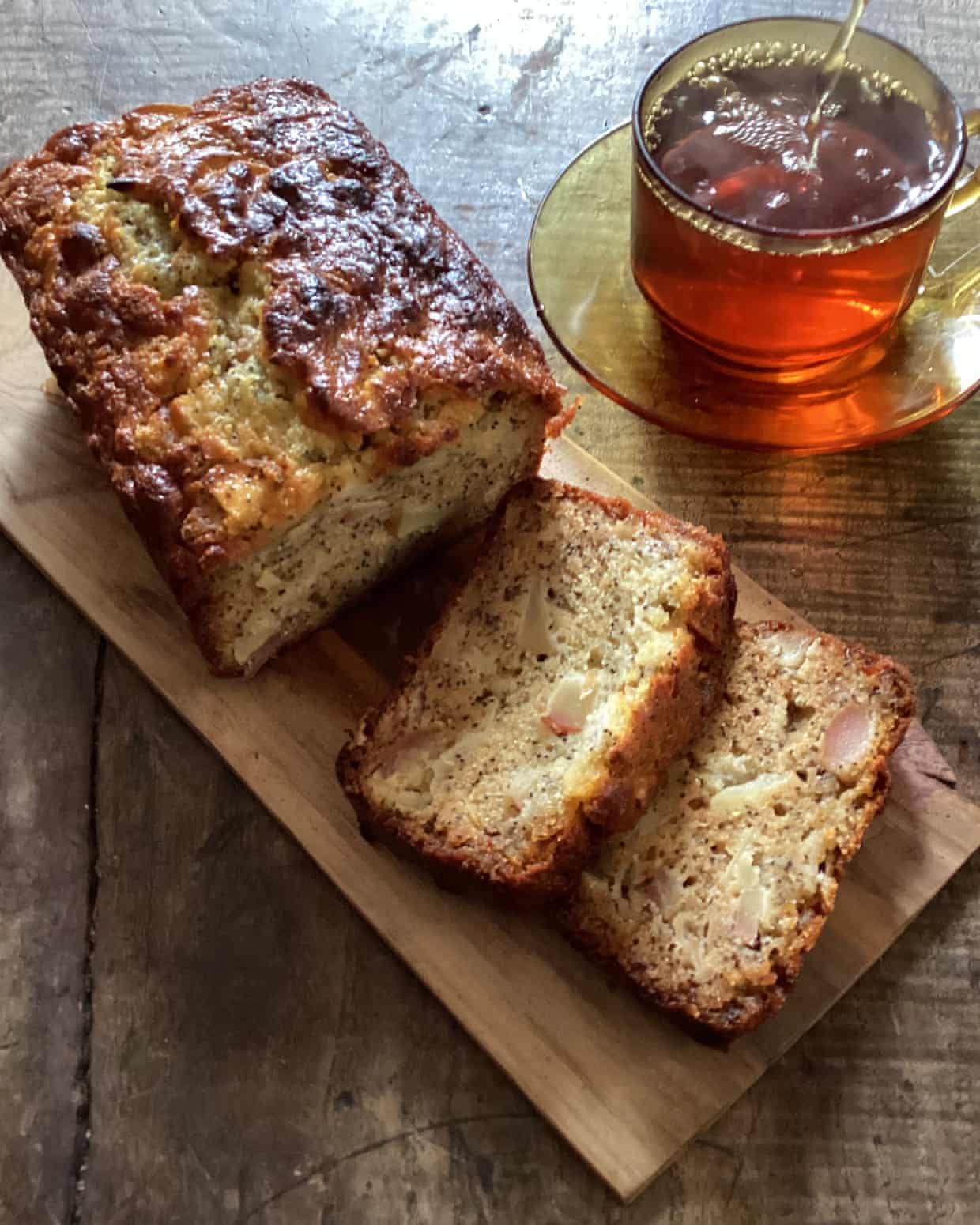
Rachel Roddy’s recipe for apple, honey and poppy seed cake | A kitchen in Rome
Honey is, among other things, a successful embalming agent. It is also a humectant, which isn’t an eager cyborg, but one of many short-chained organic compounds that are hygroscopic, meaning they attract and hold water, which in turn prevents hardening and encourages softness. Other hardworking humectants are glycerine, which is what keeps face creams creamy and hydrating, and sorbitol, which ensures toothpaste can be squeezed and smeared all over the sink and on the mirror. Honey, though, is the humectant that’s most suitable for this week’s recipe: a one-bowl, everyday cake inspired by my neighbour’s Polish honey cake, miodownik, combined with the tortino di mele e papavero (apple and poppy seed cake) enjoyed at a station bar in Bolzano.Not only does honey keep the cake moist, its sweetness comes largely from fructose, which is naturally sweeter than refined sugar, so the perception of sweetness is much greater even when less is added

My whey: dairy milk back on menu as protein boom cuts demand for plant-based alternatives
Gabriel Morrison hadn’t touched dairy milk for a decade until he read the ingredients label on his cheap carton of oat milk.“It’s [so much] canola oil and you imagine that in your glass, and imagine discovering that much olive oil, you’re like, that’s actually really gross,” he says.“I was just like, ‘ooft, I should stop this’.”The 28-year-old cinematographer had exclusively drunk soy, then almond, then oat milks since 2015 but had started worrying about processed foods – despite expert reassurance.In early 2025, with his housemate already buying cheaper dairy, he gave the old classic another look

G7 to discuss release of emergency oil reserves as price tops $100

Iran war drives oil prices above $100 a barrel for first time since 2022

Why has the Iran war sparked fears of stagflation for the global economy?

Average UK office attendance ‘settling’ at highest level since before Covid

Ending UK customs relief on low-value imports could push up prices, BCC says

Britain’s job market ‘floundering’ as companies remain cautious about hiring