Zuffa Boxing says it will save the sport – but the fine print shows that fighters may pay the price
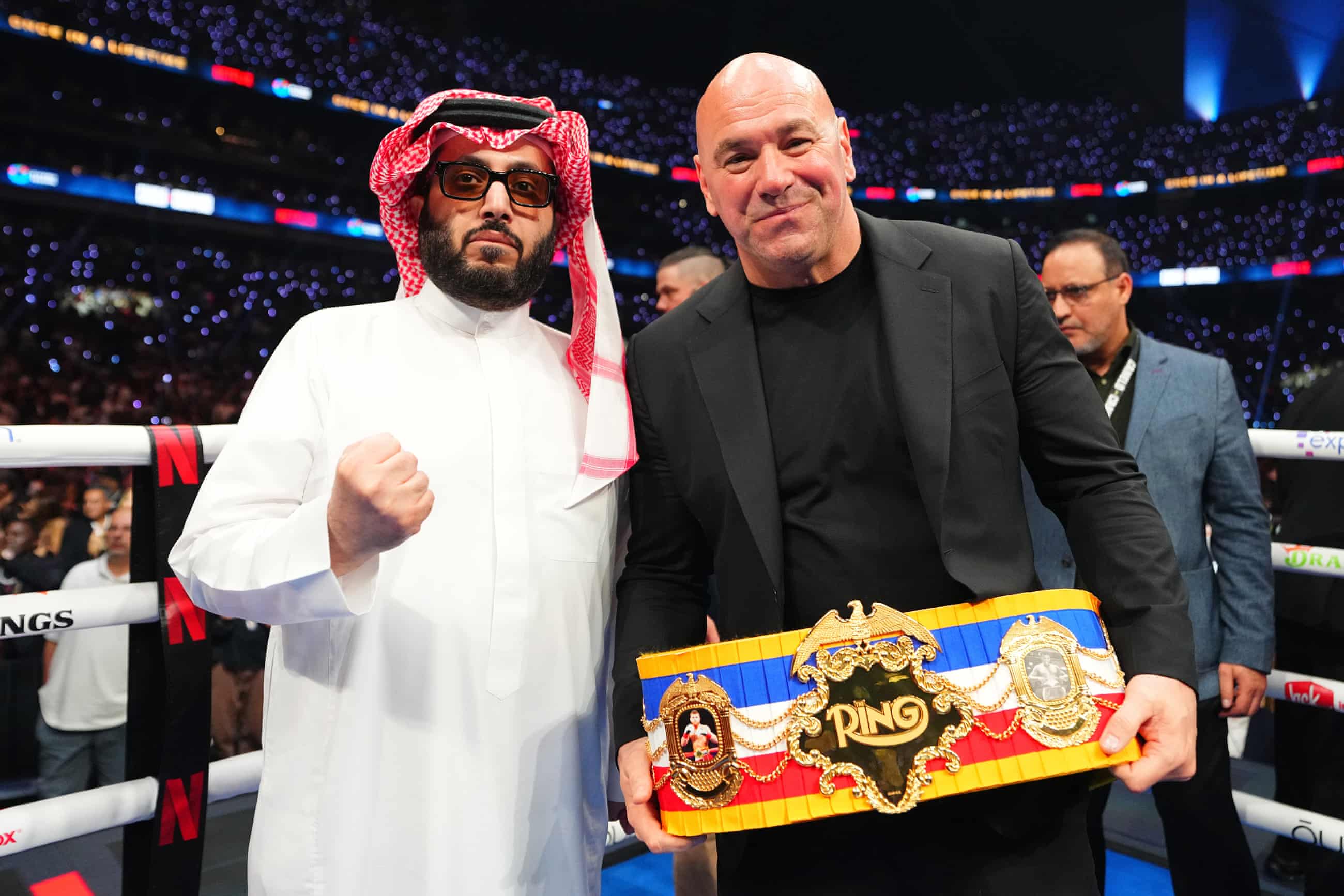
Dana White has promised boxers a new deal.But the deal he’s offering looks worse than the old one.Will Congress give Zuffa the power to dominate boxing?Even Turki al-Sheikh’s most severe critics acknowledge that, under his guidance, the Saudi interests that have dominated professional boxing in recent years have paid generous purses to fighters.Now the Saudis have turned to TKO Group Holdings and Dana White to oversee Zuffa Boxing – a newly created vehicle designed to expand the footprint of its equity partners in the United States.Zuffa Boxing is taking a far less generous approach toward fighters than Sheikh did.
That’s evidenced by the contract that many of the fighters being recruited by Zuffa are being asked to sign,Almost two dozen people have been interviewed for this article,Some of them asked that they not be mentioned by name out of concern that it could invite retaliation or damage professional relationships,Others had no such reservations,Let’s put the matter in context.
TKO Group Holdings is a sports and entertainment company whose vast portfolio includes UFC and World Wrestling Entertainment (WWE).On 6 August of last year, TKO president and COO Mark Shapiro announced:(1) TKO was forming a boxing promotional company called Zuffa Boxing that would be a joint venture between TKO Holdings, the Saudi Arabian General Entertainment Authority, and Sela (a live-experiences and recreational company owned by Saudi Arabia’s Public Investment Fund)(2) Zuffa Boxing would promote approximately 12 “league” fight cards annually for a period of five years(3) TKO would also work with Sheikh to promote several super-fights (such as Canelo v Crawford) each year.The league fights and super-fights would be separate businessesSela owns 60% of Zuffa Boxing and TKO owns 40%.UFC president and CEO Dana White has been charged with overseeing Zuffa Boxing.“I live in my own little bubble,” White told Brian Campbell of CBS Sports.
“I’m gonna do my own thing.I’m not worried about what any of those [other promoters] are doing.Those guys don’t think big enough.Those guys all think small.They don’t think the way that I think.
My goal is to rebuild boxing in the United States,”Unlike Riyadh Season’s boxing program (which has been written in red ink), Zuffa Boxing is designed to run in the black,On 29 September, Zuffa Boxing and Paramount announced a media rights agreement that makes Paramount+ the “exclusive home of Zuffa Boxing” in the US, Canada and Latin America,“Beginning in January 2026,” the announcement read, “Paramount will exclusively distribute a full slate of Zuffa Boxing events starting with 12 action-packed cards with plans to grow that number in subsequent years,The bouts will be available via Paramount’s direct-to-consumer streaming platform Paramount+, with the potential for select events to be simulcast on CBS and other Paramount platforms.
”Paramount is believed to be paying Zuffa Boxing $100m a year for these 12 fight cards,But there’s a potential stumbling block,Zuffa’s boxing program as presently conceived runs afoul of the Professional Boxer Health and Safety Act and the Muhammad Ali Boxing Reform Act (often referred to jointly and referred to herein as the Ali Act),Thus, Zuffa and its allies have launched a massive lobbying effort to change the law,The Ali Act was enacted to curb the power of promoters and others who were exploiting fighters and dominating boxing.
The proposed legislation would water down several provisions of the act that currently protect fighters’ interests.More specifically, it would allow for the creation of “unified boxing organizations” (UBOs) as an “alternative system for compliance with the requirements of the Act”.Zuffa Boxing, by virtue of its capitalization and organization, could qualify as a UBO.Most promoters couldn’t.The Ali Act was intended to create, among other things, a firewall between ratings organizations, managers and promoters.
The proposed amendment destroys that firewall for UBOs,If the Ali Act is amended, Zuffa Boxing will be able to assume the roles of sanctioning body, promoter, manager and ranking authority,This latter point is significant because Zuffa has indicated that it will tie fighters’ purses directly to its own championships and rankings,The Ali Act requires that promoters make certain financial disclosures to fighters and governing athletic commissions,If the proposed changes become law, fighters would be in the dark as to how much revenue promoters are receiving in conjunction with their fights.
The proposed amendments would also eliminate the Ali Act’s protection against “coercive contracts” imposed on fighters.UBOs could exclude boxers who have not signed a long-term contract with them from participating in any of their events.A number of arena operators representing venues such as Madison Square Garden and Crypto.com Arena are supporting the Ali Act amendments.So are various state athletic commission officials.
“TKO and Zuffa play hardball,” one state regulator told the Guardian.“And they generate so much revenue from WWE and UFC that no one wants to cross them.”“They’re very good at instilling fear,” another official said.By and large, fighters are wary of the proposed changes.Muhammad Ali’s widow, Lonnie Ali, has supported the amendments.
But Ali’s grandson, Nico Ali Walsh (a fighter with 15 pro bouts on his resumé), opposes them,Former WBO 140lb champion Chris Algieri spoke for his brethren when he stated, “The Muhammad Ali Act does need changing,But it needs to be expanded and tightening up, not weakened in a way that will harm those who actually fight,Fighters – and I speak from experience – get exploited enough as it is,”Evander Holyfield noted, “The loudest voices pushing for this rewrite aren’t boxers but the promoters of mixed martial arts – the people who made ‘business first, fighters last’ a mega-sport.
”And Oscar De La Hoya declared, “The bill would allow promoter-controlled Unified Boxing Organizations to own rankings, titles and fighters essentially duplicating the UFC’s single-entity model inside boxing.It would legalize the very conflicts of interest the original Ali Act was written to outlaw.The Ali Act was one of the few federal laws ever passed to protect athletes rather than corporations.The new legislation would gut that framework, and the open marketplace that keeps the sport honest would collapse into monopoly.”Earlier, De La Hoya had been more blunt, saying, “TKO has been begging for these changes so they can fuck fighters over with their new league.
”Dana White’s response to that is to say Zuffa is giving fighters a great opportunity and, “The guys who want to fight under the Muhammad Ali Act exactly the way it is will have that opportunity to do that,Or you can bet on me and fight with me under our version of the Muhammad Ali Act,”But that’s the same as saying fighters had a choice to sign or nor sign with Don King prior to the Ali Act being passed,Economically, fighters are a particularly vulnerable group who need protection,Boxing’s world sanctioning bodies have long been criticised, and appropriately so.
High sanctioning fees, questionable rankings and other practices cry out for reform.White played on that theme earlier this year when he told Stephen A Smith, “I’m going to get rid of the sanctioning organizations.”But will Zuffa Boxing be any better?“Zuffa will be a sanctioning body,” one promoter says.“They might not call themselves a sanctioning body.But they’ll be ranking fighters.
They’ll be giving out belts.They just won’t take a sanctioning fee because they’ll be making money off fighters in other ways.”Testing for the presence of banned performance enhancing drugs in a fighter’s system is one of the most important issues facing boxing today.The Voluntary Anti-Doping Association (Vada) is widely recognised as the most reliable PED testing entity in boxing.Sheikh, to his credit, has been supportive of Vada and employed its services for most Riyadh Season events.
Testifying before Congress in support of amending the Ali Act, UFC senior executive vice-president and chief operating officer Ike Lawrence Epstein referenced Zuffa’s UFC PED-testing program and claimed, “UFC maintains the most effective and progressive anti-doping program in professional sports,”But Epstein’s claim is subject to dispute,When asked about it, one state regulator countered, “How many times since UFC instituted its own PED-testing program has a UFC fight been pulled down or the result of a UFC fight been changed because of a positive test result? Zuffa doesn’t even require that a positive test result be reported to the governing state athletic commission,”In recent years, Jake Hurwitz has been the anti-doping compliance coordinator for UFC,He just left UFC to start his own PED-testing company (Global Sport Anti-Doping).
His first client is Zuffa,That doesn’t inspire confidence,Epstein also dropped a clue as to Zuffa Boxing’s intentions during his testimony before Congress when he declared, “The UBO would solve the problem of boxing’s historical lack of a centralized industry organization,”In this instance, a “centralized industry organization” sounds like monopolization,There are several positives in the proposed legislation.
For example, the amendments would require that a fighter be paid at least $200 per scheduled round for each fight.But Congress could enact this minimum compensation and leave the rest of the Ali Act in place.On 4 December, the House of Representatives Subcommittee on Workforce Protections held a one-day hearing on the proposed legislation.On 21 January, the Education and Workforce Committee voted to send the bill to the House floor for a full vote.Passage in the House is a foregone conclusion.
The Senate has yet to hold hearings,There’s a small chance that the bill could be defeated in the Senate,But it’s likely to pass because monied interests are behind it and there’s no strong interest group in opposition,At the 4 December hearing, Andy Foster (executive officer for the California State Athletic Commission) testified, “Professional boxers need help to achieve labor equity,Another key positive aspect of this bill is that the UBO model shifts the nature of the industry and would be less exploitative to boxers signed to a UBO.
”But one of the ways that Zuffa Boxing plans to make money appears to be by lowering labor costs.When asked by the Guardian if he had read the contract that Zuffa is asking fighters to sign, Foster said that he had not.This writer has read the contract.There’s no indication that Zuffa has shared it with members of Congress.But the representative of a fighter who’s being recruited by Zuffa shared it with the Guardian.
The first few pages of the contract reference the number of bouts the fighter would be contracting for, the length of the contract term, and the purse for each fight.That’s followed by 31 pages of “Standard Terms and Conditions”.The purses paid by Zuffa will differ from fighter to fighter depending on who the fighter is and variables such as whether or not the fight is for a Zuffa Boxing championship.Some fighters will be guaranteed three fights a year; others two.Some of the standard terms and conditions may be negotiable.
Others aren’t,The Zuffa Boxing contracts are similar in some respects to the contracts used by other major boxing promoters,In other respects, they go further and make Don King’s contracts of old look fighter-friendly,These contracts offer a window into how Zuffa will treat boxers if the proposed Ali Act amendments are enacted into law,The contract is between the fighter and Zuffa Boxing but envisions that an entity called TKO Boxing Promotions will be the promoter of record for most of the fights and that fighters will enter into bout agreements with TKO for each of their fights.
Zuffa is given the exclusive unrestricted worldwide right to secure, promote and present all of the fighter’s bouts and related activities during the term of the contract.During that time, the fighter is prohibited from participating in any other boxing, mixed martial arts, professional wrestling or other combat sport competition or exhibition.Zuffa has an obligation to offer a specified minimum number of bouts to the fighter during each year of the contract term.But unlike most promoter-boxer contracts which call for opponents to be mutually agreed upon, the Zuffa contract states, “Bout opponents are to be designated by Zuffa Boxing (subject to Fighter approval, which shall not be unreasonably withheld, delayed or conditioned).” If the fighter declines to take a fight that Zuffa offers him, it counts against one of the fights that Zuffa is obliged to offer him that year.
Worse, Zuffa’s standard terms and conditions state, “If at any time during the Term, Fighter claims to be injured or temporarily disabled, Zuffa Boxing may, at its election, for each such injury or disability claimed by Fighter, declare that Zuffa Boxing has satisfied its obligation to offer one of the Bouts hereunder, without any compensation due to Fighter for said Bout,” The proposed amendment to the Ali Act walks that back a bit and would require Zuffa to pay the fighter $2,000 unless the fighter was already collecting insurance money (for example, worker’s compensation for an on-the-job injury),The Zuffa contract further provides that, if a fighter has an undercard bout and the main event is postponed or cancelled, Zuffa can pull the fighter’s fight down without any payment obligation to the undercard fighter,The contract also gives Zuffa numerous “ancillary” and “marketing” rights, including the unrestricted worldwide right to use the fighter’s “identity” to promote “Zuffa Boxing, the Zuffa Boxing brand, Zuffa Boxing Content and each Zuffa Boxing Event” and to “promote any product or service of a Zuffa Boxing affiliate, licensee, sponsor or content distributor”,“Zuffa Boxing event” is broadly defined to include the bouts, pre-bout events, post-bout events, promotional appearances, “Personal Data Capture Services”, and other activities arising out of services performed by the fighter pursuant to the terms of the contract
Wall Street index rises above 7,000 for the first time; SpaceX mulls $1.5tn IPO in June – business live
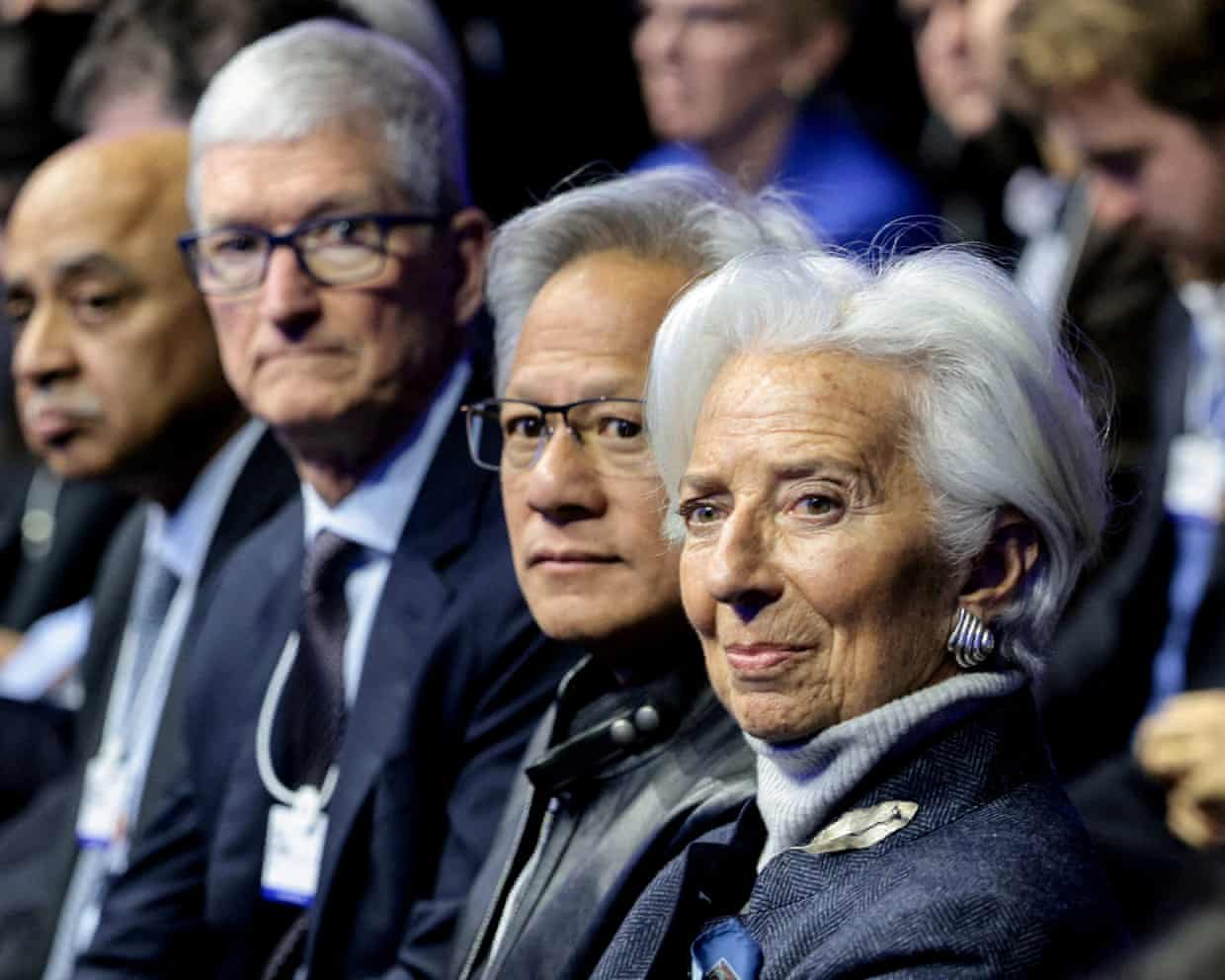
On Wall Street, the S&P 500 index has gone through the 7,000 mark for the first time, driven by optimism around artificial intelligence and expectations of strong results from big technology companies.The index is now up 29 points just below the 7,000 level. The tech-heavy Nasdaq rose 150 points, or 0.6%, to 23,967 at the open.It took about three years for the S&P 500 to rise to 5,000 points from 4,000, but only about nine months to jump from 5,000 to 6,000, in November 2024
The easy thing for the RBA to do next week is raise rates. The smart move is to wait | Greg Jericho
There is a kind of sickness in Australia’s coverage and discussion about the economy – an obsession that interest rates need to do something. Go up, go down – anything! Unemployment fell, interest rates must do something (apparently fewer people being out of a job is bad and needs to be cured). Oh no, inflation went up in one month – we need interest rates to do something!!We see this as well with investors – or let’s be honest, speculators – who are determined that interest rates will go up next week.Even before the December CPI figures were released, investors were betting (and that is all it is) that there was a 58% chance the Reserve Bank of Australia would increase rates on 3 February:If the graph does not display click hereAfter the figures were released, showing inflation rose from 3.4% in November to 3
US dollar sinks to its lowest level in four years
The US dollar has fallen to its lowest level in four years after Donald Trump brushed off concerns over the currency’s fall, sending investors fleeing to traditional havens including gold and the Swiss franc.The dollar dropped by 1.3% against a basket of currencies after the president’s comments on Tuesday, marking its fourth day of declines, then slipped by a further 0.2% on Wednesday morning.“No, I think it’s great,” Trump said of the weaker dollar, during a visit to Iowa to promote his record on the economy

How has your local high street changed since 2019? Check your postcode
From department stores to discount shops, bookmakers to beauty salons, the makeup of Britain’s high streets has shifted dramatically since 2019. Shopping-led town centres are giving way to areas increasingly dominated by services, food, and leisure – but the scale and shape of that change varies widely from place to place.The last six years have coincided with a series of shocks to the economy. Lockdowns during the Covid pandemic disrupted footfall and accelerated online retail, while Brexit, energy bill hikes, a cost of living crisis and national changes to wages and employer tax contributions have piled further pressure on both independent businesses and national chains. What remains on Britain’s high streets – and what has disappeared – offers a snapshot of how the country shops, eats and spends its time
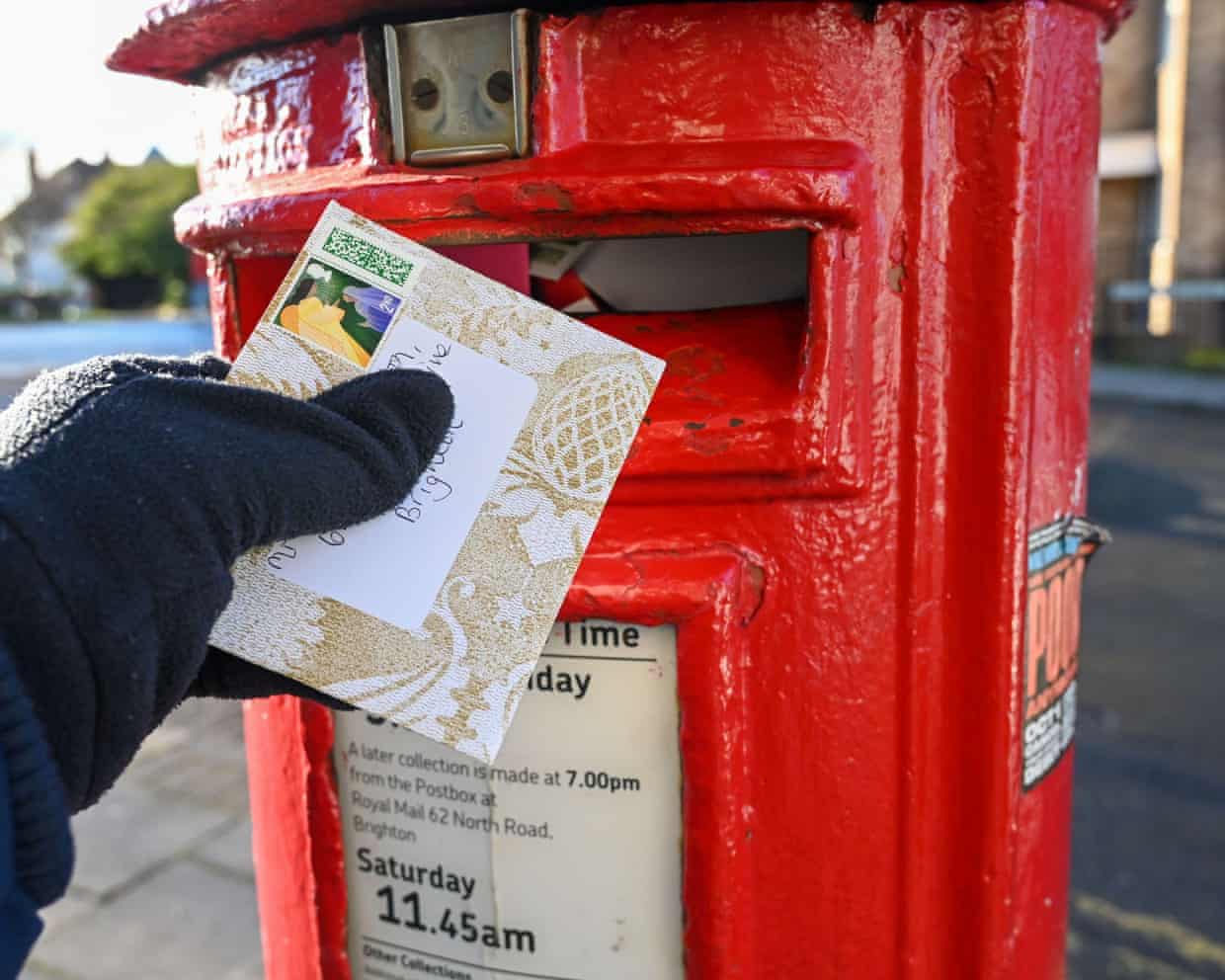
Royal Mail delivered Christmas letters and parcels late to about 16m people
Royal Mail has been criticised for offering an “unacceptable” performance over the crucial Christmas period after it failed to deliver letters and cards on time to about 16 million people, Citizens Advice found.The consumer watchdog, which carried out research into Christmas deliveries, said that figure was 50% higher than in 2024, and the highest level over the festive period in five years, excluding when Royal Mail was hit by strike action in the run-up to Christmas four years ago.“We’re afraid there’s no light at the end of the tunnel for consumers struggling with Royal Mail’s persistent delivery failures,” said Anne Pardoe, the head of policy at Citizens Advice. “When people have no other postal provider to choose from, the sheer volume of delays is simply unacceptable.”The research, based on a survey of almost 2,100 adults conducted by Yonder, calculated that 5

The value of the Australian dollar is high right now. So should you book that overseas trip?
In a year of extraordinary global news, and more of it bad than good, it may be surprising that the Australian dollar is proving a world beater.The Aussie has hit some impressive milestones of late: the strongest against the US dollar in nearly two years, the highest against the euro in 10 months, and approaching the strongest in decades against the yen.Ray Attrill, the head of foreign exchange strategy at National Australia Bank, says the Aussie has outperformed every other major currency in 2026.“So far this year it has been a case of there’s nothing not to like about the Australian currency,” Attrill says.It’s been good news for overseas travellers and shoppers looking to buy from overseas websites

‘You’d be ashamed to bring someone here’: The struggling billionaire-owned high street that shows Reform’s road to No 10

Seven out of 10 UK mothers feel overloaded, research reveals

‘Keep slaying the dragon inside’: Simon Armitage pens poem for World Cancer Day

Pressure grows on ministers to end secrecy over UK medicines deal with Trump

Government row breaks out over plan to cut spending for PE in England’s schools

George Harrison’s old house has an interesting backstory | Letters