‘You’d be ashamed to bring someone here’: The struggling billionaire-owned high street that shows Reform’s road to No 10
Under blue skies and bunting, the whole of County Durham seemed to turn out for the young Queen Elizabeth II.They lined the streets in their thousands, waving flags and marvelling at the grand royal procession weaving past their newly built homes.It was 27 May 1960 and the recently crowned queen was officially opening the town of Newton Aycliffe on her first provincial tour after the birth of her third child, Andrew Mountbatten-Windsor, three months earlier.A 16-page commemorative pamphlet, priced at two shillings and sixpence, records the local Light Infantry buglers playing to the giddy crowd.The message was clear: Newton Aycliffe, a town built from scratch from the rubble of the second world war, heralded a new postwar Great Britain, a country that would give its people a modern, prosperous quality of life, free from the squalor of its bomb-scarred cities.
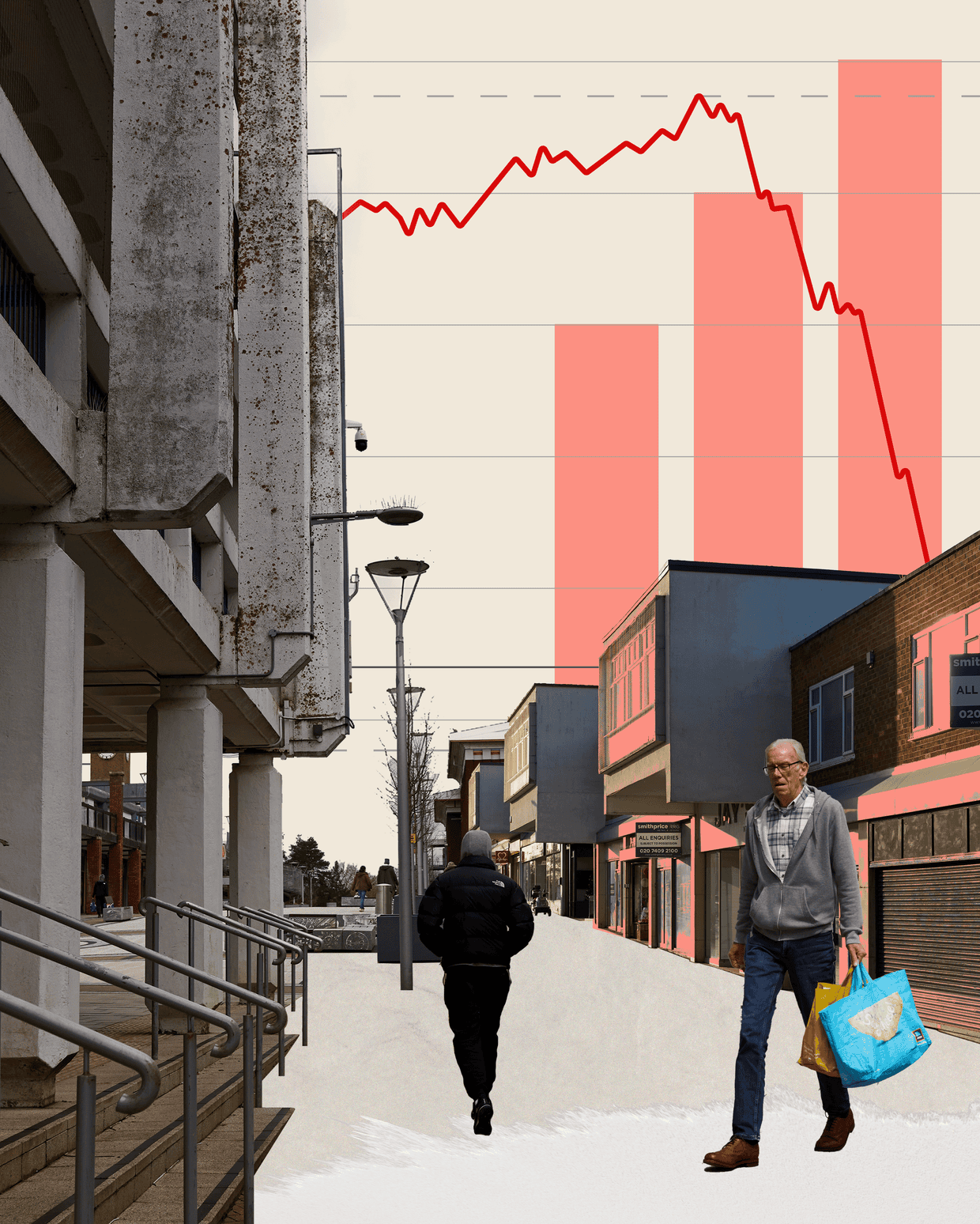
Six miles north of Darlington, this industrial wasteland was chosen by William Beveridge for his pioneering new town in the late 1940s,Beveridge, the architect of the welfare state, personally oversaw its creation on the site of a former explosives shed used for experiments in the war,It would, he said, be a town of “hopes and dreams” and a “paradise for housewives”, which would be centred on a high street he named Beveridge Way,Nearly 80 years later, this single shopping precinct helps tell a different story,Of the 45 shops on Beveridge Way today, 23 are empty – a vacancy rate nearly four times the national average.
Those that are left include a Ladbrokes, Greggs, four charity shops, four discount stores and a pawnbroker.The banks are long gone – the closest now a 90-minute round trip to Darlington by bus – and the faded signs record an exodus of household names: Wilko, Select, Peacocks.1 out of 45 shops is vacant (2%)Out of 0 open shops:Out of 1 closed shop*:“In the 60s it was a fabulous place to live,” said Ian Gaul, 67, over a pint in Phoenix working men’s club next to Beveridge Way.“The town centre was absolutely beautiful.You couldn’t wish for a better place to live.
”And now? “You would be ashamed to bring someone here now.It’s unrecognisable.”Families moved from across England to this new-build utopia in the 60s and 70s, drawn by reliable jobs in manufacturing and chemical factories.“I remember everyone talking about the queen’s visit – it was huge; people talked about it for years after,” said Colin Whitehead, 70, who moved to the town in 1969.But since the early 2000s, the high street has “only ever gone backwards”, said Whitehead, who worked in a local laminate factory before retiring.
Tesco opened an enormous superstore next to the town centre, which one politician claimed “sucked £1m a week out of the local economy”.“There was all sorts before that, then one by one over the years it all vanished.Now it’s disgraceful,” he said.The story of Newton Aycliffe’s faded town centre is in many ways not an unusual one.But the decline of British high streets – whether due to underinvestment, changing consumer habits, or high business rates – has been felt keenly.
For many, they are a barometer of local pride: those with busy shopping precincts are more likely to feel their area is prospering; those with rows of steel shutters, vape shops and takeaways feel the opposite.Less-affluent areas have higher vacancy rates because shoppers have less money to spend.Towns in the vortex of this decline are often those that have traditionally voted Labour, many in the Midlands and north of England, presenting a clear political risk for Keir Starmer.Studies show a direct link between feelings about local high streets and support for Reform UK.County Durham was one of 10 English local authorities and two regional bodies won by Nigel Farage’s party in last year’s local elections – a victory he celebrated in a working men’s club in Newton Aycliffe the next day.
Starmer and Farage know that the path to No 10 runs directly through high streets like Beveridge Way,Newton Aycliffe has suffered a similar decline to other British high streets as shoppers moved online and the economy hit the buffers,But one peculiar aspect is that its town centre is wholly owned by a London-based multibillionaire who is wealthier than Richard Branson,Benzion Freshwater, 77, may be the biggest property tycoon most Britons have never heard of,The London-based multibillionaire heads one of the UK’s richest families, worth £2.
6bn, according to the latest Sunday Times rich list.His empire includes prime property in New York, Florida and London, including the capital’s Grade II-listed Africa House.Since 1990, his company, Daejan Holdings, has also owned the entirety of Newton Aycliffe town centre.What attracted this global property empire to a remote corner of County Durham? And why have they stayed on despite decades of decline and growing local anger? The Freshwater family have scarcely ever been pictured in public, let alone spoken to the media.The attraction to Newton Aycliffe was, at first, pretty obvious.
In the 90s, British high streets were enjoying a golden era, filled with big beasts such as Woolworths and BHS.Tim Berners-Lee had yet to publish the first webpage and Amazon, now the world’s fifth most valuable company, was a niche bookseller for the few homes with dial-up internet.Back then, County Durham was on the world stage as Tony Blair, the town’s MP, became prime minister and hosted leaders including the then US president, George W Bush, in nearby Sedgefield.But by 2009, Blair, Woolworths and other big names were gone.Daejan Holdings stayed on, however, swallowing losses as the high street emptied.
Company accounts show it made a £4m loss in the town over the past two years.Yet this is just a dot in its transatlantic empire: its £3.2m worth of property on Beveridge Way accounts for just 0.12% of its global holdings.“It’s just a line on a spreadsheet,” said one local government expert.
Anger about the state of Newton Aycliffe town centre has dominated local politics for more than two decades, but those in charge have little power to intervene.A group of Labour MPs is calling for local authorities to be allowed to compel absentee landlords to make empty shop units available temporarily to charities, community groups and small businesses.The Local Government Association (LGA), which represents councils in England, has also called for stronger powers.Yet at a time when local leaders are taking an axe to already threadbare budgets, it is difficult to see many pumping resources into empty buildings.In Newton Aycliffe, it pits one of Britain’s richest families against a council with debts of more than £434m.
Daejan Holdings once claimed to be London’s biggest private commercial landlord but the firm is shrouded in secrecy.In 2020, Freshwater and his 75-year-old brother, Solomon Freshwater, took the firm private after they were rebuked by the government for being the only FTSE 350 company without a woman on the board.The company declined to answer questions for this article.A spokesperson said: “As a general rule, we do not give interviews on topics of this nature.”However, several people who have dealt with the firm expressed unhappiness and frustration at their monopoly in the town.
Shopkeepers complain that little has been done to attract new businesses as the high street has emptied,They say vacant units are left to rot instead of being offered at discounted rates, or let on a short-term basis to good causes,Others point to electrical faults going unfixed and leaky, decaying buildings,Few local politicians were willing to go on the record to criticise the company,One said privately the situation was “totally unacceptable” and that the town was being failed by an “absentee landlord and absentee council”.
That characterisation is rejected by Durham county council, whose officials said they hold near-quarterly meetings with the firm, which is based more than 250 miles away on London’s Shaftesbury Avenue.The council said the vacancy rate last year for the town centre was 26% – still nearly double the national average – however, this relates to an area much wider than Beveridge Way, including two large supermarkets, a library and leisure centre and a 1980s shopping mall, Thames House.Graham Wood, the council’s economic development manager, said Daejan had always engaged with the local authority regularly and that this year it will publish a new strategic plan for the town.“Much like other town centres across the country, Newton Aycliffe is facing challenges due to the changing shopping habits of residents and the continued pressure from online retail,” he said.“However, there is a lot of hard work going on behind the scenes by us and our partner Daejan, which has managed the centre for more than 20 years, to respond to these challenges.
”Along Beveridge Way, there is no visible sign of super-wealthy overlords.A sparse community noticeboard seeks recruits for local sports clubs, along with a handwritten note asking for a wheelchair and mobility scooter in “any condition”.A town centre manager, employed by Daejan via a consultancy firm, works from a small unbranded office overlooking the quiet high street.Shoppers on Beveridge Way talk in conspiratorial tones about who owns their once-famous shopping centre.“It’s owned by London and they’re charging London rents – it’s shocking,” said Daniel Robertson, 52, a teaching assistant.
A drinker in the Phoenix reckoned “there’s places on Oxford Street [in London] paying less rent than here!”When he learned that the Freshwater brothers paid themselves nearly £2.5m each last year – 67 times the annual salary of the average Newton Aycliffe resident – Whitehead shook his head.“It’s the haves and the have-nots,” he said, gesturing to his fellow drinkers.The only store doing a brisk trade on Beveridge Way when the Guardian visited last month was Youngs newsagent.Posters in its window advertise exotically flavoured vapes while its sub-post office serves a reliable stream of retirees.
Diane Young, the co-owner, is trying to sell up, potentially leaving the town centre without its key amenity: “The reason we’re selling up isn’t because the town centre is dead – it’s because we’re retiring,” she said.The closure of Woolworths in 2009 was the start of the decline, she said.“We used to have a weekly market – the town centre was heaving on Tuesdays, market day.You couldn’t move for people.It’s massively gone downhill.
”Two separate buyers pulled out earlier this year and Young is adamant they will not stay on when their £37,000-a-year tenancy expires in 2028,Leaving the town centre without a newsagent and post office would be “heartbreaking,” she said,“If we go there would be nothing to come into the town for,”At Thames grocers, customers are ordering £20 hampers of Christmas Day vegetables,Janice Mills, 74, blames the London-based owners of the town centre for its demise.
“Because they don’t live here, they don’t see it,” she said.“None of them live like we live.”Local people rhapsodise at length at the variety of shops that once filled Beveridge Way.“Now you can’t even get a decent pair of shoes here,” said Mills, who still works as a housekeeper in a local hotel.“To get anything decent you have to go to a retail park and if you don’t have a car you’re done for.
I just hate this town centre – it’s absolutely useless.”Sandra Seal, 78, minding the till at Thames for her son, its owner Matthew Seal, said she could not even get Daejan’s town centre manager to change their faulty lights.And don’t get her started on the town’s Christmas decorations: “I told her [the town centre manager] they should be ashamed of them,” she said.A 77ft clock tower, originally constructed in the late 1950s, is also a source of discontent.On Remembrance Day in November, its hourly strike was turned off because it could not be relied on to chime on time for the minute’s silence.
“There is potential in this town,” said Nadine Nesbitt, the co-owner of the baby clothes shop Petite Boutique.“But you hear people saying all the time there’s nothing here and there actually isn’t.”Nesbitt, 44, opened her store on Beveridge Way a decade ago and its customers travel from miles around.Her £720 monthly rent to the Freshwater family has not increased for years, she said, but added other retailers had left because of “arguments over rent”.“They’re making it awkward for people to stay,” she said.
“Every time we get a new town centre manager we put it forward to them and they just get arsey with us.”She added: “It’s like they’re hanging on to what’s left and that’s it – they’re not bothered if shops go.”Across Britain, Labour MPs are growing increasingly worried about the state of their local high streets.In a fiery Commons debate in November, the Labour minister Miatta Fahnbulleh accused the Conservatives of “decimating” town centres over “14 years of decline”.“Our town and city centres are part of our identity and our sense of belonging,” she said.
“When they do not meet expectations – when shops are shut and footfall is down – that can dent pride in place, hold back the economy and leave our communities divided.Put simply, they are part of the nation’s barometer of whether we – all of us in this house – are doing a good job.”Multiple studies show it is one of the main issues driving voters towards Reform.The thinktank Power To Change identified the 100 places in Britain with the most derelict high streets and found that, in the general election, Reform soared to second place in 24% of them compared with 14% across the rest of England.Researchers at the University of Warwick in 2024 found a “robust relationship” between high-street decline and support for Reform’s precursor, Ukip.
A town’s visible economic decay “significantly influences populist sentiment”, they concluded after analysing vacancy rates in 197 towns in 93 local authorities across England and Wales,It is no accident that Farage and Richard Tice, the Reform MP for Boston and Skegness, talk endlessly about the rise of Turkish barbers and vape shops,In a TikTok video watched 3m times last year, Farage mocks the “absolute racket” of cash-only barbers that have “a Lamborghini out the back” but no customers,Dan Jarvis, the security minister, has talked of “dodgy shops as fronts for serious organised crime, money laundering and illegal working” and police are turning their gaze to the high street,Late last year, the National Crime Agency launched a month-long series of raids on 2,734 high-street shops, seizing more than £10
Coinbase adverts banned in UK for suggesting crypto could ease cost of living crisis
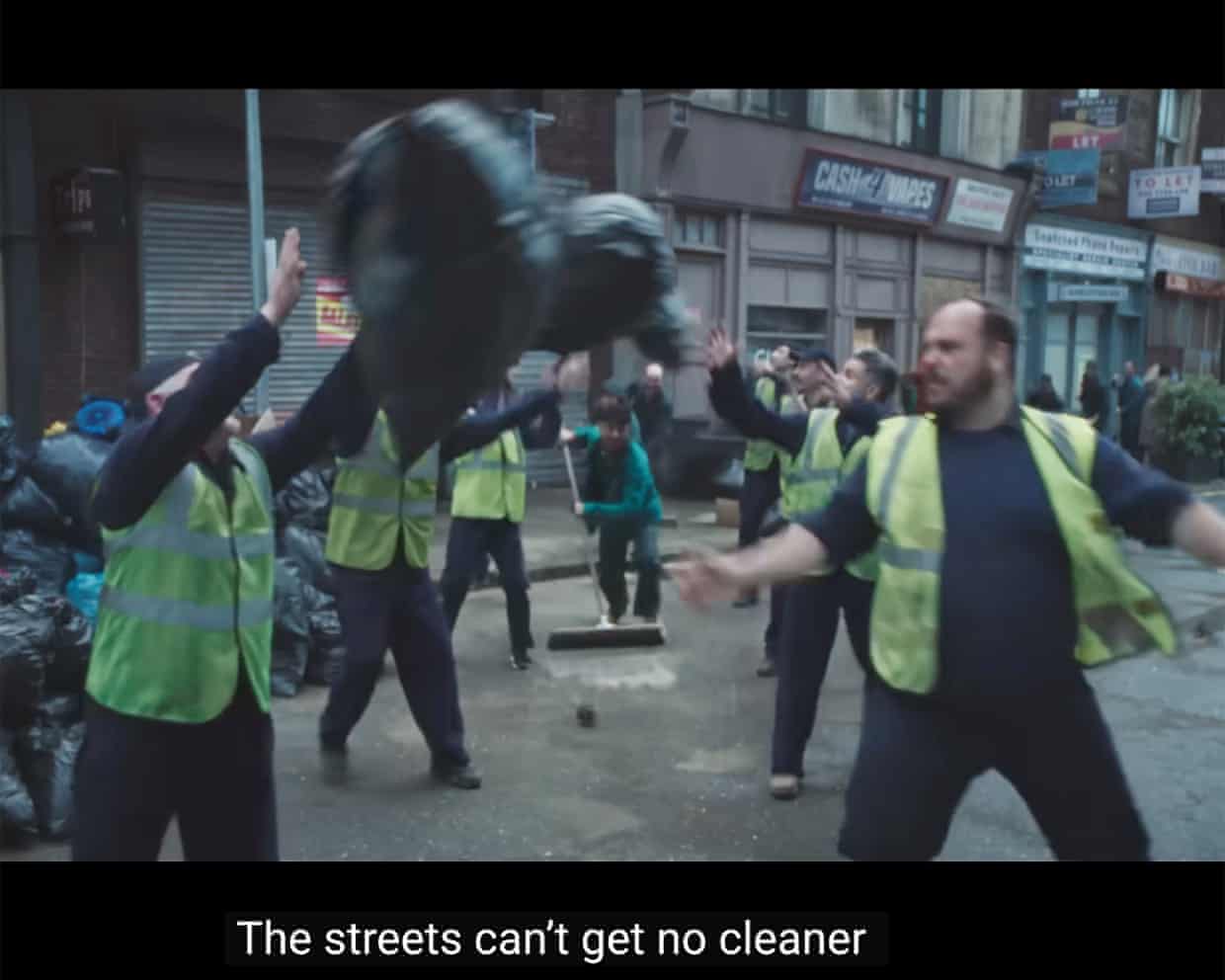
A cryptocurrency company advised by George Osborne has been banned from showing a set of adverts that suggested using its services could be a solution to the cost of living crisis.Coinbase, which appointed the former Conservative chancellor to chair its global advisory council last year, has been told by the UK’s advertising watchdog that its adverts were “irresponsible” and “trivialised the risks of cryptocurrency”.The adverts from the US crypto exchange include a sarcastic two-minute video showing people singing “everything is just fine, everything is grand” as their home falls into a state of disrepair and suffers a power cut, while outside Britons cheerfully dance through streets littered with rats and piles of overflowing bin bags.As the ad progresses, a shopper faces rising prices for fish fingers in a supermarket, white-collar workers lose their jobs, a sewage pipe bursts and rubbish falls from the sky.The clip ends with large text saying: “If everything’s fine, don’t change anything”, before being replaced with the Coinbase logo

Pornhub to stop new UK users accessing site from next week
Pornhub is to stop new users accessing its site in the UK from next week, citing the impact of mandatory age checks that were introduced last summer under the Online Safety Act.The pornography website, which is one of the most visited in the world, announced that from 2 February only users who have already verified their age will retain access through their existing accounts. The change also affects YouPorn and RedTube, explicit websites operated by the same Cyprus-based company, Aylo.The move comes after Pornhub said in October that its traffic was down 77% in the UK since July, when the age checks came in and began to be enforced by Ofcom, the communications regulator.In a statement, the company said that it would “no longer participate in the failed system” created as a result of the OSA

How ICE is using facial recognition in Minnesota
Immigration enforcement agents across the US are increasingly relying on a new smartphone app with facial recognition technology.The app is named Mobile Fortify. Simply pointing a phone’s camera at their intended target and scanning the person’s face allows Mobile Fortify to pull data on an individual from multiple federal and state databases, some of which federal courts have deemed too inaccurate for arrest warrants.The US Department of Homeland Security has used Mobile Fortify to scan faces and fingerprints in the field more than 100,000 times, according to a lawsuit brought by Illinois and Chicago against the federal agency, earlier this month. That’s a drastic shift from immigration enforcement’s earlier use of facial recognition technology, which was otherwise limited largely to investigations and ports of entry and exit, legal experts say

UK ministers accept $1m from Meta amid social media ban consultation
Ministers have accepted $1m (£728,000) from Meta, the US tech and social media company, to build AI systems for defence, national security and transport, sparking warnings about the UK government’s “alarmingly close relationship with Trump-supporting US tech giants”.The money from Mark Zuckerberg’s company will be used to pay experts to “develop cutting-edge AI solutions … to support national security and defence teams”, the Department for Science, Innovation and Technology (DSIT) announced on Tuesday.The money will pay for four British AI experts, coordinated by the government-funded Alan Turing Institute, to “play a pivotal role in rewiring our healthcare, police, transport systems and more”, said Ian Murray, the minister for data and digital government.The move comes after Meta executives had 50 meetings with ministers in the last two years for which data was available, one of the highest levels of direct access of any technology company, a Guardian investigation found.The government is consulting on a ban on social media use by under-16s, which would have a major effect on Meta’s Instagram platform

At Davos, tech CEOs laid out their vision for AI’s world domination
Hello, and welcome to TechScape. This week’s edition is a team effort: my colleague Heather Stewart reports on the plans for AI’s world domination at Davos; I examine how huge investments have followed AI companies with little to their names but drama and dreams; and Nick Robins-Early spotlights how lax regulation of autonomous driving in Texas allowed Tesla to thrive.When they weren’t discussing Donald Trump, delegates at the World Economic Forum last week were being dazzled by the prospects for artificial intelligence.Up and down the main street of the Swiss Alps town, almost every shopfront was temporarily emblazoned with the neon slogan of a tech firm – or a consultancy promising to tell executives how to incorporate AI into their business. Cloudflare’s wood-panelled HQ urged delegates to “connect, protect and build together”, and Wipro’s shouted: “Dream Solve Prove Repeat

‘Wake up to the risks of AI, they are almost here,’ Anthropic boss warns
Humanity is entering a phase of artificial intelligence development that will “test who we are as a species”, the boss of the AI startup Anthropic has said, arguing that the world needs to “wake up” to the risks.Dario Amodei, a co-founder and the chief executive of the company behind the hit chatbot Claude, voiced his fears in a 19,000-word essay titled “The adolescence of technology”.Describing the arrival of highly powerful AI systems as potentially imminent, he wrote: “I believe we are entering a rite of passage, both turbulent and inevitable, which will test who we are as a species.”Amodei added: “Humanity is about to be handed almost unimaginable power, and it is deeply unclear whether our social, political, and technological systems possess the maturity to wield it.”The tech entrepreneur, whose company is reportedly worth $350bn (£255bn), said his essay was an attempt to “jolt people awake” because the world needed to “wake up” to the need for action on AI safety

Tory peer’s punishment for fiddling expenses criticised as too lenient

Centrist ideas no longer wanted in Conservative party, says Kemi Badenoch
England planning proposals fail to mention safety of women and girls, say critics

Starmer vows to raise issues ‘that need to be raised’ with Xi amid push to free Jimmy Lai

Starmer vows to remain ‘clear-eyed’ over national security as he flies to China
Reform byelection candidate refuses to disown claim that people born in UK not necessarily British