Brendon McCullum keen to carry on with England but wants to ‘steer the ship’
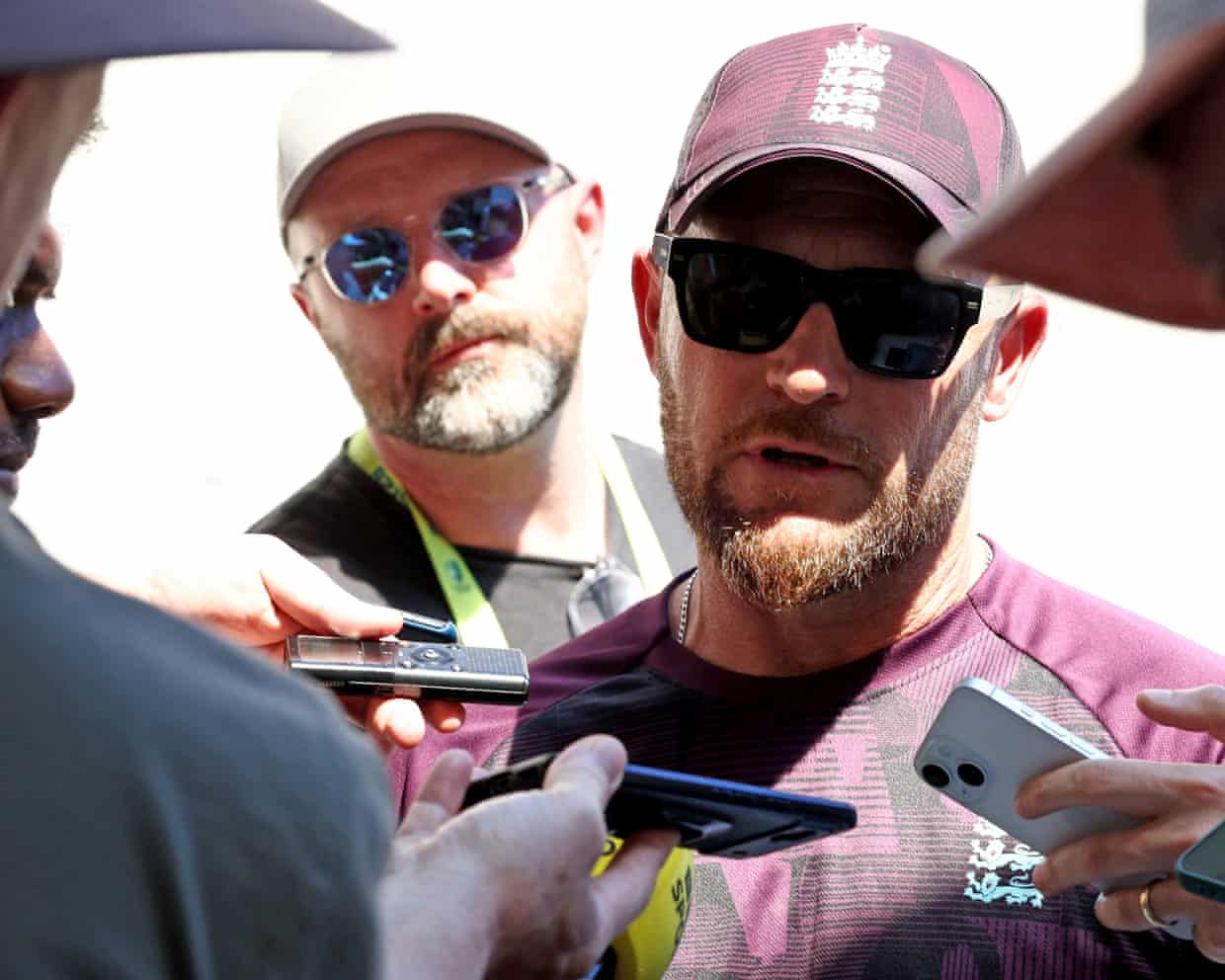
At the end of a sorry Ashes loss capped off by news of Harry Brook’s involvement in a late-night incident two months earlier, Brendon McCullum set out his position as England head coach: if his wings are clipped and his ethos compromised then “maybe there is someone better” to do the role.The caveat is key here.McCullum is keen to continue and having held talks with Richard Thompson and Richard Gould, chair and chief executive respectively of the England and Wales Cricket Board, he appears set to – at least for the white-ball tour of Sri Lanka that begins in less than a fortnight.But an ECB review into the Ashes tour is already under way and will run in parallel to this, from which recommendations for the Test set-up will follow.While there is acceptance of mistakes in Australia – at 4-1, how could there not be? – McCullum has limits as regards imposed solutions.
McCullum said: “I think whatever you do in life, you have to have some authenticity and for me as coach, when you’re trying to guide, shepherd and assist players, you need to have influence over how the environment runs.“And [you need] to be in charge of a lot of those decisions that are made when the pressure’s on.So as long as that remains, I’m open to progress, I’m open to evolution and some nipping and tucking.But without being ultimately able to steer the ship, maybe there is someone better.“It depends what changes, right? I have a firm conviction in a lot of my methods.
I’m not against evolution and not against progress,However, you need to stand for something,”While McCullum’s currently pared-back coaching staff is likely to be one area looked into, the team culture under the New Zealander and the team director, Rob Key, is most under the spotlight,And this final press conference from McCullum came before the Telegraph revealed Brook’s £30,000 fine for an altercation with a nightclub bouncer on the preceding tour of New Zealand,Though the incident took place two months earlier, it rather crystallised the image of an unserious set-up that underperformed.
Not that it was news to McCullum or Key.Nor does anyone involved come out of it that well.Brook was clearly under the belief it was fine to be out late and drinking the night before captaining his country in a one-day international, less than a year into the job.And the ECB hierarchy now marking McCullum’s work all thought a hushed-up punishment was the way to go.Brook handed himself in, swallowed the maximum fine, but all parties were naive to think it wouldn’t resurface.
“Half our guys don’t have a drink to be honest,” said McCullum, when the question about the team’s relationship with alcohol was asked more broadly.“They’ll have a couple of beers every now and again.I think people do that in most walks of life.”Players have to live their lives given the time on the road – and perceptions are often driven by results – but it is hard to square McCullum’s words with Brook’s error.And despite no reports of overt wrongdoing, the same probably goes for the mid-tour break in Noosa – a break Brook happily described as a “belting time” afterwards.
This is only one strand of the review into a tour on which England’s players did not give themselves – or were not given – the best chance to succeed.Ben Stokes appears in the strongest position to continue as Test captain and wants McCullum alongside him.But it was also hard not to discern a divergence in their thinking as Australia set off on an 11-day march to a series win.Asked if they had been on the same page given some of the mixed messaging, McCullum replied: “The good thing about having the relationship we’ve got is that we always have robust conversations.It doesn’t always mean he’s always going to agree with my stuff, or I’ll agree with some of his.
But we commit and support one another.That’s how I think leadership works.“We’ve just got to keep challenging ourselves in certain ways, always racking our brains to ensure we’re sitting on the right tactics.Sometimes the language we use is kind of the same but in different words.But it comes from the same place.
Ultimately we have the same vision for this team.”In the end, the team bonding that McCullum made central to their approach leading into the Ashes ended up serving solely as a coping mechanism in defeat.Players were seemingly not prepared or up-skilled sufficiently for Australia’s unique challenges.The upshot was some wincingly soft cricket during the clutch moments.Brook, though absurdly gifted, was among the most culpable here, be it his back foot drive in Perth during the crazed hour that tossed away the first Test, or the footwork-devoid thrash at Mitchell Starc during the Gabba day-nighter when the left-armer’s pivotal twilight spell had just begun.
Very soon, the same player will be leading an England team to Sri Lanka and then a T20 World Cup that will feed into McCullum’s longer term future.For different but not unrelated reasons, both are on notice.

Thousands of offenders in England to get health support at probation meetings
About 4,000 offenders in England will get targeted healthcare sessions during their probation appointments as part of a new pilot scheme.Offenders are far more likely to have poor physical or mental health or addiction issues, which increases the likelihood of reoffending.A recent report by the chief medical officer for England, Chris Whitty, found that half of offenders on probation smoked, many had drug or alcohol addiction issues and a majority had poor mental health. They were also less likely to receive screening for prostate, breast, lung or cervical cancers.Many offenders do not receive timely care because they are not registered with a GP, meaning often they seek help for any physical or mental health problems only when their symptoms have become acute, turning to A&E
Under-pressure charities face conflicting demands | Letters
Your editorial on charities makes many useful points about their contribution to social life and appropriately highlights the harsh nature of the current funding environment (The Guardian view on hard times for Britain’s charities: struggling to do more with less, 31 December).However, it is overoptimistic about the ability of charities to resist capture by funders when you state that “their priorities are not distorted by the profit-seeking motives of market-based providers”. This is true, but their priorities are frequently distorted by the requirements of their funders. In a target-driven society, funders – state, corporate or charitable – have their own performance indicators to meet.Consequently, as our own research has demonstrated, charity organisations often cannot access funding for the expressed needs of their members and user groups

A rare joy at police station in Huyton | Brief letters
Your letters on the kindness of strangers (2 January) took me back to my days as a duty sergeant at Huyton in the 1990s. A man walked into the station with more than £1,000 in a cash bag he’d found by a bank’s night safe. As we gathered round, another chap burst in, white as a sheet – he’d absent‑mindedly walked off and left the day’s takings behind. Reuniting the two was a rare joy: a small reminder that people can still surprise you. Terry O’Hara Liverpool I don’t like to pick holes in your inspiring article on communities supporting refugees (Report, 7 January), but Ashbourne is not in “the north of England”

Jim Thomas obituary
My father, Jim Thomas, who has died of cancer aged 61, started out on his career in health and social care as a community nurse in East Anglia in 1986, and worked his way up to be head of workforce capacity and transformation at the charity Skills for Care, where he was employed from 2007 to 2022. Throughout his career, Jim fought for people to have more control over their care, and he had a deep suspicion of authority and rules for the sake of rules. He was a lateral thinker who cut through the jargon and asked: what do people actually need?As a young nurse, he was asked to convince an elderly man to move into sheltered housing. But he quickly realised that this man enjoyed living in his isolated countryside home with many cats, a long-drop toilet and a water supply from a nearby stream. To keep the authorities at bay, Jim persuaded the man to connect the house to mains water and get a flushable toilet and litter trays

Guardian readers raise more than £850,000 as charity appeal enters final days
The Guardian’s Hope appeal has so far raised more than £850,000 thanks to generous readers’ continuing support for our five inspirational charity partners, whose work aims to tackle division, racism and hatred.The 2025 Guardian appeal is raising funds for five charities: Citizens UK, the Linking Network, Locality, Hope Unlimited Charitable Trust and Who is Your Neighbour?.The Hope appeal, entering its final few days, is aiming to raise £1m for grassroots voluntary organisations campaigning against extremism, violence and harassment, anti-migrant rhetoric, and the re-emergence of “1970s-style racism”.The appeal has struck a chord with thousands of readers. One emailed us to say: “I am so worried about the division being sown between people in the UK

Hospital patients collapsing while out of sight on corridors, NHS watchdog says
Patients are collapsing in hospitals unseen by staff because overcrowding means they are stranded out of sight on corridors, the NHS’s safety watchdog has revealed.Using corridors, storerooms and gyms as extra care areas poses serious risks to patients, including falls, infections and a lack of oxygen, the Health Services Safety Investigations Body (HSSIB) said.NHS staff told investigators that some patients who end up on a trolley or bed in overflow areas have not been assessed or started treatment “and so may be at increased risk of deterioration, which may go unnoticed or be detected late in a temporary care environment,” HSSIB’s report said.It highlighted that patients in these areas are at risk of not getting prompt attention if they deteriorate and suffer a medical emergency.“Several nurses shared a patient safety concern around calling for help and responding to a medical emergency in temporary care environments,” the report said

Your Guardian sport weekend: FA Cup third round, NFL playoffs begin and the WSL returns
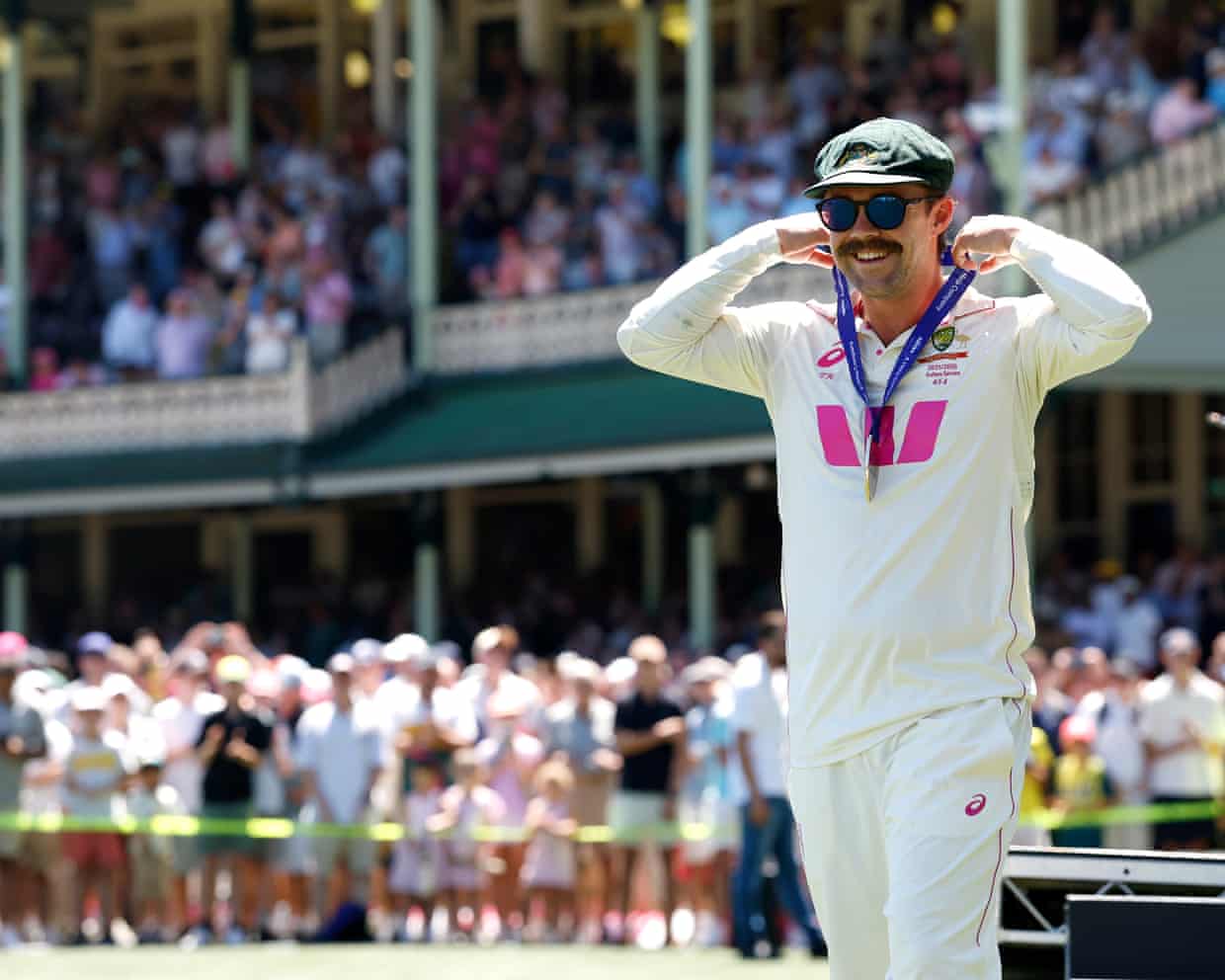
All-heart Travis Head leaves indelible mark on Ashes series by playing his own game | Angus Fontaine

Big Bash League momentum builds but its future remains up in the air | Jack Snape
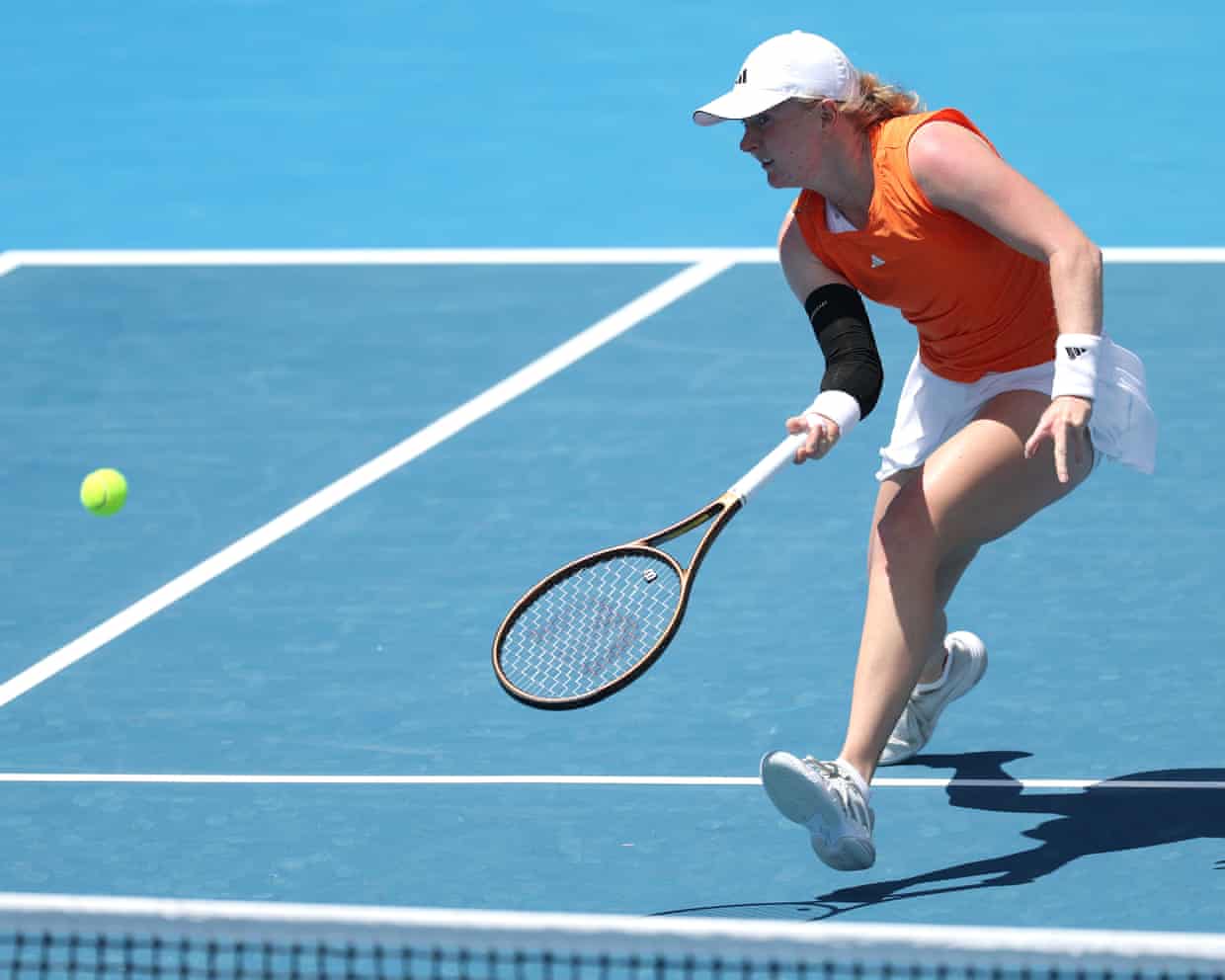
Keeping up with Fran Jones: the tennis star refusing to let rare condition define her

Henry Pollock: ‘I don’t look at a challenge and think what could go wrong? I’m just excited’
Brendon McCullum keen to carry on with England but wants to ‘steer the ship’