Thousands of offenders in England to get health support at probation meetings

About 4,000 offenders in England will get targeted healthcare sessions during their probation appointments as part of a new pilot scheme.Offenders are far more likely to have poor physical or mental health or addiction issues, which increases the likelihood of reoffending.A recent report by the chief medical officer for England, Chris Whitty, found that half of offenders on probation smoked, many had drug or alcohol addiction issues and a majority had poor mental health.They were also less likely to receive screening for prostate, breast, lung or cervical cancers.Many offenders do not receive timely care because they are not registered with a GP, meaning often they seek help for any physical or mental health problems only when their symptoms have become acute, turning to A&E.
Under a joint pilot between the probation service and the NHS in England, up to 4,000 offenders will receive targeted health support during their probation appointments,NHS clinicians and nurses will work directly from probation offices and sit in on appointments between offenders and probation staff,James Timpson, the minister for prisons, probation and reducing reoffending, said the pilot aimed to tackle the “cycle of crime driven by untreated mental health problems or an addiction to drink or drugs”,He said: “A nurse or clinician can now sit in the room during probation appointments, identify the warning signs earlier and refer offenders quickly into treatment or mental health care,That’s a gamechanger.
It will ensure offenders are quickly referred to services that are designed to directly address the issues fuelling their criminality, reduce the number of costly missed appointments and help cut reoffending.”The scheme is being piloted in Cambridge, Middlesbrough, Ilfracombe and Hammersmith.Health hubs located in probation offices will help offenders to register with a GP and attend cancer screening appointments, and organise referrals to other health services as required.Dr Dianne Addei, the director of healthcare inequalities improvement at NHS England, said: “We know that people released from prison often have poorer health outcomes, and evidence shows that the faster you intervene the more likely you are to see improvements, so this new scheme is a vital step to boosting people’s health.”Gillian Merron, the women’s health and mental health minister, said she hoped the approach would help prevent reoffending and reduce demand on the NHS.
“By providing offenders with a health assessment and the right support, we’re giving them a real shot at rebuilding their lives,That means healthier communities and safer streets,” she said,Experts cautiously welcomed the scheme,Mark Day, the deputy director of the Prison Reform Trust, said: “Much offending behaviour is driven by addiction or mental ill health, and so it makes perfect sense to collocate health services in probation to help identify and tackle the underlying causes of crime,“People with neurodivergent conditions are disproportionately overrepresented in the justice system and can face particular barriers to accessing appropriate treatment and care.
Health is already closely involved in many criminal justice settings, including youth offending teams and liaison and diversion services located in police stations and courts.We welcome these pilots and hope equal attention will be given to supporting those on community sentences at risk of being sent to prison, as well as those on release from custody.”
Thousands of offenders in England to get health support at probation meetings
About 4,000 offenders in England will get targeted healthcare sessions during their probation appointments as part of a new pilot scheme.Offenders are far more likely to have poor physical or mental health or addiction issues, which increases the likelihood of reoffending.A recent report by the chief medical officer for England, Chris Whitty, found that half of offenders on probation smoked, many had drug or alcohol addiction issues and a majority had poor mental health. They were also less likely to receive screening for prostate, breast, lung or cervical cancers.Many offenders do not receive timely care because they are not registered with a GP, meaning often they seek help for any physical or mental health problems only when their symptoms have become acute, turning to A&E

Under-pressure charities face conflicting demands | Letters
Your editorial on charities makes many useful points about their contribution to social life and appropriately highlights the harsh nature of the current funding environment (The Guardian view on hard times for Britain’s charities: struggling to do more with less, 31 December).However, it is overoptimistic about the ability of charities to resist capture by funders when you state that “their priorities are not distorted by the profit-seeking motives of market-based providers”. This is true, but their priorities are frequently distorted by the requirements of their funders. In a target-driven society, funders – state, corporate or charitable – have their own performance indicators to meet.Consequently, as our own research has demonstrated, charity organisations often cannot access funding for the expressed needs of their members and user groups

A rare joy at police station in Huyton | Brief letters
Your letters on the kindness of strangers (2 January) took me back to my days as a duty sergeant at Huyton in the 1990s. A man walked into the station with more than £1,000 in a cash bag he’d found by a bank’s night safe. As we gathered round, another chap burst in, white as a sheet – he’d absent‑mindedly walked off and left the day’s takings behind. Reuniting the two was a rare joy: a small reminder that people can still surprise you. Terry O’Hara Liverpool I don’t like to pick holes in your inspiring article on communities supporting refugees (Report, 7 January), but Ashbourne is not in “the north of England”

Jim Thomas obituary
My father, Jim Thomas, who has died of cancer aged 61, started out on his career in health and social care as a community nurse in East Anglia in 1986, and worked his way up to be head of workforce capacity and transformation at the charity Skills for Care, where he was employed from 2007 to 2022. Throughout his career, Jim fought for people to have more control over their care, and he had a deep suspicion of authority and rules for the sake of rules. He was a lateral thinker who cut through the jargon and asked: what do people actually need?As a young nurse, he was asked to convince an elderly man to move into sheltered housing. But he quickly realised that this man enjoyed living in his isolated countryside home with many cats, a long-drop toilet and a water supply from a nearby stream. To keep the authorities at bay, Jim persuaded the man to connect the house to mains water and get a flushable toilet and litter trays

Guardian readers raise more than £850,000 as charity appeal enters final days
The Guardian’s Hope appeal has so far raised more than £850,000 thanks to generous readers’ continuing support for our five inspirational charity partners, whose work aims to tackle division, racism and hatred.The 2025 Guardian appeal is raising funds for five charities: Citizens UK, the Linking Network, Locality, Hope Unlimited Charitable Trust and Who is Your Neighbour?.The Hope appeal, entering its final few days, is aiming to raise £1m for grassroots voluntary organisations campaigning against extremism, violence and harassment, anti-migrant rhetoric, and the re-emergence of “1970s-style racism”.The appeal has struck a chord with thousands of readers. One emailed us to say: “I am so worried about the division being sown between people in the UK
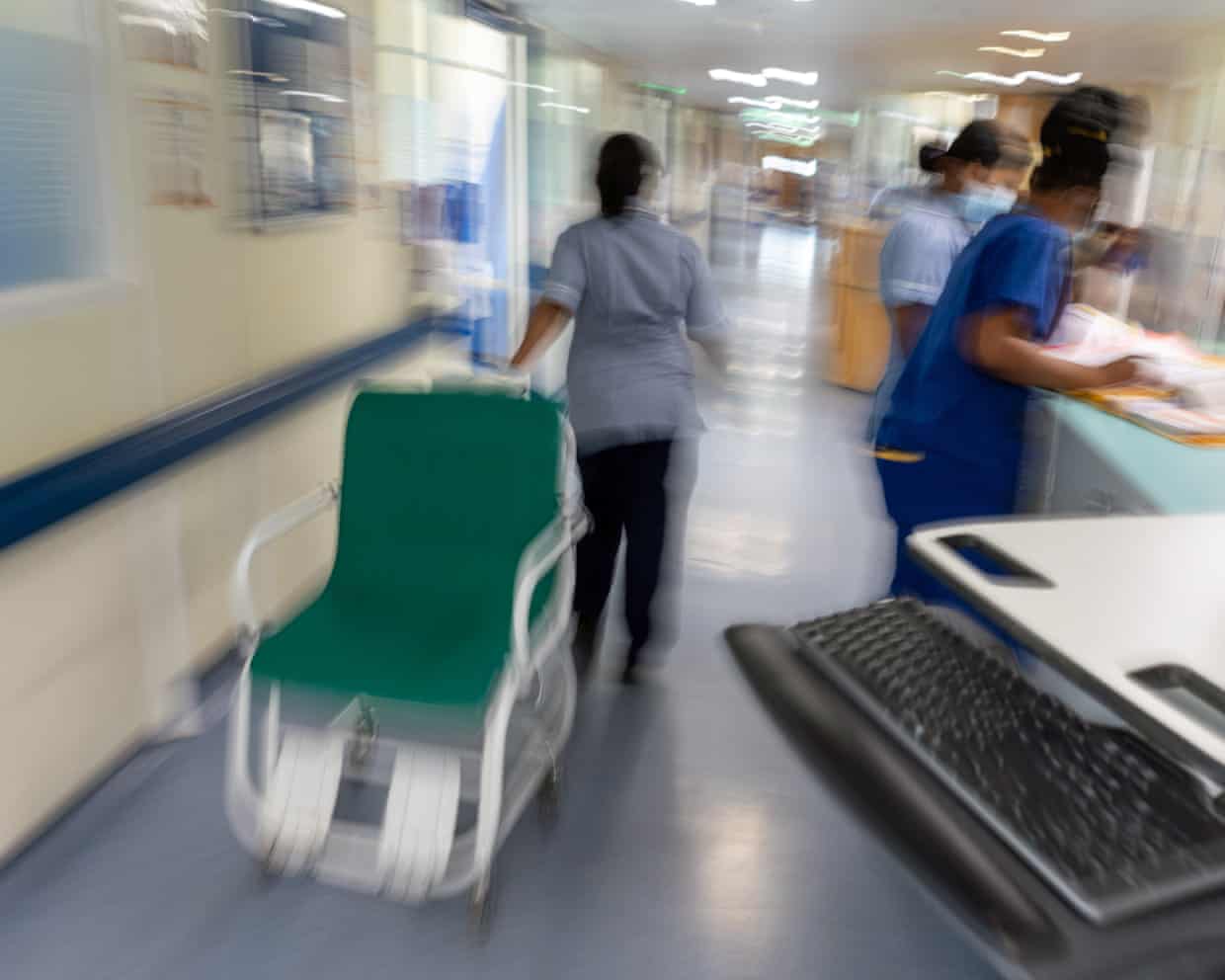
Hospital patients collapsing while out of sight on corridors, NHS watchdog says
Patients are collapsing in hospitals unseen by staff because overcrowding means they are stranded out of sight on corridors, the NHS’s safety watchdog has revealed.Using corridors, storerooms and gyms as extra care areas poses serious risks to patients, including falls, infections and a lack of oxygen, the Health Services Safety Investigations Body (HSSIB) said.NHS staff told investigators that some patients who end up on a trolley or bed in overflow areas have not been assessed or started treatment “and so may be at increased risk of deterioration, which may go unnoticed or be detected late in a temporary care environment,” HSSIB’s report said.It highlighted that patients in these areas are at risk of not getting prompt attention if they deteriorate and suffer a medical emergency.“Several nurses shared a patient safety concern around calling for help and responding to a medical emergency in temporary care environments,” the report said

US hiring held firm in December capping weakest year of growth since pandemic

Glencore and Rio Tinto are at it again – and it seems the markets smell action

Elon Musk’s X threatened with UK ban over wave of indecent AI images

Robots that can do laundry and more, plus unrolling laptops: the standout tech from CES 2026

Free agent outfielder Max Kepler hit with 80-game ban for positive drug test

France taps out as G7 summit moved to avoid clash with White House UFC event