Pollock promotion reflects England’s need to banish Murrayfield blues | Robert Kitson

A week can be a long time in the Six Nations, never mind in politics.One minute England are contemplating title showdowns in Paris, the next they face a must-win game against Ireland to remain in contention.A swift riposte to the defeat in Scotland last weekend is required urgently and Steve Borthwick’s team selection reflects the management’s desire for a significant gear change.It has clearly played straight into the hands of Henry Pollock, whose ambition to start for England is about to be realised after seven caps off the bench.His promotion reflects the need to re-energise all involved in the Murrayfield meltdown, as does the starting return of Tom Curry and Ollie Lawrence, Tommy Freeman’s shift back to the wing and Marcus Smith’s bench resurrection.
There could easily have been further changes.Borthwick’s first instinct is to give his players the benefit of the doubt but even he hesitated after the experience of last Saturday.“There are players in the team this week who are playing because I’m backing them to put in a performance that they’ll want to put in after last week,” the head coach said, slightly ominously.He did not name names, saying only that he’d “had a lot of conversations with players not selected who are very, very disappointed”.Several, presumably, will come roaring into the frame if there is no instant reaction to the 31-20 loss in Edinburgh.
While one defeat would not normally prompt an extreme team-sheet makeover, the nature of the Calcutta Cup debacle has clearly shaken England’s coaches wide awake.If you really want your side to rebound spectacularly, who better to whistle up than the ball of energy that is Pollock, the irrepressible Tigger to Borthwick’s less excitable Eeyore.The first time the pair met was at Franklin’s Gardens in Northampton when Borthwick paid a visit to meet Saints’ posse of international wannabes.“I was stood in the car park and this bundle of energy just bounced up to me.Typically when an 18-year-old meets the England head coach for the first time they are usually on the shy and retiring side.
The first thing he said was: ‘How are you, mate?’ I thought: ‘Right, you’re different.’”Borthwick was also struck by Pollock’s match-clinching jackal off the bench in a crucial Champions Cup pool game against Munster 13 months ago, never mind the back-rower’s spectacular try – and subsequent “pulse check” celebration – against Leinster in Dublin last May.The net result is that Pollock, now 21, has been picked to wear the No 8 jersey with Ben Earl, England’s most consistent player in this championship to date, shifting to seven.In some respects it changes precious little with Borthwick keen to stick to the blueprint of picking three No 7s.At the same time, though, it gives Pollock a little extra licence to roam.
Out on the wide outside is where English rugby’s young tyro can be an absolute nightmare for unwary defenders, particularly on the shoulder of someone such as Freeman,England lost out aerially against Scotland but this time it takes scant imagination to foresee George Ford hoisting the ball towards Freeman’s wing with Pollock sniffing for any juicy loose balls,There have been few English forwards, aside perhaps from Tom Croft, with Pollock’s searing pace and poacher’s instinct,Nor will he be afflicted by big-game nerves,As he said last month: “I don’t look at a challenge and think ‘what if?’ or ‘what could go wrong?’” It was the same when he went to Leinster last year.
“I wasn’t going into the stadium feeling nervous about playing against Josh van der Flier or Jack Conan,I was just so excited to show the world who I am,”Ireland, naturally, will have a different scenario in mind,Slow down England’s ball, stop them at the gain-line and force them into a slugfest and Pollock and co will have less time and scope to moonlight out wide,Having coached the British & Irish Lions in Australia last year, Andy Farrell has also had a closeup look at several England players and knows exactly where their strengths and weaknesses lie.
That said, Farrell is a massive admirer of Curry and also backed Freeman as a Lions Test starter.He may also wince slightly at the return of the fit-again Lawrence to add more midfield punch and recall what happened the last time Smith played against Ireland at Twickenham.On that occasion it was Smith’s dramatic late drop goal which saw England home 23-22 after they had been 12-8 down at the interval.Ireland are supposedly more vulnerable these days but that was the widespread view about Scotland this time last week.While Henry Arundell, having avoided a ban after his Murrayfield red card, will be keen for a less stressful afternoon this time, that cannot be guaranteed.
From Borthwick’s perspective, either way, the stage is set for Pollock to bounce England out of their Scottish introspection.“I will challenge him to express himself, be himself and bring what gets people jumping up and down with joy,” the head coach said.As Winnie-the-Pooh’s old mate would say: “The most wonderful thing about Tiggers, is I’m the only one.”
Developers will only bring us more car-dependent sprawl | Letters
It is disappointing to see the huge urban sprawl at Gilston, north of Harlow, described as rejecting “car‑centric models” (A new town for the 21st century?, 9 February).Big, ultra-low-density developments like this, far from rail-transit networks, are inevitably car-dependent, despite claims by their promoters. It takes more than building the primary schools necessitated by such schemes to get people out of their cars, especially as walks to school are extended by the very low densities secured by huge consumption of productive farmland.Nor should the developers be given credit for “mixed tenure” housing. They managed to get East Herts council’s aspirations for 40% “affordable” housing reduced to 23%, using cynical “viability” provisions in planning guidance that enable developers to demand high rates of return and so reduce their obligations to provide affordable housing

Health support needed to tackle joblessness | Letter
The alarming rise in economic inactivity highlighted in your report (UK sleepwalking into joblessness epidemic, Tesco boss warns, 10 February) underlines a public health issue as much as an economic one. It is increasingly clear that millions of working-age people are drifting out of the labour market not through choice but because of long-term health problems and inadequate support systems around them.Tackling worklessness requires proactive, health-centred approaches that help individuals stay in or return to work. We also know that time out of work is corrosive. Good-quality work improves physical and mental wellbeing, providing income, social connection and purpose, and protects against social exclusion

Gen Z in the US: how are you feeling about your finances?
The US economy has been in a tailspin, from rising prices, changing trade policies and the impact of artificial intelligence on the labor market. Polls show many Americans believe their financial security is getting worse and it’s harder to afford major life goals.Young Americans are no exception. If you are aged 18-29 and live in the US, we’d like to hear from you about the state of your finances and your biggest money concerns.You can tell us about your money situation and concerns using this form

We joke that to afford a home in Australia we must wait for our parents to die. It feels like a deal with the devil | Fiona Wright
For years, whenever my friends and I have despaired of the housing market and our precarious place within it, we have eventually landed on the same dark joke: there’s nothing any of us can do until our parents drop off the perch.The median rent in Sydney – the city where I live, largely by dint of being born here – has just hit $800 a week, a sum that represents more than half of a median income, and well beyond what is defined as affordable. This is the system that we are living with, one in which housing is a commodity, an investment, a means to accrue and hold wealth, rather than a basic need and human right.In the past five years house prices have risen by nearly 50%, from what was already a record high. In the past month three of my closest friends – including one who lives alone – have been hit with rental increases of more than $100 a week
‘The kids don’t get days off. Nor should you’: my secret life as a paedophile hunter on the dark web
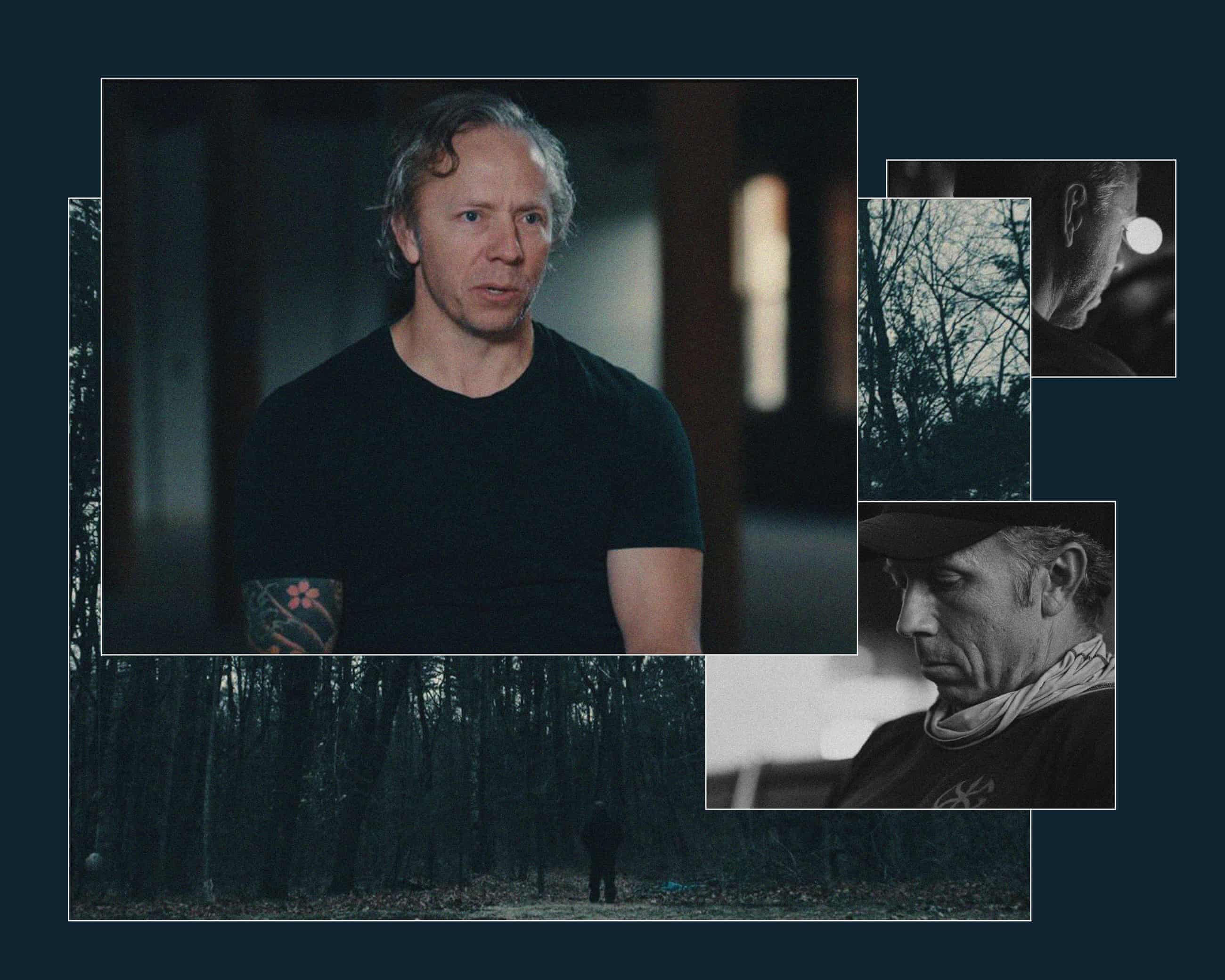
US undercover investigator Greg Squire can spend 18 hours a day befriending child sex abusers, to try to identify them and get justice for victims. He reveals the toll the work has taken on him Greg Squire can never forget the video that opened his eyes to what child sexual abuse could mean. It was a Sunday and he was at his home in New Hampshire, sitting out on his deck, his two young children running around, playing. This was 2008, about a year into Squire’s career as an agent for Homeland Security – he’d been a postman before this – and he reached for his laptop, checked his inbox and saw that the results of an email search warrant for a suspect had come in.He clicked on a video

Police ‘determined’ to target abusers who drive women to suicide but say they lack resources
Police are “determined to do more” to hold to account domestic abusers who drive victims to kill themselves, the National Police Chiefs’ Council has said.Assistant Commissioner Louisa Rolfe, the NPCC lead for domestic abuse, has said that “more posthumous investigations are taking place”, but that officers struggle with a lack of resources, adding that 20% of all crime relates to domestic abuse in most forces.National guidance had been changed, she said, with the NPCC’s research team going into forces to look at how it was being applied. That guidance, she said, had been adapted based on feedback from families, who had consistently raised concerns about police response.This included, Rolfe said, “officers too quick to assume, ‘well, it’s a suicide and therefore a case for the coroner, not an investigation to be had by policing’, too often assuming that the domestic abuse perpetrator was the primary next of kin, and therefore risking evidence being lost by, for example, returning personal property like phones to those individuals

Boost to British Steel as Turkey places high-speed rail order

Goldman Sachs to drop race, gender and LGBTQ+ criteria from board evaluations

Palantir moves headquarters to Miami amid tech’s growing retreat to Florida

AI’s workplace revolution is here – and anxiety is rising with it
Only winners in Lachie Neale media storm are those counting the clicks

Japanese teenager Ami Nakai overshadows USA’s Blade Angels in women’s figure skating opener