AI’s workplace revolution is here – and anxiety is rising with it

Hello, and welcome to TechScape.I’m your host, Blake Montgomery, The Guardian’s US tech editor, writing to you while cheering on Team USA in the Winter Olympics.Throughout 2026, The Guardian will publish a series of stories about how artificial intelligence is affecting modern labor.We’re calling it Reworked: A series about what’s at stake as AI disrupts our jobs.Our first story published this morning.
Artificial intelligence, in particular the increasing automation of coding, has changed the attitude in the tech industry from one of relentless optimism and quirky perks like office ball pits to a default of grinding and austerity.Arielle Pardes reports on San Francisco’s new work ethic:In the last year, as the magic dust of artificial intelligence has settled in the City by the Bay, the vibe among tech workers does seem different.The excitement about a new epoch in tech – and all the money that comes with it – is now tempered with anxieties about the industry and the economy.Some workers are going all-in on AI while also questioning whether all that AI is good for the world.Others are effectively training machines to do their jobs better than they can.
And many of the same workers who are racing to build the future are now wondering if the future they’re building has a place for them in it,The work of Mike Robbins, an executive coach in Silicon Valley who has worked with companies like Google, Salesforce, and Airbnb, illustrates the change,Robbins used to be asked to speak to companies and their leaders about topics like employee burnout, wellbeing and belonging – top priorities in the years during and shortly after the pandemic,“Quite frankly, we’ve stopped talking about all that,” he says,Now, company leaders want advice on topics like change, disruption and uncertainty in the workplace.
Rather than a model of how we should all work, the tech industry may be a premonition for the anxiety and attempts to compensate that are coming for all of us,The change afoot in San Francisco serves as an early alarm to other industries – my own included – as AI encroaches on all types of work,Automating work rarely opens time for leisure,Instead, it increases expectations of productivity,Sometimes those goals rise to unattainable levels if an employer believes the technology is more powerful than it really is.
Bosses’ unrealistic expectations are the subject of a story coming later this week in the series.Stay tuned for more excellent pieces as Reworked launches: An essay about the bunk promise of the four-day work week by longtime Guardian columnist Robert Reich; on-the-ground tales from UK workers who have been training their own robotic replacements; and a powerful essay by the series’ editor, Samantha Oltman, about worker power in the age of artificial intelligence.You won’t want to miss them.You’ll be able to find them all on the series landing page.Epstein engineered intimate relationship for Tesla’s Kimbal Musk, emails showElon Musk posted about race almost every day in JanuaryMusk changes course on Mars quest and shoots for moon – again‘A different set of rules’: thermal drone footage shows Musk’s AI power plant flouting clean air regulationsElon Musk’s xAI faces second lawsuit over toxic pollutants from datacenterThe high-velocity artificial intelligence sector hit two speedbumps last week.
Each is quite different from the other, but both seem likely to be solved the same way.The first snag: A memory chip shortage.Long, long ago (September 2025), experts predicted that data centers’ rising demand for computer memory would make your next smartphone more expensive if Donald Trump’s tariffs didn’t get there first.That prophecy has come to pass.The three most prominent memory chip producers–Samsung and SK Hynix of South Korea and Micron of Idaho, USA–have declared code red, Morning Brew reports.
They can’t meet demand, which is growing because of the rapid rollout of AI infrastructure across the world.The price of consumer electronics is already increasing as a result, since computer memory chips are foundational to nearly every type of advanced device.Sony may debut the next Playstation due to the shortage.An observation: Data centers seem to me to be constructed not so much out of steel and concrete but out of pure hunger and thirst, buildings of reified need for money, power, water and every kind of computer chip–all of it never enough.The second bump for the industry was a wave of departures.
At Elon Musk’s xAI, multiple co-founders departed amid the reorganization and absorption of the company by SpaceX,Elsewhere, a leading safety researcher quit Anthropic, which makes the Claude chatbot and coder, to become a poet,OpenAI fired a safety researcher who opposed the introducing erotic content into ChatGPT’s responses for alleged sex discrimination,Another OpenAI researcher quit over the company’s decision to insert ads into ChatGPT,It seems that the AI industry will overcome the shortages of memory and executives by the same means: money.
Last week, I wrote about tech giants’ plans to spend some $600bn in the coming year alone,That amount of money exerts a gravitational pull like a black hole,Memory chip makers will sell their wares to the highest payer,Skilled employees will do the same,The losers in the memory chip shortage will be everyday consumers who need to replace their phones.
As for the executives, Musk seems to have had little trouble attracting talent despite his fearsome and multi-headed public controversies.At OpenAI and Anthropic, we have seen the departure of safety-minded executives result in little but their replacement and the continued debuts of products with greater power and potential for misuse.There is money to be made, after all, billions and billions, and this is the United States.The gravity of the cash grab in AI has repeatedly trumped ethical concerns and will do so again.There does appear to be a looming crisis in AI, though, one which may reveal the true character of a firm that has cast itself as one of the most conscientious in the industry.
A concrete version of the choice between safeguards and violent action lies before Anthropic now.The US military deployed Claude in its raid on Venezuela that resulted in the capture of Nicolás Maduro, according to the Wall Street Journal.That use doesn’t seem to have been satisfactory, though: The Pentagon is now considering cutting ties with Anthropic over the safeguards the startup has placed on its AI, Axios reports.After months of difficult negotiations between the Pentagon and Anthropic leadership, the startup has maintained two red lines it will not cross: the use of its technology for the mass surveillance of Americans or fully autonomous weaponry.The US military is getting fed up.
Which side will balk?Anthropic was spun out of OpenAI by safety-conscious executives and marketed to the public as a more mindful version of the ChatGPT maker and its ruthless founder.Will the young startup choose money or its corporate morals? Google faced a similar dilemma years ago with Project Maven, in which the US military used open source Google software to better identify people during drone flights.The tech giant dropped the project but later dropped its commitment not to use AI for weapons.Shares in trucking and logistics firms plunge after AI freight tool launchRussia attempted to ‘fully block’ WhatsApp, Meta-owned company saysInstagram CEO dismisses idea of social media addiction in landmark trialSalesforce workers outraged after CEO makes joke about ICE watching themCalifornia’s billionaires pour cash into elections as big tech seeks new alliesThe problem with doorbell cams: Nancy Guthrie case and Ring Super Bowl ad reawaken surveillance fears‘It’s over for us’: release of new AI video generator Seedance 2.0 spooks Hollywood

Grand National field ‘stands out’ in 2026 with elite runners and promising underdogs
The unveiling of the weights for the 2026 Grand National started with a montage of clips from 50 years ago, when the world’s most famous steeplechase was at its lowest ebb, the crowd had dipped below 10,000 and the track was odds-on to be sold off for housing. It was, as Ruby Walsh pointed out on the voiceover, a reminder of how the National has been revived and transformed.A glance back no further than the 2011 Grand National, however, also offers clear evidence of how much the great race has changed, even in the space of 15 years. The field, of course, is now down to a maximum of 34, rather than the 40 runners that we all grew up with, but it is the depth of quality in the names, ratings and weights that were published on Tuesday that stands out.The bottom weights in 2011 raced off a rating of 138

A part-time job and DJ gigs helped Lara Hamilton reach the Winter Olympics. Now she wants to put Australia on the map
When Lara Hamilton started skiing as a child her parents would not let her join them on the slopes until she could keep up. Off she went to ski school, while her mum and dad traversed the New South Wales ski town of Perisher unshackled by children. Her dad raced World Cup Nordic skiing, so they didn’t dawdle. Now, Hamilton is about to make her Winter Olympics debut, and she is solely focused on keeping pace with the best ski mountaineers in the world.“It was just in the family and we had a lot of old gear and he taught me and my sister how to Nordic ski,” Hamilton says

Lindsey Vonn back in US for treatment but ‘not yet able to stand’ after Olympic crash
Lindsey Vonn is back home in the US to continue treatment after she broke her leg during the Winter Olympic downhill.“Haven’t stood on my feet in over a week… been in a hospital bed immobile since my race. And although I’m not yet able to stand, being back on home soil feels amazing,” Vonn posted on X with an American flag emoji. “Huge thank you to everyone in Italy for taking good care of me.”The 41-year-old suffered a complex tibia fracture after she crashed early in her downhill run on 8 February
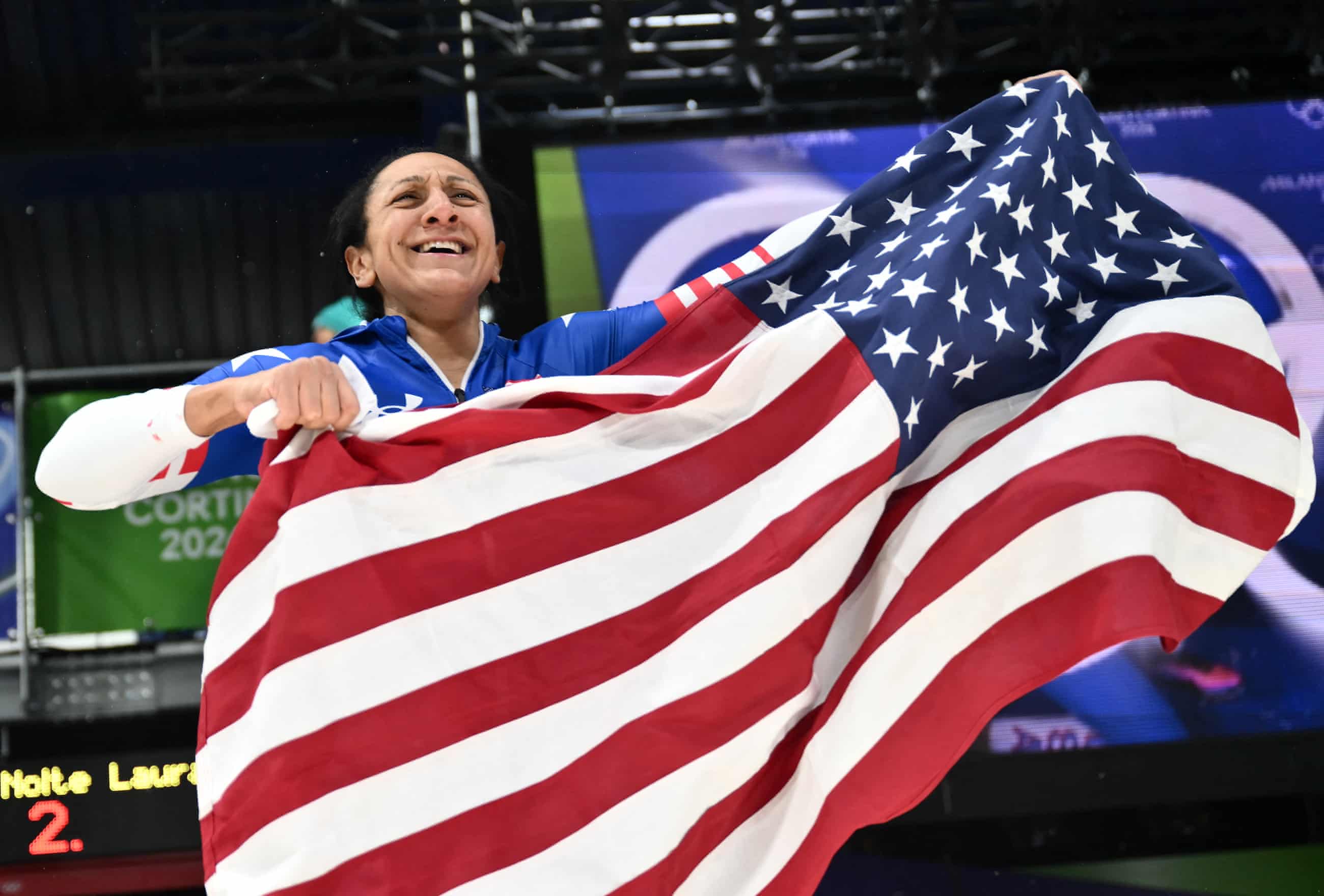
Elana Meyers Taylor’s victory in her fifth Olympics was about far more than gold
The American won her first Winter Games title at 41. She did so while advocating for Black athletes, mothers and the deaf and Down’s syndrome communitiesElana Meyers Taylor had already cemented her place in Olympic history long before Monday night. She had competed with and against men on the World Cup tour and at the world championships to help force women’s monobob into the Winter Olympic program. She had surpassed the speed skater Shani Davis as the most decorated Black athlete in Winter Games history. She had stacked more Olympic medals than any female bobsledder ever, reaching the podium at Vancouver, Sochi, Pyeongchang and Beijing

‘No cushion, no seatbelt, no airbag’: the GB bobsledder who races with her eyes closed
Ashleigh Nelson was never meant to be in the Winter Olympics. If you’d asked her 18 months ago where she expected to be competing this week, she would have told you she would be at the Utilita Arena in Birmingham running the 60m at the UK Indoor Championships, not standing at the top of the world’s newest ice track riding a £75,000 bobsleigh.“I was tricked into it,” Nelson says. “You laugh, but it’s true.” Nelson got into it only after the GB bob pilot Adele Nicoll sent her a message on Instagram just after the Paris Olympics asking if she fancied giving it a go
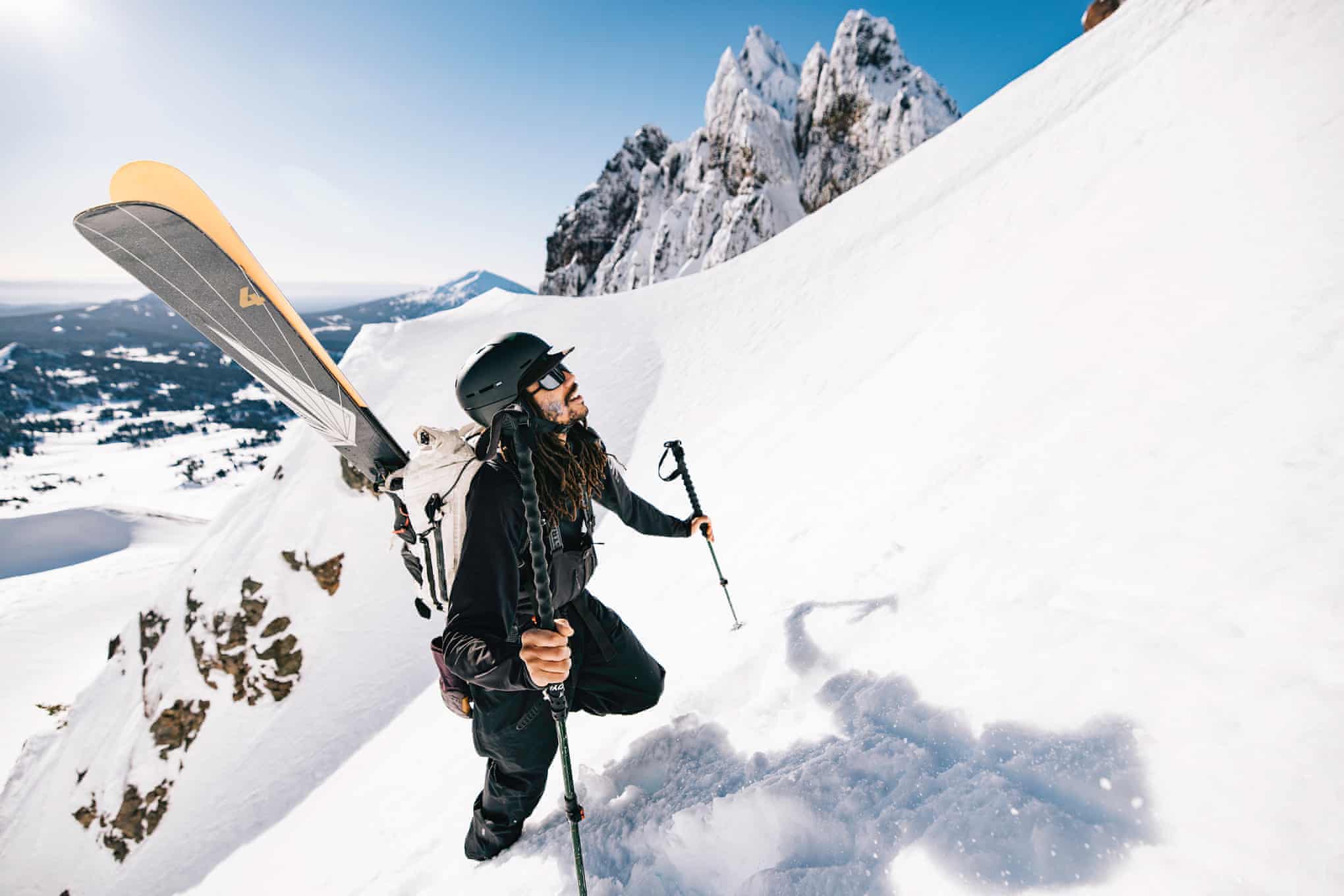
‘I’m trying to expand what it means to be a skier’: Mallory Duncan on jazz, freedom and the mountains
The Californian once had ambitions of winning gold at the Winter Olympics. But now he is more interested in what skiing can do for the soulGrowing up in the Hayward Hills, just south of Oakland, California, Mallory Duncan lived a hybrid lifestyle throughout his childhood. Weekdays were spent at school, avoiding homework, disrupting class and getting in trouble. Weekends at Alpine Meadows, a ski resort on the north-west shores of Lake Tahoe, were for jumping off cliffs and skiing powder with friends. Every Sunday he would have dinner at his grandad’s house, watch football and listen to jazz

Rukmini Iyer’s quick and easy recipe for ginger sesame meatballs with rice and greens | Quick and easy

How to make the perfect chicken massaman – recipe | Felicity Cloake's How to make the perfect …

Original Bramley apple tree ‘at risk’ after site where it grows put up for sale

Potstickers and sea bass with ginger and spring onions: Amy Poon’s recipes for lunar new year

How to plan Ramadan meals: minimal work, maximum readiness

Benjamina Ebuehi’s recipe for almond frangipane crepes | The sweet spot