Slow Alzheimer’s diagnoses ‘mean UK patients missing out on experimental treatments’

People with Alzheimer’s disease are missing out on experimental treatments because they are not diagnosed early or accurately enough to be enrolled in clinical trials, a UK charity has said.Trials of Alzheimer’s drugs reached a record high this year, according to data published on Tuesday, but Alzheimer’s Research UK said too few UK patients were taking part because their diagnoses were delayed or were not specific enough.The warning suggests patients are being left behind as research gathers momentum and branches out to tackle the condition on multiple fronts, a strategy that scientists consider to be crucial for halting the disease.Dr Sheona Scales, the director of research at Alzheimer’s Research UK, said the recent surge in clinical trials was driving demand for participants, but without a large and diverse range of patients to match to trials the UK risked missing out.“People won’t have access to the next generation of Alzheimer’s treatments,” she said.
More than 32 million people worldwide have Alzheimer’s disease, the most common form of dementia, but getting a diagnosis can take years.One in three people living with the condition in the UK do not have a formal diagnosis.The precise mechanisms that drive Alzheimer’s disease are unclear but hallmarks include the buildup of abnormal proteins in the brain, including amyloid plaques between cells and tangles of tau protein inside neurons.Hopes for treating Alzheimer’s have been boosted by the arrival of the anti-amyloid medicines lecanemab and donanemab, which have been approved by medicines regulators around the world.Clinical trials found that both slowed the progression of the disease, though the benefits were slight and neither drug was considered cost-effective for the NHS.
The recent Cochrane review of seven anti-amyloid drugs prompted controversy by concluding that the class of drugs had no clinically meaningful impact on patients over 18 months.But critics argued that the analysis lumped lecanemab and donanemab in with older, less effective medicines, and said the drugs may have better results when given to patients much earlier and for longer periods.Dr Jeffrey Cummings, of the University of Nevada, has published an annual review of clinical trials for Alzheimer’s drugs for the past decade.The latest review, published in Alzheimer’s & Dementia: Translational Research & Clinical Interventions, reveals a shifting approach to the disease, with fewer drugs designed to remove amyloid and more targeting tau, inflammation and other immune system pathways.Cummings said: “Anti‑amyloid medicines such as lecanemab and donanemab have been a crucial breakthrough.
They’ve shown that directly targeting the disease’s process can slow decline,But they are only the beginning of what people with Alzheimer’s will ultimately need,”The number of candidate drugs being trialled for Alzheimer’s has risen by 40% in the past decade, the review found, with 158 potential medicines and 192 trials taking place globally this year,Eight final phase-three trials are due to end in 2026,Another keenly watched trial that could report this year is the Trailblazer-Alz 3 trial, which is testing the effect of donanemab in people who have amyloid in the brain but no Alzheimer’s symptoms.
This could show whether the drug can protect against cognitive decline by administering the drug before the disease destroys brain cells.Diagnosing patients is a major obstacle for identifying patients suitable for Alzheimer’s drug trials.In the UK, a third of patients have no formal diagnosis, and of those who do, the diagnosis is often general dementia, which is not precise enough to place people on trials.As such, fewer than 1,000 UK patients are taking part in phase 3 trials for Alzheimer’s drugs.Scales said: “Progress depends on finding the right participants for these studies, and that starts with early and accurate diagnosis.
Without it, researchers can’t match people to the trials most likely to help them.”

Jon Rahm free for 2027 Ryder Cup after striking deal with DP World Tour
Jon Rahm has revealed he has ended his dispute with the DP World Tour, which returns the Spaniard to contention for next year’s Ryder Cup at Adare Manor, but he played down the sense of golfers sharply exiting LIV. Rahm, who has been tipped to make a return to the PGA Tour, has cited tight contractual terms as a reason he and others are not completely in control of their own destiny.The abrupt exit of Saudi Arabia’s Public Investment Fund (PIF) from LIV – the Saudis will remove finance at the end of this year – has left the tour scrambling for alternative investment. Rahm and Bryson DeChambeau are LIV’s biggest names, whom many assumed would already be glancing towards a playing future elsewhere. Rahm urged caution

Wu Yize cements China’s status as premier snooker force as younger generation takes over
Perhaps of all the noise emanating from Wu Yize’s historic victory in the World Snooker Championship final on Monday evening, it was 12 simple words from the godfather of Chinese snooker that meant the most.For the second successive year, China has a world champion in the sport the nation has taken to its heart, with Wu emulating Zhao Xintong’s win 12 months earlier by defeating Shaun Murphy in one of the great finals. But perhaps none of it would be possible without Ding Junhui laying the groundwork over the last 20 years.Ding, a beaten world finalist 10 years ago who was never quite able to take that decisive step, wrote on Weibo: “This is not just a breakthrough, rather our era is approaching now!” Gone are the days of Ding being China’s sole flag-bearer for the sport; there are now five Chinese players in the top 16.Two of them, Zhao and Wu, are in the top four, and Ding’s talk of new eras beginning for snooker feels pertinent on multiple fronts, not just for the sport in China

Ascot’s bold move in turf war leaves racing fighting to avoid constitutional crisis
The racing industry is such a broad and varied collection of professions, venues and interests that at times it can feel like the Holy Roman empire: there is always a turf war or two going on somewhere, but never to such an extent that the whole thing falls apart.Ascot’s announcement on Monday that it will quit the Racecourse Association (RCA) at the end of the year, however, feels like more than just another localised dispute. The email dropped at 9am on a bank holiday, as if to underline that the king’s track means business, and where Ascot has led, others may follow, putting the future of a trade association that dates back to 1907 in serious doubt.The spark that lit the fuse, just two months ago, was Charles Allen’s departure as chair of the British Horseracing Authority (BHA), after a brief and ultimately fruitless attempt to impose a modern governance structure, including a fully independent board of directors, on Britain’s second-biggest spectator sport.Ascot, along with the Jockey Club, which operates major tracks including Cheltenham, Aintree, Epsom and Newmarket, and also three key “big independent” tracks – Newbury, York and Goodwood – subsequently wrote to the RCA calling for “a formal governance review” of the Association, to ensure “significant views from key racecourses can influence outcomes”

Sabalenka believes players will boycott grand slams to ‘fight for our rights’
Aryna Sabalenka believes the top tennis players will boycott grand slam tournaments in an attempt to resolve their dispute with the four events, which they argue should provide players with a greater share of their growing revenues.“I think at some point we will boycott it, yeah,” said the world No 1 during her pre-tournament press conference at the Italian Open. “I feel like that’s going to be the only way to fight for our rights.”Her comments come after a group of the top 20 male and female players released a statement criticising the prize money levels offered at the French Open, which begins this month. Sabalenka argued the players should be better compensated for their influence on tournament finances

London Marathon sets record after 1.8% of UK adult population applies for 2027 race
The London Marathon has set yet more records with organisers announcing that 1.8% of the UK adult population – more than one million people – have applied to run in next year’s race.Running’s boom wasreflected in a world record 1,338,544 global application for the 2027 London Marathon – up from 1.13m for this year’s race and more than double the amount they received in 2024.The extraordinary figures were welcomed by the London Marathon CEO, Hugh Brasher, who said: “This astonishing total of more than 1

Mercedes may have won again but Miami upgrades have shaken up the F1 grid | Giles Richards
The improved form of McLaren and Red Bull in Florida suggests the 2026 title race is likely to run and runThere is a long old way to go but after Formula One emerged from its enforced early season break with an entertaining romp around the Hard Rock Stadium in Miami, it indicated that there may yet be a decent tale to be told this season. One where Mercedes do not have it all their own way.Regulation changes dominated the buildup – of which more later because honestly paragraph two is too early to subject readers to the increasingly soul-destroying phrase “energy management” – but what really mattered in Miami was the sporting imperative of upgrades making a competitive difference.Mercedes had looked ominously strong with three straight wins in the opening three rounds before the five-week break caused by the cancellation of the Bahrain and Saudi GPs. During that time there was no little beavering across the paddock on upgrades for Miami

Man charged over bomb hoax after Peter Kay show evacuated

Guy Montgomery: ‘One fan took us back to his house and showed us all his guns’

‘We have to mock the site’s insanity’: comedian Tim Heidecker on the allure of becoming Infowars’ new boss

Prince’s death made me upend my life and move to his home town

The Devil Wears Prada 2 to Lenny Henry: your complete entertainment guide to the week ahead
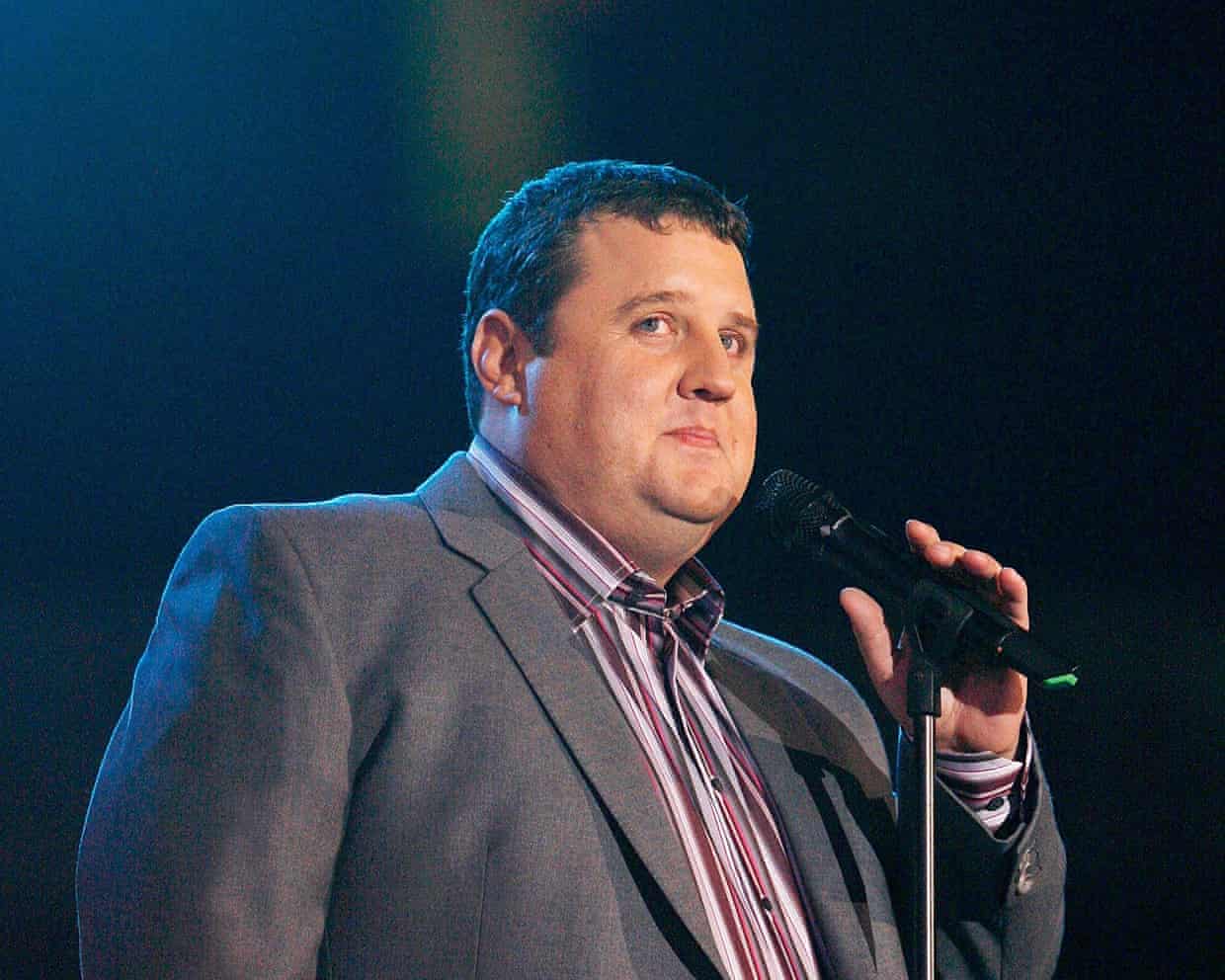
Peter Kay show stopped and 19-year-old in custody after ‘suspicious bag’ found