Collapse of ‘zombie’ UK firms forecast to fuel unemployment in 2026

The UK is poised for a rise in unemployment in 2026 fuelled by the collapse of “zombie” companies that have struggled to adapt to a rise in business costs, according to a report,At the start of what could be a pivotal year for the economy, the Resolution Foundation said businesses were grappling with a “triple whammy” of multiyear increases in interest rates, energy prices and the minimum wage that could “finish off” some underperforming companies,Publishing its new year outlook report, the thinktank said 2026 had potential to be a “turning point” after decades of sluggish productivity growth – a key metric of output per hour of work which is vital for raising living standards,However, it warned this could involve a sharp rise in unemployment as more unproductive companies go bust,Ruth Curtice, chief executive of the Resolution Foundation, said there were indications 2026 could be remembered as a “turning point year” by future economists and demographers.
“There are early and encouraging signs of a mild zombie apocalypse, where higher interest rates and minimum wages have combined to kill off struggling firms and leave the door open for new, more productive ones to replace them,” she said.“But while this is good news for our medium-term economic prospects, the short-term impact could be job displacement and higher unemployment.Policymakers will need to redouble efforts to address this problem.”Unemployment in the UK has reached the highest level outside the Covid pandemic in a decade, with the headline rate hitting 5.1% in October as employers held back on hiring before Rachel Reeves’s autumn budget.
Business leaders have said tax increases and a rising living wage are among contributing factors deterring employers from taking on staff,Experts have warned for several years that Britain has been held back by so-called “zombie firms” – companies which barely make enough money to cover their costs but just about stay in business – preventing the allocation of resources to more productive sectors of the economy,Economists have suggested that low interest rates in the years since the 2008 financial crisis contributed to this, as cheap borrowing costs helped debt-laden companies to stay afloat,Businesses have come under pressure from 14 consecutive Bank of England rate increases between December 2021 and August 2023, designed to tackle inflation,While the Bank has since cut the base rate six times – from a peak of 5.
25% to 3.75% – firms’ operating costs remain higher than before the Covid pandemic.In a sign of the pressure, the British Chambers of Commerce (BCC) warned in a separate report that business confidence slumped to the lowest level in three years in the final quarter of 2025.In a survey of more than 4,600 firms carried out between 10 November and 8 December – straddling Reeves’s 26 November budget – the lobby group found that tax was the biggest business concern, followed by inflation.Fewer than half (46%) of companies said they expected increased turnover over the next 12 months, while nearly a quarter (24%) expected a decrease.
Only 19% had increased investment and 27% had scaled back plans,David Bharier, head of research at the BCC, said: “Our data shows more clouds have gathered over business confidence, and the outlook for SMEs in 2026 is unsettled,”The Resolution Foundation said there were early signs that Britain’s productivity growth was being boosted by “creative destruction”, whereby newer and better firms, products or processes replace older, less-efficient, ones,Adoption of artificial intelligence technologies could also be playing a role, it said,However, it said the short-term impact from job losses would be “hugely difficult,” and urged the government to focus on supporting living standards.
“Amidst this change one thing that isn’t changing enough is disposable income growth, which is set to grow at mediocre rates for the rest of the parliament,” Curtice said.“We must hope – but more importantly act – to ensure that 2026 is a turning point year for lifting living standards too.”

Full-blown agony: my battle against the mysterious pain of cluster headaches
They can hurt more than broken bones or pancreatitis. But with the right drugs and therapies, relief is possible from this debilitating and often misunderstood conditionIt was a dreary Monday morning in September 2016, and I was working as a teacher, trying to settle a new year 7 class, when a sharp pain bloomed behind my right eye. It was followed by quick jolts, like electric shocks. As each class came and went, the pain eased and then returned with greater intensity. Four times that day I left a teaching assistant with worksheets and ran to the school bathroom to douse my face with cold water

Brain injuries linked to cognitive issues in domestic violence survivors, Australian study finds
An Australian-first study has strengthened evidence that intimate partner violence can cause lasting brain injuries, leading to memory loss, learning changes and other long-term cognitive problems.A Monash University study published in the Journal of Neurotrauma found that survivors of domestic violence who experienced repeated head impacts or non-fatal strangulation were more likely to show behavioural and cognitive changes, including impaired memory.The impact of brain injuries has become widely recognised in professional sport, where repeated concussions have been linked to chronic traumatic encephalopathy (CTE) and other neurodegenerative conditions. Guardian Australia has extensively reported on concussion in sport, coverage that contributed to a Senate inquiry and an AFL class action.Researchers and advocates said the study highlights a need for greater awareness of brain injury when screening and supporting survivors of intimate partner violence, so they can receive appropriate treatment

Starmer urged to scrap ‘outdated’ law limiting power to stop new gambling premises
Keir Starmer has been urged to abolish an “outdated” rule that limits the power of communities to prevent bookmakers and 24-hour slot machine shops from opening on high streets.In a letter to the prime minister, nearly 300 politicians and campaigners called for an end to the “aim to permit” policy, introduced when Tony Blair’s Labour government liberalised gambling laws in 2005.The rule places a legal obligation on licensing authorities such as councils or the Gambling Commission to err on the side of allowing new gambling premises.“Our high streets are being hollowed out by a surge of betting shops and 24/7 slot-machine venues, while local people are left powerless,” said the Labour MP Dawn Butler, who coordinated the letter.She said the aim to permit rule had left councils powerless to refuse licence applications, even in the face of local opposition

Guardian Hope appeal raises more than £800,000 for charities tackling division
Donations to the Guardian’s Hope appeal have passed the £800,000 mark as generous readers continue to support inspirational grassroots charities that promote tolerance and tackle division, racism and hatred.The 2025 Guardian appeal is raising funds for five charities: Citizens UK, the Linking Network, Locality, Hope Unlimited Charitable Trust and Who is Your Neighbour?The Hope appeal, which is entering its final few days, supports charities offering positivity and common purpose against an backdrop of extremist violence and harassment, anti-migrant rhetoric, and the re-emergence of “1970s-style racism”.One donor told us by email: “I support all efforts to rebuild community links and cohesion. With lived experience of racism (current and past), I never want it to stain our country again.“Hate and division are making our communities less safe for all of us
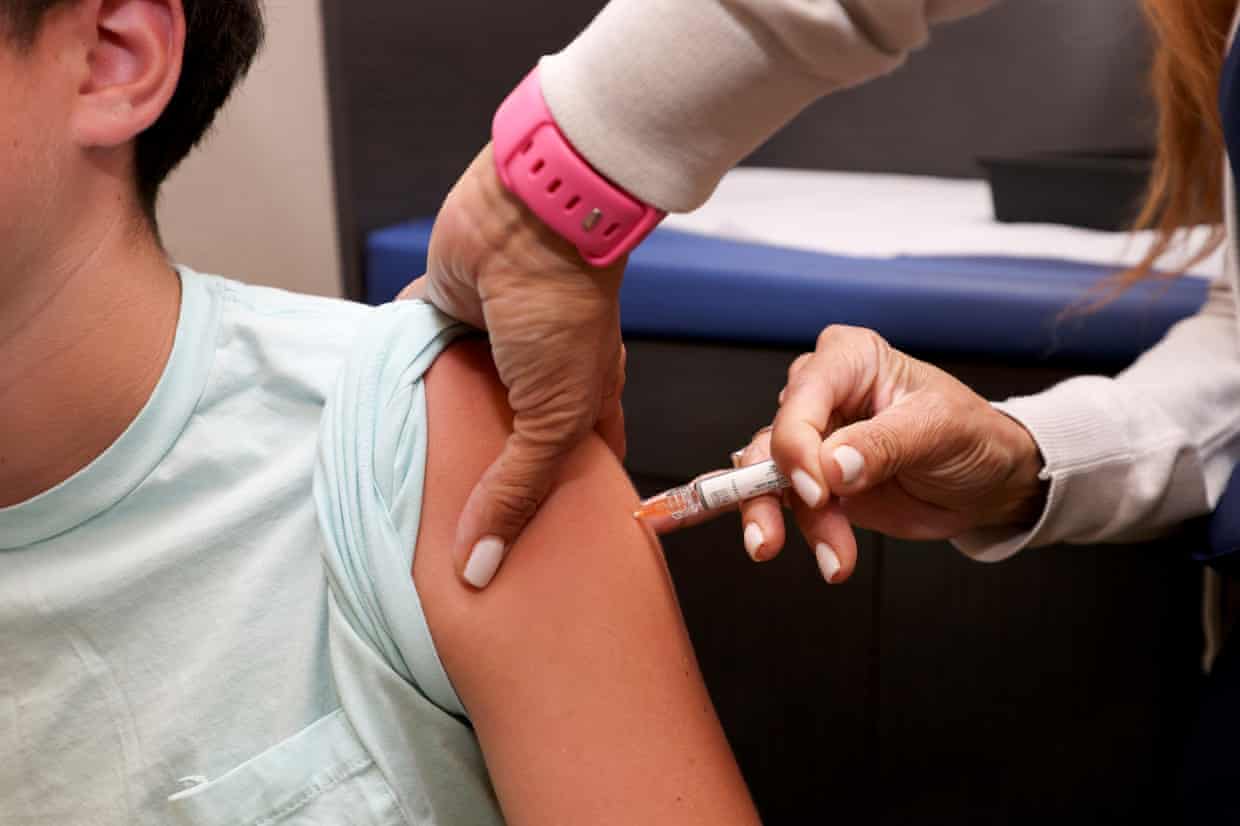
US to slash routine vaccine recommendations for children in major change experts say creates doubt
The Trump administration will slash routine vaccine recommendations during childhood from 17 to 11 jabs – the biggest change to vaccines yet under the purview of longtime vaccine critic Robert F Kennedy Jr.The changes, which US health officials announced on Monday afternoon and are effective immediately, will erode trust and reduce access to vaccines while allowing infectious diseases to spread, experts said.“The goal of this administration is to basically make vaccines optional,” said Paul Offit, an infectious diseases physician at Children’s Hospital of Philadelphia and a former member of the advisory committee on vaccines for the US Food and Drug Administration (FDA). “And we’re paying the price.”The CDC will now recommend one dose of the HPV vaccine instead of two

Shortage of NHS stroke specialists resulting in thousands dead or disabled, say doctors
Thousands of people who have had a stroke are ending up severely disabled or dying because the NHS has too few specialists to treat them quickly enough, senior doctors are warning.A chronic shortage of stroke consultants across the NHS means that patients are suffering horrendous consequences because of delays in getting clot-busting drugs and surgery, they said.“People are either dying or living with disability unnecessarily because they’re not getting the correct evaluation and treatment by the right expert at the right time,” Prof David Werring, the past president of the British and Irish Association of Stroke Physicians (BIASP), told the Guardian.Many hospitals cannot urgently diagnose stroke patients and give them time-critical treatment to maximise their chances of a full recovery “because we haven’t got enough consultants”, Werring said. “The shortage means that when people have an acute stroke, they cannot be sure of receiving an expert consultant opinion to get the right diagnosis and the right treatment at the right time
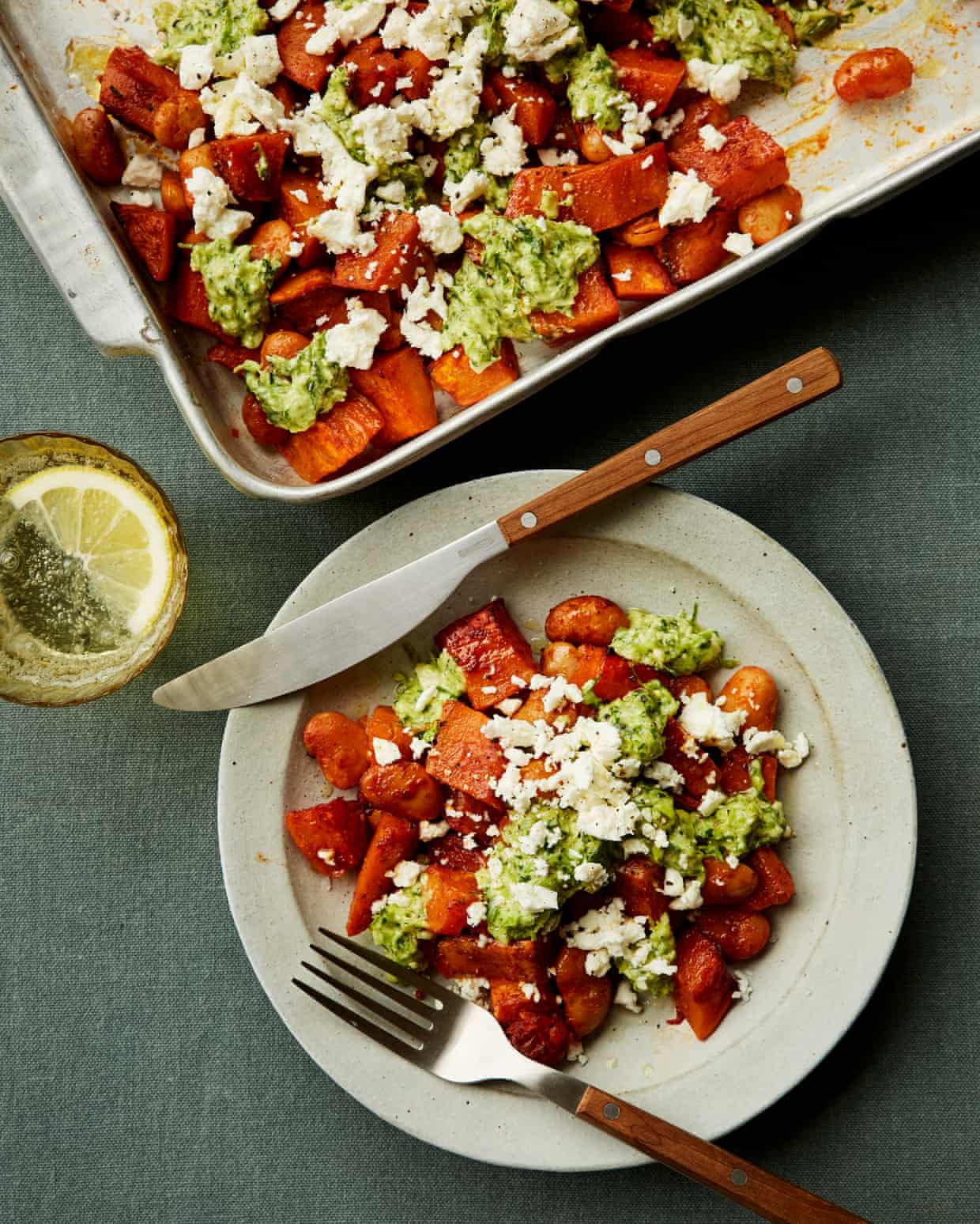
Rukmini Iyer’s quick and easy recipe for roast sweet potato, feta and butter bean traybake | Quick and easy

Overnight oats, spinach pie and cheesy corn muffins: Alexina Anatole’s recipes for make-ahead breakfasts

How to make the perfect breakfast tacos – recipe | Felicity Cloake's How to make the perfect …

Poon’s at Somerset House, London WC2: ‘The tofu dip alone is worth booking a table for’ – restaurant review | Grace Dent on restaurants

Benjamina Ebuehi’s recipe for yoghurt panna cotta with banana and tahini crumble | The sweet spot

How to turn the dregs of a bottle of beer into cheesy rolls – recipe | Waste not