Why have efforts to bring in assisted dying law been thwarted?
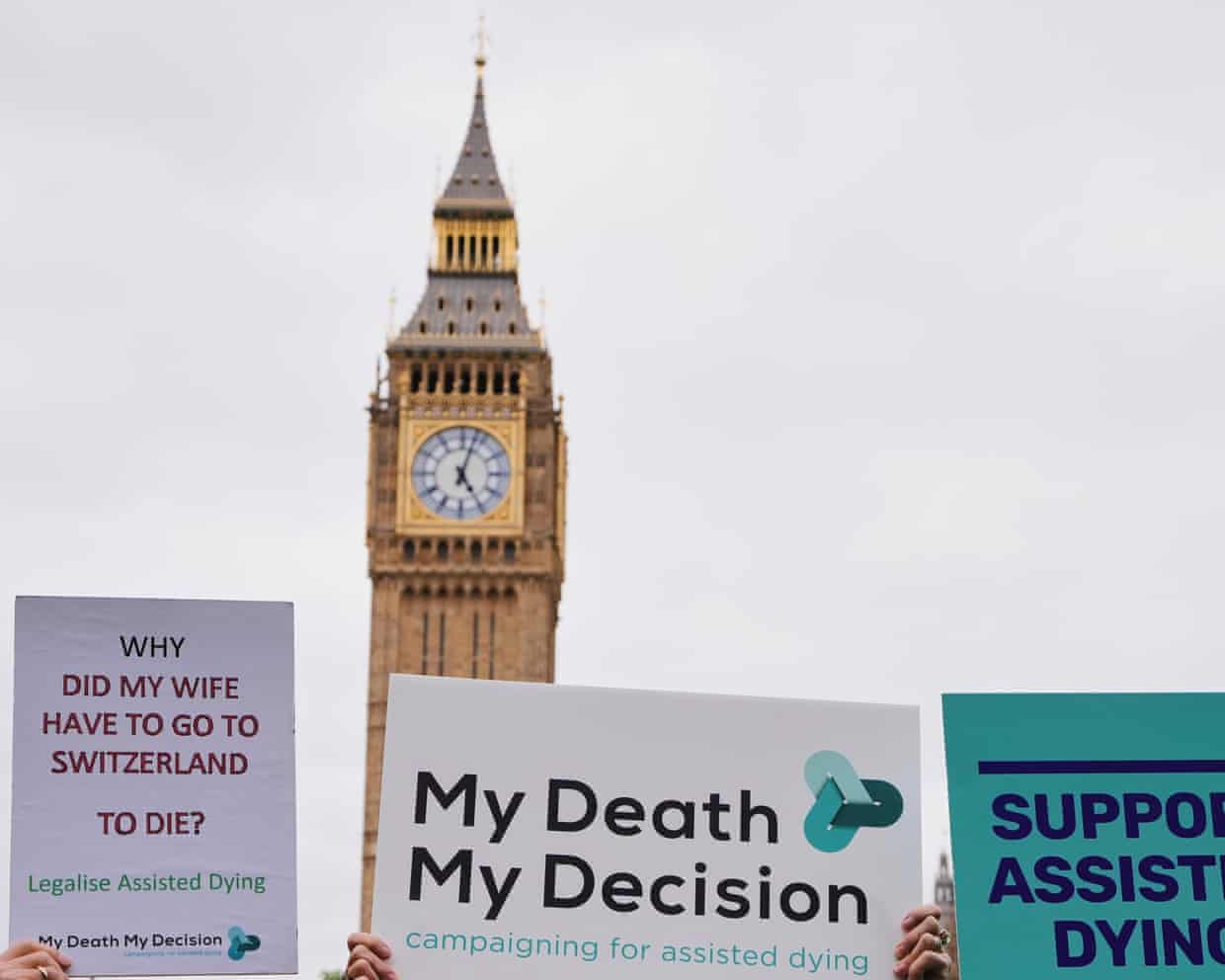
The attempt to bring in new laws allowing assisted dying for terminally ill people with less than six months to live looks likely to fail.The legislation passed the House of Commons but it has struggled in the House of Lords, and campaigners in favour of the new law have accused peers of “sabotage”.Here is what has happened:The law was proposed by a backbench MP, Kim Leadbeater, and backed by a majority in the House of Commons.It did not have government support but No 10 allowed a “free vote” of MPs that permitted them to follow their conscience and it was not whipped.The bill then went to the House of Lords but a small number of opponents of the legislation have laid down so many amendments that it will not be voted on in time to make it through the current parliamentary session that ends in May.
There are less than six days left for debate.The Labour whip in the House of Lords, Roy Kennedy, told a parliamentary committee that the government would not give it any more time as there were only a limited number of sitting Fridays left.The government could have helped the bill through by extending the parliamentary session but this would have been an extraordinary move.MPs will no doubt try again in the new parliamentary session with another backbench bill.The current bill’s backers, Leadbeater and Charles Falconer, have taken advice on forcing through the bill next time using an archaic parliamentary procedure if it continues to be blocked by the Lords.
The high stakes move – described by some backers as the “nuclear option” – would be the first time the 1911 Parliament Act has been invoked for a private member’s bill.They have said they have extensive legal and constitutional advice that proves they can force peers to vote on the bill, unamended, in the next session of parliament.Opponents of the bill in the House of Lords have felt emboldened to frustrate the passage of the bill because it was not sponsored by the government and was not part of the Labour party manifesto with a mandate from the electorate.There is no rule to say that lords cannot use tactics to prevent a bill being passed but supporters of the legislation say that it goes against the spirit of parliament, namely that MPs should have primacy over peers.Opponents say the Commons did not sufficiently scrutinise the legislation and that they are doing their job by holding it to account.
The Parliament Act allows the House of Commons to reintroduce a bill and force legislation through if the Lords repeatedly block it.Since 1949, when it was revised, it has been used for just a handful of bills to enact laws that have not had the consent of the Lords, including decriminalising homosexuality and banning foxhunting.After the session of parliament ends, a bill must be reintroduced and passed again in the new session to trigger the act’s override mechanism.It must be exactly the same version of the bill as passed by the Commons.There are two ways to invoke the Parliament Act: by a supporter adopting it at the next private member’s bill ballot or for the government to give the bill time to return to the Commons.
Supporters of the bill say it is undemocratic for peers to in effect block the legislation.Dame Esther Rantzen accused some peers of “blatant sabotage”.Speaking to Sky News on Thursday, she said: “This is a handful of peers putting down 1,200 amendments not to scrutinise the bill, which is their job, but to block it.”

Dissatisfaction with life in UK unchanged since Covid, official data shows
The proportion of people in the UK who feel dissatisfied with life has failed to improve since the pandemic despite the economic outlook improving, official figures show.The Office for National Statistics said a survey of personal wellbeing in the UK showed average life satisfaction remained below its pre-pandemic peak, despite the rate of gross domestic product per person rising since 2021.The report also flagged the more recent decline in living standards, pointing out that UK GDP per person fell in the third and fourth quarters of 2025.The ONS also said trust in the UK government remained low, with about one in five adults (21.9%) in Great Britain reporting trust in December 2025 to January 2026

Netflix quits Warner Bros takeover battle; FTSE 100 ends week at record high – as it happened
The market reaction to Netflix walking away from Warner Brothers indicates all sides have done well, suggests Matt Britzman, senior equity analyst at Hargreaves Lansdown.With Netflix and Paramount’s shares both up almost 9% in pre-market trading, Britzman says:double quotation markThe streaming takeover saga took a dramatic turn after Warner Bros. Discovery formally recognised Paramount Skydance’s offer as the superior bid, prompting Netflix to walk away almost immediately. After weeks of drama, meetings and speculation, Netflix’s decision to step aside brought an abrupt end to what had been one of the market’s most closely watched corporate chess matches. In the end, it underlined just how fast things can move when big money, regulators and strategic pride collide

BA owner’s profits rise by 20% despite drop in passenger numbers last year
British Airways’ owner, International Airlines Group, has announced a sharp rise in annual profits to almost £4bn despite a slight fall in passenger numbers in 2025.Pre-tax profits across IAG increased by 20% to €4.5bn (£3.9bn), with record operating profits on margins of more than 15% at BA and its sister airline Iberia.The group’s chief executive, Luis Gallego, said the lucrative transatlantic market, also served by IAG’s Aer Lingus and Level airlines, remained robust, after warnings of softening demand in the autumn
Sainsbury’s to cut 300 jobs as it restructures tech team and Argos deliveries
Sainsbury’s is cutting 300 head office jobs as it restructures its technology team and Argos delivery network, creating more separation between the two businesses.The London-based retail group said most of the job cuts would be in technology and data, where it was “consolidating routine reporting tasks” and creating dedicated teams for Argos and the supermarket.The changes also include restructuring the local delivery hubs for Argos, where teams’ shifts will change so they are working more regular hours with less overtime.Regional store directors for the Sainsbury’s Local convenience store chain are also being introduced to help drive that part of the business.The latest changes come after Sainsbury’s decided to invest more in technology to improve efficiency at its business, including AI forecasting tools and warehouse robotics

Trump says affordability crisis is over. Voters and data disagree
The affordability crisis is over, Donald Trump told the US on Tuesday. The president’s state of the union address put the blame for soaring prices squarely on the “dirty, rotten” lies of the Democrats and claimed prices were now “plummeting downward”.“Soon you will see numbers that few people would think were possible to achieve just a short time ago,” Trump said.But more than a year since he was sworn in to office, stubborn inflation and Trump’s chaotic trade policies, have done little to assuage consumers’ fears about the cost of living. Poll after poll shows that, as far as voters are concerned, “affordability” is still very much an issue

Hornby sells slot car racing brand Scalextric for £20m
For almost six decades Hornby has watched Scalextric drive revenues for its hobby business but on Friday the company said it had decided to sell the slot car racing brand for £20m to a little-known buyer.The model railway company, which also sells toy planes and cars under the Airfix and Corgi brands, has sold the Scalextric business and intellectual property rights to Purbeck Capital Partners.Kent-based Hornby, which experienced a hobby boom during the Covid pandemic, has owned Scalextric since 1968. Invented by Fred Francis, the very first Scalextric set was made in Hampshire in 1956.On Friday, Hornby’s parent company, Castelnau, which also owns businesses including the funerals firm Dignity, said it was selling the toy car racing business to Purbeck Capital Partners

Doom Bar maker Sharp’s Brewery in Cornwall to be closed by US owner

Table for one: is eating lunch at work on your own a bad thing?

How to use on-the-turn milk to make an Italian classic – recipe

Nadiya Hussain on food, faith and finding her voice: ‘I get paid less than the white version of me’

Should you sanitise your strawberries? Experts on the right way to wash fruit and vegetables

Do you really need to chill cookie dough? | Kitchen Aide