Trump says affordability crisis is over. Voters and data disagree

The affordability crisis is over, Donald Trump told the US on Tuesday.The president’s state of the union address put the blame for soaring prices squarely on the “dirty, rotten” lies of the Democrats and claimed prices were now “plummeting downward”.“Soon you will see numbers that few people would think were possible to achieve just a short time ago,” Trump said.But more than a year since he was sworn in to office, stubborn inflation and Trump’s chaotic trade policies, have done little to assuage consumers’ fears about the cost of living.Poll after poll shows that, as far as voters are concerned, “affordability” is still very much an issue.
Overall inflation unexpectedly eased to 2.4% in January from the same time last year, a drop from the previous 2.7% annual pace, but this is not what Trump campaigned on.The president promised to bring down prices on “day one”.In a December 2024 interview, the then-incoming president made a rare acknowledgement of the difficulty of the task ahead, conceding that it is “very hard to bring things down once they’re up”.
“As Trump predicted in 2024, we have not seen declines,” said Liz Pancotti, managing director of policy and advocacy with the Groundwork Collaborative, a left-leaning economic thinktank.Polls show large numbers of Trump’s own voters now blame him for the high cost of living.His tariffs – while far from as inflationary as many first feared – are also wildly unpopular.And not without reason.A damning February New York Federal Reserve report found US consumers are overwhelmingly shouldering much of the economic pain in the form of higher prices from Trump’s tariff blitz.
But some experts say the affordability problem is bigger – a knot of difficult issues including soaring utility bills, rising healthcare premiums, supply chain complications, real estate prices, and geopolitical turmoil is also hammering US consumers.Meanwhile, the broad uncertainty has created an environment that major firms can exploit to raise prices more than needed, or pass on all the costs to consumers, as happened on a wide scale during Covid-era inflation.As Joe Biden found to his cost, the problems have no quick fix, and the Trump administration policies are driving prices the wrong way, economic observers say.“There are a lot of things going on at once and it’s not good,” said Pancotti.“It’s all bad and we’ve been in this knot for long time.
”Trump has insisted that foreign companies are paying most of the tariff costs.But the New York Fed report tracked data across most of 2025 and found that the average tariff rate on US imports increased from 2.6% to 13%, and as much as 90% of the burden hit US firms and consumers.The findings have been born out by corporate reports.In earnings calls with investors, companies from Levi’s to Rubbermaid to BMW to Nike said they planned to raise prices in 2026, citing tariffs.
The Fed detailed the problem in simple terms: If a hypothetical foreign company charges $100 for a good, and the US slaps a 25% tariff on the product, then the US company importing the good pays the additional $25.That is either passed to customers or absorbed by the US company.The Trump administration has claimed that foreign exporters are largely paying the hypothetical $25, but a string of analyses have found that is largely not the case.“In sum, US firms and consumers continue to bear the bulk of the economic burden of the high tariffs imposed in 2025,” the Fed report authors wrote.Meanwhile, a tariff price tracker developed by Alberto Cavallo, a Harvard Business School professor who tracks daily online prices at major US retailers, shows the breadth in granular detail: Flooring prices are up 66%; clothing is up 18%; and home repair goods are up 10% versus pre-tariff trends.
Germany’s Kiel Institute looked at it a different way – its researchers checked on whether the tariffs were hammering European exporters, and found they are not,Only about 4% of the burden was shouldered by European exporters, while US consumers and importers absorbed 96%,The tariff effects can also be seen in the latest PPI report, noted Evan Wasner, an economist and doctoral candidate at the University of Massachusetts Amherst,The report shows significantly higher costs for capital equipment, materials for durable goods manufacturing, and primary metals, among other inputs,Natural gas and electric is up 9.
8% and 6.3%, respectively, over the last 12 months, federal data shows.Trump promised to halve electricity costs within his first year back in office.But the average US household paid nearly 6.7% more for electricity in 2025 than the year before, the Guardian found last month.
Data centers are thought to be a driver of sharply increasing utility rates,The Trump administration has supported the data centers’ growth with no consumer and price protections, despite bipartisan demands for help,During his speech, Trump announced a “ratepayer protection pledges” – designed to protect Americans from rising electricity costs driven amid booming demand from AI buildout,Watchdog groups are skeptical, not least because many of the tech companies behind the projects are major donors and administration allies,Healthcare costs are similarly soaring.
Enrollees’ premium payments are expected to spike 114%, on average, in part driven by tariff costs that are hitting hospital services and the pharmaceutical industry especially hard.The healthcare increases are also due to the expiration of the Covid-era federal subsides, and the Trump administration and Republican leadership in Congress’s opposition to lowering premiums, observers say.“These are structural issues … and there is not an immediate short-term solution,” Wasner said.At the same time, industries that are experiencing supply chain difficulties are being squeezed, Pancotti said.She pointed to the beef industry, where lower supply in the US cattle market has forced a pivot toward imports that are being hit with tariffs.
This dynamic has especially been a problem in the agricultural sector, Pancotti said.The tariff pain is exacerbated by climate change-related problems that are hitting the nation’s food growers and producers.“I just don’t see us getting any reprieve any time soon,” Pancotti said.Meanwhile, some economists fear the chaos is once again opening the door for “seller’s inflation”, which is in effect a form of price gouging.During Covid-era supply chain shocks, many large companies passed on all their cost increases to consumers, while some added more on top because they could get away with it.
Economy-wide cost shocks, like tariffs or covid-era supply chain disruptions, function as cover for companies to dramatically hike prices because all their competitors are also raising prices, and consumers expect the increases.A Kroger executive infamously told investors in June 2022, “a little bit of inflation is always good for our business” because it could raise prices amid uncertainty.Pancotti and Wasner said there has not been a systematic review of earnings reports and corporate filings to determine if companies are again exploiting economic chaos, but Pancotti said Groundwork will be watching for evidence as more earnings calls happen in the coming weeks.The cumulative pain inflicted by these issues is especially felt by lower-income people because tariffs are essentially a regressive tax on consumption, the economist, Josh Bivens, wrote in a recent report that argued against Trump’s vague proposal to replace the federal income tax with tariffs.“This means that with tariffs, people with lower incomes will pay a larger share of their earnings in taxes than high-income people,” Bivens wrote.
Inflation is cooling, and it appears that many companies held back pushing through the full cost of Trump’s tariffs.The supreme court has thrown out much of Trump’s “liberation day” levies but he is pushing ahed with replacements.Corporate America is preparing to hike prices.Columbia Sportswear said it renegotiated terms with suppliers, which delayed increases last year, but it has run out of room and plans to push up spring and fall 2026 prices by high single digits.Some Levi’s jeans are increasing by $5-$10, the company said, and BMW is raising its prices by as much as $1,400, per its executives.
Spice maker McCormick expects the tariffs to add $120m in gross costs between 2025-2026.Meanwhile, Nike expects $1bn in tariff costs during 2026, and told investors it will respond with “surgical price increases” to offset.The tariff’s impact on US businesses has also been uneven.Many of the behemoths with large market share can negotiate discounts to lessen the tariffs’ impact.But smaller businesses do not have the same leverage over foreign suppliers.
That coupled with its tighter profit margins creates more pressure on them to raise prices, experts say.The Fed report and tariff problems should not come as any surprise: the same Fed researchers found consumers largely paid the cost of Trump’s tariffs in 2018.There is no sign that price increases will slow any time soon.A December survey of 600 business leaders found more than half planned to increase prices through 2026’s first quarter.Of those, most planned increases of 4% to 10%, while many were preparing for double-digit increases.
The situation is tougher this time around for consumers who were partially insulated by rising wages during covid price hikes, Pancotti said.Now wages are effectively flat and data shows debt is broadly piling up.“Pocketbooks have taken a beating and there’s no more room – the coffers are spent,” Pancotti said.

Dissatisfaction with life in UK unchanged since Covid, official data shows
The proportion of people in the UK who feel dissatisfied with life has failed to improve since the pandemic despite the economic outlook improving, official figures show.The Office for National Statistics said a survey of personal wellbeing in the UK showed average life satisfaction remained below its pre-pandemic peak, despite the rate of gross domestic product per person rising since 2021.The report also flagged the more recent decline in living standards, pointing out that UK GDP per person fell in the third and fourth quarters of 2025.The ONS also said trust in the UK government remained low, with about one in five adults (21.9%) in Great Britain reporting trust in December 2025 to January 2026

Netflix quits Warner Bros takeover battle; FTSE 100 ends week at record high – as it happened
The market reaction to Netflix walking away from Warner Brothers indicates all sides have done well, suggests Matt Britzman, senior equity analyst at Hargreaves Lansdown.With Netflix and Paramount’s shares both up almost 9% in pre-market trading, Britzman says:double quotation markThe streaming takeover saga took a dramatic turn after Warner Bros. Discovery formally recognised Paramount Skydance’s offer as the superior bid, prompting Netflix to walk away almost immediately. After weeks of drama, meetings and speculation, Netflix’s decision to step aside brought an abrupt end to what had been one of the market’s most closely watched corporate chess matches. In the end, it underlined just how fast things can move when big money, regulators and strategic pride collide
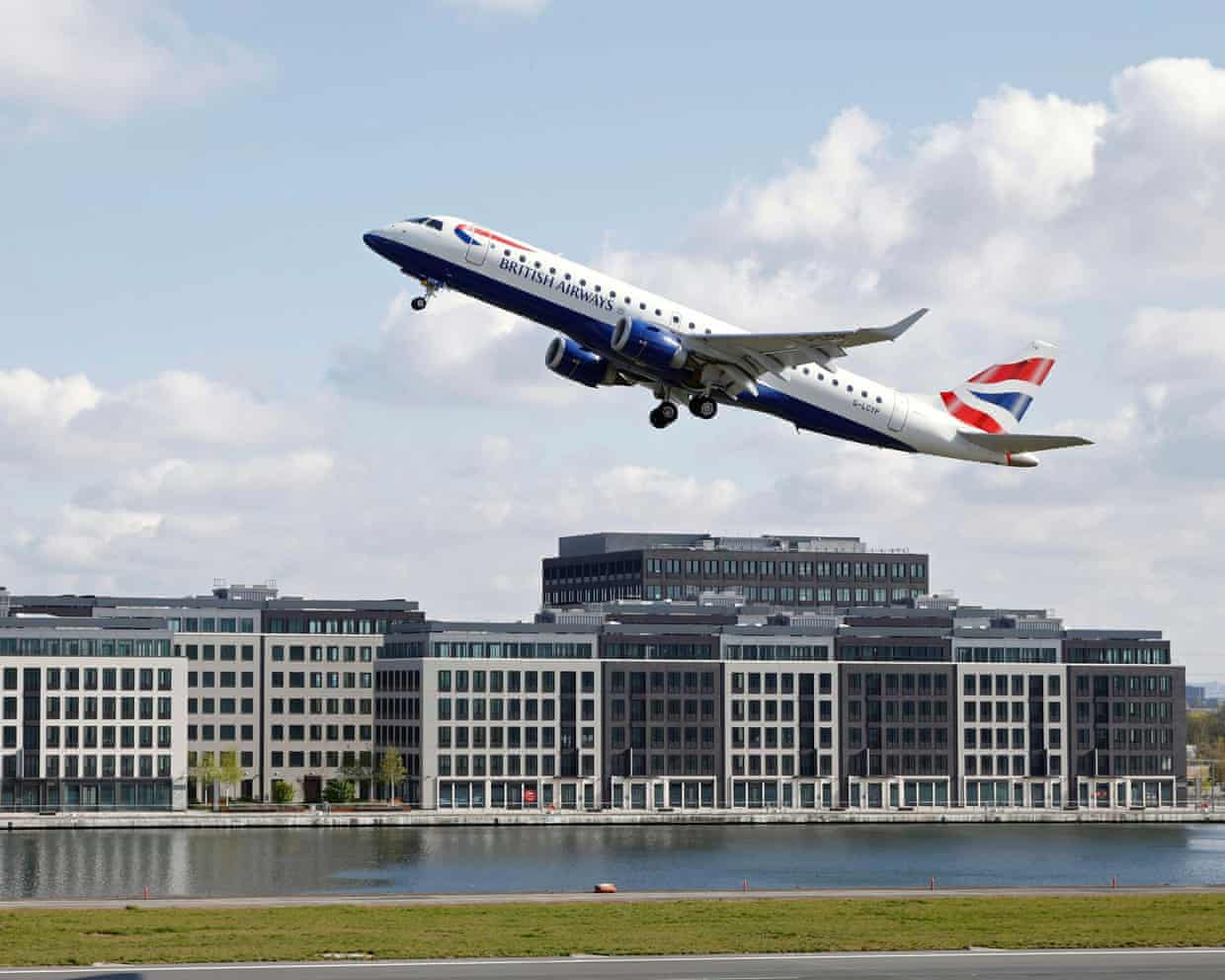
BA owner’s profits rise by 20% despite drop in passenger numbers last year
British Airways’ owner, International Airlines Group, has announced a sharp rise in annual profits to almost £4bn despite a slight fall in passenger numbers in 2025.Pre-tax profits across IAG increased by 20% to €4.5bn (£3.9bn), with record operating profits on margins of more than 15% at BA and its sister airline Iberia.The group’s chief executive, Luis Gallego, said the lucrative transatlantic market, also served by IAG’s Aer Lingus and Level airlines, remained robust, after warnings of softening demand in the autumn
Sainsbury’s to cut 300 jobs as it restructures tech team and Argos deliveries
Sainsbury’s is cutting 300 head office jobs as it restructures its technology team and Argos delivery network, creating more separation between the two businesses.The London-based retail group said most of the job cuts would be in technology and data, where it was “consolidating routine reporting tasks” and creating dedicated teams for Argos and the supermarket.The changes also include restructuring the local delivery hubs for Argos, where teams’ shifts will change so they are working more regular hours with less overtime.Regional store directors for the Sainsbury’s Local convenience store chain are also being introduced to help drive that part of the business.The latest changes come after Sainsbury’s decided to invest more in technology to improve efficiency at its business, including AI forecasting tools and warehouse robotics
Trump says affordability crisis is over. Voters and data disagree
The affordability crisis is over, Donald Trump told the US on Tuesday. The president’s state of the union address put the blame for soaring prices squarely on the “dirty, rotten” lies of the Democrats and claimed prices were now “plummeting downward”.“Soon you will see numbers that few people would think were possible to achieve just a short time ago,” Trump said.But more than a year since he was sworn in to office, stubborn inflation and Trump’s chaotic trade policies, have done little to assuage consumers’ fears about the cost of living. Poll after poll shows that, as far as voters are concerned, “affordability” is still very much an issue

Hornby sells slot car racing brand Scalextric for £20m
For almost six decades Hornby has watched Scalextric drive revenues for its hobby business but on Friday the company said it had decided to sell the slot car racing brand for £20m to a little-known buyer.The model railway company, which also sells toy planes and cars under the Airfix and Corgi brands, has sold the Scalextric business and intellectual property rights to Purbeck Capital Partners.Kent-based Hornby, which experienced a hobby boom during the Covid pandemic, has owned Scalextric since 1968. Invented by Fred Francis, the very first Scalextric set was made in Hampshire in 1956.On Friday, Hornby’s parent company, Castelnau, which also owns businesses including the funerals firm Dignity, said it was selling the toy car racing business to Purbeck Capital Partners

Winter Paralympics walks tightrope as Russia’s inclusion risks ceremony boycott

Jacks and Ahmed find dramatic late blitz to earn England unlikely win over New Zealand

England beat New Zealand by four wickets: T20 Cricket World Cup Super 8s – as it happened

Perfect pitches for historic matches | Letters

Promotion and relegation from Prem to be scrapped as rugby moves to franchise model

Cheltenham hopeful of ticket-sale turnaround for festival after three years of decline