UK government strategy to protect women and girls from violence ‘seriously underfunded’

A landmark strategy to protect women and girls from violence and abuse “falls seriously short” of the funding required to realise the government’s ambitions, campaigners have said.The government’s strategy to combat violence against women and girls (VAWG) was hailed as a “milestone” by women’s organisations.It will focus on prevention and tackling harmful behaviours in boys, by teaching pupils about healthy relationships and pornography and equipping teachers with the skills to intervene if they witness disturbing or worrying behaviour.Presenting the strategy in the House of Commons on Thursday, Jess Phillips, the safeguarding minister, who has played a central role in developing the policies, said the strategy was backed by £1bn of funding and was “more than a document”.“It is a call from a government that recognises this as a national emergency, a government that is willing to back up its words with action,” she said.
“Ending violence against women and girls is the work of us all … It will take all of society to step up and end the epidemic of abuse and violence that shames our country.”The document spells out cross-governmental plans to address VAWG by focusing on prevention and measures such as sending experts to secondary schools to educate children about consent and the dangers of sharing explicit images.Teachers will also be able to send young people at risk of causing harm on behavioural courses.Phillips said that as well as prevention, new measures would “bear down” on perpetrators and support victims so they could “get justice when they seek it, and the closure that they deserve”.Andrea Simon, the director of the End Violence Against Women coalition, said the strategy was welcome but that the £3m allocated to a teacher training pilot would “barely touch the surface of the additional infrastructure needed”.
She said many organisations that support abused women were facing a funding crisis, which the strategy was promising little to help,“This is an important milestone but we remain deeply concerned about financial challenges for frontline support services following years of chronic underfunding,The delays to this strategy’s publication have only made this worse,” she said,Policies in the heavily trailed packages include:Tackling misogyny with focused education in schools,A new GP referral service and £50m funding for therapeutic support for child victims of sexual abuse.
New laws to ban AI “nudification” apps.Plans to work with tech companies to ban the sharing of nude images on children’s phones.Specialist rape and sexual offences units in every police force.A national rollout of strict new restraining orders on domestic abusers.£19m funding for councils to provide safe housing for domestic abuse survivors.
£550m investment to support victims and witnesses throughout the criminal justice system.One aspect of the strategy which has drawn criticism from the Conservatives is its focus on tackling misogyny among boys.Simon said the focus on early intervention must not target or demonise individual boys.“We don’t want a situation that is overly punitive around very young boys,” she said.“Young people need education and awareness-raising, but we have to recognise that the problem is systemic and those profiting the most from rising extreme misogyny are the tech platforms who must be held to account.
”The domestic abuse commissioner for England and Wales also raised concerns about the level of funding for services.“Today’s strategy rightly recognises the scale of this challenge and the need to address the misogynistic attitudes that underpin it, but the level of investment to achieve this falls seriously short,” Nicole Jacobs said.“There is still no long-term sustainable funding for specialist services to ensure victims can actually access support in their area, despite the fact many of these measures will likely drive up referrals.”One source in the sector said that despite multiple briefings which revealed much of the policies in the strategy before its release, the strategy remained unclear.“I think there is quite a lot of disappointment,” they said.
“It’s all very kind of top level and vague.All of the initiatives do nothing to alleviate the enormous strain on frontline services.The announcements are actually an investment into education and health, not into the sector.”Karen Ingala Smith, co-founder of the Femicide Census, which records the killings of women by men in the UK, welcomed the strategy’s explicit use of the term.“Femicide is arguably the most serious form of men’s violence against women and girls,” she said.
The Conservatives faced criticism after their leader, Kemi Badenoch, was accused of weaponising violence against women and girls and of using “dangerous” and “deeply inaccurate” claims in her response to the government’s plan.Badenoch said plans to tackle misogyny in schools were being introduced only because “some people in Labour” watched the Netflix drama Adolescence, adding that the focus should be on “people, who come from cultures that don’t respect women, coming into our country”.She added: “The fact is, it’s not 11-year-old boys in school who are perpetrating violence against women and girls … They need to do the right thing, put police officers on the street, stop people who come from cultures that don’t respect women coming into our country, foreign criminals removed as soon as they commit crimes.”Ghadah Alnasseri, the co-executive director at Imkaan, a charity that supports women from minority ethnic backgrounds, said the response could put women at risk.“Her rhetoric is very dangerous,” Alnasseri said, adding that the majority of victims of sexual and domestic abuse knew their abuser.
“It’s deeply inaccurate, it’s misinformation and it’s spreading racism.”The best public interest journalism relies on first-hand accounts from people in the know.If you have something to share on this subject, you can contact us confidentially using the following methods.Secure Messaging in the Guardian appThe Guardian app has a tool to send tips about stories.Messages are end to end encrypted and concealed within the routine activity that every Guardian mobile app performs.
This prevents an observer from knowing that you are communicating with us at all, let alone what is being said.If you don't already have the Guardian app, download it (iOS/Android) and go to the menu.Select ‘Secure Messaging’.SecureDrop, instant messengers, email, telephone and postIf you can safely use the Tor network without being observed or monitored, you can send messages and documents to the Guardian via our SecureDrop platform.Finally, our guide at theguardian.
com/tips lists several ways to contact us securely, and discusses the pros and cons of each.

Sony collars Snoopy in £340m deal to take control of Peanuts franchise
Sony has taken control of Charles Schulz’s Peanuts franchise including Snoopy and Charlie Brown in a deal worth C$630m (£340m).The Japanese conglomerate has bought 41% of Peanuts Holdings, which owns the intellectual property Schulz created, from the Canadian children’s entertainment company WildBrain.The deal raises Sony’s total stake, which it began building in 2018, to 80%. The Schulz family owns the remaining 20%.Peanuts, which first appeared as a comic strip in seven newspapers in 1950 and ran daily until the cartoonist’s death in 2000, has gone on to become a global franchise spanning TV, toys, films and theme park attractions

TikTok signs Trump-backed deal to avoid US ban
TikTok has reached a deal to form a joint venture that will allow it to continue operating in the US, five years after Donald Trump threatened to ban the social media platform over privacy and national security concerns, a move that further strained relations with China.ByteDance, TikTok’s Chinese owner, has signed a deal with Larry Ellison’s Oracle, the private-equity group Silver Lake and Abu Dhabi’s MGX that will allow it to retain control of its core US operations.Under the arrangement, the joint venture will take over part of TikTok’s US business, including data protection, algorithm security and content moderation.However, TikTok’s chief executive, Shou Zi Chew, told employees in a memo that ByteDance would continue to run US operations, including its main revenue drivers such as e-commerce, advertising and marketing.The deal ends five years of uncertainty over the future of TikTok in the US, where the platform has more than 130 million users
What will your life look like in 2035?
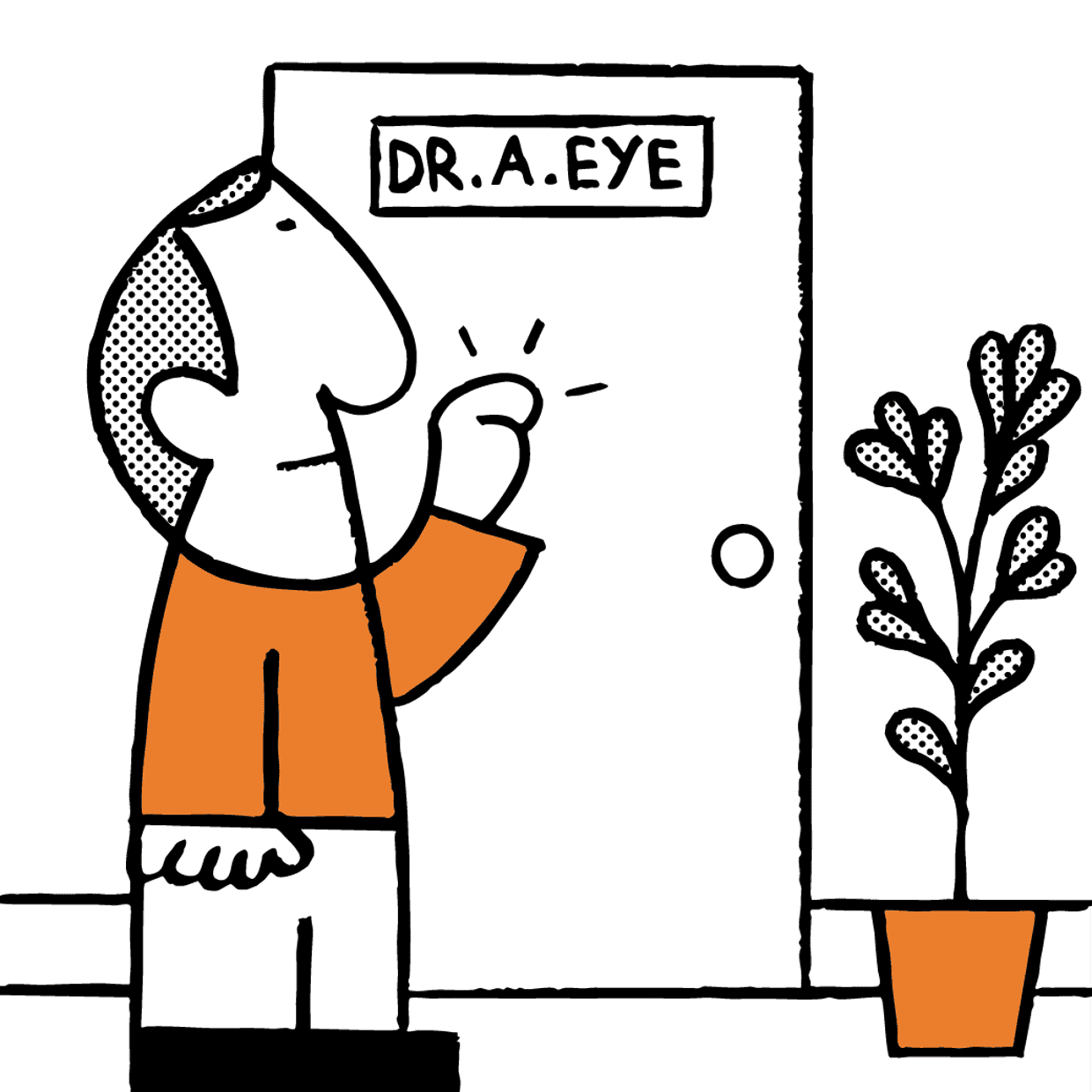
“Does it hurt when I do this?”“You seem to have dislocat…”A Eye: “NOOOO! The problem is a sprain in the brachial plexus due to you lifting that 10kg carton on Wednesday at 2.58pm and not eating enough blah blah”“Wow, err, thanks”In 2035, AIs are more than co-pilots in medicine, they have become the frontline for much primary care. Gone is the early morning scramble to get through to a harassed GP receptionist for help. Patients now contact their doctor’s AI to explain their ailments. It quickly cross-checks the information against the patient’s medical history and provides a pre-diagnosis, putting the human GP in a position to decide what to do next

Facebook tests charging users to share links in potential blow for news outlets
Facebook is testing a system that charges users for sharing web links, in a move that could prove to be a further blow to news outlets and other publishers.Meta, the social media platform’s owner, said it is carrying out a “limited test” in which those without a paid Meta Verified subscription, costing at least £9.99 a month, can only post two external links a month.The test appears to involve a subset of Facebook pages and user profiles on Professional Mode, which includes features used by content creators to monetise their posts.News organisations are not included in the test

AI boom has caused same CO2 emissions in 2025 as New York City, report claims
The AI boom has caused as much carbon dioxide to be released into the atmosphere in 2025 as emitted by the whole of New York City, it has been claimed.The global environmental impact of the rapidly spreading technology has been estimated in research published on Wednesday, which also found that AI-related water use now exceeds the entirety of global bottled-water demand.The figures have been compiled by the Dutch academic Alex de Vries-Gao, the founder of Digiconomist, a company that researches the unintended consequences of digital trends. He claimed they were the first attempt to measure the specific effect of artificial intelligence rather than datacentres in general as the use of chatbots such as OpenAI’s ChatGPT and Google’s Gemini soared in 2025.The figures show the estimated greenhouse gas emissions from AI use are also now equivalent to more than 8% of global aviation emissions

Third of UK citizens have used AI for emotional support, research reveals
A third of UK citizens have used artificial intelligence for emotional support, companionship or social interaction, according to the government’s AI security body.The AI Security Institute (AISI) said nearly one in 10 people used systems like chatbots for emotional purposes on a weekly basis, and 4% daily.AISI called for further research, citing the death this year of the US teenager Adam Raine, who killed himself after discussing suicide with ChatGPT.“People are increasingly turning to AI systems for emotional support or social interaction,” AISI said in its first Frontier AI Trends report. “While many users report positive experiences, recent high-profile cases of harm underline the need for research into this area, including the conditions under which harm could occur, and the safeguards that could enable beneficial use
UK government strategy to protect women and girls from violence ‘seriously underfunded’

Long waits and ‘unacceptable’ lack of data at NHS gender clinics in England, review finds

Stay at home if you have flu symptoms, experts urge amid fears of second surge

Better to be online than on hold for a GP | Brief letters

Council funding deal: who are the winners and losers – and will tax bills rise?
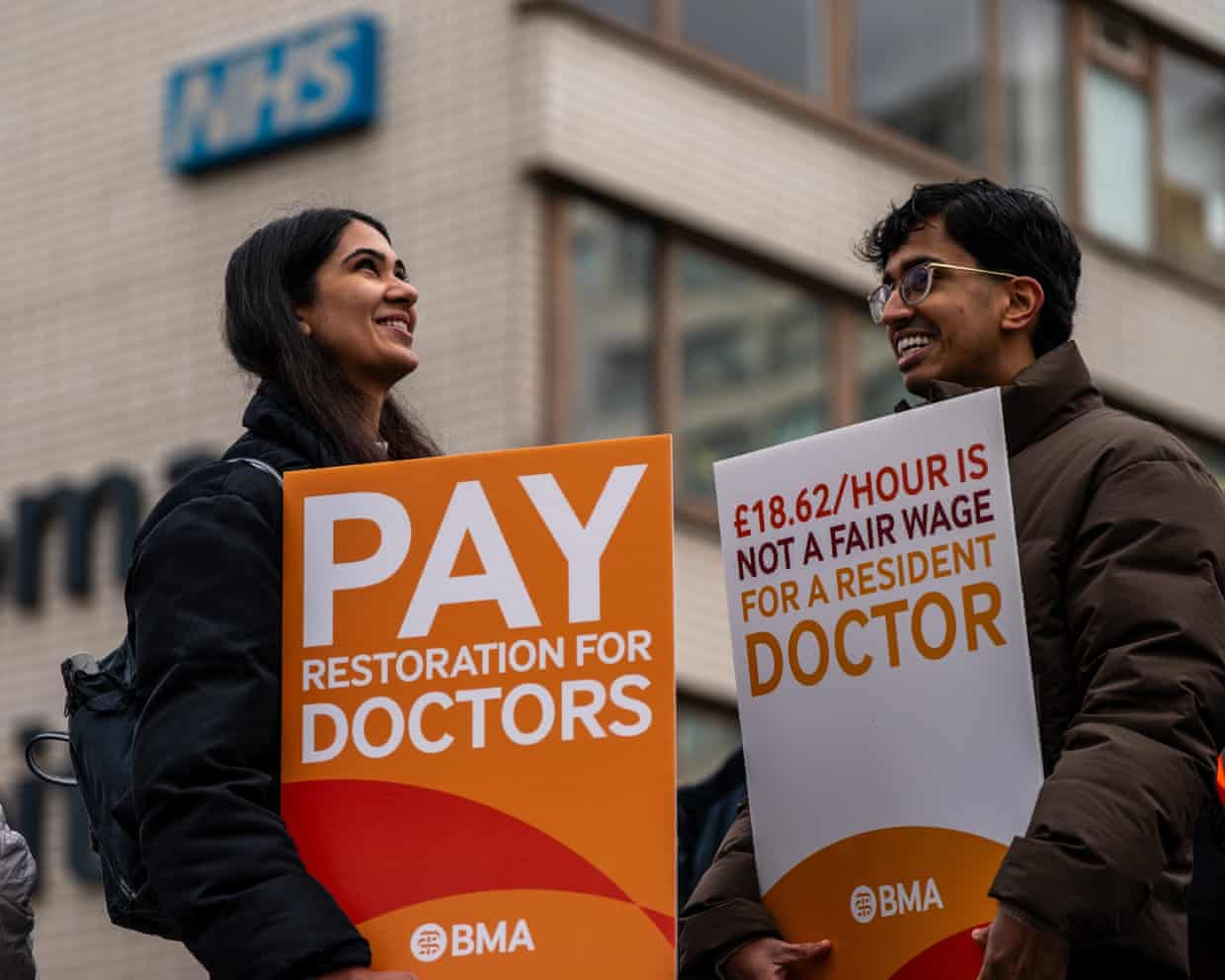
Acas offers to help break deadlock in resident doctors’ strike