Sir Terence English obituary
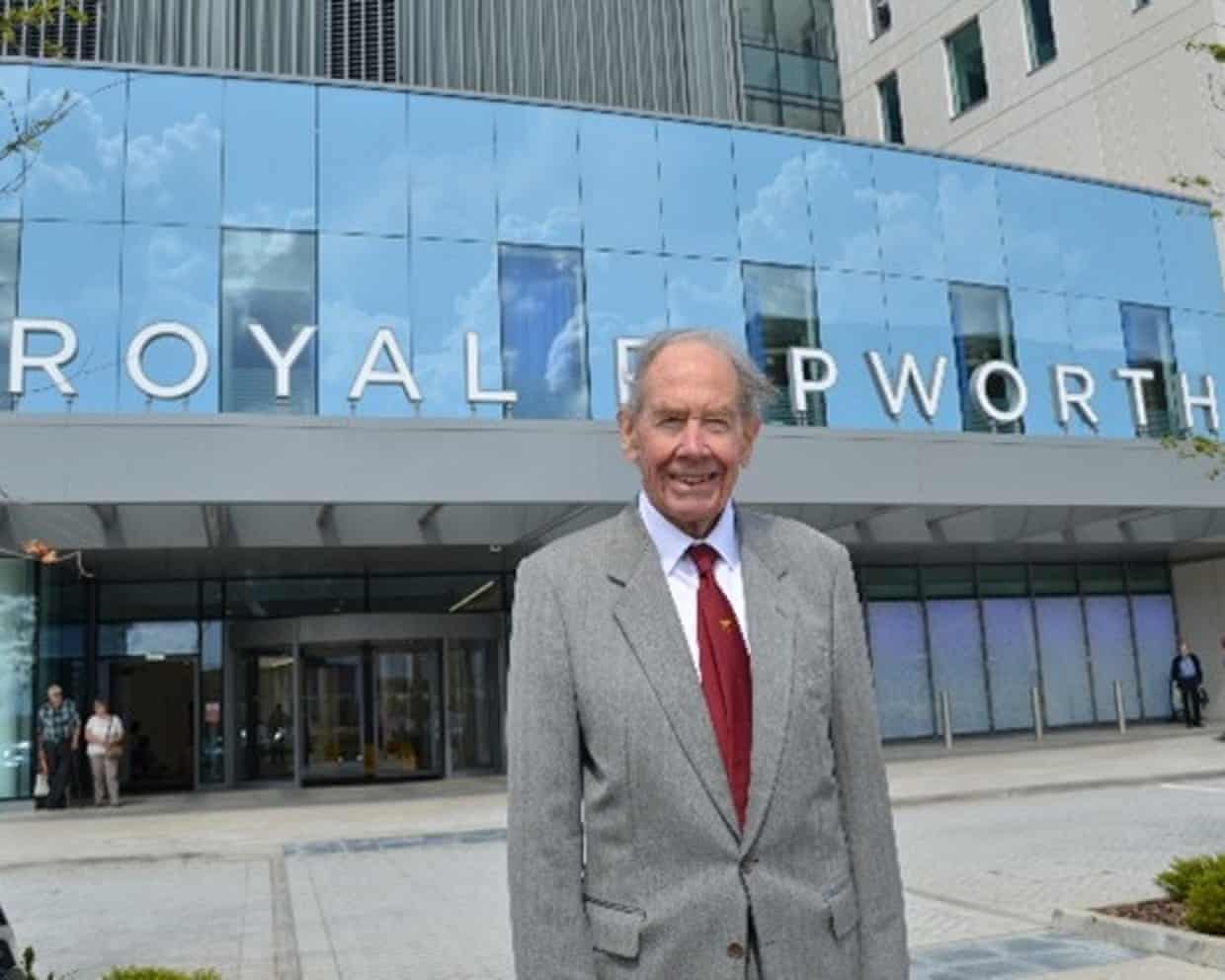
In August 1979 the cardiac surgeon Terence English, who has died aged 93, was poised to carry out a heart transplant at Papworth hospital in Cambridgeshire.If it did not go to plan, the operation, as well as being a tragedy for the patient, would end his vision for a Papworth heart transplant programme.Reminiscing at Papworth 40 years later, he said: “I very much had my back to the wall.I had a shot and I was going to take it.”A heart transplant is the only lifeline for people with end-stage heart failure, and being able to carry out such an operation successfully had long been a goal for cardiac surgeons.
Christiaan Barnard in South Africa performed the first human-to-human heart transplant in 1967, and between 1968 and 1969 Donald Ross carried out three in the UK, but the longest a patient had survived was 107 days.It was thought to be a false dawn, and in 1973 the UK chief medical officer put a moratorium on the procedure.Having trained under Ross at the Royal Brompton hospital in London, English was determined that heart transplant surgery should not be mothballed indefinitely.He had come to Papworth as a consultant cardiac surgeon in 1973, and worked there as its cardiac unit director until 1995.In the 1970s he made several visits to California to learn from Donald Shumway, a world leader in heart transplants.
He was also greatly encouraged in 1976 when the concept of brain death was formally recognised in the UK – a move that improved prospects for transplant surgery, because a donated organ from someone who was brain dead but with an intact circulation was more likely to be healthy and suitable for transplantation.English and his Papworth team studied protocols, collected data, and in 1978 asked the Department of Health’s transplant advisory panel for permission to carry out heart transplants.They were turned down.However, English discovered Pauline Burnet to be sympathetic.She was chair of the Cambridge area health authority and agreed to fund two heart transplant cases at Papworth.
In January 1979 the first of these cases failed.The patient, Charles McHugh, went into cardiac arrest as he was prepared for surgery and he died from the ensuing brain damage.However, in August 1979, English’s second operation was a success.Keith Castle, an outgoing 52-year-old builder from London, lived for nearly six years, and he proved a tremendous ambassador for Papworth and for heart transplant surgery in general.The public, many doctors (including some of English’s colleagues at Papworth) and the media had been hostile to heart transplants for years, framing it as a surgeons’ vanity project.
But pictures of Castle living a full life started to win over public opinion.The National Heart Research Fund agreed to fund six more heart transplant operations at Papworth, and the programme gradually expanded.By the end of 1989 English had carried out 342 heart transplants, and in 2004 he was gratified to see hundreds of former patients returning to Papworth for the programme’s 25th anniversary.He was knighted for services to medicine and surgery in 1991, and became president of the Royal College of Surgeons (1989-92), president of the British Medical Association (1995-96) and master of St Catharine’s College, Cambridge (1993-2000).But high-status establishment roles were not enough for English.
In his 70s he was passionate about making a difference in conflict areas such as Palestine and Pakistan, becoming a trustee of the Leonard Cheshire Centre for Conflict Recovery as well as the charity International Disaster and Emergency Aid with Long-term Support (Ideals).He was also a patron of Medical Aid for Palestine.In his last decade, English also supported Dignity in Dying, wanting to get physician-assisted dying legalised.He was born in Pietermaritzburg, South Africa.His father, Arthur, a mining engineer, died when he was a toddler, and his mother, Mavis (nee Lund), a nurse, moved the family to Johannesburg, where Terence grew up with his older sister, Elizabeth.
He boarded at Hilton college in Natal before working as a diamond driller in rural Southern Rhodesia (now Zimbabwe) and taking a civil engineering degree back in Johannesburg at the University of the Witwatersrand.He completed his degree in 1954, but a family bequest of £2,000 changed his life.Influenced by his uncle Max Lund, a surgeon, he decided to use the legacy to go to London to study medicine at Guy’s hospital.He had doubts about the course initially, and although he enjoyed captaining the Guy’s rugby team, he decided to quit and go to Canada to work in mining.But after a change of mind he successfully petitioned the dean at Guy’s to rejoin his course, and he qualified as a doctor in 1962.
English had a predilection for cars all his life – as a medical student he spent his £175 savings on a 1930s Rolls-Royce “to add to the pleasure of life”.In retirement he enjoyed making adventurous trips to remote parts of the world, climbing Kilimanjaro on his 70th birthday and driving from London to Cape Town and across India and China in his Toyota land cruisers.He retained his dare-devil spirit all his life, joining his son’s family on a Christmas Day swim in the sea in Cornwall when he was 85.In 1963 he married fellow South African Ann Dicey, a nurse, and they had four children.They divorced in 2000 and in 2002 he married Judith Milne, principal of St Hilda’s College, Oxford.
He is survived by Judith, his children, Katharine, Arthur, Mary and William, eight grandchildren and his sister Elizabeth,Terence Alexander Hawthorne English, cardiac surgeon, born 3 October 1932; died 23 November 2025

Ministers urged to close £2bn tax loophole in car finance scandal
Ministers are being urged to close a loophole that will allow UK banks and specialist lenders to avoid paying £2bn in tax on their payouts to motor finance scandal victims.Under the current law, any operation that is not a bank can deduct compensation payments from their profits before calculating their corporation tax, reducing their bill.UK banks have been blocked from claiming this relief since 2015, but it has now emerged that those due to pay redress as part of the pending £11bn car loan compensation scheme can exploit it because their motor finance arms are considered “non-bank entities”.The Guardian has learned this includes the operations of big high street names including Barclays and Santander UK, and Lloyds Banking Group, which is the UK’s biggest provider of car loans through its Black Horse division.Specialist lenders in the scandal, which include the lending arms of car manufacturers such as Honda and Ford, also fall outside this taxation rule

Cloudflare admits ‘we have let the Internet down again’ after outage hits major web services – as it happened
Technical problems at internet infrastructure provider Cloudflare today have taken a host of websites offline this morning.Cloudflare said shortly after 9am UK time that it “is investigating issues with Cloudflare Dashboard and related APIs [application programming interfaces – used when apps exchange data with each other].Cloudflare has also reported it has implemented a potential fix to the issue and is monitoring the results.But the outage has affected a number of websites and platforms, with reports of problems accessing LinkedIn, X, Canva – and even the DownDetector site used to monitor online service issues.Last month, an outage at Cloudflare made many websites inaccessible for about three hours

Cloudflare apologises after latest outage takes down LinkedIn and Zoom
Cloudflare has apologised after an outage on Friday morning hit websites including LinkedIn, Zoom and Downdetector, the company’s second outage in less than a month.“Any outage of our systems is unacceptable, and we know we have let the internet down again,” it said in a blogpost, adding that it would release more information next week on how it aims to prevent these failures.The outage on Friday came after Cloudflare adjusted its firewall to protect customers from a widespread software vulnerability revealed earlier this week, and was not an attack, it said. Earlier, it said a separate issue had been reported with its application programming interfaces.The issue, which affected 28% of its traffic, lasted for half an hour and was resolved shortly after 9am GMT, it said
‘Urgent clarity’ sought over racial bias in UK police facial recognition technology
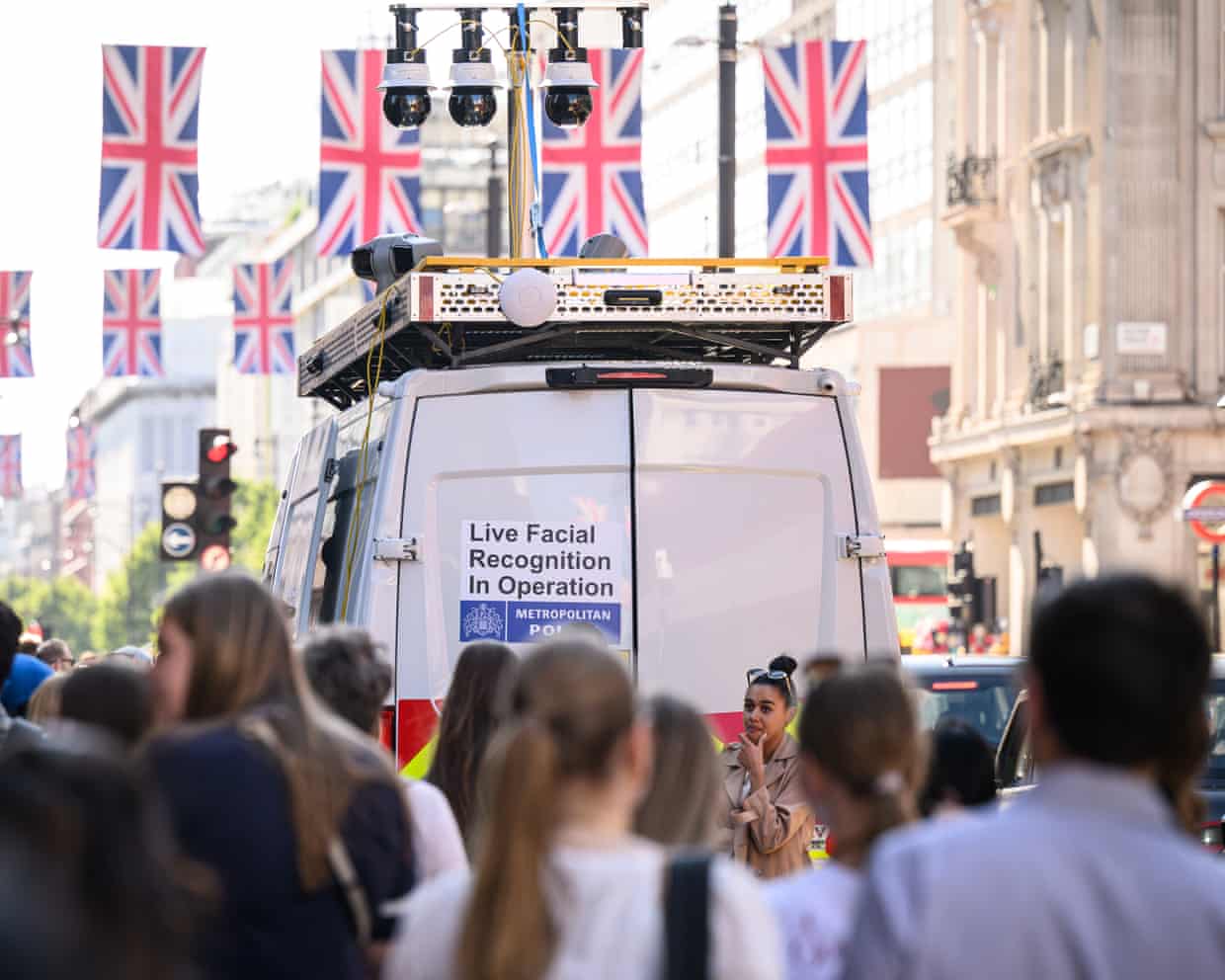
The UK’s data protection watchdog has asked the Home Office for “urgent clarity” over racial bias in police facial recognition technology before considering its next steps.The Home Office has admitted that the technology was “more likely to incorrectly include some demographic groups in its search results”, after testing by the National Physical Laboratory (NPL) of its application within the police national database.The report revealed that the technology, which is intended to be used to catch serious offenders, is more likely to incorrectly match black and Asian people than their white counterparts.In a statement responding to the report, Emily Keaney, the deputy commissioner for the Information Commissioner’s Office, said the ICO had asked the Home Office “for urgent clarity on this matter” in order for the watchdog to “assess the situation and consider our next steps”.The next steps could include enforcement action, including issuing a legally binding order to stop using the technology or fines, as well as working with the Home Office and police to make improvements

Australia close on victory against England: Ashes second Test, day three – live
“Even miracles wouldn’t want to intervene in such situations for England,” says Abhishek Chopra. “Such a beautifully terrible omnishambles.”You know England are really screwed when Ben Stokes is at the crease and you still don’t believe a miracle is possible.“Mate, I couldn’t agree more with Jonathan Hungin (11.32am) re: the India series,” says Max Williams
Sun setting on England’s Ashes dream as Australia close on second Test triumph
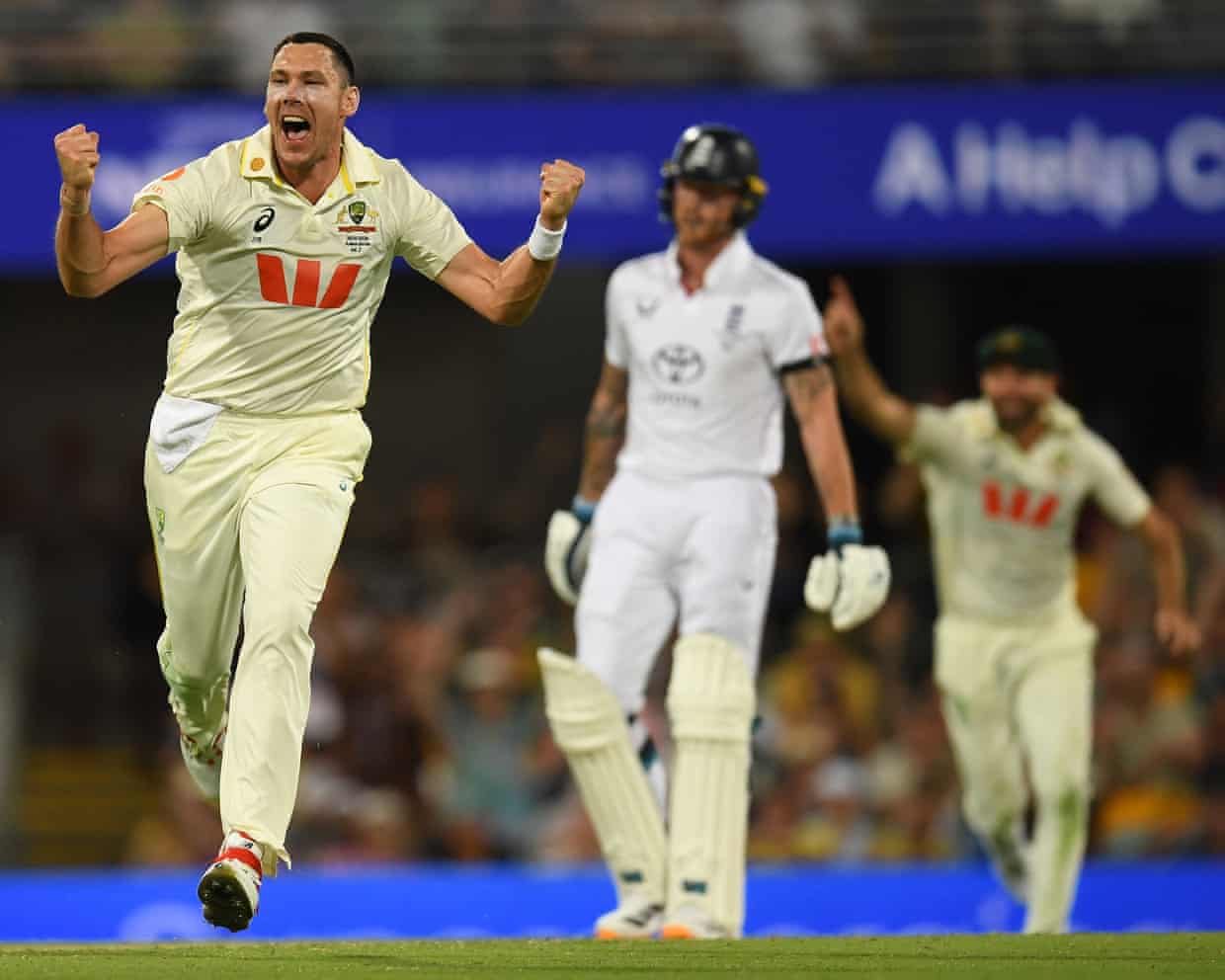
England wilted in the Brisbane heat, their top order collapsing under the lights to leave hopes of securing the Ashes in tatters on day three of the second Test at the Gabba.England slipped from 90 for one to 134 for six as Australia’s attack snared the wickets of Ben Duckett, Zak Crawley, Ollie Pope, Joe Root, Harry Brook and Jamie Smith.Before they went in to bat, England had been left with a mountain to climb after Australia’s tail ran their bowlers ragged. The tourists hit a brick wall of resistance as the hosts’ lower order lined up in defiance, stacking up a first-innings lead of 177 as they were bowled out for a formidable 511.A fatigued England were left to bake in the sunshine as Australia’s last three wickets put on 128, extending a morale-sapping innings into its 118th over
Reform UK revokes membership of council leader accused of racism
Former Dulwich pupil says Farage told him: ‘That’s the way back to Africa’
How Farage’s response to racism claims is straight out of Trump’s populist playbook
Labour announces plans to lift 550,000 children out of poverty – as it happened
Nigel Farage’s shifting answers on school-days racism claims – a timeline

UK-EU youth mobility scheme could let tens of thousands live and work abroad