Reform UK revokes membership of council leader accused of racism
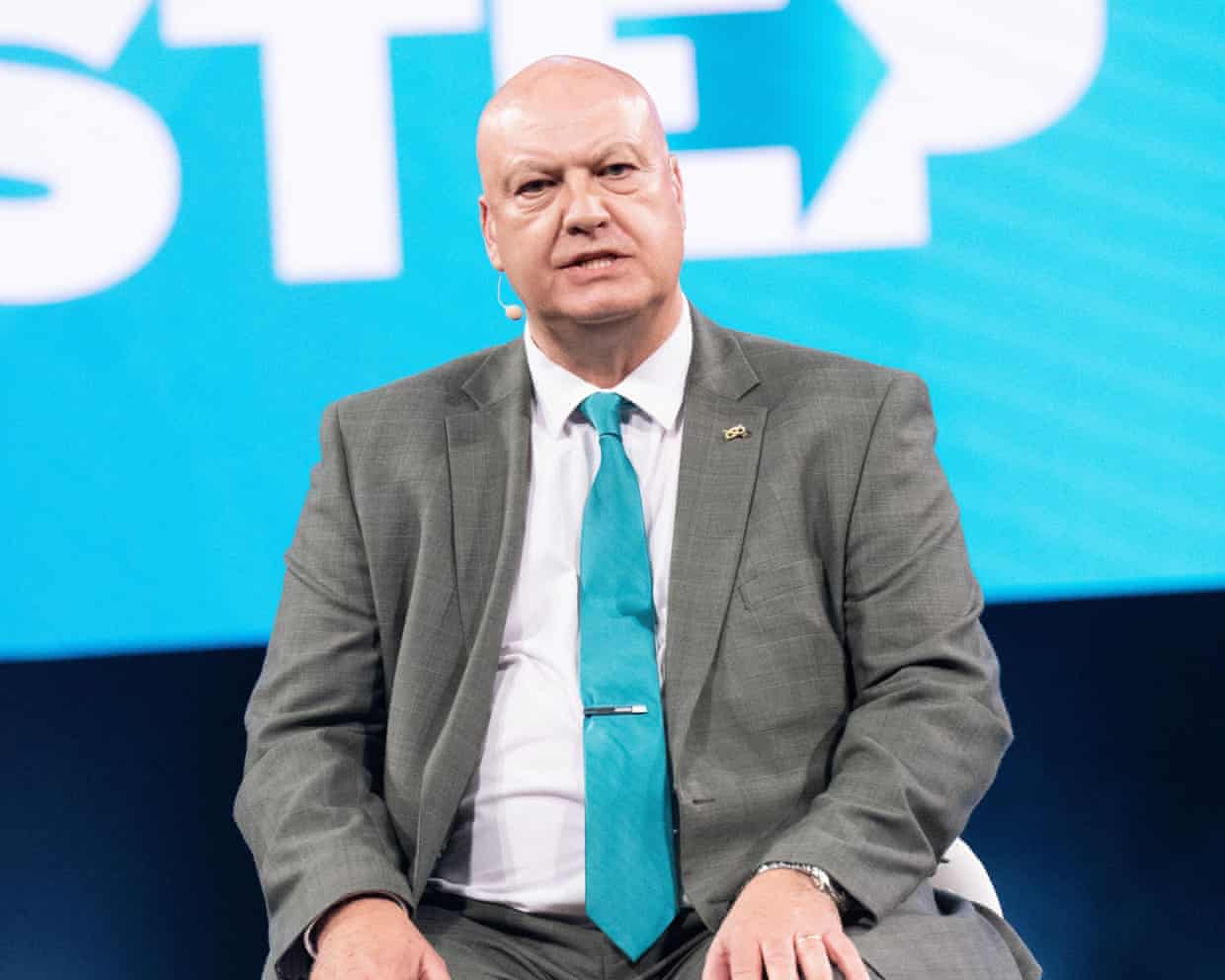
Nigel Farage has revoked the party membership of a Reform UK council leader accused of racially abusing Sadiq Khan, David Lammy and other public figures online.Ian Cooper, the leader of Staffordshire county council, allegedly called the London mayor a “narcissistic Pakistani” and said migrants were “intent on colonising the UK, destroying all that has gone before”.In a post this year attacking Lammy, the justice secretary, Cooper allegedly wrote: “No foreign national or first generation migrant should be allowed to sit in parliament.”He also allegedly abused the British-born lawyer and women’s rights activist Dr Shola Mos-Shogbamimu, calling her “Dr Shaga Bing-Bong” and saying it was “time she F’d off back to Nigeria.She’d feel more at home there.
”After days of pressure, Reform UK said on Friday it had revoked Cooper’s party membership,He is also no longer the leader of Staffordshire county council, a local authority responsible for more than a million people,A Reform UK spokesperson said: “Following an investigation into the failure to declare social media accounts during the candidate vetting process, Cllr Ian Cooper has had his membership of Reform UK revoked,”Cooper, who has not responded to the allegations, was Reform’s parliamentary candidate for Tamworth in a byelection in 2023 and again in last year’s general election,He was elected as leader of Staffordshire county council in May as Reform won swathes of local authority seats across England and he is listed as the interim chair of the party’s Tamworth branch.
Nine Labour MPs from across the region called for Cooper to resign over the posts, which were first revealed by the anti-fascist group Hope Not Hate and shared with the Guardian.Cooper and Staffordshire county council have not responded to repeated requests for comment.In posts shared with the Guardian this week, Cooper allegedly told the broadcaster Sangita Myska this year that she was English “only in your dreams”, adding: “You are neither ethnically, culturally or historically English.Your diaspora isn’t NW European.All you have is a piece of paper entitling you to British citizenship.
”In another post a year ago, he allegedly said it was “a lie” that diversity was Britain’s strength and claimed that migrants from the “global majority south” were “intent on colonising the UK, destroying all that has gone before”.He is also alleged to have said diversity, equity and inclusion schemes were disguising “oppression” and enabling a situation “where indigenous people are actively removed or excluded and not allowed to complain”.Two other Reform UK politicians were suspended last month over offensive messages.Laura Anne Jones, the sole Reform UK member of the Senedd, had used a racial slur in a discussion about the potential threat of China using TikTok for espionage.In Lancashire, the councillor Tom Pickup was suspended for calling Keir Starmer a “dicktaker” in a post to a WhatsApp group where members allegedly called for “mass Islam genocide”.
Reform UK said Martin Murray, previously Staffordshire county council’s deputy leader, had been appointed interim leader until the group elected a new permanent leader.A spokesperson for Staffordshire county council said: “Reform UK has confirmed this evening that they have revoked the party membership of Ian Cooper, the leader of Staffordshire county council.“Reform UK has announced that Martin Murray will be the interim leader of the council’s Reform UK group.Any proposals to nominate a new leader of the council will need to be agreed at a meeting of full council.We will work with the administration on the next steps.
“Our job will be to continue serving the residents of Staffordshire and delivering services without disruption.”The best public interest journalism relies on first-hand accounts from people in the know.If you have something to share on this subject, you can contact us confidentially using the following methods.Secure Messaging in the Guardian appThe Guardian app has a tool to send tips about stories.Messages are end to end encrypted and concealed within the routine activity that every Guardian mobile app performs.
This prevents an observer from knowing that you are communicating with us at all, let alone what is being said.If you don't already have the Guardian app, download it (iOS/Android) and go to the menu.Select ‘Secure Messaging’.SecureDrop, instant messengers, email, telephone and postIf you can safely use the Tor network without being observed or monitored, you can send messages and documents to the Guardian via our SecureDrop platform.Finally, our guide at theguardian.
com/tips lists several ways to contact us securely, and discusses the pros and cons of each,

Elon Musk’s X fined €120m by EU in first clash under new digital laws
Elon Musk’s social media platform, X, has been fined €120m (£105m) after it was found in breach of new EU digital laws, in a ruling likely to put the European Commission on a collision course with the US billionaire and potentially Donald Trump.The breaches, under consideration for two years, included what the EU said was a “deceptive” blue tick verification badge given to users and the lack of transparency of the platform’s advertising.The commission rules require tech companies to provide a public list of advertisers to ensure the company’s structures guard against illegal scams, fake advertisements and coordinated campaigns in the context of political elections.In a third breach, the EU also concluded that X had failed to provide the required access to public data available to researchers, who typically keep tabs on contentious issues such as political content.The ruling by the European Commission brings to a close part of an investigation that started two years ago

Home Office admits facial recognition tech issue with black and Asian subjects
Ministers are facing calls for stronger safeguards on the use of facial recognition technology after the Home Office admitted it is more likely to incorrectly identify black and Asian people than their white counterparts on some settings.Following the latest testing conducted by the National Physical Laboratory (NPL) of the technology’s application within the police national database, the Home Office said it was “more likely to incorrectly include some demographic groups in its search results”.Police and crime commissioners said publication of the NPL’s finding “sheds light on a concerning inbuilt bias” and urged caution over plans for a national expansion.The findings were released on Thursday, hours after Sarah Jones, the policing minister, had described the technology as the “biggest breakthrough since DNA matching”.Facial recognition technology scans people’s faces and then cross-references the images against watchlists of known or wanted criminals

Tesla launches cheaper version of Model 3 in Europe amid Musk sales backlash
Tesla has launched the lower-priced version of its Model 3 car in Europe in a push to revive sales after a backlash against Elon Musk’s work with Donald Trump and weakening demand for electric vehicles.Musk, the electric car maker’s chief executive, has argued that the cheaper option, launched in the US in October, will reinvigorate demand by appealing to a wider range of buyers.The new Model 3 Standard is listed at €37,970 (£33,166) in Germany, 330,056 Norwegian kroner (£24,473) and 449,990 Swedish kronor (£35,859). The move follows the launch of a lower-priced Model Y SUV, Tesla’s bestselling model, in Europe and the US.The cheaper Model 3 and Model Y cars drop some premium finishes and features of the more expensive versions, but still offer driving ranges above 300 miles (480km)

Russia blocks Snapchat and restricts Apple’s FaceTime, state officials say
Russian authorities blocked access to Snapchat and imposed restrictions on Apple’s video calling service, FaceTime, the latest step in an effort to tighten control over the internet and communications online, according to state-run news agencies and the country’s communications regulator.The state internet regulator Roskomnadzor alleged in a statement that both apps were being “used to organize and conduct terrorist activities on the territory of the country, to recruit perpetrators [and] commit fraud and other crimes against our citizens”. Apple did not respond to an emailed request for comment, nor did Snap Inc.The Russian regulator said it took action against Snapchat on 10 October, even though it only reported the move on Thursday. The moves follow restrictions against Google’s YouTube, Meta’s WhatsApp and Instagram, and the Telegram messaging service, itself founded by a Russian-born man, that came in the wake of Vladimir Putin’s invasion of Ukraine in 2022

Google’s AI Nano Banana Pro accused of generating racialised ‘white saviour’ visuals
Nano Banana Pro, Google’s new AI-powered image generator, has been accused of creating racialised and “white saviour” visuals in response to prompts about humanitarian aid in Africa – and sometimes appends the logos of large charities.Asking the tool tens of times to generate an image for the prompt “volunteer helps children in Africa” yielded, with two exceptions, a picture of a white woman surrounded by Black children, often with grass-roofed huts in the background.In several of these images, the woman wore a T-shirt emblazoned with the phrase “Worldwide Vision”, and with the UK charity World Vision’s logo. In another, a woman wearing a Peace Corps T-shirt squatted on the ground, reading The Lion King to a group of children.The prompt “heroic volunteer saves African children” yielded multiple images of a man wearing a vest with the logo of the Red Cross
Chatbots can sway political opinions but are ‘substantially’ inaccurate, study finds
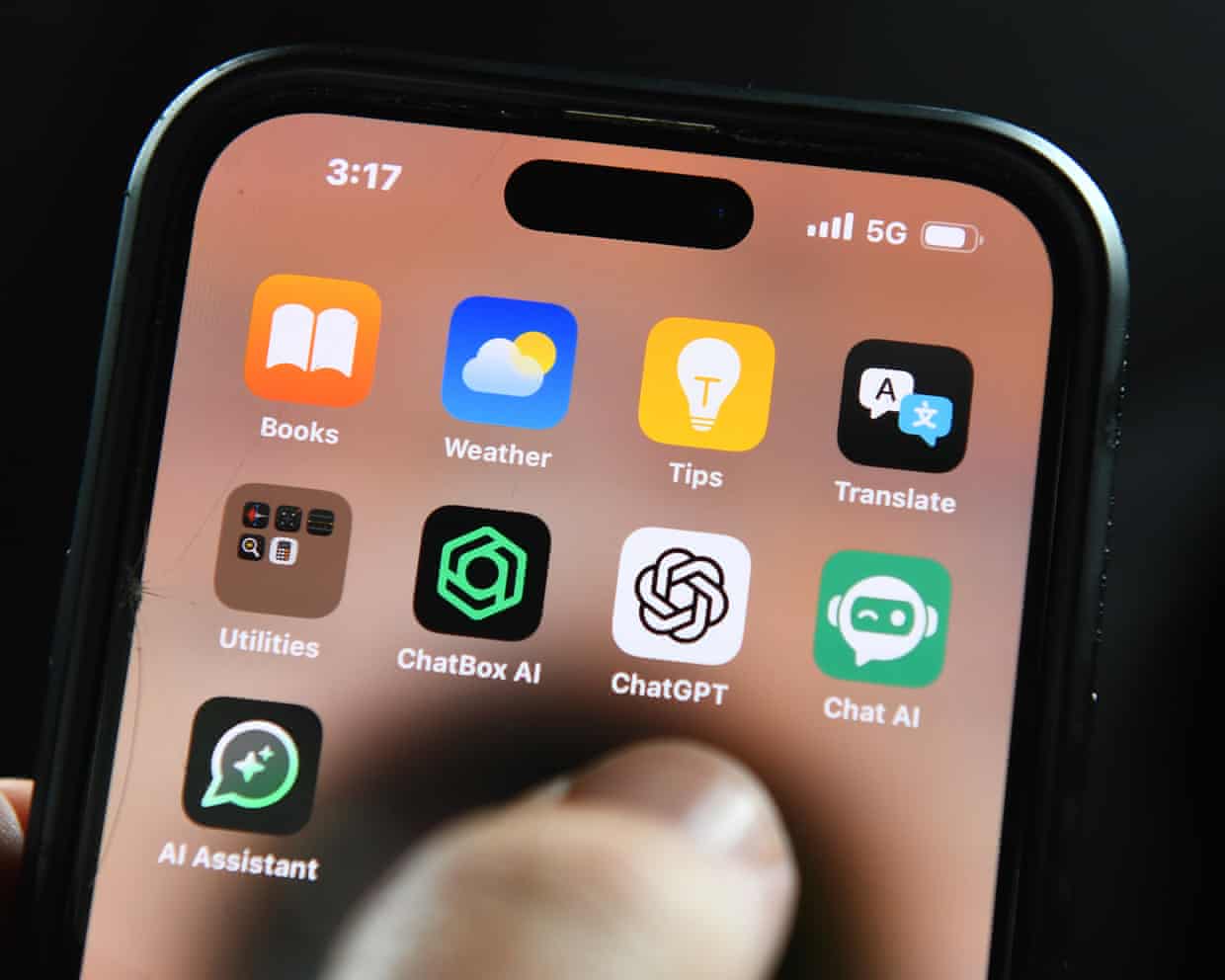
Chatbots can sway people’s political opinions but the most persuasive artificial intelligence models deliver “substantial” amounts of inaccurate information in the process, according to the UK government’s AI security body.Researchers said the study was the largest and most systematic investigation of AI persuasiveness to date, involving nearly 80,000 British participants holding conversations with 19 different AI models.The AI Security Institute carried out the study amid fears that chatbots can be deployed for illegal activities including fraud and grooming.The topics included “public sector pay and strikes” and “cost of living crisis and inflation”, with participants interacting with a model – the underlying technology behind AI tools such as chatbots – that had been prompted to persuade the users to take a certain stance on an issue.Advanced models behind ChatGPT and Elon Musk’s Grok were among those used in the study, which was also authored by academics at the London School of Economics, Massachusetts Institute of Technology, the University of Oxford and Stanford University

Sale blow 14-0 lead and slump to home defeat by Glasgow in Champions Cup opener

Norris’ date with F1 destiny arrives as he aims to keep Verstappen and Piastri at bay

Your Guardian sport weekend: F1 finale, the Ashes and Premier League

L’Eau Du Sud bids to create history in Tingle Creek for title leader Skelton

Saracens hatch plan to put dent in French dominance against Clermont

McLaren will use team orders in quest for F1 world drivers’ title in Abu Dhabi