‘Urgent clarity’ sought over racial bias in UK police facial recognition technology
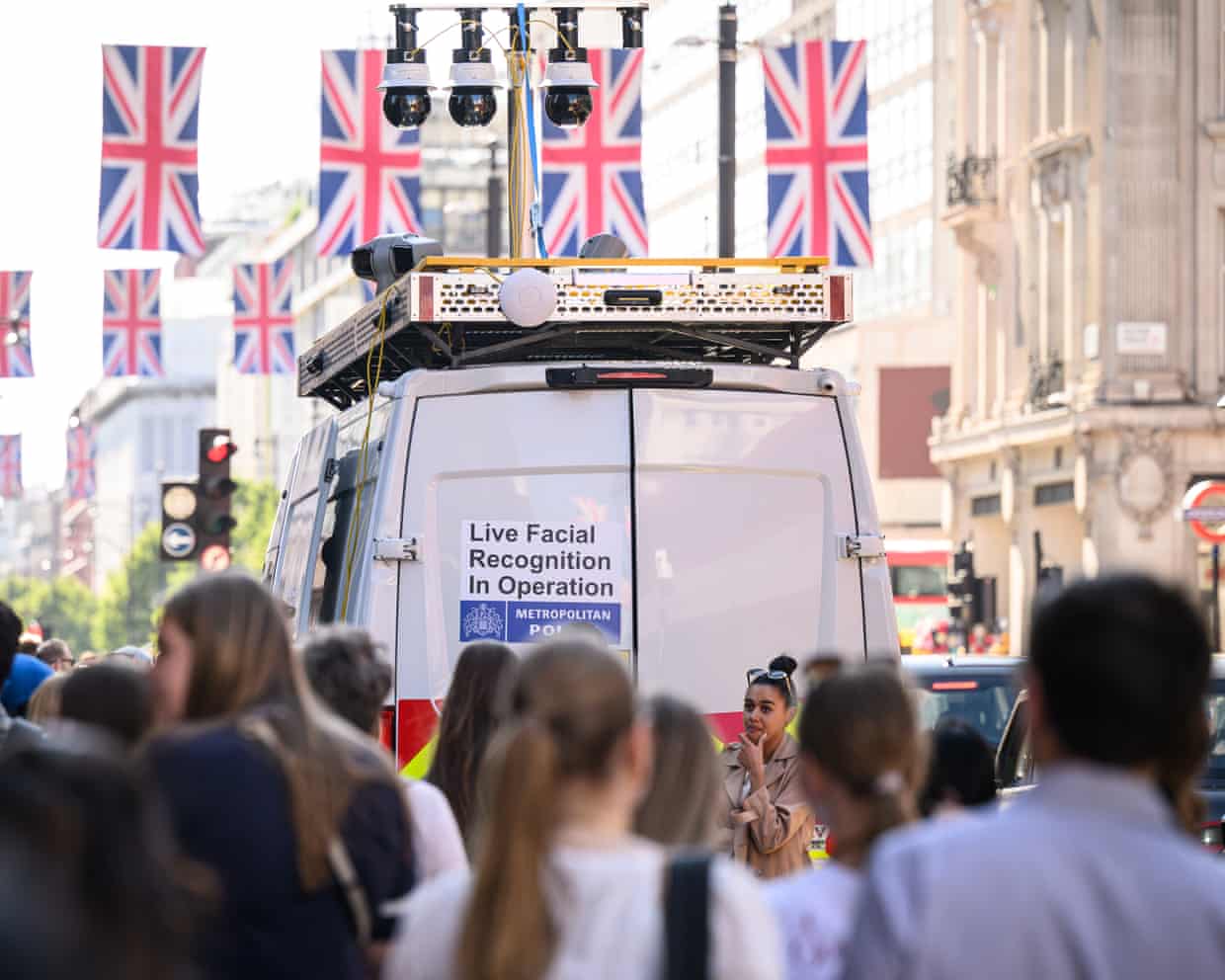
The UK’s data protection watchdog has asked the Home Office for “urgent clarity” over racial bias in police facial recognition technology before considering its next steps,The Home Office has admitted that the technology was “more likely to incorrectly include some demographic groups in its search results”, after testing by the National Physical Laboratory (NPL) of its application within the police national database,The report revealed that the technology, which is intended to be used to catch serious offenders, is more likely to incorrectly match black and Asian people than their white counterparts,In a statement responding to the report, Emily Keaney, the deputy commissioner for the Information Commissioner’s Office, said the ICO had asked the Home Office “for urgent clarity on this matter” in order for the watchdog to “assess the situation and consider our next steps”,The next steps could include enforcement action, including issuing a legally binding order to stop using the technology or fines, as well as working with the Home Office and police to make improvements.
Keaney said: “Last week we were made aware of historical bias in the algorithm used by forces across the UK for retrospective facial recognition within the police national database.“We acknowledge that measures are being taken to address this bias.However, it’s disappointing that we had not previously been told about this, despite regular engagement with the Home Office and police bodies as part of our wider work to hold government and the public sector to account on how data is being used in their services.“While we appreciate the valuable role technology can play, public confidence in its use is paramount, and any perception of bias and discrimination can exacerbate mistrust.The ICO is here to support and assist the public sector to get this right.
”Police and crime commissioners said publication of the NPL’s finding “sheds light on a concerning inbuilt bias” and urged caution over plans for a national expansion, which could include cameras being placed at shopping centres, stadiums and transport hubs, without putting in place adequate safeguards.The findings were released on Thursday, hours after Sarah Jones, the policing minister, had described the technology as the “biggest breakthrough since DNA matching”.Facial recognition technology scans people’s faces and cross-references the images against watchlists of known or wanted criminals.It can be used while examining live footage of people passing cameras, comparing their faces with those on wanted lists, or to enable officers to target individuals as they walk by mounted cameras.Police officers can also retrospectively run images of suspects through police, passport or immigration databases to identify them and check their backgrounds.
Analysts who examined the police national database’s retrospective facial recognition technology tool at a lower setting found that “the false positive identification rate (FPIR) for white subjects (0.04%) is lower than that for Asian subjects (4.0%) and black subjects (5.5%)”.The testing found that the number of false positives for black women was particularly high.
“The FPIR for black male subjects (0,4%) is lower than that for black female subjects (9,9%),” the report said,Responding to the report, a Home Office spokesperson said the department took the findings “seriously”, and had already taken action, including procuring and testing a new algorithm “which has no statistically significant bias”,“Given the importance of this issue, we have also asked the police inspectorate, alongside the forensic science regulator, to review law enforcement’s use of facial recognition.
They will assess the effectiveness of the mitigations, which the National Police Chiefs’ Council supports,” the spokesperson said.

Financial markets now certain the RBA will hike interest rates in 2026
Financial markets are now pricing in a 100% chance the Reserve Bank will hike rates in 2026, in what would be a blow to mortgage holders but may take some steam out of an overheating property market.The latest forecasts represent a turnaround from just two weeks ago, when traders were factoring in an even chance that the next RBA move would be a cut by its May meeting.It comes as data showed inflation is now moving in the wrong direction, alongside this week’s national accounts and household spending figures which showed the economy is accelerating into the new year.Adam Donaldson, the head of interest rates strategy at the Commonwealth Bank, said “the market has come to the conclusion that the Reserve bank won’t be cutting rates any further”.“Basically, from February onwards, the market is starting to price some risk that rates will go up

UK first-time buyers in best position to snap up property in a decade, data shows
Buyers attempting to get on to the property ladder in the UK have received a lift, after figures from Halifax showed they are in the best position to snap up a home in a decade.Britain’s biggest mortgage lender said that the average price of a UK property hit a record high of £299,892 in November, after a marginal month-on-month rise.However, Halifax said when property prices were compared with average incomes, affordability was at its strongest since late 2015.The lender added that taking into account higher interest rates – the average two-year fixed mortgage rate is 4.85%, according to Moneyfacts – mortgage costs as a share of incomewere at their lowest level in about three years
New York Times sues AI startup for ‘illegal’ copying of millions of articles
The New York Times sued an embattled artificial intelligence startup on Friday, accusing the firm of illegally copying millions of articles. The newspaper alleged Perplexity AI had distributed and displayed journalists’ work without permission en masse.The Times said that Perplexity AI was also violating its trademarks under the Lanham Act, claiming the startup’s generative AI products create fabricated content, or “hallucinations”, and falsely attribute them to the newspaper by displaying them alongside its registered trademarks.The newspaper said that Perplexity’s business model relies on scraping and copying content, including paywalled material, to power its generative AI products. Other publishers have made similar allegations

I spent hours listening to Sabrina Carpenter this year. So why do I have a Spotify ‘listening age’ of 86?
Many users of the app were shocked, this week, by this addition to the Spotify Wrapped roundup – especially twentysomethings who were judged to be 100“Age is just a number. So don’t take this personally.” Those words were the first inkling I had that I was about to receive some very bad news.I woke up on Wednesday with a mild hangover after celebrating my 44th birthday. Unfortunately for me, this was the day Spotify released “Spotify Wrapped”, its analysis of (in my case) the 4,863 minutes I had spent listening to music on its platform over the past year

Norris’ date with F1 destiny arrives as he aims to keep Verstappen and Piastri at bay
He has a 12-point lead before Sunday’s Abu Dhabi GP but the British driver vows to ‘crack on’ if the title goes elsewhereThe atmosphere at a season-deciding finale in the Formula One world championship is like no other. The paddock positively hums with a febrile, pulsing excitement and sense of expectation that is impossible to ignore. Amid all of which the title favourite, Lando Norris, finds himself at the moment he has dedicated his life toward, destiny lying in his own hands.After a gruelling 23-race trek around the world, the conclusion of all the work, sacrifice and effort will be decided in just an hour and a half on Sunday afternoon in Abu Dhabi.Norris has been fascinating to observe across a season during which he opened on top, was then eclipsed by his McLaren teammate Oscar Piastri before mounting a comeback in the final third to retake the lead

Your Guardian sport weekend: F1 finale, the Ashes and Premier League
James Wallace and Rob Smyth will cover all the day-three action, over by over. The day-nighter at the Gabba has already thrown up more storylines than an entire season of Neighbours, and our team of writers – Ali Martin, Geoff Lemon and Simon Burnton – are in Brisbane for reports, news and analysis. Australian supporters are welcome to join the conversation, too.Emillia Hawkins and John Brewin take the controls for our essential weekly gateway to the day’s football action. There’ll be plenty of washup from Friday’s World Cup draw in Washington DC as well as team news, breaking stories and snippets from our reporters around the grounds

Cloudflare admits ‘we have let the Internet down again’ after outage hits major web services – as it happened

BP to scrap paid rest breaks and most bank holiday bonuses for forecourt staff

Cloudflare apologises after latest outage takes down LinkedIn and Zoom
‘Urgent clarity’ sought over racial bias in UK police facial recognition technology
Australia v England: Ashes second Test, day three – live
Sale blow 14-0 lead to slump to home defeat by Glasgow in Champions Cup opener