Claims that AI can help fix climate dismissed as greenwashing

Tech companies are conflating traditional artificial intelligence with generative AI when claiming the energy-hungry technology could help avert climate breakdown, according to a report.Most claims that AI can help avert climate breakdown refer to machine learning and not the energy-hungry chatbots and image generation tools driving the sector’s explosive growth of gas-guzzling datacentres, the analysis of 154 statements found.The research, commissioned by nonprofits including Beyond Fossil Fuels and Climate Action Against Disinformation, did not find a single example where popular tools such as Google’s Gemini or Microsoft’s Copilot were leading to a “material, verifiable, and substantial” reduction in planet-heating emissions.Ketan Joshi, an energy analyst and author of the report, said the industry’s tactics were “diversionary” and relied on tried and tested methods that amount to “greenwashing”.He likened it to fossil fuel companies advertising their modest investments in solar panels and overstating the potential of carbon capture.
“These technologies only avoid a minuscule fraction of emissions relative to the massive emissions of their core business,” said Joshi.“Big tech took that approach and upgraded and expanded it.”Most of the claims that were scrutinised came from an International Energy Agency (IEA) report, which was reviewed by leading tech companies, and corporate reports from Google and Microsoft.The IEA report – which devoted two chapters to the potential climate benefits of traditional AI – had a roughly even split between claims that rested on academic publications, corporate websites and those that had no evidence, according to the analysis.For Google and Microsoft, most claims lacked evidence.
The analysis, released during the AI Impact Summit in Delhi this week, argues the tech industry has misleadingly presented climate solutions and carbon pollution as a package deal by “muddling” types of AI.Sasha Luccioni, AI and climate lead at Hugging Face, an open-source AI platform and community, who was not involved in the report, said it added nuance to a debate that often lumped very different applications together.“When we talk about AI that’s relatively bad for the planet, it’s mostly generative AI and large language models,” said Luccioni, who has pushed the industry to be more transparent about its carbon footprint.“When we talk about AI that’s ‘good’ for the planet, it’s often predictive models, extractive models, or old-school AI models.”Green claims even for traditional AI tended to rely on weak forms of evidence that had not been independently verified, the analysis found.
Only 26% of the green claims that were studied cited published academic research, while 36% did not cite evidence at all.One of the earliest examples identified in the report was a widespread claim that AI could help mitigate 5-10% of global greenhouse gas emissions by 2030.The figure, which Google repeated as recently as April last year, came from a report it commissioned from BCG, a consulting firm, which cited a blogpost it wrote in 2021 that attributed the figure to its “experience with clients”.Datacentres consume just 1% of the world’s electricity but their share of US electricity is projected to more than double to 8.6% by 2035, according to BloombergNEF.
The IEA predicts they will account for at least 20% of the rich world’s growth in electricity demand to the end of the decade.While the energy consumption of a simple text query to a large language model such as ChatGPT may be as little as running a lightbulb for a minute, partial industry disclosures suggest, it rises considerably for complex functions such as video generation and deep research, and has troubled some energy researchers with the speed and scale of its growth.A spokesperson for Google said: “Our estimated emissions reductions are based on a robust substantiation process grounded in the best available science, and we have transparently shared the principles and methodology that guide it.”Microsoft declined to comment, while the IEA did not respond to requests for comment.Joshi said the discourse around AI’s climate benefits needed to be “brought back to reality”.
“The false coupling of a big problem and a small solution serves as a distraction from the very preventable harms being done through unrestricted datacentre expansion,” he said.The best public interest journalism relies on first-hand accounts from people in the know.If you have something to share on this subject, you can contact us confidentially using the following methods:The Guardian app has a tool to send tips about stories.Messages are end to end encrypted and concealed within the routine activity that every Guardian mobile app performs.This prevents an observer from knowing that you are communicating with us at all, let alone what is being said.
If you don’t already have the Guardian app, download it (iOS/Android) and go to the menu.Select ‘Secure Messaging’.Our guide at theguardian.com/tips lists several ways to contact us securely, and discusses the pros and cons of each.
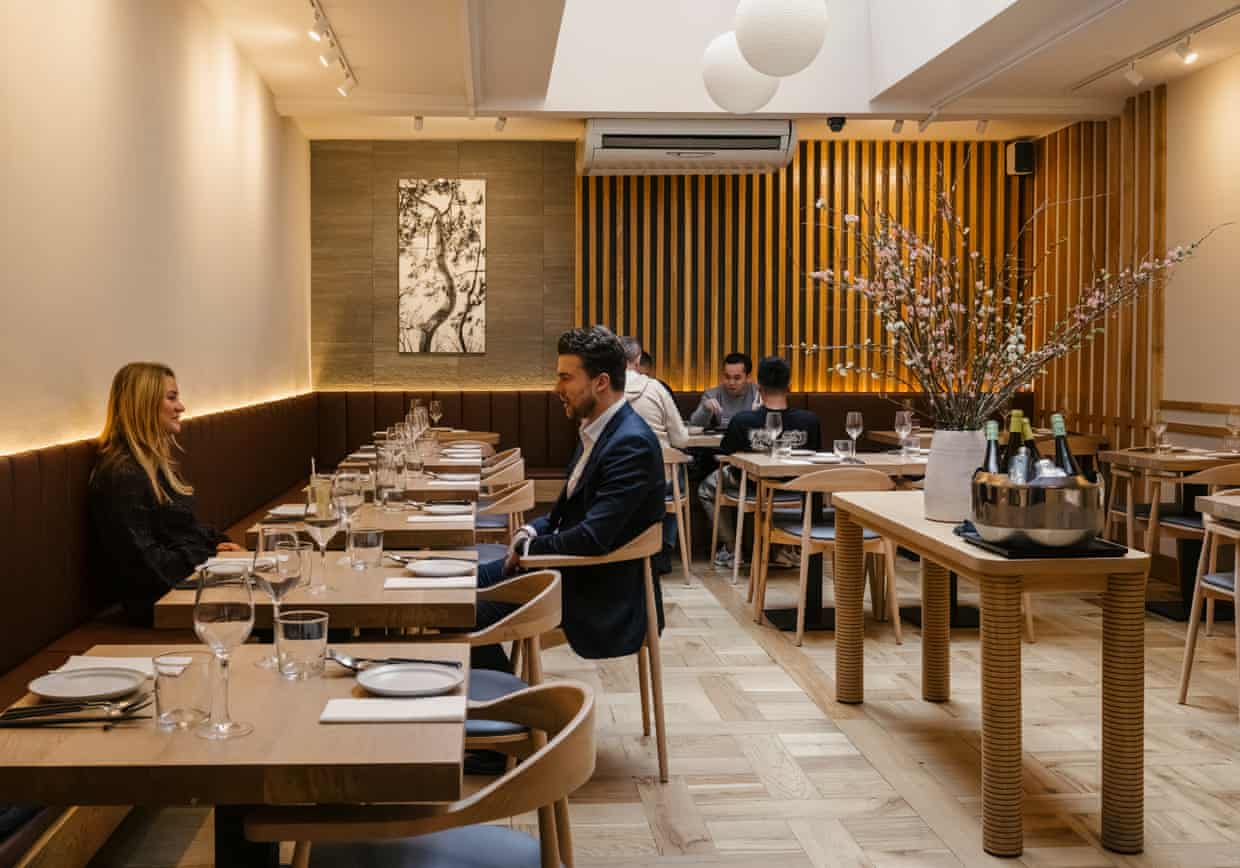
Koba, London W1: ‘I admire their chutzpah’ – restaurant review
Sometimes, my memories of a restaurant begin at the end, and at Koba in Fitzrovia, central London, the enduring image is the warm, fresh, sugary, bean paste doughnut served with a pot of buckwheat tea. It was an utter delight, but then, Korean sweet bean paste, which is made with adzuki beans, is so very satisfying: pleasantly claggy, almost nutty, and a little decadent, while at the same time still convincing you that it might count as one of your five a day, were it not stuffed inside a hot fresh doughnut with a whopping great dollop of whipped cream. It was a cold winter’s day – the sort where, by lunchtime, my own umbrella had blown inside-out twice and everyone else’s seemed determined to poke my eye out. Against that backdrop, this doughnut was a moment of pure bliss.Koba, a Korean restaurant by Linda Lee, has been providing moments of such joy for 20 solid years, not least with its traditional tabletop barbecue hot plates on which guests could grill their own dinner

Original Bramley apple tree ‘at risk’ after site where it grows put up for sale
The future of the original Bramley apple tree, which is responsible for one of the world’s most popular cooking apples, is at risk now that the site where it grows has been put up for sale, campaigners have warned.The tree is situated in the back garden of a row of cottages in Southwell, Nottinghamshire, which has been owned by Nottingham Trent University since 2018 and has been used as student accommodation.The university said the site was for sale due to the “age and configuration” of the cottages, which made them no longer suitable for accommodation.The great granddaughter of the man who first introduced the Bramley apple commercially said she was “very concerned” for the future of the tree and it needed to be protected.“It’s a very famous tree

Potstickers and sea bass with ginger and spring onions: Amy Poon’s recipes for lunar new year
Christmas is lovely, but my kids think Chinese new year is by far the best holiday. I might be biased, but, unusually, I am inclined to agree with them. As my eldest puts it, “New clothes, cash, booze and food – what’s not to love?” There’s the added bonus that cash is absolutely more than acceptable – in fact, it’s de rigueur, so there’s no shopping for mundane socks and smelly candles. Chinese new year is full of rituals and, just as at Christmas, every family has its own, but they are all variations on a theme. Symbolism looms large in Chinese culture, and at new year it centres around messages of prosperity, luck and family

How to plan Ramadan meals: minimal work, maximum readiness
Ramadan arrives this year in February, in the heart of winter. Short days, cold evenings and the pressure of everyday work mean that preparation is no longer about producing abundance, but about reducing effort while maintaining care. For many households balancing jobs, children and long commutes, the question is not what to cook, but how to make the month manageable.The most effective approach to Ramadan cooking is not variety but repetition. A small set of meals that are easy to digest, quick to prepare and gentle on the body can carry a household through 30 days of fasting with far less stress than daily reinvention

Benjamina Ebuehi’s recipe for almond frangipane crepes | The sweet spot
When it comes to pancake day, I don’t discriminate and fill the day with as many types of pancakes as possible – from a fluffy American-style stack in the morning to a savoury buckwheat pancake at lunch, and finishing off with classic crepes in the evening. This version was heavily inspired by an almond croissant, so although it does lean more towards dessert, I won’t judge if this is what you choose to start your day with. Bake them until the edges go crisp but the middle stays a little gooey.Prep 5 min Rest 20+ min Cook 50 min Makes 7-8 crepes120g plain flour ½ tbsp caster sugar A pinch of salt 2 large eggs 240ml whole milk 25g melted butter, plus extra for greasing Icing sugar, for dusting Lightly whipped cream, to serve (optional)For the frangipane90g salted butter, softened90g caster sugar ¼-½ tsp almond extract1 large egg 110g ground almonds 50g flaked almondsPut the flour, sugar and salt in a bowl and whisk briefly to combine. Add the eggs, whisk to a thick paste, then pour in the milk in three batches, whisking each time to avoid any lumps
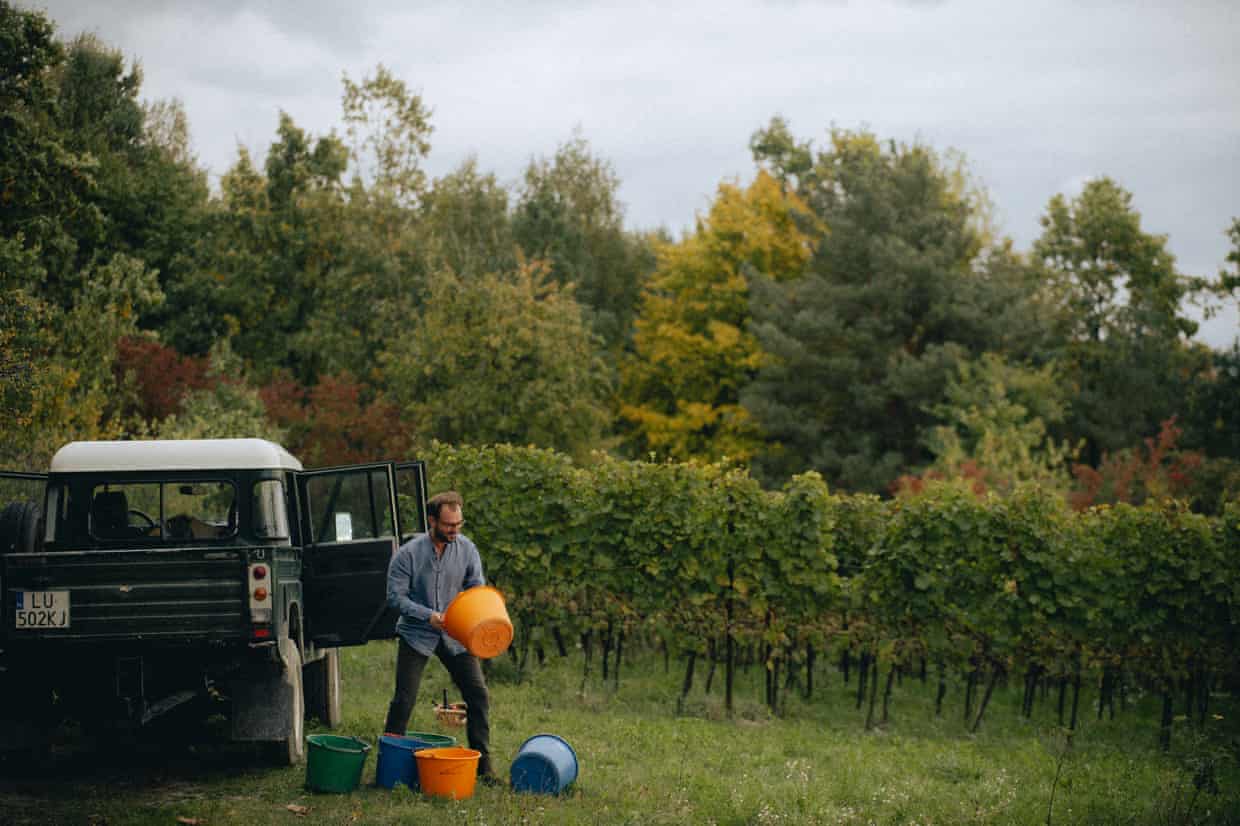
Heard it on the grapevine: Polish wine’s quiet renaissance
Swap the staid stereotypes of Żubrówka vodka and Żywiec lager for vineyards and vintages, because Poland is in the throes of a viticultural renaissance, the likes of which hasn’t been seen for centuries. On a road trip tracing Poland’s best terroirs back in the summer of 2023, I met winemakers going against the grain, unshackled by tradition and producing unpretentious, expressive pours that more than merit a place on your dining table.Lately, Polish wines have been cropping up all over bar and restaurant lists: Niemczańska’s chardonnay at London’s most emblematic Polish restaurant, the borscht-fronted Daquise in South Kensington, say, while chic bar Spry in Edinburgh has started stocking my favourite producers, Dom Bliskowice, Kamil Barczentewicz and Nizio. But you won’t find bottles nestling between the neat rows of kabanos sausages of your local Polski sklep, nor lining the supermarket shelves. Or not just yet, anyway

UK shelves £110m frictionless post-Brexit trade border project

Hyatt chair Thomas Pritzker steps down over Epstein links

Google puts users at risk by downplaying health disclaimers under AI Overviews

Starmer to extend online safety rules to AI chatbots after Grok scandal

‘I’m trying to expand what it means to be a skier’: Mallory Duncan on jazz, freedom and the mountains

The Breakdown | France’s creative heart ‘Jalipont’ can easily join rugby’s great double-acts