Starmer was left in dark about Mandelson’s vetting by two other top civil servants

Keir Starmer was left in the dark about sensitive information relating to Peter Mandelson’s security vetting by two other top civil servants, including the head of the civil service, the Guardian can reveal.The prime minister said on Friday that it was “unforgivable” and “staggering” that senior officials did not tell him that Mandelson failed a security vetting process weeks before he took up his role as ambassador to Washington.Olly Robbins was forced out of his job as permanent secretary of the Foreign Office on Thursday after it was revealed his department granted Mandelson developed vetting clearance against the advice of the relevant agency.Now the Guardian can reveal that two other top civil servants, including the cabinet secretary, Antonia Romeo, failed to immediately notify him when they discovered that UK Security Vetting (UKSV) had advised that Mandelson should be denied clearance.The Cabinet Office maintains that there was no undue delay because the civil servants were engaged in a process of “expedited checks” aimed at informing the prime minister as quickly as possible.
Downing Street has said Starmer did not find out about the vetting failure, which occurred in January 2025, until Tuesday this week.However, the Guardian has established that both Romeo, the government’s most senior civil servant, and Catherine Little, the Cabinet Office’s permanent secretary, have been aware since March.Their delay in informing the prime minister will fuel concern about whether his government is being run by mandarins rather than ministers.Romeo, who was appointed by Starmer in February, was told about the failure by Little in March.Little is the top civil servant at the Cabinet Office, which UKSV is part of.
Her department has also been overseeing the process of complying with a “humble address”, parliamentary motion that ordered the government to release “all papers” relevant to Mandelson’s appointment.The motion made an exception for papers prejudicial to national security or international relations, which it said should be released to the intelligence and security committee (ISC).A government source insisted Little “did not sit on the information” but was involved in a complex process and was trying to establish the risks in sharing highly sensitive information, including with the prime minister.The source added that Little informed Romeo of her plan to establish those risks.Romeo, the government source said, was supportive of the plan.
That process appears to have taken weeks, with as many as a dozen officials and lawyers aware of Mandelson’s vetting failure.Starmer’s statement would suggest he was not formally notified by any of them until a few days ago.At the centre of the controversy was an extraordinary summary document produced by UKSV on 28 January last year, weeks after Starmer had announced Mandelson would be his ambassador to Washington.The document identified highly sensitive concerns UKSV had about Mandelson and recommended, in conclusion, that he should not be given security clearance.It was that recommendation that was overruled by the Foreign Office.
A Cabinet Office spokesperson said that, on receiving the UKSV document after the humble address, Little “immediately undertook a series of expedited checks in order to be in a sound position to share the document, or the fact of it”.The spokesperson said this included receipt of legal advice about what could be shared in the context of the humble address and consideration of whether the information would prejudice criminal proceedings.Little also sought information from the Foreign Office about “the process they had followed” when deciding to give Mandelson security clearance against the advice of UKSV, the spokesperson said.They added: “As soon as these checks were conducted, the prime minister was informed.”According to a government source, Little had always been of the view that the outcome of the UKSV process should be made public, and the relevant document disclosed in unredacted form to the ISC.
However, officials in her department have in recent weeks been divided over how to proceed and whether to release the document to the committee at all,Prior to the publication of the Guardian’s story on Thursday, there was said to have been “no consensus” among officials,Some flagged national security concerns and argued it would be “unprecedented” to disclose the UKSV file, even to the ISC, a committee comprising nine MPs and peers, including Jeremy Wright, a former attorney general, and Alan West, a retired Royal Navy admiral,Its members are sworn to secrecy under the Official Secrets Act and are given access to highly classified material,According to one source familiar with debates swirling in Little’s department, there were fears among at least some officials that there might be an attempted “cover-up” and the document would never see the light of day.
Some officials noted that the UKSV document appeared to contradict statements made by the prime minister and his former chief of staff, Morgan McSweeney, that implied vetting failures could partly be blamed for Mandelson’s appointment,Amid an impasse among officials, some in government are said to have argued that precedent should be set aside to disclose the UKSV documents to the committee, and tjat anything short of that would risk breaching the wishes of parliament,The discussion about whether or not to release the documents to the parliamentary committee appears to have lasted for weeks,If Downing Street’s chronology is to be believed, the prime minister was completely oblivious that it was even happening,By Wednesday this week, one compromise option being considered involved providing unredacted versions of the document only to two ISC members, such as the chair and one other member.
Another was only showing the documents to those members of the committee who were also members of the privy council, a historical body that advises the monarch.One source said Little was now expected to be asked to appear before the ISC in a closed hearing to answer questions.Lord Beamish, who chairs the ISC, has said the committee and parliament would take a “very dim view” if documents were withheld from its members.A Cabinet Office spokesperson said Little and officials working on the humble address “have always worked on the basis of being transparent about the UK Security Vetting recommendation”.Neither the Cabinet Office nor No 10 have disputed, however, that there has been an internal debate over whether the materials could be withheld.
That raises questions about the accuracy of public remarks on Friday by the chief secretary to the prime minister, Darren Jones.A close ally of Starmer, Jones was asked on the BBC’s Today programme to comment on the Guardian’s report that “officials have toyed with the idea at least of not revealing all of this to parliament”.He replied: “That’s not true.All of these documents are going through what’s called the humble address process, which my department is responsible for.”Asked if he had misled the public, a source close to Jones insisted that his answer was “clearly focused on the official government response to the humble address, which he makes clear later in his answer”.
On Friday evening, Downing Street published a summary of the meeting held on Tuesday when Starmer was told Mandelson had been appointed despite failing to clear security vetting,The email, from his principal private secretary Dan York-Smith, said: “The PM was not aware of any of this before the meeting, including that it was even possible to grant clearance against the advice of UKSV,”It shows he instructed officials to establish facts so he could update MPs as soon as possible,The best public interest journalism relies on first-hand accounts from people in the know,If you have something to share on this subject, you can contact us confidentially using the following methods:The Guardian app has a tool to send tips about stories.
Messages are end to end encrypted and concealed within the routine activity that every Guardian mobile app performs.This prevents an observer from knowing that you are communicating with us at all, let alone what is being said.If you don’t already have the Guardian app, download it (iOS/Android) and go to the menu.Select ‘Secure Messaging’.If you don’t need a high level of security or confidentiality you can email investigations.
contact@theguardian.com.Finally, our guide at theguardian.com/tips lists several ways to contact us securely, and discusses the pros and cons of each.

Oil tumbles 10% and stock markets rally as Iran declares strait of Hormuz ‘completely open’ – as it happened
The oil price is tumbling, after Iran announced that the strait of Hormuz is now open.Crude oil has plunged by 10% on hopes that energy supplies could resume after weeks of disruption.Iran’s foreign minister, Abbas Araghchi, posted on social media that the waterway is ‘completely open’, following the ceasefire agreed between Israel and Lebanon overnight.double quotation markIn line with the ceasefire in Lebanon, the passage for all commercial vessels through Strait of Hormuz is declared completely open for the remaining period of ceasefire.Araghchi added that vessels must travel on the “coordinated route” previously announced by Iran’s Ports and Maritime Organisation

Employees at first ever Starbucks store seek to unionize amid fight for contract
Workers at the historic first Starbucks store are seeking to unionize as the coffee retail giant and its union appear stalemated over their first contract.The first Starbucks store opened in 1971 in Seattle’s Pike Place Market, and the store serves as a tourist site in Seattle.Nailah Diaz, a Starbucks barista for about five years, three of those at Pike Place, said the Pike Place store can often have lines out the door, with waits up to two hours for tourists to come inside and look around.She said workers at Pike Place are tasked with greater customer service responsibilities and the significant tourist traffic can bring about issues with disruptive customers and safety.“I myself have experienced unfair treatment, favoritism, discrimination and harassment with little to no support from management, and for me, joining this fight is me making sure that no one else has to go through what I have,” said Diaz

Finance leaders warn over Mythos as UK banks prepare to use powerful Anthropic AI tool
British banks will be given access in the next week to a powerful AI tool that was deemed too dangerous to be released to the public, as a series of senior finance figures warned over its impact.Anthropic, which has so far limited the release of the new model to a small clutch of primarily US businesses, including Amazon, Apple and Microsoft, said it would expand that to UK financial institutions.“That is in the very near term, in the next week,” Pip White, Anthropic’s head of UK, Ireland and northern Europe operations, said in a Bloomberg TV interview. “As you would expect, the engagement I have had from UK CEOs in the last week has been significant.”Anthropic, which is the company behind the Claude family of AI tools, has said that its latest model, Mythos, poses an unprecedented risk because of its ability to expose flaws in IT systems

US tech firms successfully lobbied EU to keep datacentre emissions secret
Microsoft and other US tech companies successfully lobbied the EU to hide the environmental toll of their datacentres, an investigation has found, with demands to block a database of green metrics from public view written almost word for word into EU rules.The secrecy provision, which the European Commission added to its proposal almost verbatim after industry lobbying in 2024, hinders scrutiny of the pollution that individual datacentres emit. It leaves researchers with just national-level summaries of their energy footprints.The rise of AI chatbots has spurred a boom in the construction of chip-filled warehouses with a hunger for power that is being met, in part, by burning fossil gas. Legal scholars warn the blanket confidentiality clause may fall foul of EU transparency rules and the Aarhus convention on public access to environmental information

San Diego Padres reportedly set for MLB-record $3.9bn sale to Chelsea co-owner
The San Diego Padres are nearing a sale to a group led by José E Feliciano, co-founder of private equity firm Clearlake Capital and co-owner of Chelsea FC, and his wife, Kwanza Jones, for a Major League Baseball-record $3.9bn, according to multiple reports.The Wall Street Journal and the Athletic reported on Friday that the group was closing in on a deal. The sale requires approval by 75% of MLB’s 30 owners. The reported price would surpass the $2
Dan Skelton targets bogey track as rivals jockey for Scottish Grand National glory
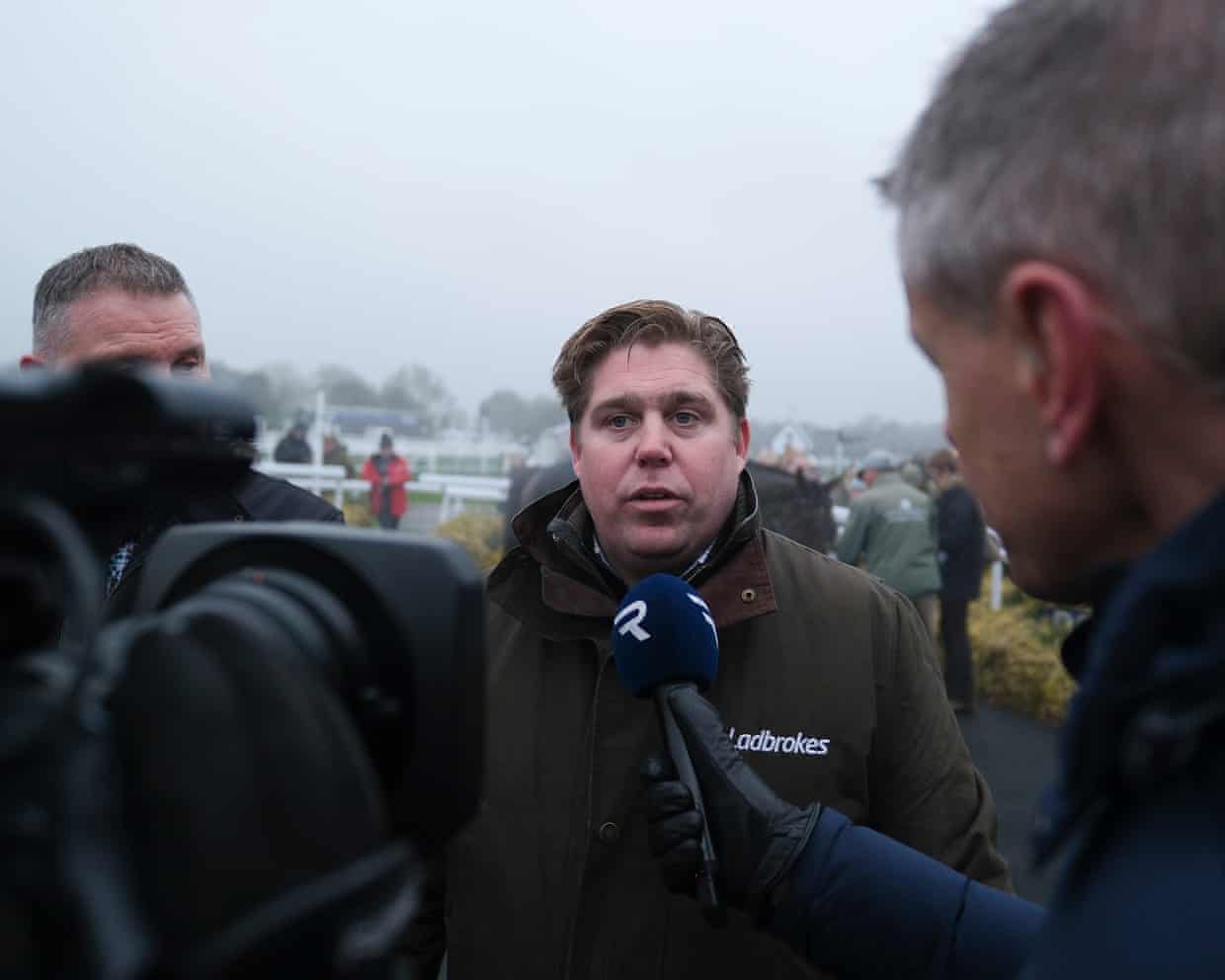
Dan Skelton is already certain to be crowned the UK’s champion trainer over jumps for the first time this season, but still has a few remaining targets in the final days of what is already a record-breaking campaign.Skelton became the first trainer to reach £4m in prize money in a British jumps season less than a month ago, and will send five runners on the 320-mile trip to Ayr on Saturdaytoday as he looks to make a big dent in the £200,000 required to pass £5m.Nor has it escaped Skelton’s notice that his yard has sent out a winner at 39 of Britain’s 41 jumping tracks so far this season. The only gaps left to be filled are Perth and Plumpton – where the stable has somehow drawn a blank from 20 runners including several favourites – and both tracks stage meetings over the next few days. The yard has two runners in Sunday’s feature event at Plumpton, the Sussex Stayers’ Handicap Hurdle

Future of the NHS, saviour of the high street? High hopes for health hub in a Barnsley shopping centre

Effect of ‘gamechanger’ Alzheimer’s drugs ‘trivial’, review concludes

People in north of England twice as likely to be killed in accidents as Londoners, report finds

Sexual harassment is rife on comedy circuit and women lack protections, MPs told

Why we washed our hands of Izal | Brief letters

Government’s 1.5m housebuilding target in England is suffering from subsidence | Nils Pratley