How to make the perfect chicken massaman – recipe | Felicity Cloake's How to make the perfect …
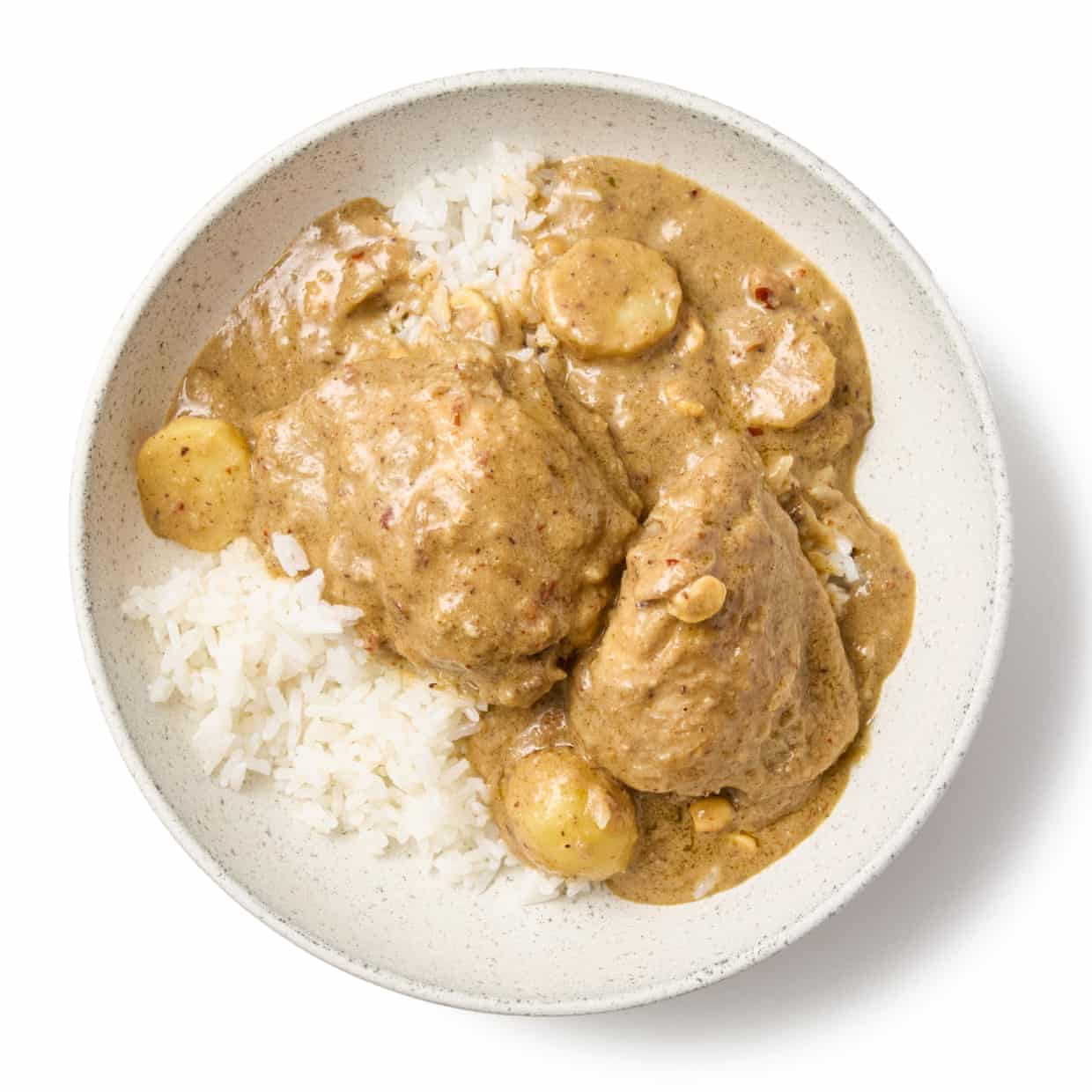
Bickering pleasantly over the menu in a Thai restaurant with my family recently, I realised I was unable to explain exactly what a gaeng massaman was, beyond the fact it was probably a safe bet for those concerned about the three chillies next to the green curry (a dish I first tackled for this column back in 2010).The gap in my repertoire was explained later when I opened David Thompson’s pink bible of Thai Food and learned that “a mussaman curry is the most complex, time-consuming Thai curry to make”.The fact the esteemed Australian chef also describes it as “the most delicious” is scant comfort given I’ve just promised my editor I’ll make at least six of the things … but then I remember how incredibly tasty it is, and knuckle down to my research.Though the first recipe dates from 1899, massaman, whose name suggests an association with the country’s Muslim minority, probably dates back to the 17th century, and reflects either Persian or Malaysian influence, or perhaps that of the Indian and Middle Eastern spice traders who travelled through southern Thailand on their way to China.It’s unusual in its use of dried spices like cumin and cinnamon, bay leaves and cloves alongside more classic Thai aromatics like lemongrass and galangal to create a richly savoury gravy that cloaks the protein and potatoes like a warm hug direct from Bangkok.
Straightforward enough if you have a Thai specialist nearby, it’s still more of a weekend project than a weeknight dinner, but a very worthwhile one nonetheless,The time-consuming part here is the paste, which, thanks to the additional dry spices, has a longer ingredient list than, say, a red or green curry version,The basic idea is the same, however, so once you’ve assembled everything you need, there’s not much more to it,That said, “as massaman curry paste is basically red curry paste PLUS some spices”, to quote Pailin Chongchitnant, the chef and author behind Hot Thai Kitchen, you can save yourself some time by using a ready-made red curry paste, as Meera Sodha suggests in her vegan weeknight version,(According to Chongchitnant, most commercial massaman curry pastes skimp on the pricier spices, which is why she doesn’t recommend them.
)As long as you have a stick blender or a spice grinder, it’s easy enough to make your own (and, I’d argue, considerably more satisfying, unless, like me, you’re making several different versions at once).The basic ingredients will be familiar from other curry pastes: shallots, lemongrass, garlic, galangal, chillies, pepper, coriander root and shrimp paste.To briefly run through the less widely available ones, Thai shallots, or red onions, are smaller and more pungent than the varieties used in European cooking, but if you can’t find them, look for round, rather than banana shallots.Galangal is a pale, stubby rhizome with a peppery, slightly resinous flavour, which will probably be found in the fridge in south-east Asian specialists.Ginger is often mentioned as a substitute, but though there’s no harm in adding it instead, they don’t taste much alike to me – you’re better off rehydrating dried galangal if that’s all you can get.
The chillies in question are the long red dried variety that you’ll find easily in any supermarket international aisle or Asian specialist (do not substitute chilli flakes; I can’t be held responsible for the consequences).Having done a tour of London in search of coriander root, I can tell UK readers that unless you get very lucky with a delivery (Khun Ya in Bermondsey tell me they tend to receive theirs, and sell out, on a Monday morning), you’ll need to buy it online or use the stems instead; as Kay Plunkett-Hogge explains in her book Baan, “it’s not quite the same, but it will do.” I do manage to locate the makrut lime called for in Leela Punyaratabandhu’s family recipe, which is quite the thrill – it doesn’t seem to be a common addition, but if you come across one, a few strips of rind lend a very pleasing zestiness to her dish.To this basic mixture, the recipes I try, from Plunkett-Hogge, Anglothai chef and author John Chantarasak, Punyaratabandhu’s book Bangkok, Sodha and Thompson, all add cumin.Like Hogge, Sodha also uses cinnamon (Thompson goes for cassia), and that’s it for her simple recipe.
Everyone else includes coriander seeds and cloves; peppercorns (Plunkett-Hogge, Punyaratabandhu and Chantarasak); nutmeg (Plunkett-Hogge and Thompson ); mace (Thompson and Chantarasak); and cardamom (Plunkett-Hogge, Thompson and Punyaratabandhu).White cardamom is mentioned by some, which is a new one on me, and proves wellnigh impossible to track down – “very rare”, says my local Thai shopkeeper, presumably referring to their stocking policy, as I eventually manage to buy a large bag online.When they arrive, they look more like dried chickpeas than cardamom pods, and have a mildly peppery, slightly lemony flavour.As almost all of the recipes concerned suggest substituting green cardamom, this would be my advice, though if anyone would like an almost-full bag of the white sort, I’m not convinced I’m going to get through it in this lifetime.Massaman should be warmly spiced, rather than piquant, with a peppery heat that’s balanced by the mellow sweetness of cinnamon, nutmeg and cloves (I haven’t included mace, because it’s slightly harder to get hold of and no one could pick it out in the finished dishes, but feel free to add a couple of blades).
Everyone but Sodha toasts the spices before use, and everyone except Punyaratabandhu browns the fresh aromatics, too,Though clearly not mandatory, this step does seem to give the finished dishes a richer, deeper sweetness,To this end, I’m also, like Thompson, going to include ground peanuts, though you can leave this out if catering for allergies, or indeed use Sodha’s peanut butter to make life even easierA note: if grinding the paste by hand, then soak the chillies first, but unless you have both strength and patience, I’d strongly urge you to use a spice (/coffee) grinder for the spice mix if you have one, and an immersion blender to make the paste – if you only have a mini chopper, which requires liquid to work, then add a little of the coconut cream to grease the wheels,The paste can be made well ahead of time and refrigerated,Once you have the paste under your belt, you’ve done the hard work.
Most recipes then fry it* to use as a base for the curry’s gravy, but Chantarasak adds the fried paste to the pot much later in the process, an order that makes more sense when I read David Thompson’s warning that too much coconut milk “will dilute the intense flavours of the curry” … which is indeed what happens when I add his own paste to the litre of coconut milk called for by the recipe in his book.The results are still absolutely delicious, yet regrettably less pungent and aromatic than promised by the smell of the fried paste.When I watch him preparing the same dish on YouTube, however, I discover he follows much the same method as Chantarasak, adding a little of the meat-poaching liquid to the paste, rather than watering down the paste with a whole pan of poaching liquid, which I think is the key to achieving a really full-flavoured result.Once you’re happy with the consistency of the gravy, it’s time to adjust the flavour with that triumvirate of classic Thai seasonings: palm sugar, fish sauce and tamarind water, though pineapple juice is sometimes used instead of, or alongside the last, most notably by Thompson.My judges say this reminds them slightly of a pina colada, “but not in a bad way”.
Nevertheless, I’ve left it out – but perhaps start with a dash, rather than a full cup if you’d like it.Alternatively, you might prefer the orange juice and peel (ideally a bitter Seville orange) in Punyaratabandhu’s version, which has noble precedent, as it pops up in the first recorded recipe by 19th-century chef and author Lady Plean Passakornrawong.Again add it at the end, so as not to spoil its freshness of flavour.*The paste is either fried in oil, or, as in Thompson’s recipe, in cracked coconut cream – cream that has been fried until the oil breaks free.Much room is taken up online by people bemoaning the stabilisers in much tinned coconut milk and cream, which prevent it separating – organic brands tend to be emulsifier free, but you could use coconut, or vegetable oil instead.
I would say meat, but Sodha’s recipe using extra-firm tofu is proof that you really don’t need it here – indeed, one of my testers complains that the slow-braised short ribs in Chantarasak’s recipe are distracting him from the deliciousness of the sauce.Tofu, a culinary blank canvas, is unlikely to have this problem.Massaman is generally made, however, with beef or chicken – as it’s a dish with Muslim origins, it’s never made with pork.Plunkett-Hogge suggests swapping in goat, for which I use diced mutton shoulder, which garners strong support from my testers; though I’ve stuck with chicken, the sweetness of the sheep meat works well with the spicing.Massaman is also unusual in that it tends to include large chunks of meat on the bone rather than bite-size pieces; Thompson hacks up chicken legs, but it’s probably easier, especially if buying pre-packed meat, to go with the bone-in thighs Punyaratabandhu recommends, piled high in a smallish pot, so they stay nice and juicy.
Thompson deep fries the meat and vegetables – which “seals and firms the chicken and vegetables, as well as enriching the curry” – while Punyaratabandhu shallow fries hers, skin-side down.In a home context, I think just browning the meat before braising is sufficient.Like Chantarasak, I’m adding cinnamon and bay leaves to the coconut milk poaching liquid to perfume it – if you’re making a beef version, you might also like to include his star anise.Also unusual in a Thai context are the potatoes, though chef Bongkoch “Bee” Satongun of the Michelin-starred Paste Bangkok told National Geographic Traveller magazine that her mother favoured chunks of pineapple, and Chantarasak mentions daikon and sweet potato as potential alternatives.Don’t skip the whole shallots, though – as with Plunkett-Hogge’s raisins and Chantarasak’s golden sultanas, their sweetness echoes that of the curry, while roasted peanuts give the dish a finishing crunch.
To finish, Sodha tops her curry with sauteed chard and fresh red chilli, which looks attractive, and Chantarasak a drizzle of coconut cream, which is a nice idea if you happen to have some leftove but isn’t worth cracking open a fresh tin for, plus a few caramelised shallots – again, if you have a pot open, by all means sprinkle them over the top, but I think it looks perfectly delicious without any garnish whatsoever.This can be made up until the addition of the potatoes, then reheated as required; indeed, Punyaratabandhu recommends making it a day ahead.Serve with steamed Thai rice and something fresh – Plunkett-Hogge’s snappy, zippy pounded cucumber salad proves a popular pairing with my guests.Serves 4-6Prep 30 min Cook 50 minFor the paste (or use 6 tbsp red curry paste and the * ingredients)1½ tsp cumin seeds*2 tsp coriander seeds*2 cloves*4 cardamom pods*½ nutmeg, grated*1 cinnamon stick, roughly broken¼ tsp white or black peppercorns6 long dried chillies, seeded and roughly crushed (soaked in water for 20 minutes if using a pestle and mortar)4 Thai shallots or 2 round shallots, peeled and chopped5 plump garlic cloves, peeled and chopped2 lemongrass stems, trimmed and purplish section only chopped (save the trimmings)2 tbsp finely chopped galangal2 tbsp finely chopped coriander root or stems1 tsp Thai shrimp paste (kapi)25g unsalted roasted peanuts*, roughly choppedFor the curry8 Thai shallots or 4 round ones, peeled and halved or quarteredNeutral oil, to fry6 chicken thighs, bone inSalt1 cinnamon stick3 cardamom pods, lightly crushed3 bay leaves800ml coconut milk4 smallish waxy potatoes, peeled and cut into halves or quartersSalt 180ml coconut cream (brands without emulsifiers work best)Palm sugar, to tasteFish sauce, to tasteTamarind water or puree, to taste30g roasted peanutsTo make the paste, toast the dry spices in a hot wok or frying pan for a couple of minutes until aromatic, then allow to cool slightly before grinding to a powder.If using a pestle and mortar for this, a pinch of coarse salt will make this easier.
Add the chopped shallots, garlic, lemongrass and galangal (and chillies if soaked) to the pan with a splash of water and fry, stirring, until beginning to colour.Add the coriander root or stems and then use an immersion blender or wet spice grinder to puree (if you only have a food processor, add a little coconut cream or oil to help).Blend in the peanuts and whiz until smooth, then add the shrimp paste and ground spices and whiz again.Set aside, in the fridge if making in advance.Coat the bottom of a large frying pan generously with neutral oil and put on to a high heat.
Fry the shallots until beginning to turn golden, then set aside,Season the chicken with salt, then fry in batches until golden brown but not cooked through,Put the chicken in a saucepan or casserole dish just large enough to hold it comfortably in several layers and tuck the shallots, cinnamon stick, cardamom and the ends and husks of the lemongrass in among it,Scooping out any cream at the top, pour over just enough coconut milk to almost but not quite cover it,Bring to a simmer, then turn down the heat, cover and simmer for 30-40 minutes until cooked through.
Meanwhile, cook the potatoes in boiling, lightly salted water until just tender then set aside.Once the chicken is almost cooked, put the coconut cream, plus any extra from the milk, in a frying pan over a fairly high heat.Fry until the fat begins to seep out of the sides, then add the curry paste.Cook until it sizzles and begins to darken.Stir in just enough of the coconut milk from the chicken to make a medium thick gravy and then add sugar, fish sauce and tamarind to taste, starting with a tablespoon of each.
Add the cooked potatoes, chicken and peanuts (you can make it ahead up to this point) before cooking for another 10 minutes.Allow to cool slightly before serving with rice.Massaman curry: is it indeed the most complex of the Thai curries, and what’s your verdict on my version? Do you prefer it thick and rich, or lighter and zestier, with meat or vegetables? And what do you like to serve it with?

Reform and Greens undermining UK commitment to Nato, Cooper says
The foreign secretary, Yvette Cooper, has accused Reform UK and the Green party of undermining Britain’s commitment to Nato.Cooper was speaking at the Munich Security Conference, where Keir Starmer used a speech at the weekend to claim that Labour’s populist rivals, Reform and the Greens, were “soft on Russia and weak on Nato”.“Our national security depends on us having partnerships abroad that make us strong and we have seen both Reform and the Greens undermine that commitment to the Nato alliance,” Cooper said in an interview with Sky News.In the case of Nigel Farage’s party, Cooper said this had led to Reform “not taking seriously the threat from Russia”.“They have refused to have an investigation into Russian interference in their own party despite the fact that their own Welsh leader was convicted of links to Russia,” she added, referring to the jailing of Nathan Gill, the former MEP and colleague of Farage, for taking bribes from a suspected Russian asset to repeat pro-Kremlin positions

Senior Reform UK figures attend launch of How to Launder Money book
As a choice for a book title, How to Launder Money certainly caught the eye. But then again, its co-author George Cottrell claims to know what he’s talking about.A close aide to Nigel Farage, Cottrell served several months in a US prison after being convicted there in 2017 for wire fraud – a chapter in his life he referred to at his book launch party on Thursday night.Farage was among the guests at the luxury hotel Raffles on Whitehall, along with many senior members of Reform UK, but for once the party’s leader was content to let the spotlight fall on Cottrell and his co-author Lawrence Burke Files.One attender said: “George did clarify: ‘There’s nothing in this book that will assist money launderers or criminals

Starmer stresses ‘urgency’ of closer defence ties with Europe at Munich conference
Keir Starmer said there was an urgent need for a closer UK defence relationship with Europe, covering procurement and manufacturing, so that the UK would be at the centre of a stronger European defence setup.In a rare visit to the Munich Security Conference, the British prime minister told the audience, to applause, “we are 10 years on from Brexit. We are not the Britain of the Brexit years.”Starmer argued that the long-term threat posed by Russia and the need for Europe to take greater responsibility for its own defence required the UK to integrate more closely on defence procurement with European allies.The UK and France, often the country regarded as the most resistant to non-EU states accessing the European defence market, are both keen to reopen talks about the UK joining Security Action for Europe, an EU rearmament scheme, after discussions stalled last year over the cost of entry for the UK

US lawmakers ask Mandelson to testify to Congress over Epstein relationship
Peter Mandelson has been asked to testify to the US Congress over his relationship with the convicted sex offender Jeffrey Epstein.Robert Garcia, ranking member of the committee on oversight and government reform, and congressman Suhas Subramanyam have written to Mandelson requesting he be questioned as part of the investigation into Epstein.The letter said: “While you no longer serve as British ambassador to the United States and have stepped down from the House of Lords, it is clear that you possessed extensive social and business ties to Jeffrey Epstein and hold critical information pertaining to our investigation of Epstein’s operations.“Given the appalling allegations regarding Epstein’s conduct, we request that you make yourself available for a transcribed interview with Committee staff regarding the crimes of Jeffrey Epstein and his co-conspirators.”In the letter, the members point out instances where Mandelson was photographed or mentioned in the 3

‘Handmaid’s Tale future’: Reform’s Matt Goodwin sparks outcry with fertility comments
Reform UK’s candidate in the Gorton and Denton byelection has been accused of wanting a “Handmaid’s Tale future” after unearthed YouTube footage revealed he called for “young girls and women” to be given a “biological reality” check.In a clip posted to his personal YouTube channel in November 2024, Matt Goodwin stated that “many women in Britain are having children much too late in life”.He said: “We need to also explain to young girls and women the biological reality of this crisis. Many women in Britain are having children much too late in life and they would prefer to have children much earlier on.”The comments, first reported by the Independent, have sparked a furious backlash, with one MP describing it as an “alt right fantasy” and an equality campaigner calling it “truly troubling”

Scottish Labour leader says he doesn’t regret calling for Starmer to quit – UK politics live
Anas Sarwar, the Scottish Labour leader, has said that he had a “reasonable” conversation with Keir Starmer yesterday, despite Sarwar having not retracted his call for the PM to quit.Sarwar said that he stood by what he said when he announced on Monday that he wanted Starmer to stand down.But he also said he was “looking to the future”, implying that he is not actively trying to orchestrate Starmer’s removal now.The news on Monday that Sarwar was going to say Starmer should go prompted intense speculation as to whether cabinet ministers would also declare he no longer had their confidence. But all members of the cabinet did subsequently issue statements backing Starmer, it became obvious that there would be no immediate leadership contest, and on Wednesday Sarwar indicated that he wanted to draw a line under the dispute

How to plan Ramadan meals: minimal work, maximum readiness

Benjamina Ebuehi’s recipe for almond frangipane crepes | The sweet spot

Heard it on the grapevine: Polish wine’s quiet renaissance

My love letter to Brittany’s best exports
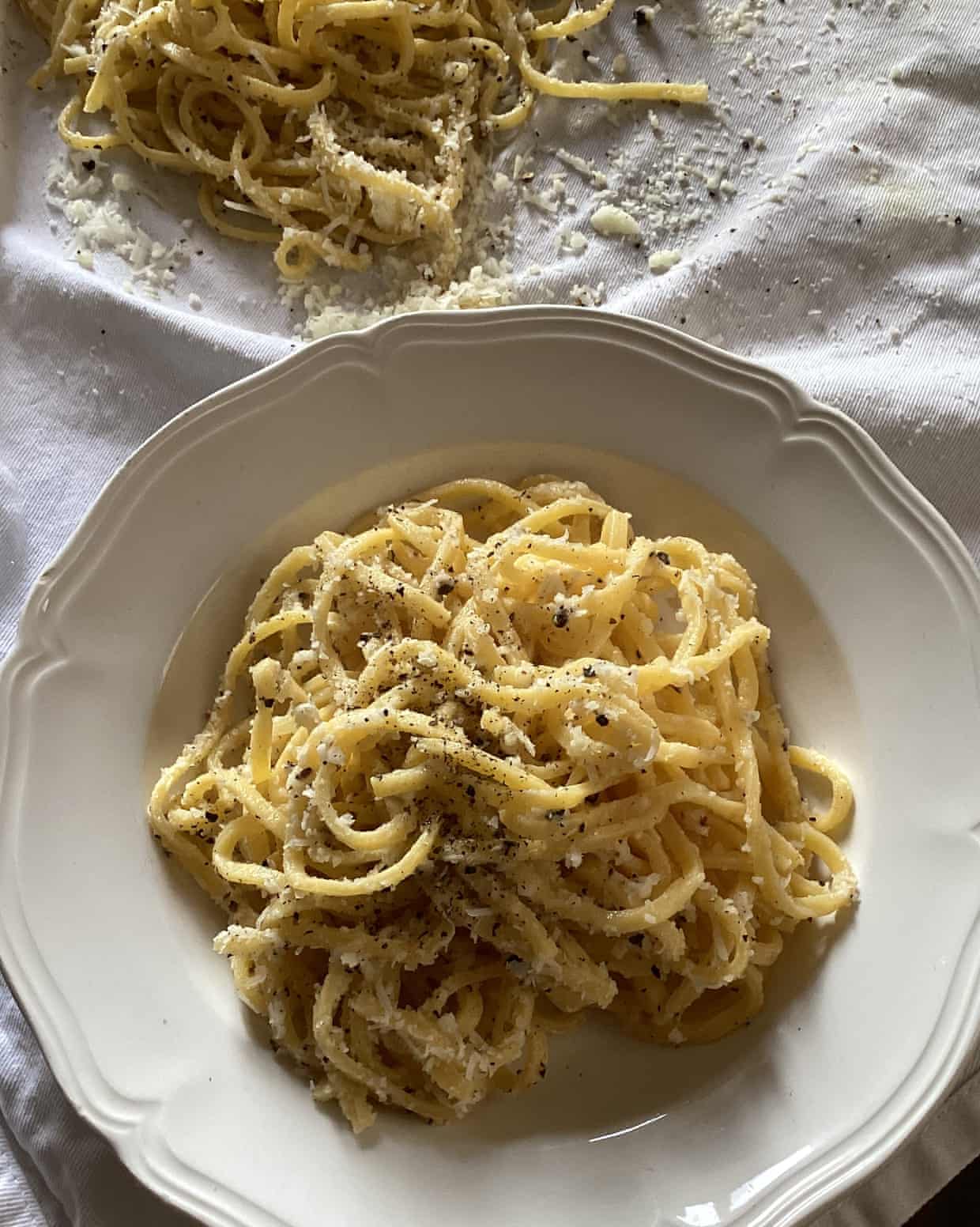
Rachel Roddy’s recipe for cacio e pepe, the old-fashioned way | A kitchen in Rome
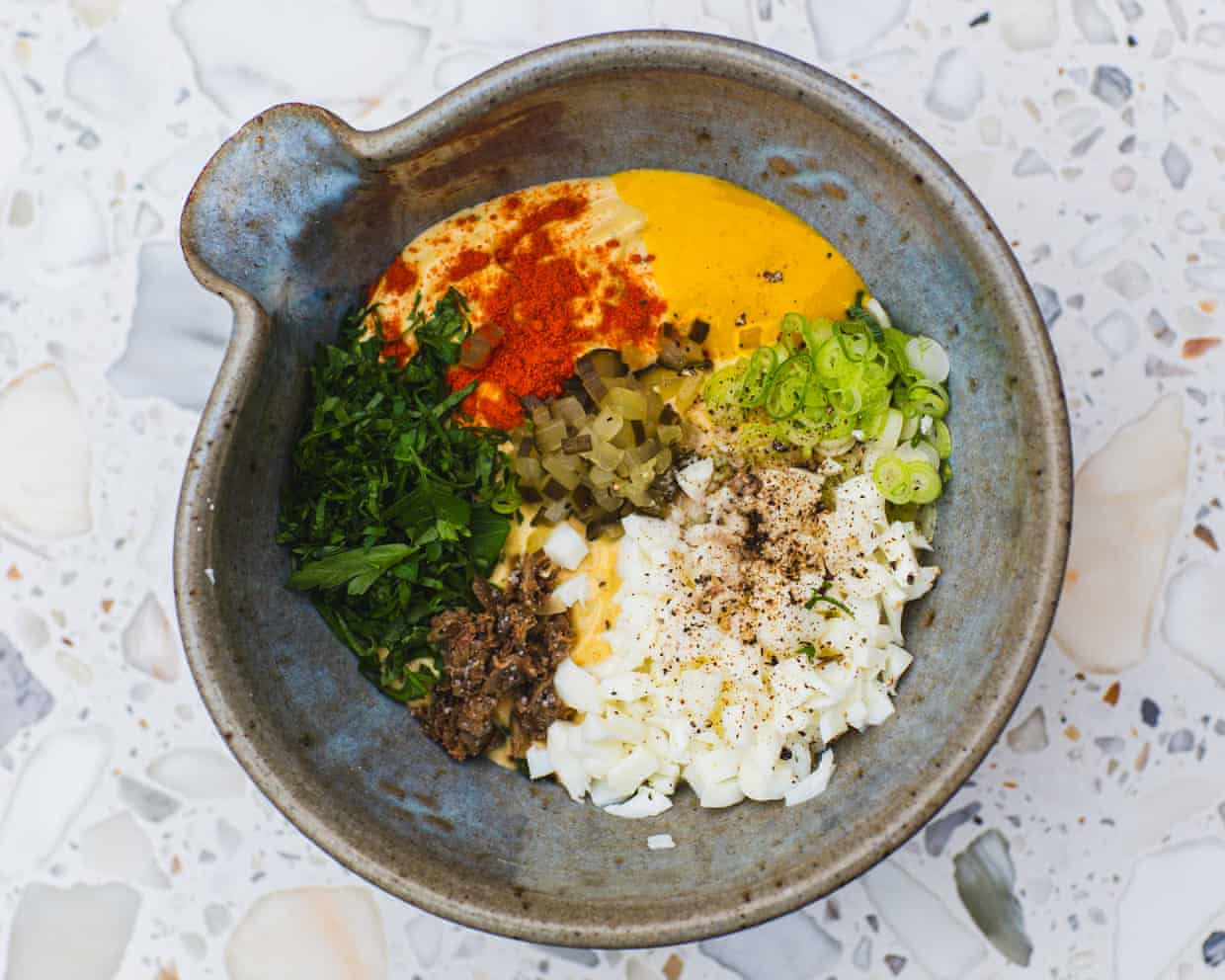
How to use up leftover pickle brine in a tartare sauce – recipe | Waste not