Senior Reform UK figures attend launch of How to Launder Money book
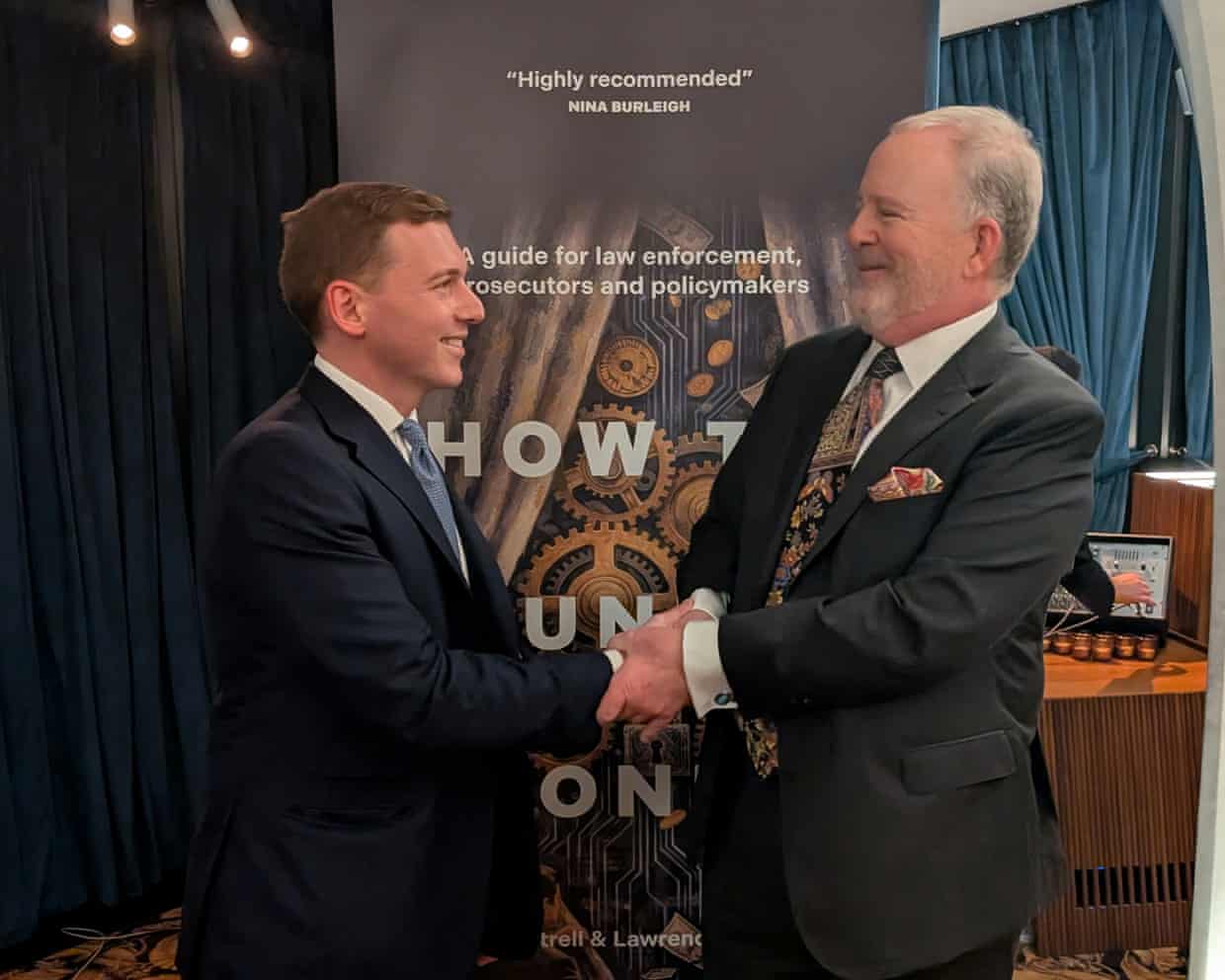
As a choice for a book title, How to Launder Money certainly caught the eye.But then again, its co-author George Cottrell claims to know what he’s talking about.A close aide to Nigel Farage, Cottrell served several months in a US prison after being convicted there in 2017 for wire fraud – a chapter in his life he referred to at his book launch party on Thursday night.Farage was among the guests at the luxury hotel Raffles on Whitehall, along with many senior members of Reform UK, but for once the party’s leader was content to let the spotlight fall on Cottrell and his co-author Lawrence Burke Files.One attender said: “George did clarify: ‘There’s nothing in this book that will assist money launderers or criminals.
And he had a funny joke along the line that he did extensive research for the book, though unfortunately a lot of it is held by the FBI,”Published by Biteback, owned by Lord Ashcroft, the book is subtitled: A Guide for Law Enforcement, Prosecutors and Policymakers,Its promotional text reads: “The criminals already know how to launder money; this is, in part, their inside story,”Those attending the event included the Reform MP Richard Tice, the party’s treasurer, Nick Candy, and its London mayoral candidate, Laila Cunningham,They were joined by a number of Reform staffers, the GB News presenter and former Brexit party MEP Martin Daubney and James Orr, the Cambridge University philosophy professor and senior adviser to Farage.
“How to Launder Money offers a peek behind the wizard’s curtain to see the bent levers of finance and how they are pulled,” Cottrell and Burke Files write in an introduction, which describes anti-money laundering laws as “a convoluted failure” burdening legitimate businesses.It cites the experience of Burke Files who’s working in finance for more than 40 years, most of it as an investigator and expert in due diligence.He is a former director of corporate finance for the investment bank American National.As for Cottrell, the introduction says he was “exposed to the world of finance from a young age”, starting a career as a financier in London upon leaving school before he “caught the political bug” and in 2014 began a long engagement with British and international politics.“In 2016, George was arrested by IRS [the US Internal Revenue Service] officers at the Republican national convention, where he had flown with a group of leading British Brexiteers,” it adds.
He was in the company of others, including Farage, then the leader of Ukip, when he was arrested while disembarking from a plane at Chicago’s O’Hare airport.“The arrest related to charges dating back to his years in finance and allegations of a money laundering conspiracy,” it reads, noting that he served eight months in prison before his release with all but a single charge dropped.The Guardian has previously reported that prosecutors advised the judge in the case to offer Cottrell a light prison sentence because he had been willing to “provide federal agents additional information after his arrest” as part of a plea deal.The book’s introduction adds: “More recently, George has worked as an international political consultant, developed his art collection and applied himself to philanthropy, while running his political consultancy Geostrategy.com.
”“Are we cheerleaders for crime? No.Quite the opposite,” it later states.The authors address law enforcement officers, who they “tip our hats to with our hands over our hearts”.Farage himself is mentioned on one page, which refers to him in the context of a discussion about the consequences for politically exposed persons (PEPs) from banks’ “de-risking”, which involves financial institutions ending or limiting ties with other banks and clients or regions considered high risk for money laundering.Describing Farage as “a central figure in the Brexit process”, it relates how he had his account closed by Coutts, adding that it was later revealed that his political views and status as a PEP influenced the decision.
De-banking has gone from being a result of money-laundering risks to a result of social belief systems, write Cottrell and Burke Files.“Not even Orwell could have imagined this; the slope gets slipperier by the day,” they add.Burke Files told the Guardian that the book was about having a conversation about money laundering, and sharing what the criminals already know about laundering money with law enforcement and the public.“It’s also a call to review the failures and perverse impacts they have had on people, finance and international development.We hope it will be a catalyst to start the discussions to make a difference,” he said.

Elon Musk’s xAI faces second lawsuit over toxic pollutants from datacenter
Elon Musk’s artificial intelligence company xAI is facing a second lawsuit alleging it is illegally emitting toxic pollutants from its enormous datacenters, which house its supercomputers and run the chatbot Grok.The new pending suit alleges xAI is violating the Clean Air Act and was filed Friday by the storied civil rights group the NAACP. The group’s 40-page notice of intent to sue alleges xAI has been polluting Black communities near its facility in Southaven, Mississippi. The pollution comes from more than a dozen portable methane gas generators that xAI set up without permits, the notice alleges.The NAACP’s first notice of intent to sue was filed last June and involves similar allegations regarding the company’s datacenter in Memphis, Tennessee

AI is indeed coming – but there is also evidence to allay investor fears
The message from investors to the software, wealth management, legal services and logistics industries this month has been clear: AI is coming for your business.The release of new, ever more powerful AI tools has coincided with a stock market slide, which has swept up sectors as diverse as drug distribution, commercial property and price comparison sites. Advances in the technology are giving increasing credibility to predictions that it could render millions of white-collar jobs obsolete – or, at least, eat into the profits of established companies.Carl Benedikt Frey, the author of How Progress Ends and an associate professor of AI and work at the University of Oxford, says investors are reassessing the value of companies that rely heavily on selling software or specialist knowledge.“AI turns once-scarce expertise into output that’s cheaper, faster, and increasingly comparable, which compresses margins long before whole jobs disappear

Anthropic raises $30bn in latest round, valuing Claude bot maker at $380bn
Anthropic, the US AI startup behind the Claude chatbot, has raised $30bn (£22bn) in a funding round that more than doubled its valuation to $380bn.The company’s previous funding round in September achieved a value of $183bn, with further improvements in the technology since then spurring even greater investor interest.The fundraising was announced amid a series of stock market moves against industries that face disruption from the latest models, including software, trucking and logistics, wealth management and commercial property services.The funding round, led by the Singapore sovereign wealth fund GIC and the hedge fund Coatue Management, is among the largest private fundraising deals on record.“Anthropic is the clear category leader in enterprise AI,” said Choo Yong Cheen, the chief investment officer of private equity at GIC

How to deal with the “Claude crash”: Relx should keep buying back shares, then buy more | Nils Pratley
As the FTSE 100 index bobs along close to all-time highs, it is easy to miss the quiet share price crash in one corner of the market. It’s got a name – the “Claude crash”, referencing the plug-in legal products added by the AI firm Anthropic to its Claude Cowork office assistant.This launch, or so you would think from the panicked stock market reaction in the past few weeks, marks the moment when the AI revolution rips chunks out of some of the UK’s biggest public companies – those in the dull but successful “data” game, including Relx, the London Stock Exchange Group, Experian, Sage and Informa.Relx, the former Reed Elsevier, whose brands include the Lancet and LexisNexis, is the most intriguing in that list. The company’s description of itself contains at least five words to provoke a yawn – “a global provider of information-based analytics and decision tools for professional and business customers” – but the pre-Claude share price was a thing of wonder

Share values of property services firms tumble over fears of AI disruption
Shares in commercial property services companies have tumbled, in the latest sell-off driven by fears over disruption from artificial intelligence.After steep declines on Wall Street, European stocks in the sector were hit on Thursday.The estate agent Savills’ shares fell 7.5% in London, while the serviced office provider International Workplace Group, which owns the Regus brand, lost 9%.The UK’s two biggest property developers, British Land and Landsec, dropped 2
Elon Musk posted about race almost every day in January
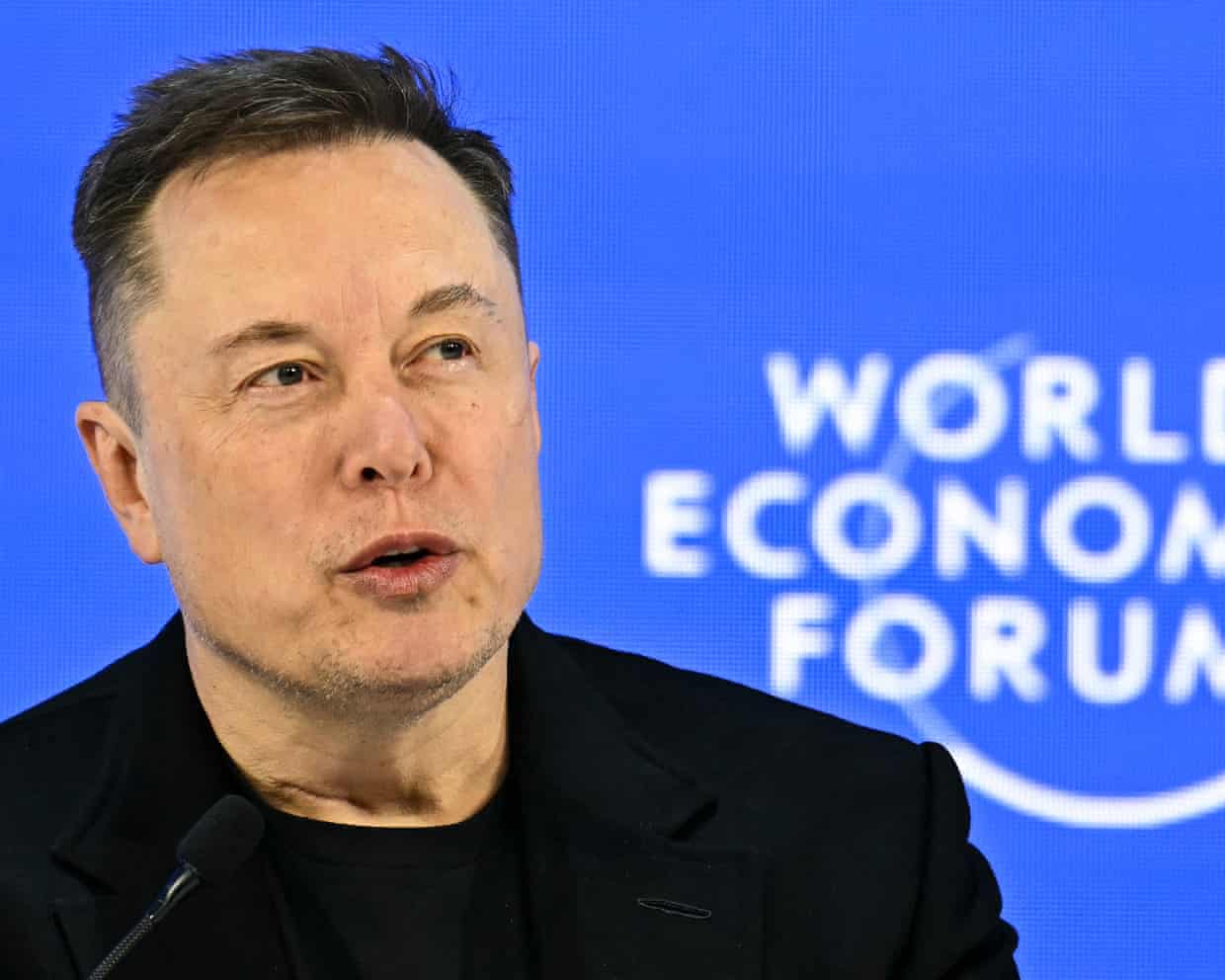
Elon Musk’s longtime fixation on a white racial majority is intensifying. The richest man in the world posted about how the white race was under threat, made allusions to race science or promoted anti-immigrant conspiracy content on 26 out of 31 days in January, according to the Guardian’s analysis of his social media output. The posts, made on his platform X, reflect a renewed embrace of what extremism experts describe as white supremacist material.“Whites are a rapidly dying minority,” Musk said on 22 January, a short time before taking the stage at the World Economic Forum in Davos, while reposting an Irish anti-immigrant influencer’s video about demographic change.Musk’s posts included him repeatedly claiming white people face systemic discrimination, endorsing the conspiracy that there is an ongoing genocide against white people in countries around the world and promoting a claim that white people would be “slaughtered” by non-whites if they become a demographic minority

Reform and Greens undermining UK commitment to Nato, Cooper says
Senior Reform UK figures attend launch of How to Launder Money book
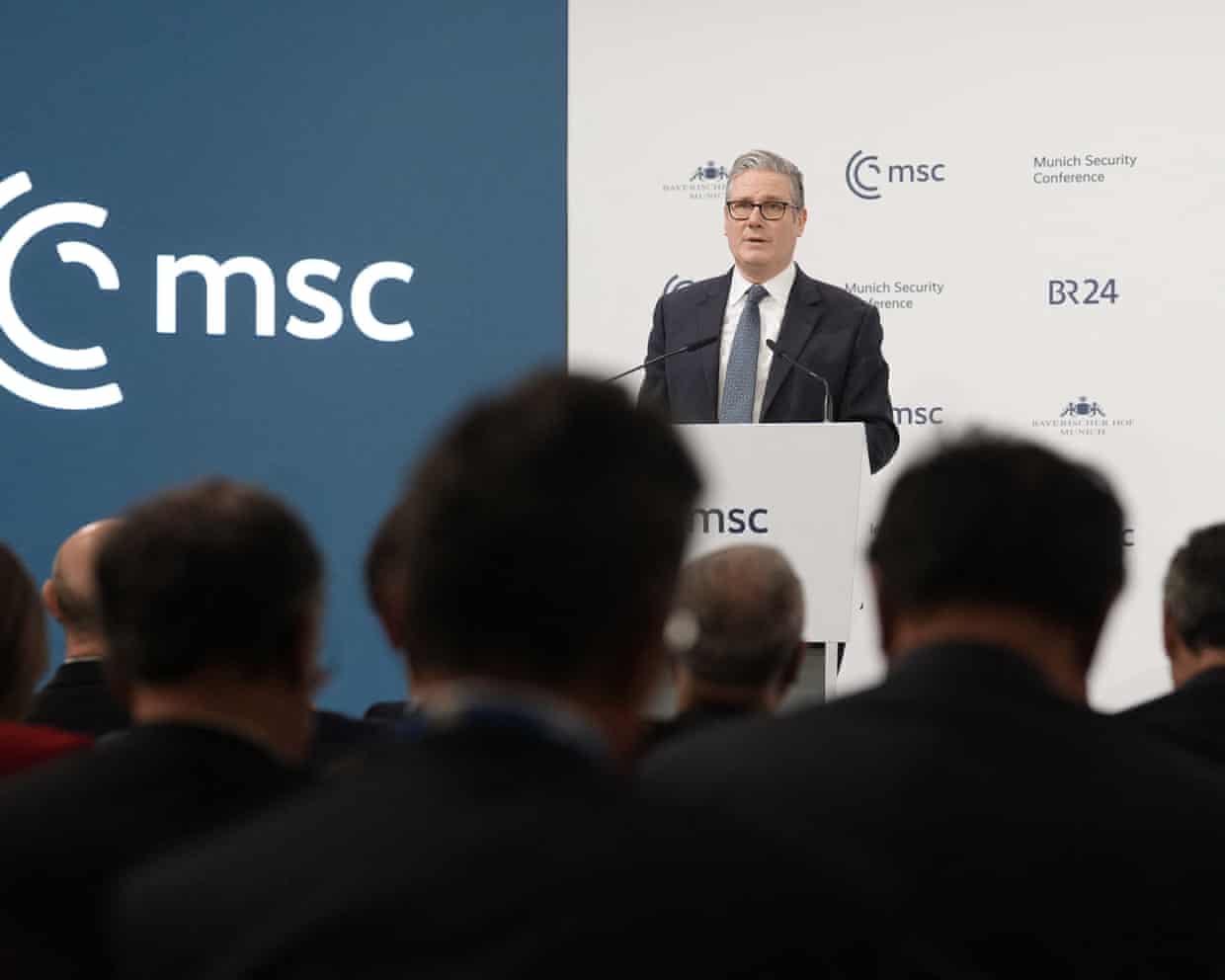
Starmer stresses ‘urgency’ of closer defence ties with Europe at Munich conference

US lawmakers ask Mandelson to testify to Congress over Epstein relationship

‘Handmaid’s Tale future’: Reform’s Matt Goodwin sparks outcry with fertility comments
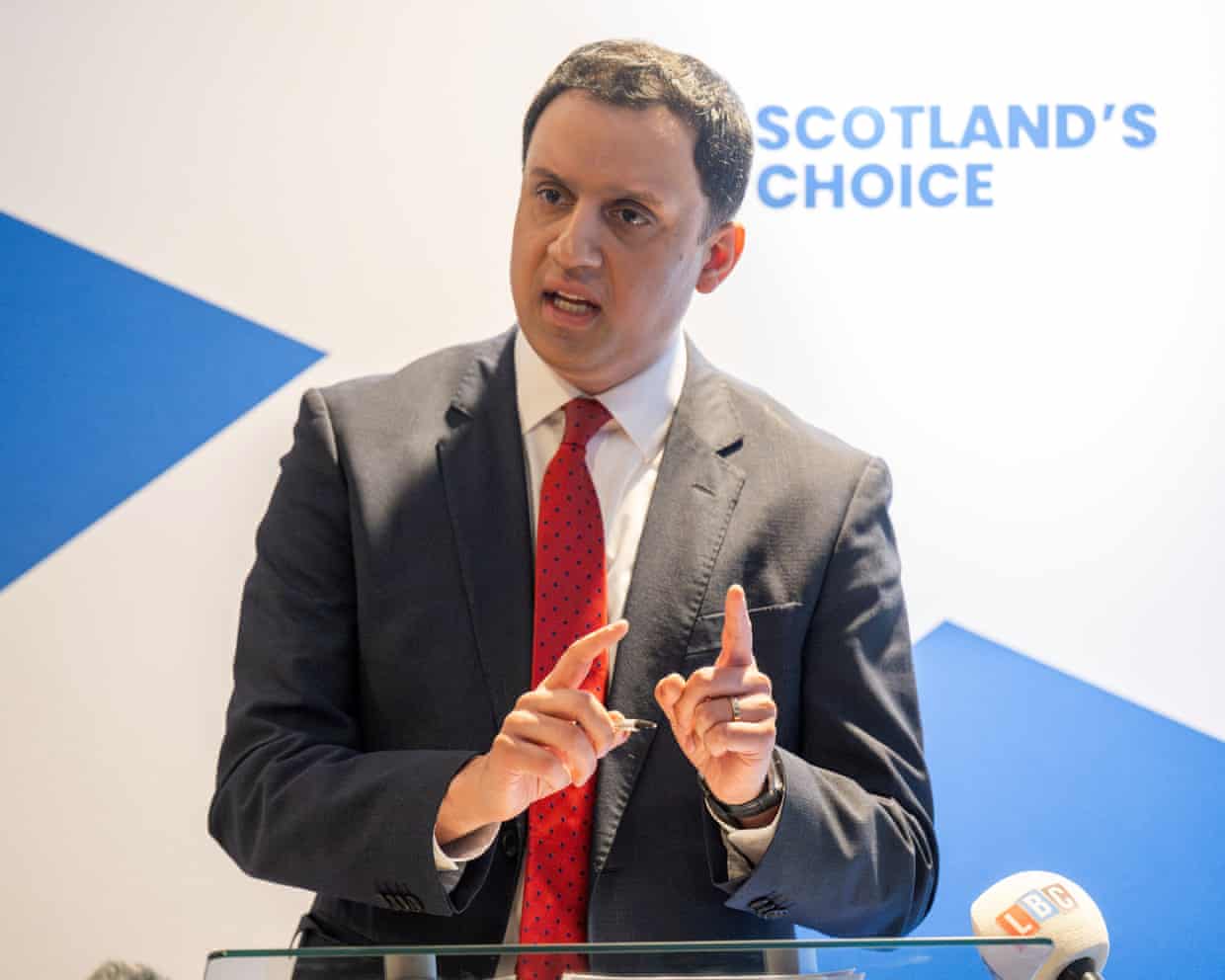
Scottish Labour leader says he doesn’t regret calling for Starmer to quit – UK politics live