How to make the perfect Portuguese feijoada – recipe | Felicity Cloake's How to make the perfect
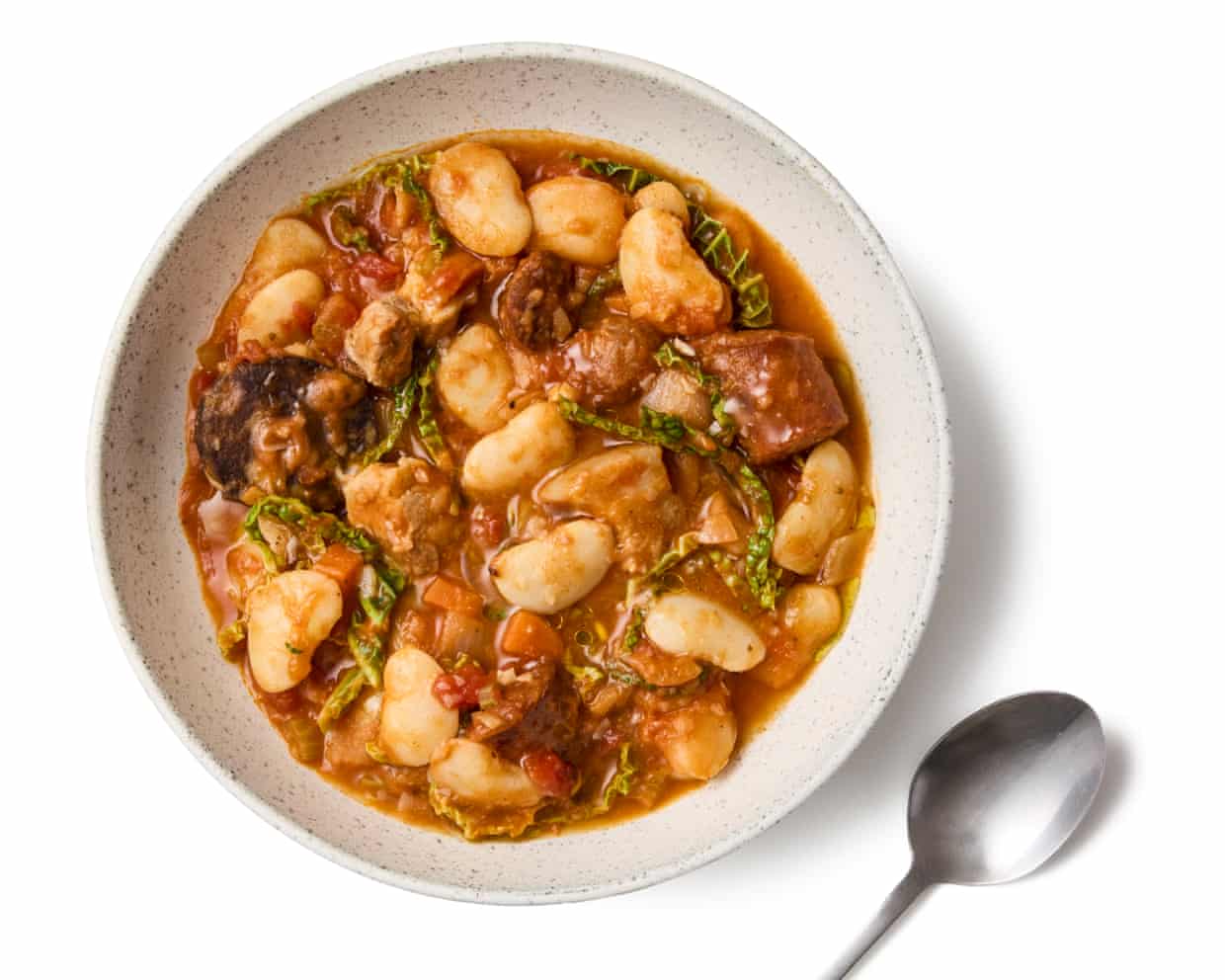
If you are trying to incorporate more beans and pulses into your diet, as I am, then this robust, one-pot feast, which food writer Edite Vieira describes as “a marvellous standby of the Portuguese kitchen”, is one to bear in mind.Though each region has its own variations, “basically”, she explains, “feijoada is a rich bean stew with pork and sausages”.The Brazilian version, often cited as that country’s national dish, is the product of the West African “love of beans”, according to the Oxford Companion to Food, with some suggesting that it’s a South American creation that travelled to Europe along with returning colonisers.Others insist with equal fervour that the dish was “born in the north of Portugal, and imported and adapted to what was available in Brazil”.Like so many such homely favourites, its precise history will probably ever remain a mystery; what’s important is that it’s simple to prepare, easy to adapt according to taste and budget, and very satisfying.
Unlike in Brazil, where black beans rule the roost, there’s no apparent consensus on the best variety here,David Leite, whose family hails from the Azores, uses white beans, Vieira butter or kidney beans in her book The Taste of Portugal, Leandro Carreira’s Portugal: the Cookbook calls for butter beans, while chef Nuno Mendes writes in Lisboeta that he likes to use “a combination of butter beans, red kidney beans and cannellini”,Though my testers, to my slight surprise, show a strong preference for the sweet, earthy kidney bean, go with whichever you prefer – and, most importantly, whichever look the freshest,I say this because it’s increasingly hard to find decent dried beans and pulses in British supermarkets – the bag of butter beans I buy are cracked and several remain wizened and wrinkly even after soaking,Whether they’re not stocking them because we’re not cooking them, or vice versa, is an argument for another day, but if you don’t have a good source locally (a place with a high turnover of beans is usually a good bet), some truly excellent varieties are available online.
For this reason, much as we all enjoy Mendes’ dish, I wouldn’t advise mixing beans, because they cook at such different rates that one is sure to end up mushy – you could, of course, cook them separately, but that’s a level of faff I can’t recommend unless you’re very committed.Vieira and Carreira flavour their beans with the classic clove-studded onion, while Mendes opts for shallot, carrot, celery, garlic and bay – I’m going to use some of those ingredients in the finished stew, though, so I’ve confined myself to the onion, clove and bay leaf, and left out their lard or olive oil in favour of Mendes’ pork belly, which should do much the same job.Márcia of the Plant Based Portuguese website uses tinned beans (kidney or white) and simmers them with aromatics.Though this won’t give you the same depth of flavour, it still makes for a delicious and substantially quicker stew.If you’d prefer to use them in the recipe below, leave out the pork belly (or substitute it for chunky bacon lardons and them alongside the chorizo), then add the beans and their liquid to the pan with the sauteed vegetables and tomatoes and simmer for 20 minutes or so before adding the cabbage, chorizo and black pudding.
You’re unlikely to get as much cooking liquid from the tins, however, so Márcia suggests topping up the pan with vegetable stock spiked with white wine.Márcia, of course, does not use meat (she substitutes tempeh soaked in soy sauce, garlic and paprika, plus optional vegan chorizo, which are two decent choices), but, to be frank, if you don’t eat animal products (and aren’t Portuguese and therefore invested in this dish in particular), there are better choices of bean stew out there.Feijoada is really all about the meat, even if you don’t use a lot of it.This is one of those agreeable dishes into which you can chuck just about anything, as long as it’s pig-shaped.Everyone includes chouriço, the Portuguese equivalent of its better-known Spanish cousin that tends to be lighter on the paprika and heavier on the garlic and wine or vinegar.
I get mine from a Portuguese grocer in south London, but you can buy it online – or, if no Portuguese are there to witness the crime, substitute a chorizo, preferably a sweet, rather than spicy variety, if you have the option.Morcela, or Portuguese blood sausage, is also common – dry cured, rather than fresh like Spanish morcilla, French boudin noir or our own black pudding, it’s more difficult to replace exactly (again, it can be purchased online), but as the flavour isn’t so different, you can slot in your own preferred sort (especially if, like the original, it’s smoked).Leite and Vieira both use cubed streaky bacon, or pancetta, which, like the cured lard Carreira adds to proceedings, feels already covered by the pork belly I’ve cooked along with the beans, and with so much other cured meat in here, I’m going to stick with just the fresh stuff.As well as salted lard and farinheira (the description “smoked sausage” fails to prepare me adequately for this extremely unusual tangy flour pudding that’s said to have been developed by 16th-century Jews to help them pass as conversos, though, like many Portuguese foods, the modern version is full of pork fat), Carreira’s feijoada contains pork ribs, trotters and ears.If you’re a fan of such things, by all means cook them slowly in water until tender; you can then go on to use that water to cook the beans, if you wish, but be aware that, though they add textural interest, they also take ages and are certainly not necessary for success.
(NB: Portuguese specialist shops often sell these things in a bundle for this very purpose.)Vieira notes that “a larger amount or variety of meat can be added”, depending on your tastes, but more important than such specifics is how you choose to cook it.The pork belly adds richness to the beans and flavour to the stew (if you’re offered the ribs by the butcher, take them and add them to the pot, too).The cured meats are generally slow simmered as well, but, to my mind, this leaches all their flavour into the broth, leaving the sausages themselves bland and chewy.At the risk of horrifying generations of Portuguese cooks, I’m going to fry the chouriço first to render some of its fat into the pan, then add it before serving.
If you’re using cured morçela, treat it the same way; if you have a softer, crumblier black pudding, however, I’d advise gently stirring it in with the fried chorizo at the end to avoid it crumbling into dust; it’s already cooked, after all, so it’s simply a question of reheating.Everyone starts their stew with onions and garlic, and Mendes, who describes his take as “fresher and more fragrant than the traditional one”, and Márcia both add carrots and celery, too, which does indeed help lighten what can be quite a heavy proposition, though I suspect they’re not strictly traditional.Tomatoes, however, whether in the form of Leite and Márcia’s puree or everyone else’s fresh ones, do seem to be, and give the broth a savoury depth.Unless you’re lucky enough to have very ripe, flavourful fruit on hand, use tinned.Mendes, Leite and Márcia all season their dishes with paprika, a spice used less in Portugal than in neighbouring Spain, perhaps thanks to the national fondness for piri piri peppers, but which is welcome here as much for its rich colour as its mild heat.
If you crave a bit more fire, Leite also pops in some dried chilli flakes, while a Portuguese poster on culinary forum egullet recommends including a Thai chilli in place of a malagueta pepper.If you’re leaving out the meat, be generous with the olive oil, too; Márcia’s recipe is no doubt very healthy, but it’s all cooked without fat, so lacks the richness of the original, plus a drizzle of good oil is surely better for the body that all that pig fat, however tasty that is.My testers and I do, however, like the cabbage that she and Mendes stir in, making this a one-pot meal, though you might prefer to have it on the side, particularly if you’re not planning to eat this all in one go.In fact, as Carreira points out, this is one of those dishes that really does taste better the next day.Prep 25 min Soak 8 hr+Cook 2 hr+Serves 4-6300g dried beans (eg, butter, kidney, white)2 medium onions 2 cloves 2 bay leaves 200g pork belly (or slightly more if it’s bone-in), or pancetta/slab bacon, cut into 1½cm-wide stripsSalt 200g cured chouriço, or chorizo (from a whole sausage, not a thinly sliced one), 150g morcela, or morcilla or black pudding (optional)2 tbsp olive oil, or lard1 large carrot, diced (optional)1 celery stick, diced (optional)2 garlic cloves, peeled and crushed1 tsp sweet paprika (ie, not hot) 400g tinned chopped tomatoes, or 5 ripe plum tomatoes, diced150g savoy cabbage, shredded (optional)Extra-virgin olive oil, to serveSoak the beans in plenty of cold water for at least eight hours, or overnight.
Drain the beans and put them in a large pan or casserole,Cut one of the onions in half, then cut one half in half again, push a clove into each quarter-onion and put in the bean pan,Add the bay leaves and pork belly, then cover with cold water, season lightly with salt and bring to a boil,Skim, turn down the heat and simmer gently, keeping the pan topped up with water, until the beans are tender (softened but not falling apart),How long this takes will depend on the type and age of the beans, but reckon on at least an hour, and probably longer for butter beans, in particular.
The pork doesn’t need to be soft at this point,Dice the remaining onion and a half and cut the chorizo into chunks,If using cured morçela (ie, a hard cured blood sausage), cut that similarly (but if using black pudding, remove the skin, if necessary, then slice and set aside for now as you will cook that later),Put the oil in a wide pan on a medium-high heat, add the chouriço and morçela, if using, and saute until they begin to colour the oil,Carefully scoop out and set aside the fried sausages, leaving as much fat in the pan as possible, and turn down the heat to medium-low.
Fry the onion, carrot and celery, if using, in the hot oil, until soft, then stir in the garlic and paprika and fry for another minute,Stir in the tomatoes, and fry until most of their liquid has evaporated,Once the beans are ready, drain them, retaining the cooking water but discarding the onion quarters and bay leaves,Add the beans and pork to the vegetable pan, then pour over enough bean liquor to cover (keep any excess for now) and bring to a simmer,Turn down the heat, partially cover the pan and leave to simmer gently, topping up with more bean liquor as necessary, until the pork is very tender.
If you are using black pudding, now is the time to add it to the stew: poach gently for five minutes, then stir in the reserved fried chouriço (and morçela) and the cabbage, and cook for another few minutes, to wilt the cabbage.Taste for seasoning, then serve with rice or bread and drizzled with extra-virgin olive oil.Feijoada: do you prefer the Portuguese or Brazilian versions (and do you have an opinion on who should take the credit?), where serves the best, does it always need to contain meat, and how do you make yours?

Reese’s chocolate heir accuses Hershey of altering recipes: ‘It wasn’t real peanut butter’
The grandson of HB Reese, the inventor of Reese’s Peanut Butter Cups, has accused the chocolate giant Hershey of faking a pledge to investors to switch back the recipes of its popular products – including KitKat – to the original milk and dark chocolate ones.A confectionary-focused dust-up between Brad Reese and the $42bn Pennsylvania-based company began in February when Reese, 70, accused the company of “quietly replacing” the ingredients – or “architecture” – in his grandfather’s invention with cheaper “compound coatings” and “peanut-butter-style crèmes”.At a recent Hershey investor conference, the company said it would change about 3% of select products to the original recipes but maintained it had never altered the renowned Reese’s Peanut Butter Cups.The company’s chief growth officer, Stacy Taffet, said Hershey was “transitioning our sweets portfolio to colors from natural sources, and ensuring that all Hershey’s and Reese’s offerings are consistent with their brand’s classic milk and dark chocolate recipes”. The changes are planned to come into effect by next year

Put away the Aperol and raise a glass to Hugo spritz, the drink of the summer
Pub gardens and bar terraces have been awash with a sea of orange in recent years as Italy’s love of Aperol spritz spread to the UK. But this year the cocktail’s cousin, a Hugo spritz, will be the drink of the summer, according to supermarkets and bars.It is already being served across the country, including at Sea Containers on the banks of the Thames and Mayfair’s swanky Claridge’s hotel in London, 20 Stories bar in Manchester and the Bridge Tavern in Newcastle. Wetherspoons has the cocktail on its menu nationwide.“In the past year, we have noted that there has been a wider shift among our guests towards drinks with lower alcohol percentages, particularly during the day – a Hugo spritz fits rather neatly into this space,” said George Raju, director of bars at Claridge’s

Helen Goh’s recipe for ricotta, rum and raisin cake | The sweet spot
This is a cake for the long, ambling tail-end of an Easter lunch. It’s gently scented with orange and vanilla, lightened by ricotta, and studded with rum-soaked raisins that bring bursts of sweetness to each slice. Ideally, they’d be soaked overnight to plump them into something luscious, but if time gets away from you, take a shortcut: put the raisins and rum in a microwave-safe bowl, zap for 20–30 seconds, then leave to cool and absorb. The chocolate glaze is optional; on days when you want something simpler (or lighter), a generous sifting of icing sugar is all this cake needs. Serve with a small glass of grappa or something similarly warming for a quietly perfect way to bring a feast to a close

Cocoa-crazy: chocolate-infused liqueurs deserve their own moment
Among my minor childhood traumas was the time my dad returned from a business trip to Belgium with a smart box of assorted chocolates (cue tiny violins). Expecting caramel, I bit into a truffle and was met by an explosion of very boozy liqueur. The box seemed to be an exciting change from the usual duty-free Toblerone, but after this incident, truffle assortments have always struck me as deeply unsafe. (I have tried liqueur-filled chocolates since, but still remain flummoxed by them.)The Guardian’s journalism is independent
Baked cheesy smoked haddock and lemon icebox pudding: Henry Harris’ alternative Easter lunch
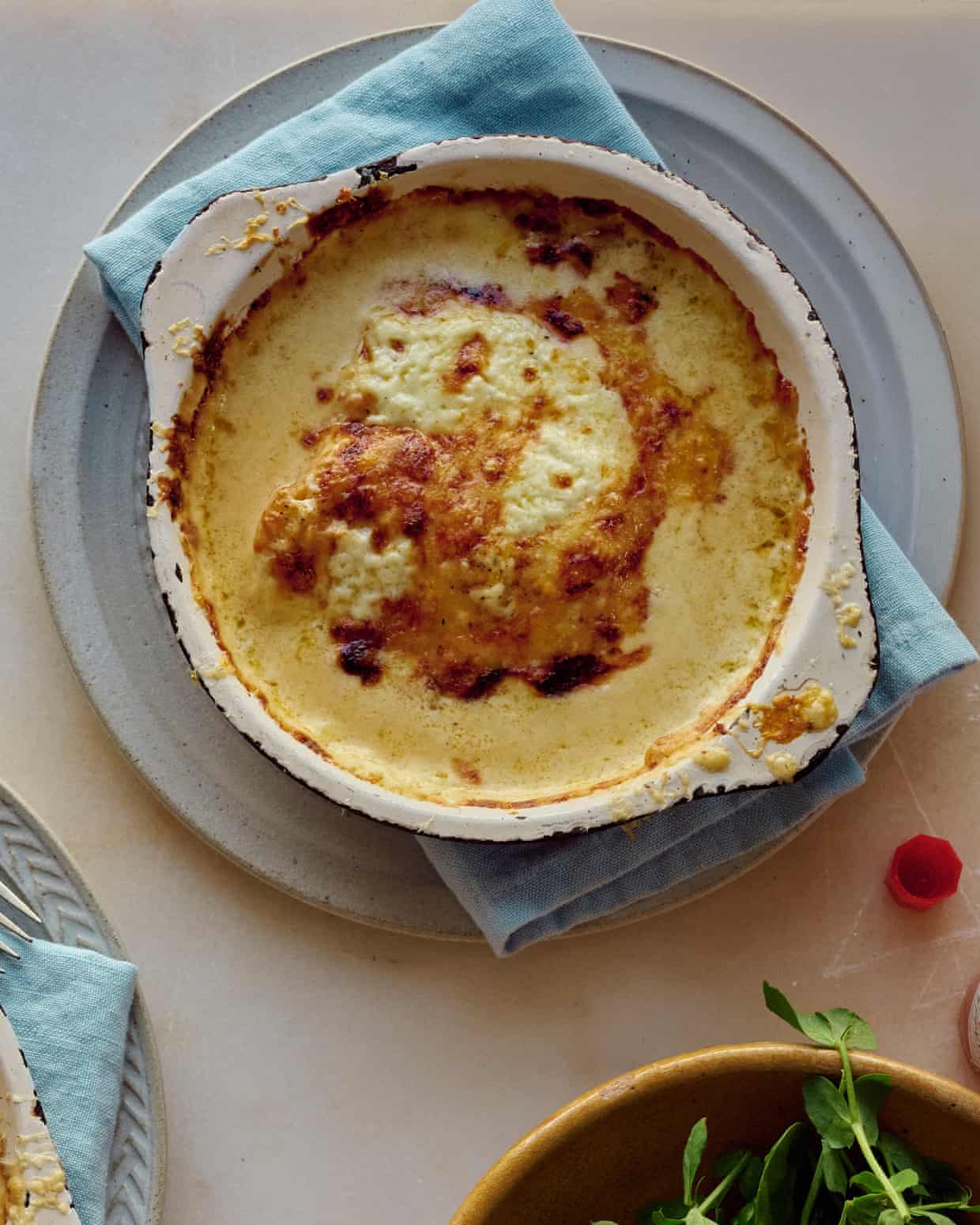
Sometimes all you want is a hot, bubbling dish and a spoon, and for me today’s cheesy haddock is that dish – a 15-minute supper to be enjoyed in front of the telly with a salad or a large bowl of hot buttered peas. Add a lemony, biscuity iced dessert, and you have a light, very easy and enjoyable supper that’s almost the perfect close to a long Easter weekend.Choose your smoked haddock carefully: you want large, thick fillets of undyed fish. Stating the obvious, here, but a good fishmonger will have this; a supermarket never. The creme fraiche must be a French, naturally soured cream, too, becausethe cheaper English versions coagulate when heat is applied, resulting in an unpleasant, watery gunk

Rachel Roddy’s Easter cannelloni with spinach, peas, ricotta and mozzarella – recipe
Fresh sheets smelling of fresh air or fabric softener (or both) with hospital corners are one of life’s great pleasures. As are fresh sheets of egg pasta – the sort that comes in squat boxes protected by clingfilm and found in the fridge section alongside ravioli. They are also one of the most useful and certainly the most multi-talented of all the pasta shapes.That they are labelled lasagne is limiting; of course, they can be lasagne, but they could just as easily be numerous other shapes. The most easy-going of which is maltagliati, meaning badly cut, which tells you everything you need to know about the approach required as you cut them (using a knife, pizza wheel or pair of scissors) into uneven bits that are ideal in all sorts of soups, but especially those with beans

Post your questions for DJ Shadow

Stephen Colbert on Trump attending birthright citizenship hearing: ‘That’s mob-boss-level intimidation’

Colbert on Trump’s shifting tone on Iran: ‘It’s a military strategy known as starting a 1,000-piece jigsaw puzzle’

Jon Stewart on Trump: less war leader, more ‘grandpa who’s lost his filter’

Chatting dating, jazz and the Harlem Renaissance: the exclusive supper clubs where Black women nourish community

Smiley Face: finally, a stoner comedy for the girls who get overstimulated at the supermarket