Nutcracker stocking fillers: Brian Levy’s recipe for sugar plum and coffee cookies | The sweet spot

These festive cookies are inspired by The Nutcracker’s Land of Sweets sequence, in which coffee and sugar plums are two of the flavours used to conjure a fanciful world of decadent diversion.Anything from a hard candy to a candied fruit can qualify as a “sugar plum” and, in the case of these cookies, the sugar plum is represented by the amarena cherry.Coffee’s bitterness balances the sweetness of the fruit and the rich butteriness of the dough, while the oat flour adds a dash of shortbread-like delicateness.Prep 10 min Chill 30 min+ Cook 35 min, plus cooling Makes 36185g room-temperature butter75g sugar2 tsp instant coffee/espresso powder1 tsp unsweetened cocoa powderFinely grated zest of ½ lemon½ tsp vanilla extract⅛ tsp fine salt 180g plain flour 85g oat flour 36 amarena cherries in syrupTurbinado sugar, or pearl sugar or icing sugar, for dippingIn the bowl of a stand mixer fitted with the paddle attachment, beat the butter, sugar, coffee powder, cocoa, lemon zest, vanilla and salt, at first on low and then medium speed, until creamy and fluffy.Add both flours and beat just until combined with no dry flour remaining; don’t overbeat because this can toughen the texture.
(Alternatively, this can be done with a hand mixer or wooden spoon,) Compress the dough into a mass, cover the bowl tightly (or transfer it to an airtight container) and refrigerate for at least 30 minutes and up to 48 hours,Heat the oven to 190C (175C fan)/375F/gas 5 and line two 33cm x 46cm baking trays with greaseproof paper,Line a large plate with two layers of kitchen towel and, using a slotted spoon or fork, put the cherries on it – the paper towels will absorb most of their excess liquid,Put some cold water in a small bowl and your preferred decorating sugar(s) in another small bowl (or bowls, if using multiple sugars).
Divide the chilled dough into 36 equal pieces of about 15g each, then roll each one between your palms to make 2½cm balls.Arrange these evenly in three rows of six on each of the lined trays.To form the craters that will welcome the cherries, press an index finger into the centre of each ball close to the bottom to create a dimple.A little cracking is OK, but if any large cracks form, smooth them much as you would clay.If your crater-forming finger is sticking to the dough, lightly dip it into the bowl of cold water (shake off any excess) before pressing it into the dough.
Press the top of each cookie into the decorating sugar(s) to coat evenly and plentifully, then return them to the baking tray,Gently nestle a cherry into each cookie crater, then bake for 13-14 minutes; the cookies will expand slightly and have tiny cracks, and the cherries may be lightly bubbling,Let the cookies cool on the trays on cooling racks,Once cooled completely, store in an airtight container at room temperature for up to two weeks,Brian Levy is the author of the Formal Assignment newsletter and Good & Sweet, published by Avery at £35.
99.To order a copy, visit guardianbookshop.com

Thousands of patients in England at risk as GP referrals vanish into NHS ‘black hole’
One in seven people in England who need hospital care are not receiving it because their GP referral is lost, rejected or delayed, the NHS’s patient watchdog has found.Three-quarters (75%) of those trapped in this “referrals black hole” suffer harm to their physical or mental health as a result of not being added to the waiting list for tests or treatment.Communication with patients is so unreliable that seven in 10 (70%) only discover they have not been put on a waiting list after chasing up the NHS because they have not been told a hold-up has occurred. In some cases referrals that GPs have agreed to make do not even get sent from their surgery to the hospital, Healthwatch England’s findings show.The research found that 14% of all referrals are getting “stuck” between GPs and hospitals, leaving patients in the dark and anxious about when they will be seen and treated

Spiteful or fair? Reeves’s mansion tax plan proves divisive | Letters
Jonathan Liew’s article (Won’t somebody please think of Britain’s poor £2m homeowners? Oh, wait – everyone already is, 2 November) entirely misses the point that underlies the spate of criticism against the “mansion tax”. While wealth disparity is no doubt an issue that needs to be addressed, this tax is a spiteful assault on hard-working taxpayers who already pay an enormous proportion of their salary to the Treasury to support a woefully mismanaged public sector and welfare state. Those who support the tax seem to be driven by a simple ideology that we need to “bash the rich” to create equality.In the real world, this tax penalises hard-working families who have made difficult choices and made huge sacrifices to get to where they are. I come from a working-class background, I worked hard at school and achieved good grades, I worked part-time jobs, paid my own way through university and chose a profession that pays well, relocating to London and making sacrifices to earn good money – spending 18 hours a day in the office – and I chose to buy property and invest in it

Young unemployed told to engage with jobs scheme or risk benefit cuts
Young unemployed people will be offered training or job opportunities in construction, care and hospitality as part of a UK government scheme, but could have their benefits cut if they do not take up offers.Pat McFadden, the work and pensions secretary, announced on Sunday that 350,000 new training or workplace opportunities would be offered to young people on universal credit, but added there would be “sanctions” for claimants who did not engage.The policy is part of the Labour government’s plans to halt the increase in the number of young people not in education, employment or training (Neet). Britain has almost a million Neets aged 16 to 24, in what some experts have called a youth jobs crisis.Rachel Reeves announced £820m in funding at her budget last month for a “youth guarantee” of a six-month paid work placement for every eligible 18- to 21-year-old who has been on universal credit and looking for work for 18 months

Gambling addicts risk losing ‘life-saving’ help due to funding overhaul, say UK charities
Gambling addicts are at risk of missing out on “life-saving” help unless the government provides emergency support, charities have warned, after an overhaul of funding left treatment providers facing a cash crunch.Until this year, money for problem gambling research, education and treatment had been provided on a voluntary basis by casinos and bookmakers who contributed about 0.1% of their takings.Under new plans, put forward by the previous government and implemented by Labour since April this year, the £12.5bn-a-year gambling sector instead pays a mandatory levy of up to 1
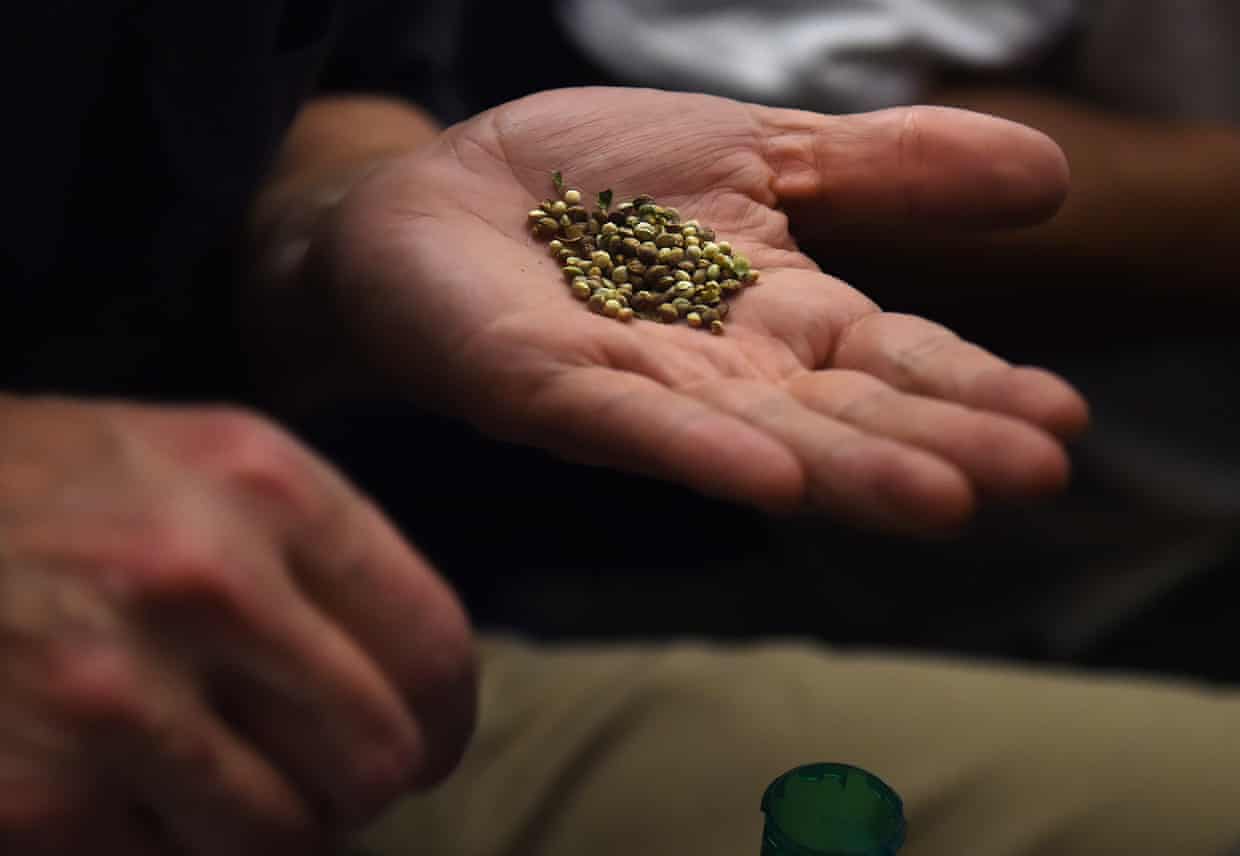
New US seed ban risks driving cannabis genetics underground, growers warn
For the first time since 2018, the sale of cannabis seeds in the US will be restricted due to a last-minute provision in the spending bill that ended the government shutdown last month – a move that experts say will kill the market in this country.Cannabis seed companies have enjoyed comparatively relaxed regulatory standards for the past several years because seeds themselves contain a negligible amount of THC, the compound that makes cannabis federally illegal.Sergio Martínez, chief executive officer and founder of Spain-based Blimburn Seeds, said that the 2018 farm bill eased restrictions on seeds by defining hemp as any product containing less than 0.3% delta 9 THC.“This definition was reinforced in 2022 when the DEA formally clarified that cannabis seeds meeting this threshold are legally considered hemp and therefore are not controlled substances under the Controlled Substances Act, even if the plants grown from them may exceed the THC limit,” Martínez said

Gen Z office survival guide: how to overcome telephobia and get up early
If you are a millennial, part of gen X or a boomer, you probably do not give a second thought to picking up the phone to talk to someone or chit-chatting beside the office water cooler. But for gen Z, those common workplace moments are a huge source of anxiety.According to a study released this week, early mornings, working with older colleagues and making small talk are just some of the things employees born between 1997 and 2012 dread.The study, commissioned by Trinity College London, surveyed more than 1,500 people aged between 16 and 29 across the UK. It found that 38% of young people dread having to make small talk in the workplace

Paramount launches $108.4bn hostile bid for Warner Bros Discovery

Divided Fed ponders US interest-rate cut at end of tumultuous year

Scores of UK parliamentarians join call to regulate most powerful AI systems

A robot walks into a bar: can a Melbourne researcher get AI to do comedy?

McCullum insists England do not have a ‘glass jaw’ and can fight back in Ashes

The once formidable Kansas City Chiefs look old, tired and out of ideas