Oil back over $100 as US-Iran ceasefire comes under pressure; British Airways’ parent company warns jet fuel could be ‘restricted’ – business live

The pound, and UK government bonds, are holding up well despite the governing Labour party having a bad local election.Sterling has risen by a third of a cent against the US dollar to $1.3585, holding those gains after prime minister Keir Starmer told the media “I’m not going to walk away,” after Labour lost hundreds of council seats, with counting continuing in many places.UK bond prices have dropped slightly, pushing up the yield (or interest rate) on gilts slightly.That, though, may reflect concerns that the higher oil prices will push up inflation and hurt growth.
The UK’s 30-year bond is up just 1.5 basis points (0.015 of a percentage point) at 5.62%, below the 28-year high (5.778%) hit earlier this week.
Analysts had suggested that the local elections could cause ructions in the markets, if traders concluded that a change of prime minister, and higher government spending, was likely.London’s stock market is sliding at the start of trading.The FTSE 100 index has dropped by 67 points, or 0.65%, to 10,209 points.IAG are among the top fallers, down 5%, after the airline group warned this morning that profits this year will be lower than expected due to the jump on fuel prices.
Intertek Group have dropped by 6.5% after rejecting a takeover approach.British Airways’ parent company has warned its earnings will be lower than expected as the Iran war drives up the cost of jet fuel.International Airlines Group (IAG) told the City this morning that it expects a “more substantial impact” from the Middle East crisis throughout the rest of the year as the increase in the fuel cost starts to manifest itself.As a result, IAG expects its profit to be lower than originally anticipated at the beginning of the year.
IAG also cautions that if the current conflict continues to restrict flows of both crude oil and jet fuel from the Middle East, “there is the potential for supplies of jet fuel to be restricted on a global basis”.IAG chief executive Luis Gallego says:double quotation mark“We are actively managing the uncertainty created by the fuel price increase and its impact, taking the necessary action on yields, costs and capacity.We currently see no issues with fuel availability in our main markets, particularly as we benefit from our investment in fuel self-supply at our hubs.Whilst the impact of the higher fuel price will inevitably lead to lower profit this year than we originally anticipated, we are confident in our business model and strategy, which has made us one of the best-performing airline groups in the world, and which gives us the opportunity to prove our resilience.This confidence means we are on track to continue with the remaining €1 billion return of excess cash.
Across the UK, house prices are rising faster in the north of the country, and falling parts of the South.Halifax reports:Northern Ireland still leads UK annual house price growth, with average prices up +7.6% over the past year to £224,851.Scotland also recorded strong growth, rising +4.0% annually to an average price of £222,448.
Wales has seen property price growth continue to slow, now +0.7% on annual basis, taking the typical home value to £230,952.The North East of England saw prices rise +4.5% over the year to £183,445, while the North West recorded annual growth of +3.4%, with the average home now costing £248,945.
By contrast, the southern markets continue to see prices fall.The South East led declines, with prices down -2.0% year‑on‑year to £383,044, while London saw average values fall by - 1.4% to £536,051.British house prices fell by 0.
1% in April as the Iran war hit confidence and drove up borrowing costs,New data from mortgage lender Halifax that the average house price edged down by 0,1% in April, following a -0,5% fall in March,The average property price has dipped to £299,313, compared with £299,609 a month earlier.
On an annual basis, annual house price inflation slowed to just 0.4%, from 0.8% in the year to March, Halifax’s monthly house price index has found.Amanda Bryden, head of mortgages at Halifax, say:double quotation mark“After a strong start to the year, recent global developments have added a greater degree of uncertainty to the outlook.In particular, higher energy prices have fed into inflation expectations, prompting markets to reassess the path for interest rates – a shift that has already pushed up borrowing costs for many buyers.
“This understandably leads to more caution among some households, with the cost-of-living once again front of mind and extra thought being given to planned property moves.“Even so, the housing market continues to display the resilience that has been its hallmark in recent years.While activity is likely to cool in the near term, the underlying picture remains one of relative stability, supported by wage growth that continues to outpace house price inflation.“Another important factor is that the majority of existing homeowners are on fixed-rate mortgages, meaning they are largely insulated from short term changes in interest rates.Good morning, and welcome to our rolling coverage of business, the financial markets and the world economy.
Oil is back over $100 a barrel as the US-Iran ceasefire came under strain, undermining hopes of an early reopening of the strait of Hormuz.Overnight,the US and Iran exchanged fire, with Tehran accusing Washington of violating the ceasefire by targeting two ships at the strait of Hormuz and attacking civilian areas.The US, though, insisted it struck Iranian targets in retaliation for “unprovoked” attacks on three US warships transiting the strait on Thursday.Cue a predictable jump in the oil price, two days after hopes of a peace deal breakthrough pushed it down.This morning, Brent is up 1% at $101 a barrel.
That’s a fairly modest move, suggesting investors are still hoping that a deal will eventually be reached.After all, president Donald Trump has described Iran’s attack on US destroyers as “just a love tap”, and insisted the ceasefire between the two countries is still in effect.Markets have slipped back thanks to questions about whether the US-Iran ceasefire is holding, reports Jim Reid of Deutsche Bank:double quotation markQuestions around the ceasefire have already had a market impact in Asia overnight, where all the major equity indices have lost ground.That includes the Nikkei (-0.69%), the KOSPI (-0.
73%), Hang Seng (-1.17%), CSI 300 (-0.90%) and the Shanghai Comp (-0.43%).Moreover, European equity futures are down, with those on the FTSE 100 (-0.
70%) and the DAX (-0.87%) both lower, although US futures have picked up a bit after yesterday’s losses, with S&P 500 futures up +0.21%.It’s going to be a busy day in the markets, with April’s US jobs report due at 1.30pm.
City traders will also be watching the results of local elections across the UK, where Labour have already lost control of several councils.7am BST: Halifax house price index8.30am BST: UN’s FAO Food Price Index1.30pm BST: US non-farm payroll report for April3pm BST: University of Michigan survey of US consumer confidence

Affordable fresh food is the recipe for a healthy Britain | Letter
Your article on UK food prices being on track to be 50% higher by November 2026 (4 May), read alongside your editorial on unhealthy Britain (3 May) describes a single story from two ends. Food has become unaffordable and the households absorbing those price rises are getting sicker.By the time poor health shows up in the data, families have been cutting food quality, quantity and variety for years. The Bread and Butter Thing runs affordable food clubs from Maidstone to Northumberland, supporting more than 10,000 households each week. Last week alone, 439 new members joined our network

The British public need to be better prepared for emergencies | Letter
Your editorial (Britain’s fragile systems: when global shocks hit your shopping bill, 1 May) makes clear that the public need to be more fully informed about global threats and actively engaged in a national resilience plan. The UK remains dangerously exposed to external shocks, whether from cyber-attacks, extreme weather triggered by climate change, or hostile state interference with our democratic processes and critical national infrastructure.A cross-party House of Lords special inquiry committee, which I chair, has been set up to examine national resilience. “Keep calm and carry on” doesn’t cut it: a plan for the 21st century needs to recognise the interconnectedness of threats: a cyber-attack can quickly escalate into power cuts, transport chaos, supply chain disruption and the collapse of public services. And this is not a case of “what if”: hybrid warfare emanating from Russia, China or Iran as cyber-attacks, disinformation or the sponsorship of proxy terrorist attacks is already commonplace

‘Worst year in memory’: parties describe climate of abuse on campaign trail for May elections
Candidates and political parties have described a climate of abuse in this year’s local and devolved elections, including death threats and intimidation while campaigning.Politicians from a range of parties have reported abuse and harassment in the lead-up to the elections in England, Scotland and Wales, with the Green party describing this year’s campaign as the worst in memory.Labour’s Dan Jarvis, the security minister, condemned “the rising tide of vile abuse, harassment and intimidation aimed towards elected officials and candidates” online and in person. “Anyone engaging in this sort of behaviour is directly attacking our democracy and we all must do more to stop it becoming normalised,” he said.A spokesperson for the Green party said some candidates had received death threats or been “yelled at or chased down the street”, and some had withdrawn from campaigning in certain areas due to harassment

Election monitors note instances of voters in England turned away over ID
Instances of voters being turned away from polling stations owing to confusion over photo ID requirements have been recorded by European election observers watching voting in England on Thursday.While the problem is not regarded as widespread, it has been noted by the delegation from the Council of Europe, which will issue a report on the local elections in England as well as the Scottish and Welsh government elections.The potential threat of interference by Russia or another hostile state was among issues discussed during talks this week involving the 17-member delegation from the Congress of Local and Regional Authorities of the Council of Europe, which represents 46 European member states. While Russian interference is understood not to be considered an issue in these elections, the visit is part of moves to share information among European states.The delegation will publish a report on Friday that is expected to address issues including the extent to which there have been concerns over the organisation of polling stations, training of staff, access for people with disabilities and where there has been any harassment or any form of interference
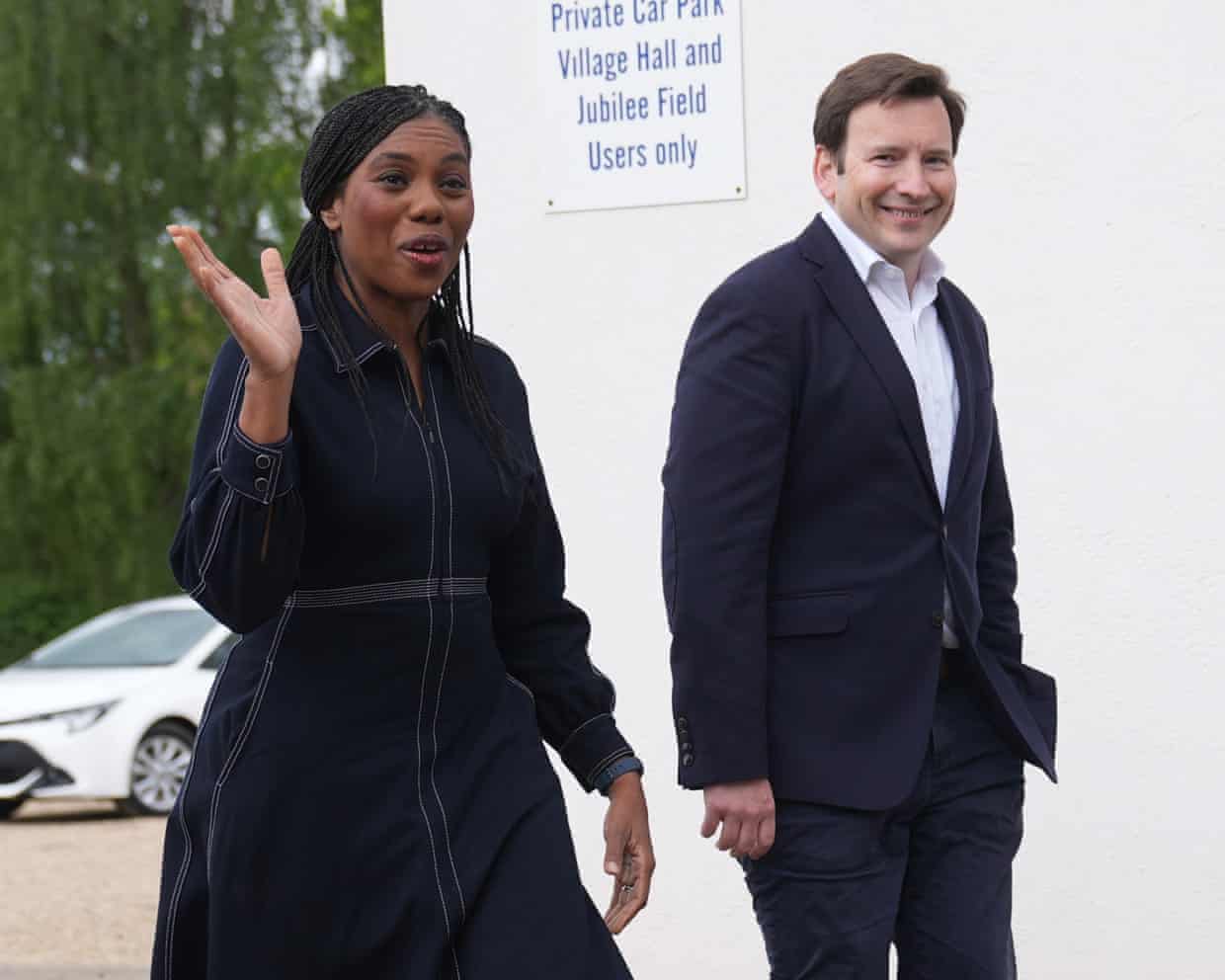
May elections: Badenoch rows back on Reform pacts as millions cast their votes – as it happened
Yesterday Kemi Badenoch gave an interview to Sky News suggesting she would be happy to see Conservative councillors working with Reform UK councillors to deliver rightwing policies.In an interview with the Sun published today, Badenoch rowed back on this. She said there would not be any deals because Reform councillors weren’t “serious”. She told the paper:double quotation markWe’re not doing deals with Reform. I don’t want to see us helping Reform

Starmer’s failure to demonstrate strong values ‘driving away progressive voters’
Progressive voters have been driven away from Labour by a lack of argument and vision from Keir Starmer, according to a report using research from a senior pollster to Tony Blair and Bill Clinton.Downing Street is understood to have been briefed on the research, which has also been handed to allies of the potential leadership candidates Andy Burnham, Wes Streeting and Angela Rayner.Labour is braced for dismal results in Thursday’s elections, which could result in Starmer facing a leadership challenge.The report from UCL’s Policy Lab, using research from the eminent pollster Stan Greenberg, suggested voters felt that Starmer had a “discomfort” with progressive values. Key fights that the government could pick included a more robust challenge to Donald Trump and a more passionate defence of environmentalism

Financial stability risks are rising as AI fuels cyber-attacks, IMF warns; oil below $100 on Iran peace hopes – as it happened
Climate campaigners attack Shell over ‘windfall’ profits from Iran war

BP plans to sell shares in flagship carbon projects as it pulls back from green agenda

JD Sports says Iran war and youth unemployment to hit consumer spending

Dawn airport drinkers call out Ryanair boss on proposal to ban ‘holiday ritual’

Revealed: owner of former WH Smith stores is charging fee to use fictitious ‘family’ brand