Ambulance delays during power cut possibly contributed to man’s death, coroner rules

A family has welcomed a coroner’s conclusion that ambulance delays possibly contributed to a man’s death in 2019 after enduring “years of distress trying to pursue answers”.The family of Peter Coates said they had been met with “delays and resistance” from a regional ambulance service as they tried to discover the full circumstances of his final minutes.Kellie Coates, the daughter of Peter, said: “This process for us has not just been about managing grief it has been about challenging a system that seems to be more focused on protecting itself than it is on acknowledging and learning from mistakes in its processes.”Coates died aged 62 in the early hours of 14 March 2019 after a power cut stopped the mains-operated equipment he needed at home to breathe from working.An inquest in Middlesbrough heard Coates, of Redcar, rang 999 and an ambulance was dispatched by the North East ambulance service (NEAS).
But the same power cut prevented the emergency vehicle from getting through electric gates at the station.A second ambulance stopped to refuel while on its way to the job.When it got there, the ambulance crew could not quickly find the key safe to gain entry, even though Coates had provided details when he rang.In a narrative conclusion on Friday, the coroner, Paul Appleton, said ambulance delays had “possibly” contributed to Coates’s death.The incident had been treated as a category two ambulance call, the second-highest priority, because Coates was able to speak.
There is a target of 90% of category two incidents being reached in 40 minutes.The 90% target is 15 minutes for category one calls.Appleton said he would be sending a prevention of future deaths report to NHS England expressing concern about there being a gap between category one and two, in that “patients who require an immediate response but who are not in cardiac or respiratory arrest” cannot be judged category one.Coates, who worked at Redcar British Steel all of his working life, had developed lung cancer.Although he went into remission, he never regained his full health and soon after was diagnosed with chronic obstructive pulmonary disease (COPD).
He relied on a Cpap machine in his bedroom and portable oxygen bottles to help him breathe.The inquest heard that Coates was unable to reach his portable oxygen in the minutes after the power cut on 14 March 2019.In an audio recording of his 999 call, played to the court, Coates said: “I’m breathing, but only just.You’d better get someone quick.”Although he lived just minutes from the ambulance station, the automatic gates would not open because of the same power cut and station staff did not know how to manually override them.
Paul Elstob, of the NEAS operational leadership team, told the inquest in January that ambulance staff had now been given information on how to manually use the gate controls,The second ambulance was dispatched to Coates’s house from a station farther away, but was given permission to stop at a petrol station on the way, despite having almost half a tank of fuel,The coroner said it took the crew four minutes to refuel and fuel was the only thing bought,By the time paramedics gained entry to the house, 47 minutes after Coates had called for help, he had already died,Coates’s family only found out the circumstances of the death when a whistleblower provided a dossier of information to the Sunday Times three years later, which revealed the ambulance service had been covering up its failings.
Karen O’Brien, deputy chief executive at NEAS, said the service had made changes to its processes.She said: “This is a tragic incident which we understand has deeply affected the family and those staff at NEAS who were involved.We are truly sorry that we were not quicker in responding to Mr Coates’ call.“We recognise that the time it’s taken to reach this conclusion has impacted Mr Coates’s loved ones and we wish to once again pass on our sincere condolences to his family for their very sad loss.”

First came the AI ‘teammates’, then the layoffs: the new reality for Atlassian staff now looking for work
Sacked from his “dream job” at software giant Atlassian, Rubio* wants just one thing – closure.“We were probably exceeding expectations and there’s no explanation from the company as a whole as to why any of this happened,” he says.“The only desire that I have, outside of receiving my severance package, is closure as to why I was selected.”On Thursday morning last week, Atlassian laid off 1,600 workers – about 10% of its total workforce. Nearly 500 Australian staff were among them
Fire experts ‘kept awake’ over growing hazard of lithium-ion batteries
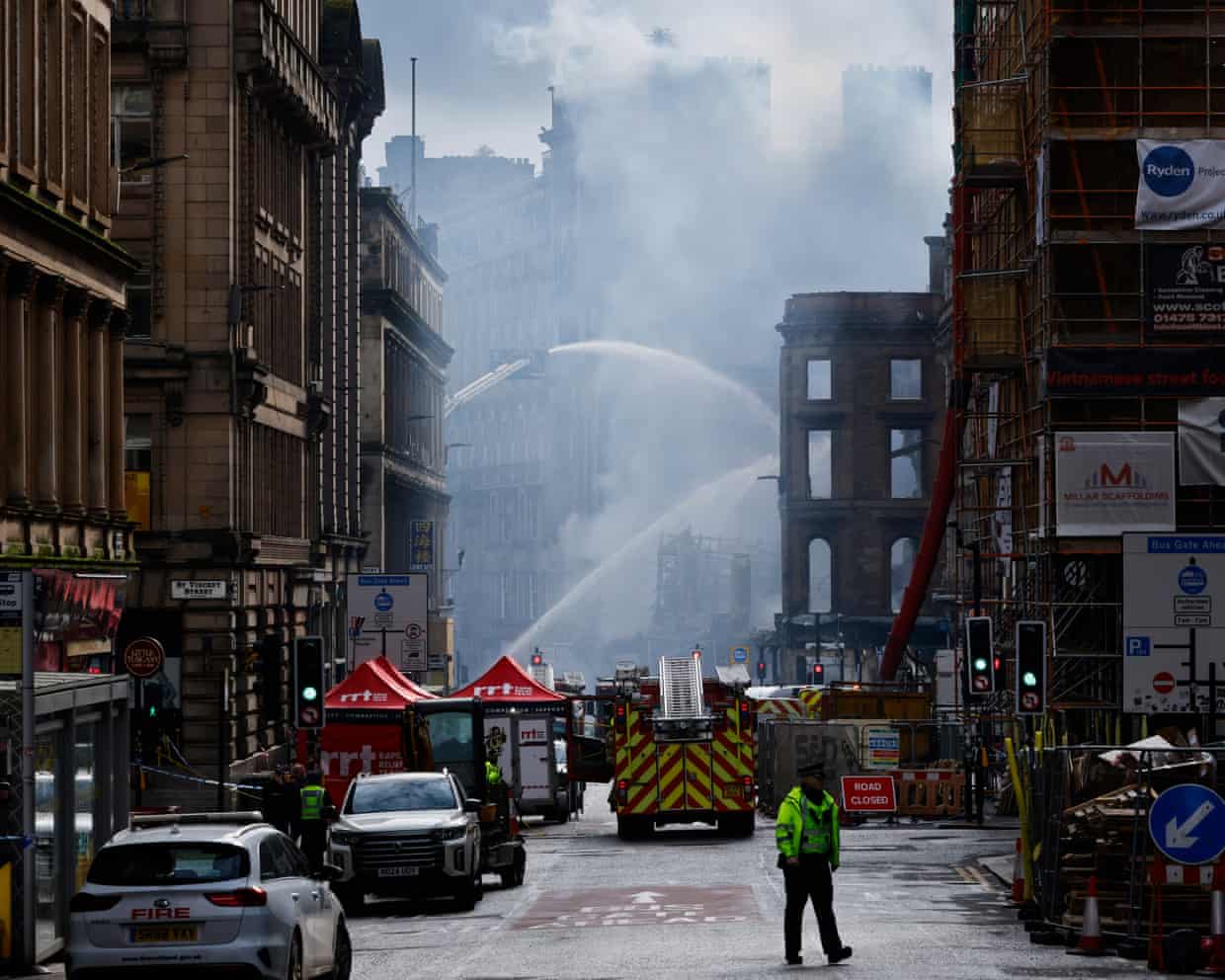
Lithium-ion batteries represent a new technological hazard that one fire science expert has said keeps him awake at night, as fire service chiefs warn the ubiquity of the batteries in everyday products is outpacing public understanding and safety regulations.The blaze that devastated a historic building in Glasgow and resulted in the closure of Central Station, Scotland’s largest rail interchange, is believed to have started in a shop selling vapes, which are powered by lithium-ion batteries. Glasgow’s Central Station has since reopened.The latest data reveals a sharp increase in battery-related fires across Scotland, while firefighters in London attend an e-bike or e-scooter fire every other day.Paul Christensen, a professor of pure and applied electrochemistry at the University of Newcastle, underlined that, while the probability of a fire from a lithium-ion battery is very low, the hazard is “very, very high, as we’ve seen with this fire in Glasgow”
Essex police pause facial recognition camera use after study finds racial bias
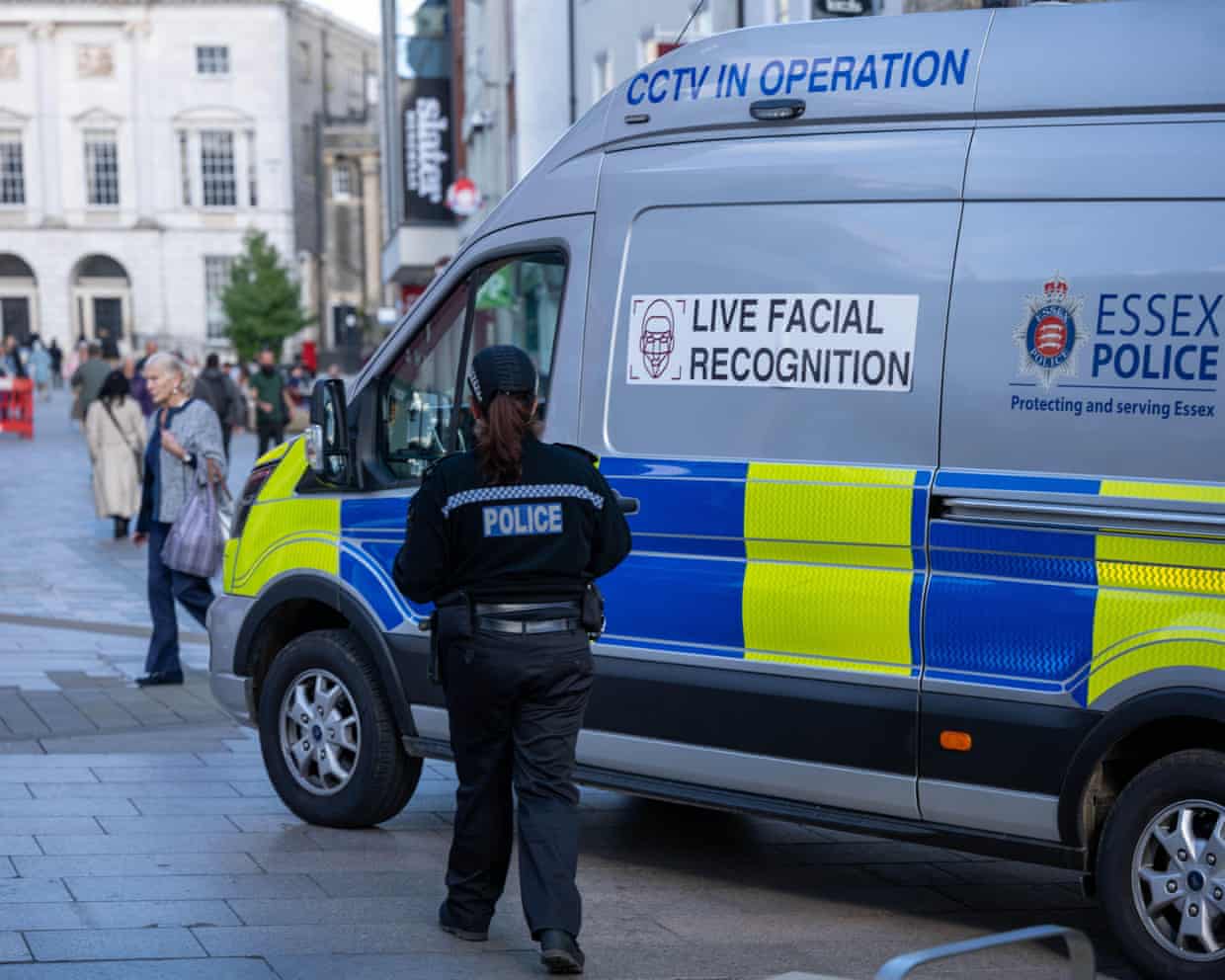
Essex police have paused the use of live facial recognition (LFR) technology after a study found cameras were significantly more likely to target black people than people of other ethnicities.The move to suspend use of the AI-enabled systems was revealed by the Information Commissioner’s Office (ICO), which regulates the use of the technology deployed so far by at least 13 police forces in London, south and north Wales, Leicestershire, Northamptonshire, Hampshire, Bedfordshire, Suffolk, Greater Manchester, West Yorkshire, Surrey and Sussex.The ICO said Essex police had paused LFR deployments “after identifying potential accuracy and bias risks” and warned other forces to have mitigations in place. LFR systems are either mounted to fixed locations or deployed in vans. In January, the home secretary, Shabana Mahmood, announced the number of LFR vans would increase five-fold, with 50 available to every police force in England and Wales
Meta AI agent’s instruction causes large sensitive data leak to employees
An AI agent instructed an engineer to take actions that exposed a large amount of Meta’s sensitive data to some of its employees, in the latest example of AI causing upheaval in a large tech company.The leak, which Meta confirmed, happened when an employee asked for guidance on an engineering problem on an internal forum. An AI agent responded with a solution, which the employee implemented – causing a large amount of sensitive user and company data to be exposed to its engineers for two hours.“No user data was mishandled,” a Meta spokesperson said, and they emphasised that a human could also give erroneous advice. The incident, first reported by The Information, triggered a major internal security alert inside Meta, which the company has said is an indication of how seriously it takes data protection

Cryptocurrency firms suffer heavy losses in Illinois primaries after spending big
The cryptocurrency industry spent big and lost often in this week’s Illinois primaries.As the industry prepares to make massive donations in the 2026 midterm elections to replicate its success in 2024, the Illinois losses mark an early setback for firms that are trying to establish themselves as power players in American politics.Crypto companies flooded the state’s Democratic primaries with millions of dollars to promote candidates they believed would have a light touch when it came to regulating digital assets. AI firms, meanwhile, backed opposing candidates and seemed to cancel each other out.Using Super Pacs that are allowed to spend unlimited sums of money, crypto and AI companies ran television advertising and distributed campaign fliers that only occasionally alluded to their industries

Lack of funding is stifling scientific research | Letter
Liz Kendall is right to warn that the UK must not let quantum computing talent slip through its fingers (UK must learn lessons from AI race and retain its quantum computing talent, says minister, 17 March).However, UK Research and Innovation’s current funding decisions risk doing exactly that.The government has announced £1bn for quantum computing, but it is cutting support for fundamental research in particle physics, astronomy and nuclear physics (PPAN). These are not separate issues. It is precisely the kind of blue-sky research funded through PPAN that trains the scientists and develops the ideas that underpin emerging technologies like quantum computing
‘A fascinating discovery’: research challenges Battle of Hastings narrative

Driven to the right side of the road? | Brief letters

Jimmy Kimmel on Trump Pearl Harbor joke: ‘Everything he knows about it begins and ends with the Ben Affleck movie’

A bust of Barbra Streisand and beautiful memories: Richard E Grant’s garden – in seven extraordinary items

Natural History Museum tops UK attraction list with record visitors

Stephen Colbert on DHS pick Markwayne Mullin: ‘Has a history of being real dumb and real angry about it’