Rachel Reeves to call for rapid AI adoption and deeper ties with EU to boost growth – business live
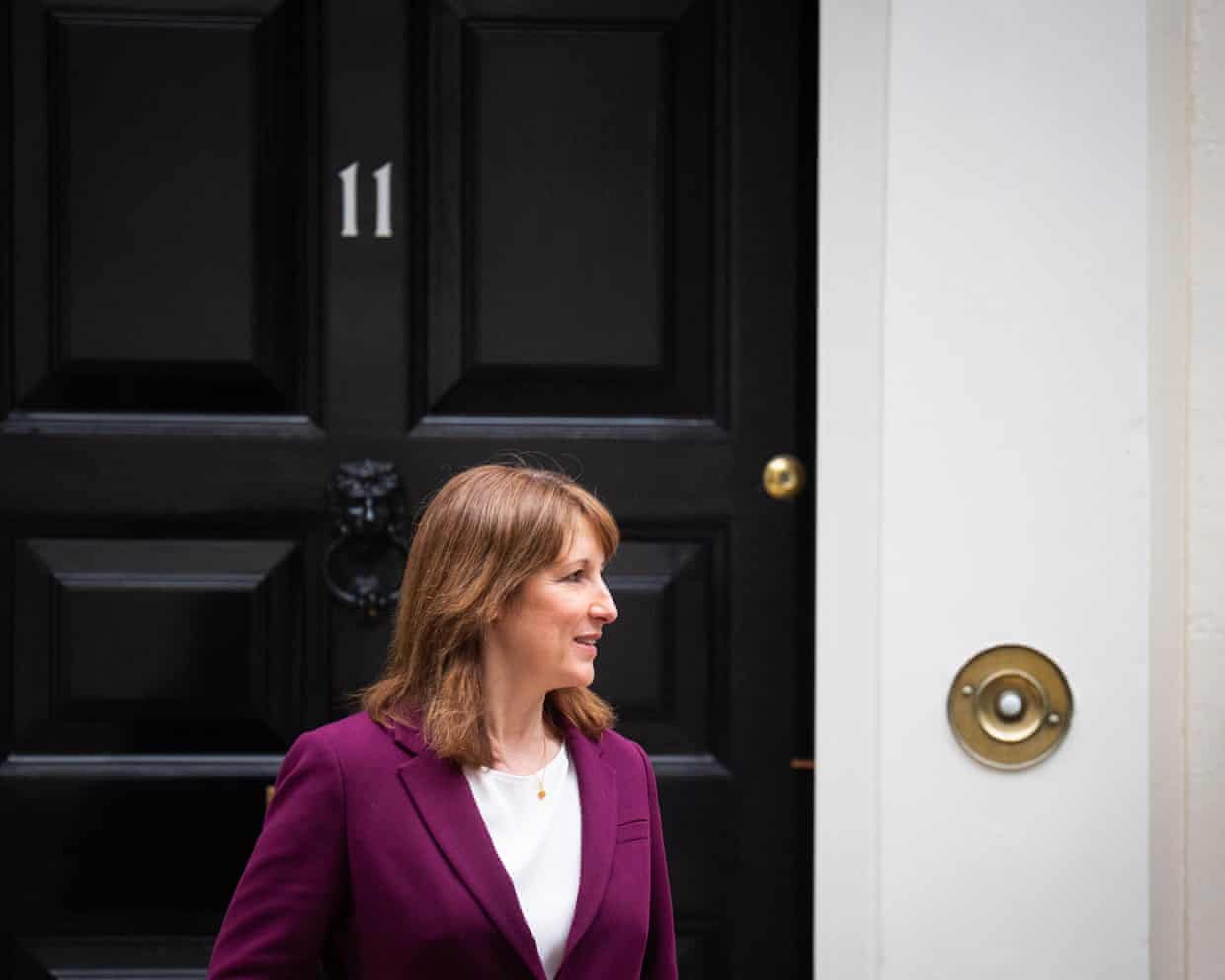
Good morning, and welcome to our rolling coverage of business, the financial markets and the world economy.While the UK economy is being buffeted by the energy shock from the Iran war, chancellor Rachel Reeves is hoping that rapid take-up of artificial intelligence and deeper ties with the European Union can deliver growth.Reeves is due to deliver a big set piece speech in London today – the Mais Lecture, at Bayes Business School.And she’s expected to identify innovation and AI, closer ties with Europe, and regional growth as three big opportunities for economic growth in the UK.The annual Mais Lecture is a set-piece event for central bank governors, chancellors and prime ministers to set out their economic philosophy.
This will be the chancellor’s second Mais Lecture – in 2024, Reeves warned that the UK was entering an “age of insecurity” marked by stalling growth, stagnant living standards, political turbulence and global shocks.Two years on, and plenty of global shocks later, Reeves will today pledge that the UK will adopt AI faster than G7 rivals, and announce £2.5bn of funding for AI and quantum computing.In her lecture at lunchtime today, the chancellor is expected to say:double quotation mark“In this changing world, Britain is not powerless.We can shape our own future.
Our method is stability, investment and reform – through an active and strategic state.“Today, I am making three big choices on the greatest growth opportunities for Britain in the decade to come: growth in every part of Britain, AI and innovation, and a deeper relationship with the EU.“Our plan is clear.To build for growth, to champion innovation, and to make Britain the place where the industries of the future are created.”And on AI, she will argue that Britain “cannot afford to stand still” in a world defined by technological change.
I’ll be at the Bayes Business School later today for full coverage of the lecture.10am GMT: ZEW Economic Sentiment Index1.30pm GMT: The Mais Lecture 2026, delivered by Rachel Reeves, Chancellor of the Exchequer.Parliament’s Treasury Committee are demanding answers from Lloyds Banking Group about the IT glitch which allowed some customers of Lloyds, Halifax and Bank of Scotland to see other users’ transactions.Dame Meg Hillier, chair of the Committee says the incident appears to be an ‘alarming breach of confidentiality’ (indeed!) and is seeking further clarity on what happened.
In a letter to Lloyds, Dame Meg wants to know how many cutomers were affected by last week’s incident, what information was revealed, and what compensation will be paid,She asks:Please can you provide the Committee with an overview of the incident, including the channels (e,g,app, internet banking) and brands that were affected by this incident,This should include a timeline of your response;A description of the information that has been incorrectly presented to people other than the correct account holder, including whether it was limited to just information about transactions or whether other personal information, including National Insurance numbers, was released;Whether it is possible to identify those whose information has been incorrectly passed on to others, and if so, how you will communicate with those customers;The number of customers that have been affected by the incident.
This should be separated into the number of people who saw other people’s information, and the number of people whose information was erroneously provided to others, if possible;What steps you are taking to encourage those who may have taken copies of data to which they were not entitled to delete it;The amount of compensation that Lloyds Banking Group has so far paid related to this incident and to how many people, and whether Lloyds Banking Group will be proactive in providing compensation to those who may at present not know they have been a victim of this data breach;When Lloyds Banking Group first informed the Financial Conduct Authority and the Information Commissioner about this breach;Your initial explanation of the reason for this failure of data protection.Dr Eleanor Crane, assistant professor in Quantum Computing at King’s College London, has welcomed the government’s pledge of £2.5bn for AI and quantum technologies, saying:double quotation mark“This investment will provide an incredible boost to quantum research, and will enable the UK to keep its longstanding role at the forefront of quantum computing.”But….challenges need to be overcome to drive quantum computing in the UK, Dr Crane adds:double quotation mark“The challenges which need to be overcome to drive quantum computing in the UK are: creating attractive positions for lecturer and professor level positions in quantum computing for internationally renowned scientists (further to the existing positions in quantum sensing and communications), and finding ways to enable widespread collaboration with leading European countries in quantum who have an aligned vision of the future such as France, Germany, Spain, Finland and Austria.
”Here’s the chancellor’s message on AI:This government will make the UK the best place in the world for quantum and AI companies to start, scale and stay.In a changing world, our economic plan is the right one.https://t.co/CnW6Kw7sA1Many medium-sized UK firms have already turned to AI, new research shows.AI adoption among mid-sized firms has jumped from 35% to 55% over the last two years, a survey conducted by the Centre for Economics and Business Research (Cebr) on behalf of HSBC UK has found.
This increase is due to AI offerings such as large language models, advanced analytics and workflow automation entering the mainstream, CEBR says,Nina Skero, chief executive at Cebr, explains:double quotation mark“Our findings show AI is beginning to influence productivity outcomes in the UK mid-market in a meaningful way,“However, productive adopters remain a minority within the mid-market,That suggests there is still significant headroom for gains across the sector,If more firms move from initial adoption to deeper integration, the aggregate impact on UK productivity and national output could be substantial by the end of the decade.
”HSBC UK has launched a scheme called the AI & Productivity Financing Initiative, which will provide £5bn of lending to help UK businesses invest in “essential, future-ready capabilities”.Over in Germany, investor morale has tumbled as the Middle East conflict has threatened to push up inflation and derail Germany’s economic recovery.The ZEW economic research institute’s monthly gauge has plummeted to just -0.5 points in March, down from 58.3 points in February.
Economists had expected a smaller fall, to 39 points.The number of people in England and Wales falling into insolvency has jumped.There were 11,609 individual insolvencies registered in England and Wales in February, the Insolvency Service has reported this morning.This was 18% higher than in February 2025 and 6% higher than in January 2026.There were a record number of debt relief orders (DROs), under which people can have debts of up to £50,000 written off, with restrictions.
Here’s the details:double quotation markThe individual insolvencies consisted of 768 bankruptcies, 4,210 debt relief orders (DROs) and 6,631 individual voluntary arrangements (IVAs).The number of DROs in February 2026 was a record high in the monthly time series going back to their introduction in 2009, exceeding the previous high of 4,185 in August 2025.The number of IVAs was higher than both January 2026 and the 2025 monthly average.Bankruptcies were 25% higher than in February 2025, although numbers were affected by the clearing of a backlog following the Insolvency Service moving to a new case management system.The number of registered company insolvencies in England and Wales has jumped month-on-month, but was lower than a year ago.
The Insolvency Service has reported that 1,878 companies fell into administration or were liquidated in February, 7% higher than in January.On the upside, though, that’s 7% fewer than in February 2025.The spectre of ‘Trumpflation’ is looming over Rachel Reeves’s Mais lecture today.The jump in energy prices, and expectations of higher inflation, have driven up mortgage rates since the Iranian war began.Data provider Moneyfacts has reported that this has added almost £800 to average annual mortgage bill in the last two weeks.
They report:Average 2-year fix has risen from 4.83% at the start of March to 5.28% today.It’s highest since April 2025.Average 5-year fix has risen from 4.
95% at the start of March to 5.32% today.It’s highest since February 2025.Adam French, head of consumer finance at Moneyfacts, said:double quotation mark“War in the Middle East has added almost £800 to a typical annual mortgage bill in just two weeks, which will be unwelcome news for anyone currently seeking a fixed rate deal.“The average two-year fixed rate has jumped from 4.
83% at the start of March to 5.28% today – its highest level since April 2025.The average five-year fix has risen from 4.95% to 5.32%, now at its highest since February 2025.
For a borrower with a £250,000 mortgage over 25 years, that equates to paying £788 more per year on a two-year fix, or £651 more on a five-year deal compared to just a fortnight ago,“Choice continues to fall as lenders pull deals and reprice in response to rapidly rising funding costs with 689 fewer mortgage products available since 9 March – almost a tenth of the market,Borrowers may need to brace for further volatility in the weeks ahead as the global economy braces for a ‘Trumpflation’ wave flowing from the US and Israel led action in Iran,”Oil and gas prices have risen again after Iran carried out attacks on production facilities for the first time since the start of the war with the US and Israel,Brent crude, the international benchmark oil price, is up 4% at $104.
17 a barrel this morning, nearly 50% higher than levels before the war began on 28 February.European wholesale gas prices are up 3% to €52.45 a megawatt hour, compared with about €30 before the war.For the first time, Iran successfully targeted oil and gas production facilities, rather than just refineries, terminals and storage.The United Arab Emirates said a drone struck the Shah natural gasfield – one of the largest in the world – on Monday and set it on fire.
Operations remained suspended on Tuesday while officials assessed the damage.The UK government’s push to adopt artificial intelligence systems faster than the rest of the G7 could raise concerns that Britain could face an early wave of AI-related job losses.But Treasury minister Dan Tomlinson has tried to downplay to prospect of job losses caused by AI, arguing that it’s important to embrace new technologies rather than run away from them.Asked whether he accepted AI adoption would lead to job losses, Dan Tomlinson told Sky News:double quotation mark“In the vast history of the UK economy, when big shocks come, when you have the Industrial Revolution, or big changes in the technology that people use, there are changes to the amount of jobs that happen in the economy, or the types of jobs that we have, you don’t see job losses overall.“And actually, if you look at the next five years, the Office for Budget responsibilities say that employment is going to increase in every single year of their forecast.
”Overnight, the Reserve Bank of Australia became the first central bank to raise interest rates since the Iran war began,The RBA lifted its cash rate target to 4,1%, back to where it was in February last year,Michele Bullock, the RBA governor, said strong growth in employment and spending had kept upward pressure on prices and the war in Iran would only worsen the problem,double quotation mark“High petrol prices will add to inflation, but they’re not the reason for today’s decision.
“Inflation was already too high.”It’s a busy week for monetary policy decisions, with the Bank of England, the US Federal Reserve, the European Central Bank and the Bank of Japan all setting interest rates this week, along with other central bank decisions in Canada, Brazil, Russia, Switzerland and Sweden.Chancellor Rachel Reeves will also announce she is ready to use compulsory purchase powers to force through the building of “the Silicon Valley of Europe” in a corridor between Oxford and Cambridge, the Financial Times are reporting.According to the FT:double quotation markReeves will tell landowners they will not be allowed to stand in the way of the project, which she is putting at the centre of a revamped growth strategy alongside closer relations with Europe and investments in AI.The chancellor would say in her Mais economics lecture that the government will intervene where landowners are deemed to be blocking developments or insisting on unreasonable demands, government officials said.
UK building materials supplier Travis Perkins has cautioned this morning that it faces a ‘subdued’ trading environment.In its full year results for 2025, Travis Perkins reported that the weakness seen in the final three months of the year has continued in 2026, saying;double quotation markThe trading environment since the start of the year has remained subdued and this reflects a continuation of the weak UK construction activity figures reported for the final quarter of 2025.The company, which provides building materials to professional builders and tradespeople, also reported a drop in adjusted operating profit to £133m, from £152m in 2024, “reflecting lower margins in Merchanting”.There’s already a backlash to the chancellor’s Mais speech, before she’s even taken the lecturn at Bayes Business School.The opposition Conservative parry is unhappy that Reeves is expected to blame Brexit for the UK’s poor economic performance.
Shadow chancellor Sir Mel Stride has accused the chancellor and prime minister of wanting “to row back on Brexit”, Sky News report.Stride added:double quotation mark“Labour are desperate to blame anyone but themselves for their economic failures.”Reeves could cite the Office for Budget Responsibility’s long-term forecast that Brexit will reduce the UK’s long-run productivity by 4% relative to remaining in the EU.Critics of the chancellor, though, could point to her tax rises on employer, which appear to be pushing up unemployment.Here’s a breakdown of the £2.
5bn funding package for artificial intelligence and quantum computing in the UK:A £500m Sovereign AI Fund is set to be launched in April at Wayve, to give British companies access to funding, compute and other support£2bn to upgrade the UK’s quantum capabilities, including a procurement programme worth up to £1 billion to procure commercial-scale quantum computers.An extra £13.8m will be injected into the UK’s 5 National Quantum Research HubsA further £12m for a edicated commercialisation skills centre to help quantum researchers translate their work into ‘real-world impact’Yesterday, technology secretary Liz Kendall said the government hoped to retain homegrown quantum startups, engineers and researchers rather than lose them to competing countries.Good morning, and welcome to our rolling coverage of business, the financial markets and the world economy.While the UK economy is being buffeted by the energy shock from the Iran war, chancellor Rachel Reeves is hoping that rapid take-up of artificial intelligence and deeper ties with the European Union can deliver growth.
Reeves is due to deliver a big set piece speech in London today – the Mais Lecture, at Bayes Business School.And she’s expected to identify innovation and AI, closer ties with Europe, and regional growth as three big opportunities for economic growth in the UK.The annual Mais Lecture is a set-piece event for central bank governors, chancellors and prime ministers to set out their economic philosophy.This will be the chancellor’s second Mais Lecture – in 2024, Reeves warned that the UK was entering an “age of insecurity” marked by stalling growth, stagnant living standards, political turbulence and global shocks.Two years on, and plenty of global shocks later, Reeves will today pledge that the UK will adopt AI faster than G7 rivals, and announce £2
Would a new leader be the answer to Labour’s woes? | Letters
Zoe Williams’s conjecture that pragmatism might be the solution to Labour’s polling woes is surely a triumph of hope over experience. (There is no denying Labour is in crisis – but in a strange way, Keir Starmer is equipped to save it, 12 March). Disavowal of ideology in favour of pragmatism is the precise cause of the apparent aimlessness and inability to convey Labour’s mission that she describes, compounded by unforced policy errors, U-turns and poor judgment. Labour members may well be discussing whether Keir Starmer should be tacking more to the left, but the underlying question remains whether he is the right person to lead a party that needs, as she says, a complete step change in orientation in the new multiparty environment.Unlike Andy Burnham, for example, he has shown no interest in either proportional representation or cross-party collaboration to defeat the far right
Labour MPs have no reason to oppose new welfare reforms, says minister
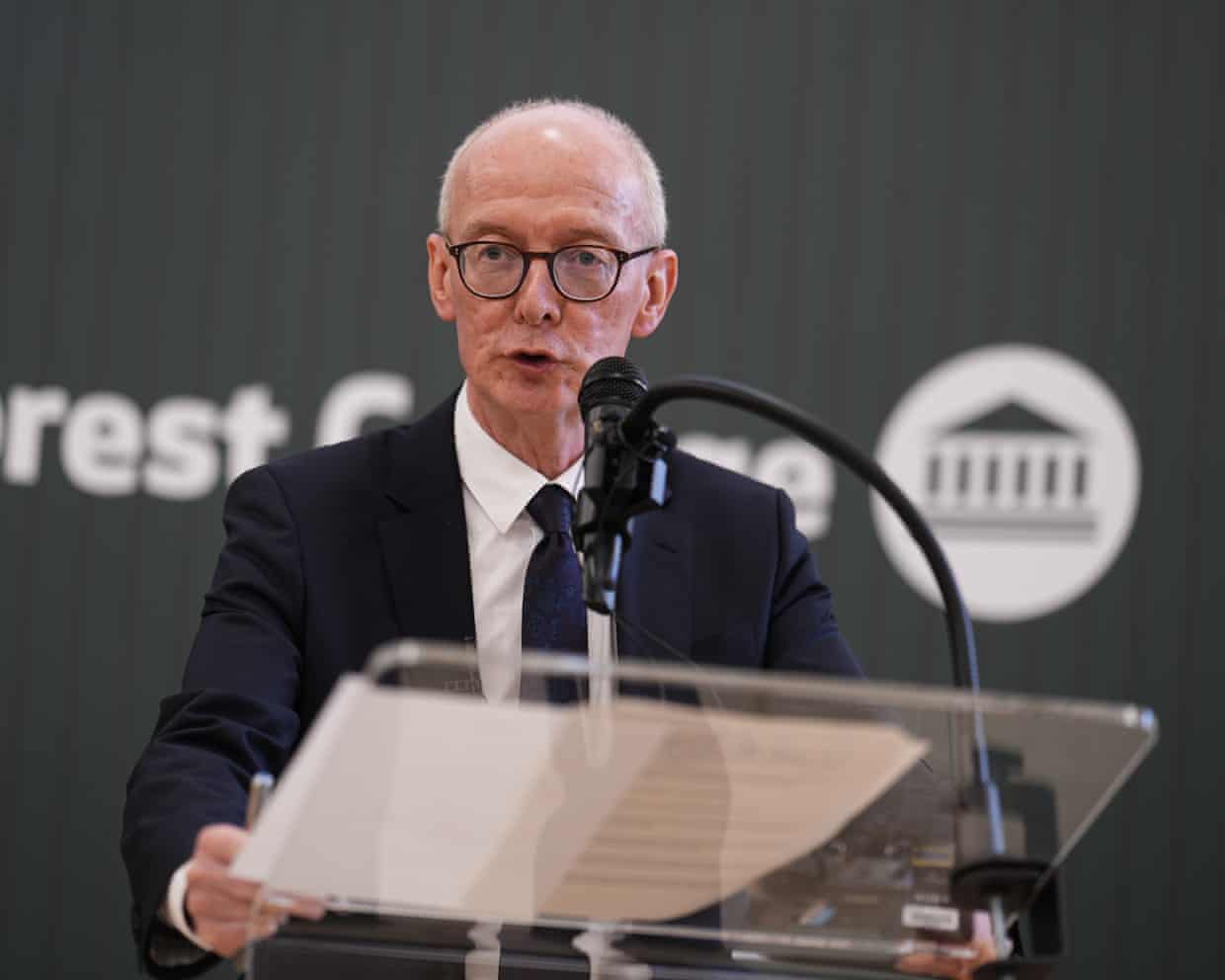
Labour MPs have no reason to oppose a fresh government attempt to overhaul the welfare system, the work and pensions secretary has said, as he unveiled a £1bn youth employment scheme.The announcement by Pat McFadden, who said the public wanted the system to promote work and “value for money”, is regarded as a prelude to a renewed effort to change the welfare system after plans by his predecessor, Liz Kendall, were blocked by a Labour backbench rebellion last year.Companies will get a £3,000 grant for each hire of a person aged 18 to 24 who is on benefits and has been looking for a job for at least six months, under a new policy designed to tackle the rising rate of youth unemployment.The funding, which is aimed at creating 200,000 jobs, is part of what was described by McFadden as a “new deal for young people”.It was announced alongside a new apprenticeship incentive, under which small and medium-sized businesses will be paid £2,000 for every new employee aged between 16 and 24 they take on

UK not obliged to support every demand of ‘transactional’ US president, minister says
Donald Trump is a “very transactional” president, whose repeated demands on Iran must be seen in this context, one of Keir Starmer’s most senior ministers has said in an unusually blunt UK assessment of relations between the countries.Asked about the US president’s threats of some sort of retaliation against allies who do not supply ships to try to free up the strait of Hormuz, Pat McFadden, the work and pensions secretary, said the UK was not obliged to agree to every US request.After Trump again criticised the UK for a perceived lack of enthusiasm in helping the US-Israeli war against Iran, McFadden said it was important to separate the US president’s “rhetoric” from the more important issues.In an overnight interview with the Financial Times, Trump reiterated his frustration at the UK for not sending ships to the strait of Hormuz, the vital sea freight passage that has been all but closed by Iranian retaliatory attacks.“It’s only appropriate that people who are the beneficiaries of the strait will help to make sure that nothing bad happens there,” Trump said

UK complicit in desecration of international law in Gaza, says Corbyn-led tribunal
The Labour government has been complicit in crimes committed by Israel in Gaza and in the desecration of international law, according to an unoffical tribunal on Gaza chaired by the former party leader Jeremy Corbyn and two specialists in international law.The tribunal’s findings to be published on Monday are likely to be cited in May’s local elections, in which Labour faces a rearguard action to beat off challenges from the Greens and Your Party, in part driven by anger that the government has not done enough to back the Palestinian cause.The tribunal took evidence from lawyers, medical professionals, former Foreign Office officials and Palestinians, and focused largely on whether the UK should have done more to end its cooperation with Israel to avoid being accused of failing to meet its duty to prevent a genocide.It finds that the government should have ended all arms exports to Israel, stopped sharing intelligence and reviewed its trade relations with the country, especially after the international court of justice (ICJ) said in a July 2024 advisory opinion that Israel was occupying Palestine unlawfully.The tribunal’s report reads: “Britain’s failure to meet its legal obligations has contributed to the mass killing of Palestinian civilians and the wholesale destruction of civilian objects, the desecration of international law and the further erosion of Britain’s status as a nation committed to the rule of law in the international arena

Phil Woolas obituary
The former Labour minister Phil Woolas, who has died aged 66 of brain cancer, was a clever and committed politician. He dedicated his working life to Labour politics in an attempt to secure the sort of changes in society that would be of widespread and universal benefit. To this end he believed his best achievement during his 13 years in parliament, which coincided exactly with the lifetime of the last Labour period of government, was as a member of the team that introduced a national minimum wage in the UK.He was not an idealist, but a tough-talking, hard-headed pragmatist who wanted to smash the idea that politicians were out of touch with the reality of most people’s everyday lives. As someone who was raised in Burnley and became the MP for Oldham East and Saddleworth – both areas of Lancashire that have seen considerable levels of postwar immigration – he regarded the need for what he called a “mature debate” about immigration policy, in particular, as his lifelong purpose
Row over university fees shows UK’s ‘reset’ with EU may not be so simple
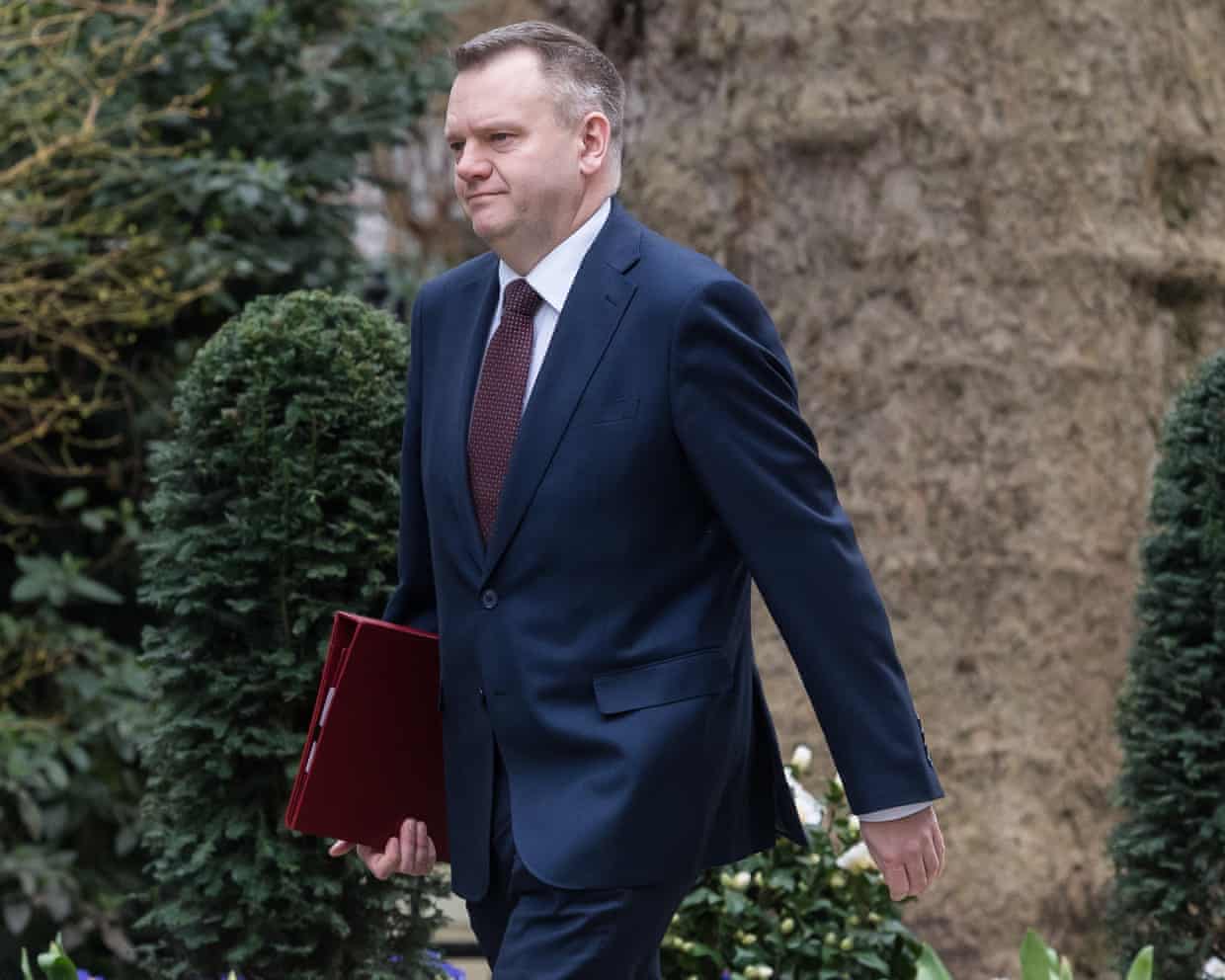
This week is “Brexit reset” week for the British government, as ministers engage in a flurry of activity intended to highlight their determination to forge closer ties with Brussels almost 10 years after the country first voted to leave the EU.On Monday, Nick Thomas-Symonds, the Cabinet Office minister in charge of negotiating the government’s reset with the EU, will arrive in Brussels for a meeting of the joint EU-UK parliamentary partnership assembly. He travels mob-handed, to be joined by the Europe minister, Stephen Doughty, and the trade minister, Chris Bryant.A day later, the chancellor, Rachel Reeves, will give her second Mais lecture to the finance industry, during which she will argue that closer alignment with the EU forms a central part of the government’s growth agenda.But even as ministers put the finishing touches to their pro-European messages, a fresh row is breaking out over Brussels’s demand for lower university tuition fees for European students
Chris Bowen declares rush on jerry cans ‘un-Australian’ as he urges end to panic buying of petrol

Train delays: compensation claims to be easier under Great British Railways

Thames Water rescue deal talks rumble on interminably but its future remains unclear | Nils Pratley

Car park firm NCP falls into administration, putting nearly 700 jobs at risk

IEA to consider release of more oil reserves as Iran war keeps prices high

UK mortgage rates jump, and petrol prices rise, amid ‘Trumpflation’ worries; Oil price falls as Bessent says US is letting Iran ship its crude – as it happened