Labour MPs have no reason to oppose new welfare reforms, says minister

Labour MPs have no reason to oppose a fresh government attempt to overhaul the welfare system, the work and pensions secretary has said, as he unveiled a £1bn youth employment scheme.The announcement by Pat McFadden, who said the public wanted the system to promote work and “value for money”, is regarded as a prelude to a renewed effort to change the welfare system after plans by his predecessor, Liz Kendall, were blocked by a Labour backbench rebellion last year.Companies will get a £3,000 grant for each hire of a person aged 18 to 24 who is on benefits and has been looking for a job for at least six months, under a new policy designed to tackle the rising rate of youth unemployment.The funding, which is aimed at creating 200,000 jobs, is part of what was described by McFadden as a “new deal for young people”.It was announced alongside a new apprenticeship incentive, under which small and medium-sized businesses will be paid £2,000 for every new employee aged between 16 and 24 they take on.
Payments to firms will be staggered under the scheme, which will start in June,Ministers also paved the way for a slower rise in the minimum wage for younger workers, amid pressure to bring down the highest levels of youth unemployment in a decade,At the same time, the government is getting rid of a number of management apprenticeships, of which eight in 10 are taken up by existing employees over 25,However, McFadden also dropped strong signals that the government was laying the ground for a fresh attempt to make welfare changes, after the government was last year forced to water down plans announced by Kendall,A U-turn on cuts to disability benefits was undertaken to avert a rebellion by more than 120 Labour backbenchers last summer, while 47 MPs later rebelled against proposed cuts to welfare.
“I want to give people a chance,I want to give them a level of support that they have not had in the past and I believe that is what welfare reform is all about and I see no reason Labour MPs should not support welfare reform that puts work and opportunity at its heart,” said McFadden when asked if he was ready to take on backbenchers once again over broader welfare changes,Earlier, he used a speech at a further education college in east London to make the case for “radical” change to the welfare system,“The welfare state is only as strong as the political and public support for it,” he said,“It has survived because there is an acceptance in society that we should support the unemployed, the sick, disabled people and the elderly.
But the public also wants the system to promote work and value for money and they are right to do so.”McFadden said the number of young people not in education, employment or training – a group sometimes referred to as Neets – was much too high at almost a million.Within that group, the proportion who are sick or disabled has doubled and is now about 45% of the total.In recognition of concerns over the youth jobs market, Peter Kyle, the business secretary, said the government would hand the Low Pay Commission (LPC) flexibility to recommend changes to the pace and timing of the minimum wage for younger workers.Labour made a manifesto pledge to scrap “discriminatory” lower rates for 18 to 20-year-olds.
However, some business leaders have blamed above-inflation rises planned for this spring for discouraging them from hiring younger adults.In publishing the annual remit for the LPC, Kyle said the government remained committed to removing discriminatory age bands.But said the body which advises on the legal pay floor would be handed “full flexibility to determine the pace and ultimate timing of that alignment, with priority being given to the employment prospects of younger workers”.The Tories said opportunities for work were “disappearing” under the Labour government, blaming the Employment Rights Act and the rise in national insurance contributions for employers.Helen Whately, the shadow work and pensions secretary, said: “The best way to tackle youth unemployment is to back businesses to create jobs, not tax them out of existence to fund benefits and subsidies.
”McFadden was challenged at the event by Lindsay Conroy, chief executive of the Association of Apprentices, who said there was “real concern” among some employers at what she described as the “defunding” of some apprenticeships and the restriction on ages.“We had to make a choice here,” McFadden responded, adding that many people would be surprised to learn that a majority of funding for apprenticeships in recent years was going to people over 25 who were already in work.Sense, a disability charity which was among those who opposed benefits changes proposed last year by Kendall, said: “It’s extremely concerning that the government seems to be laying the groundwork for reforms to disability benefits, fuelling anxiety among disabled people already struggling as the cost of living rises.”

US oil prices could see another day of wild fluctuation as Iran war drags on
US oil prices could see another day of wild fluctuation as the US-Israel campaign against Iran extends into a third week, with one analyst predicting that prices at the pump might hit $3.85 per gallon on Monday.Petroleum prices have spiraled upward as the broadening conflict has imperiled oil and gas production infrastructure in the region. On Friday, the US conducted strikes on Kharg Island, an essential oil processing hub in Iran. Tehran, meanwhile, continues to block ships from passing through the strait of Hormuz, where a fifth of the international oil supply typically passes through
Chinese-owned Syngenta to build new £100m bioscience hub in UK
Syngenta is to build a new £100m research centre for agricultural bioscience, a move hailed by the government as a vote of confidence in the UK’s science base.The Chinese-owned company, one of the biggest agrichemical groups in the world, will open the centre at its Jealott’s Hill site in Berkshire to host hundreds of scientists.The decision will provide a boost to relations between the research industry and government after a public row with the pharmaceutical sector over drug pricing and other issues, which led to big drugmakers cancelling or pausing nearly £2bn in UK investments last year.AstraZeneca’s planned £200m expansion of its research operations in Cambridge is still on hold.Switzerland-based Syngenta said the new bioscience hub would focus on a range of technologies such as biological pesticides – the next generation of crop protection

Sobering times: alcohol-free beer added to UK inflation basket
The UK’s increasing sobriety will be recognised from next month in the basket of goods used to calculate inflation after alcohol-free beer was added to a list by the Office for National Statistics totalling 760 items.Hummus and pet grooming were also included in the list of goods and services used to help judge the impact of rising prices on the cost of living.The new data will feed into the consumer prices index (CPI), the retail prices index (RPI) and the consumer prices index including housing costs (CPIH), which is the ONS’s preferred measure of inflation.Alcohol-free beer was included after sales increased, as did “the product range and shelf-space devoted to the product,” the ONS said.Hummus gained the attention of statisticians after the “increasing popularity of this item among health-conscious consumers, with estimates of expenditure rising to around £170m in 2024”

European takeover battle hots up with UniCredit’s ‘unfriendly attack’ on Commerzbank
Two European banking powerhouses have become embroiled in a €35bn (£30bn) takeover battle after Italy’s UniCredit stepped up its long-running pursuit of German lender Commerzbank, despite strong opposition from the German government.UniCredit first took a stake of 9% in Commerzbank in September 2024 and has since built up its holding to just under 30%. It said on Monday it was pushing to increase that holding further and push the rival lender into formal merger talks.Under German law, a shareholder that has a more than 30% stake is required to make a takeover bid. The Milan-headquartered bank said on Monday it was planning a share swap that would imply a €30
Taxpayer bill for saving Scunthorpe steel furnaces could top £1.5bn by 2028, auditor says
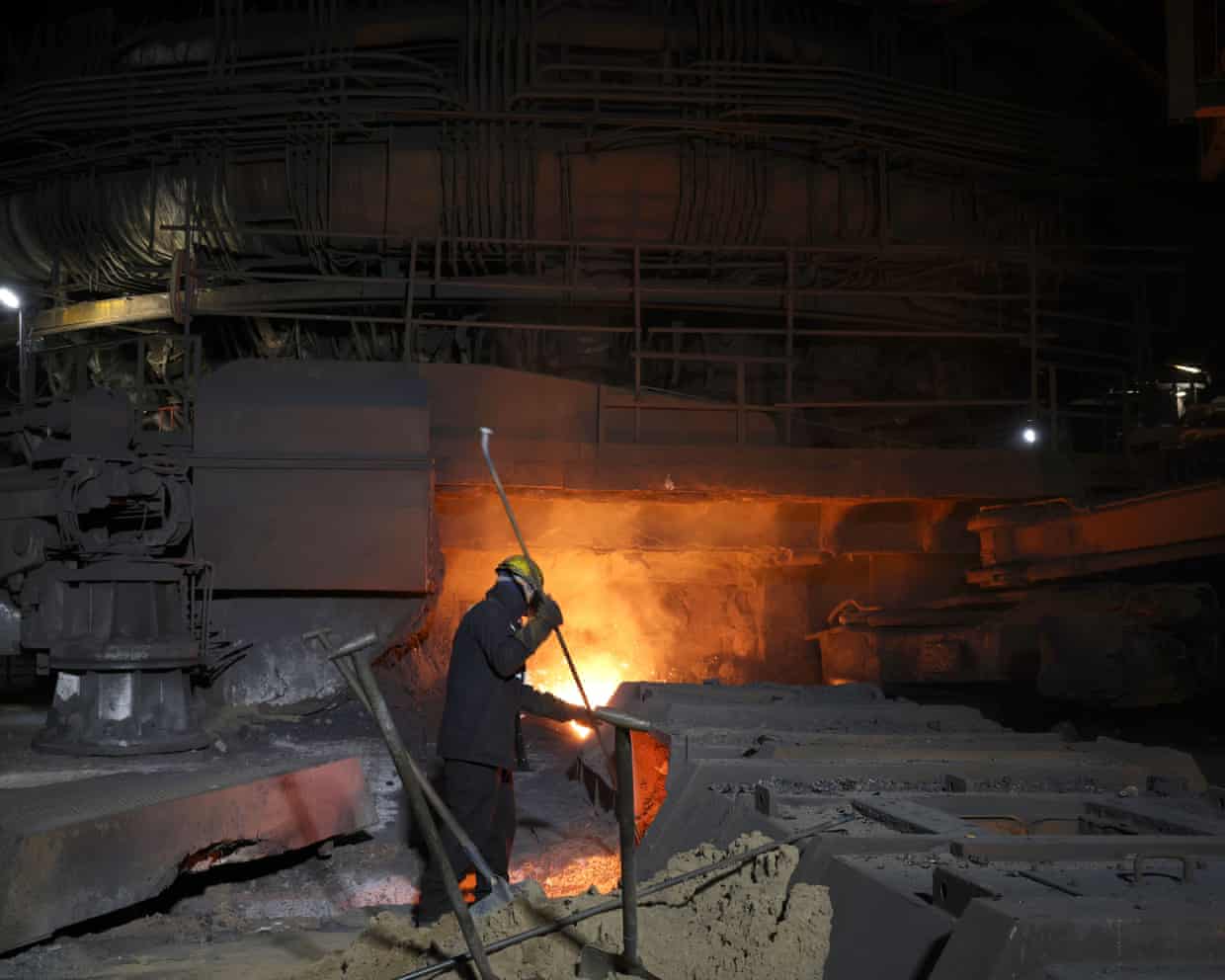
The cost of keeping the UK’s last remaining blast furnaces going at British Steel’s Scunthorpe plant could exceed £1.5bn by 2028 if it continues at its current rate, according to the government’s spending watchdog.Ministers took the plant into public control in April last year, after its Chinese owner – industrial firm Jingye – threatened to shut down the loss-making site.The National Audit Office (NAO), which monitors state spending, said the intervention saved thousands of jobs at Scunthorpe and prevented a “serious impact” on UK industry, including Network Rail, which buys steel for the railways from the plant.Shutting the plant would also have ended Britain’s “primary” steel-making ability because blast furnaces allow steel to be made from scratch, rather than relying on scrap metal

Thames Water lenders float new £10bn rescue plan
Thames Water’s lenders have put forward a £10bn rescue plan that would involve paying off the troubled water company’s hundreds of millions of pounds-worth of fines for leaks and pollution, as part of an effort to stave off financial collapse.A group of private equity firms and investment groups said they would inject about £3.35bn of cash into Thames Water and raise £6.65bn in debt, in exchange for the company not falling into a government-handled administration, in effect a temporary nationalisation.Bills for Thames Water’s 16 million customers in south-east England are already due to rise steeply until 2030 but the rescue plan would, at least, hold them at that level rather than pushing them even higher

AI has exposed age-old problems with university coursework | Letter

Trump administration reportedly set to be paid $10bn for brokering TikTok deal

Meta and Google trial: are infinite scroll and autoplay creating addicts?

New study raises concerns about AI chatbots fueling delusional thinking

Fake rooms, props and a script to lure victims: inside an abandoned Cambodia scam centre

Apple cuts China App Store commission fees after government pressure