Row over university fees shows UK’s ‘reset’ with EU may not be so simple
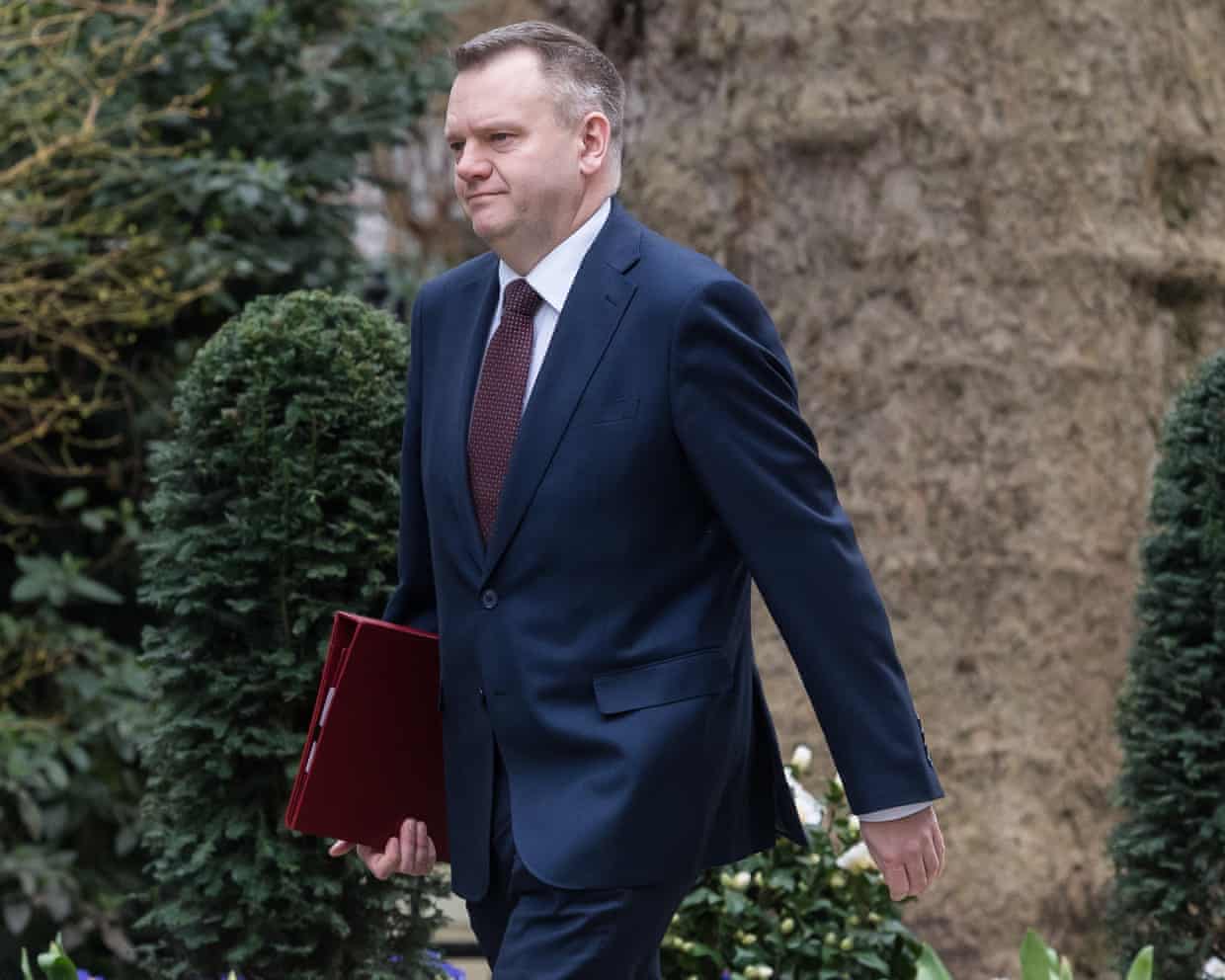
This week is “Brexit reset” week for the British government, as ministers engage in a flurry of activity intended to highlight their determination to forge closer ties with Brussels almost 10 years after the country first voted to leave the EU.On Monday, Nick Thomas-Symonds, the Cabinet Office minister in charge of negotiating the government’s reset with the EU, will arrive in Brussels for a meeting of the joint EU-UK parliamentary partnership assembly.He travels mob-handed, to be joined by the Europe minister, Stephen Doughty, and the trade minister, Chris Bryant.A day later, the chancellor, Rachel Reeves, will give her second Mais lecture to the finance industry, during which she will argue that closer alignment with the EU forms a central part of the government’s growth agenda.But even as ministers put the finishing touches to their pro-European messages, a fresh row is breaking out over Brussels’s demand for lower university tuition fees for European students.
“We are still engaging in very regular talks, but there is a lack of progress on this one issue,” said one source involved in the talks,Anand Menon, the director of the thinktank UK in a Changing Europe, said: “The standoff over [university] fees reveals not only that the EU will play hardball in these negotiations and insist on getting what it wants, but that the whole reset is perhaps more fragile than the government seems to think,”The disagreement centres on whether European university students should be charged domestic fees of about £9,500 a year or international fees, which can reach more than £60,000,Brussels believes it is not enough to reduce fees only for those coming in on the proposed youth mobility scheme,The European Commission wants lower fees for all EU students – which would cost British universities an estimated £140m a year.
Some in the sector welcome the proposal.Mark Corver, an analyst and director of Campus Numerics, said: “This would enable universities to be able to base their admissions solely on merit, rather than financial contribution, and probably allow them to spend more time serving regional and national demand.”The universities sector and the British government, however, are adamant the plan should not go ahead.UK officials describe it as a “non-starter”.It is not just the youth mobility scheme that is at risk: the entire reset, three main planks of which are due to be finalised by this summer, hangs on the outcome of the dispute.
While London is keen to sign agreements on both food and agriculture and emissions trading, Brussels is more focused on youth mobility, and is capable of holding out on the other two agreements if no deal can be reached on this point,Those close to the talks – some of whom bear the scars of the almost 10 years’ worth of post-Brexit negotiations – insist a deal can still be done,They say the relationships between Thomas-Symonds and his counterpart, Maroš Šefčovič, and between Starmer and the European Commission president, Ursula von der Leyen, are closer and more trusting than many of their predecessors,Thomas-Symonds will hold talks this week with Šefčovič and the president of the European parliament, Roberta Metsola, as both sides seek to clear the blockage,But even before those talks take place, there are signs that both sides are willing to compromise.
The Treasury and the Department for Education are working on financial analyses of how much it might cost if they were to accept such a proposal.Government sources say they would want something “really big” in return.Meanwhile, Brussels is understood not to see this as a “binary” issue, and to be willing to agree to a reduction in fees if it does not obtain full equalisation with domestic ones.“This is part of the normal way business is done – a lot of these thorny issues get held back until the final stages of talks,” said one person involved in them.“Inevitably, then there will be an act of God and it will get sorted.
”

Meta and Google trial: are infinite scroll and autoplay creating addicts?
It was as “easy as ABC”, claimed the lawyer prosecuting a landmark social media harm case against Meta and Google which heard closing arguments this week. The defendants were guilty, said Mark Lanier, of “addicting the brains of children”. Not true, replied the tech companies. Meta insisted providing young people with a “safer, healthier experience has always been core to our work”.Features such as autoplay videos, infinite scrolling and constantly chirruping alerts woven into the fabric of online platforms were central to the six-week trial in Los Angeles, which has been compared to the cases against tobacco companies in the 1990s

New study raises concerns about AI chatbots fueling delusional thinking
A new scientific review raises concerns about how chatbots powered by artificial intelligence may encourage delusional thinking, especially in vulnerable people.A summary of existing evidence on artificial intelligence-induced psychosis was published last week in the Lancet Psychiatry, highlighting how chatbots can encourage delusional thinking – though possibly only in people who are already vulnerable to psychotic symptoms. The authors advocate for clinical testing of AI chatbots in conjunction with trained mental health professionals.For his paper, Dr Hamilton Morrin, a psychiatrist and researcher at King’s College in London, analyzed 20 media reports on so-called “AI psychosis”, which describes current theories as to how chatbots might induce or exacerbate delusions.“Emerging evidence indicates that agential AI might validate or amplify delusional or grandiose content, particularly in users already vulnerable to psychosis, although it is not clear whether these interactions can result in the emergence of de novo psychosis in the absence of pre-existing vulnerability,” he wrote

Fake rooms, props and a script to lure victims: inside an abandoned Cambodia scam centre
It is as if you have walked into a branch of one of Vietnam’s banks. A row of customer service desks, divided by plastic screens, with landline phones, promotional leaflets and staff business cards. A seated waiting area and a private meeting room. All of it features the OCB bank’s logo, or its trademark green colour.This is not a genuine bank branch, however

Apple cuts China App Store commission fees after government pressure
Apple announced late on Thursday it would lower the commission fees collected in its App Store in mainland China. The move follows pressure from regulators in the tech company’s second-largest market, as well as global scrutiny of its payment requirements.Fees for in-app purchases and paid transactions will be lowered to 25% from 30% starting on Sunday, Apple said in a statement on its blog for developers.“Apple is making changes to the App Store in China following discussions with the Chinese regulator,” the company’s announcement reads. “As of March 15, 2026, changes will be made to the commission rates that apply to the China mainland storefront of the App Store on iOS and iPadOS

Anthropic-Pentagon battle shows how big tech has reversed course on AI and war
The standoff between Anthropic and the Pentagon has forced the tech industry to once again grapple with the question of how its products are used for war – and what lines it will not cross. Amid Silicon Valley’s rightward shift under Donald Trump and the signing of lucrative defense contracts, big tech’s answer is looking very different than it did even less than a decade ago.Anthropic’s feud with the Trump administration escalated three days ago as the AI firm sued the Department of Defense, claiming that the government’s decision to blacklist it from government work violated its first amendment rights. The company and the Pentagon have been locked in a months-long standoff, with Anthropic attempting to prohibit its AI model from being used for domestic mass surveillance or fully autonomous lethal weapons.Anthropic has argued that giving in to the DoD’s demands to permit “any lawful use” of its technology would violate its founding safety principles and open up its technology for potential abuse, staking an ethical boundary that others in the industry must decide whether they want to cross
AI toys for young children must be more tightly regulated, say researchers
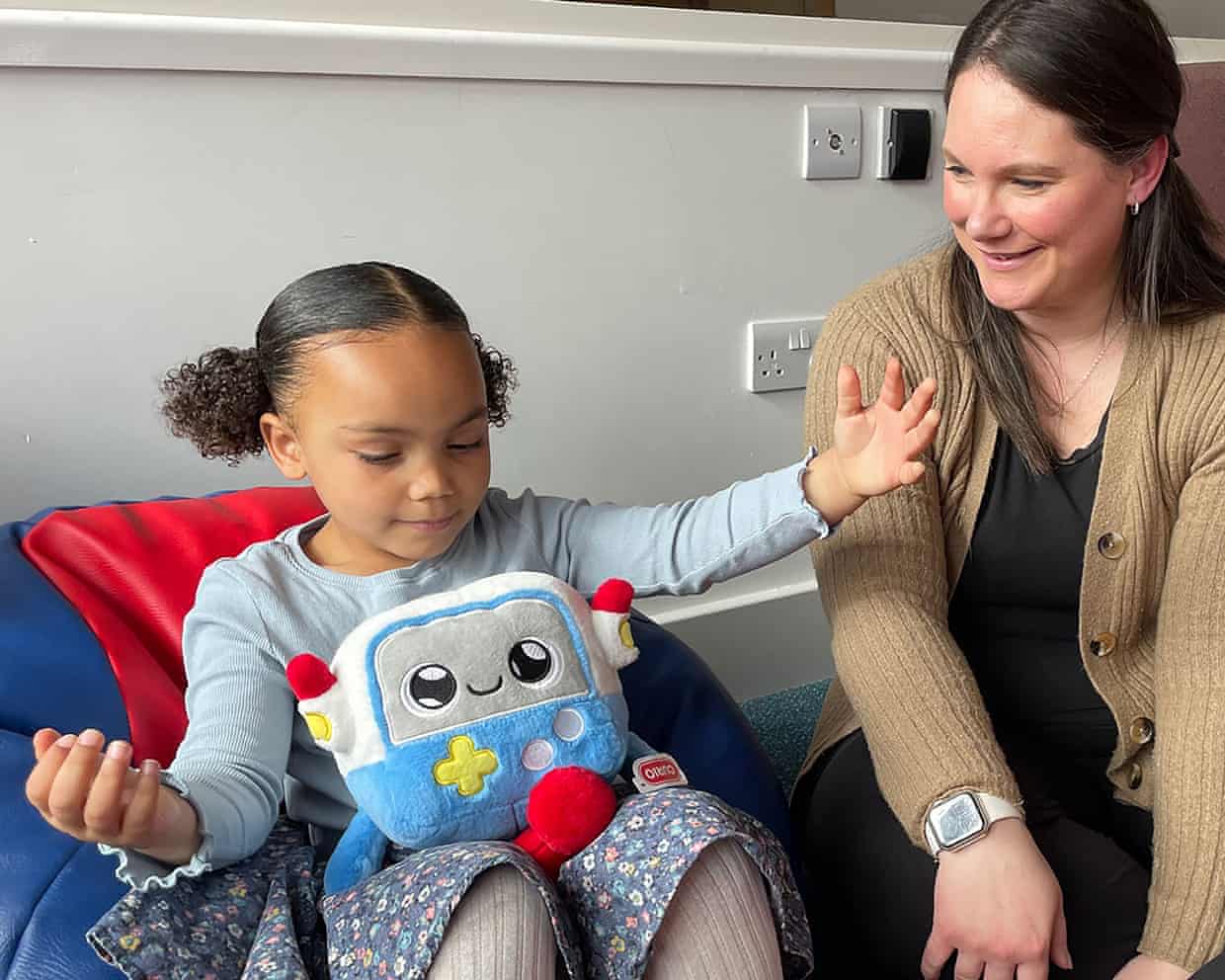
It was all going well. Charlotte, five, was chatting with an AI soft toy called Gabbo at a London play centre about her family, her drawing of a heart to represent them and what makes her happy. She even offered a couple of kisses to the £80 toy with a face like a computer screen.It was when she declared: “Gabbo, I love you”, that the fluent conversation came to an abrupt halt.“As a friendly reminder, please ensure interactions adhere to the guidelines provided,” said Gabbo, awkwardly crashing into its guardrails

Oil company shares soar to all-time highs as Middle East war turbocharges price per barrel

Beyond the strait: why attacks on Kharg Island could keep oil prices high

AI could give us our lives back – if we don’t blow it

‘Cruel hoax’ or ‘work-life balance nirvana’: whatever happened to the four-day work week?

Stout clobber? Guinness tie-up features £1,295 ‘pub carpet’ jumper

Relief for some of Britain’s poorest lands at right moment to cushion Iran aftershocks | Heather Stewart