Stock markets plunge after oil surges over $100 a barrel, wiping out hopes of UK interest rate cut – business live
Good morning, and welcome to our rolling coverage of business, the financial markets and the world economy,Stock markets are tumbling today after the oil price surged over $100 a barrel for the first time in four years,Crude prices rocketed last night as soon as Asia-Pacific financial markets opened for the new week, with US crude and Brent crude both nearing $120 a barrel in frenzied trading,Oil price is now somehow $110,Once in a lifetime you see a surge like this in 20 minutes.
pic.twitter.com/nmhrkn6dmrOil is on track for its biggest daily jump since the turmoil of the Covid-19 pandemic, after at least five energy sites in and around Tehran were hit by strikes, prompting accounts of “apocalyptic” scenes in the Iranian capital.Kuwait’s national oil company also announced a precautionary production cut amid retaliatory attacks by Iran, and there were reports that output from Iraqi oil production from its main southern oilfields has fallen by 70%.With traders betting that the Middle East confict will lead to supply disruptions, the jup in the oil price is threatening an inflationary surge that would hurt economics around the world and create a new cost of living squeeze.
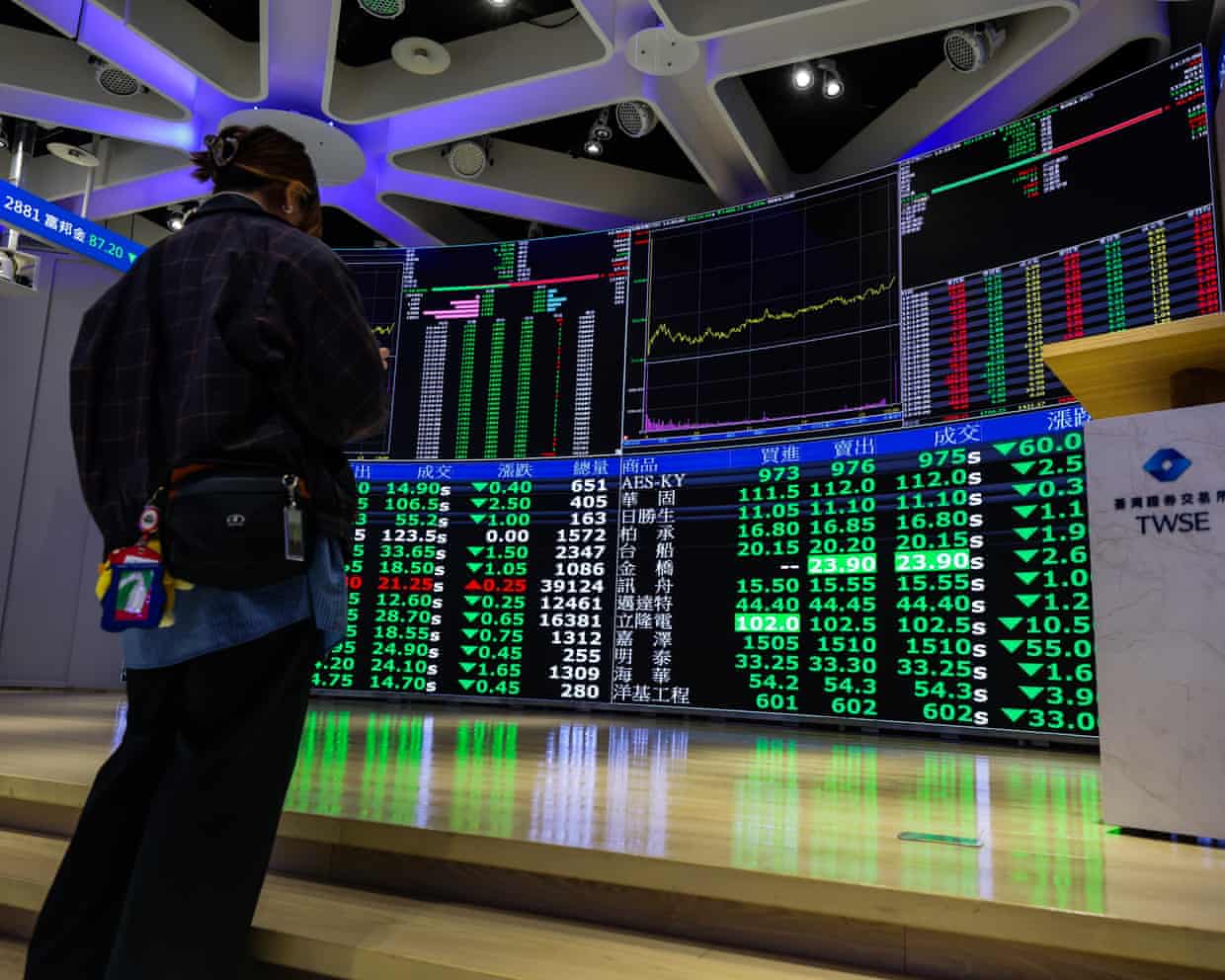
The stock market response has been brutal this morning.Japan’s Nikkei has plunged by almost 5% today, while South Korea’s Kospi has shed 6.5%.Australia’s S&P/ASX 200 has dropped by 2.85%.
European and US stock markets are all set for losses too.Ipek Ozkardeskaya, senior analyst at Swissquote, says hopes for peace have waned after Mojtaba Khamenei, the second son of the late Iranian supreme leader Ayatollah Ali Khamenei, was chosen as his successor.Ozkardeskaya says this decision that did not please the US at all, adding:double quotation markThe choice suggests that Iran will not back down to the US, and that means a potentially prolonged war in the Middle East – which is home to about 50% of global oil reserves and around 40% of the world’s natural gas reserves.About 20% of the world’s oil and LNG flows through the Strait of Hormuz, which is presently closed, making it one of the most critical energy chokepoints in the global economy.12.
30pm GMT: G7 members and IEA to hold call to discuss the impact of the Iran war2pm GMT: Eurozone finance ministers to hold Eurogroup meetingThe sharp jump in oil prices has forced markets to rethink the idea that UK interest rates are on a smooth downward path, says Jonathan Raymond, investment manager at Quilter Cheviot:double quotation markA sustained move in Brent oil over $100 is effectively an inflationary tax.It raises costs for businesses, squeezes real incomes and risks keeping headline inflation above target for longer.If that persists, gilt yields and swap rates will remain under upward pressure, which is why we are already seeing mortgage pricing move higher before the Bank has done anything.The Bank is likely to initially look through the shock because it is energy driven, but if the Middle East situation deteriorates further the risk of policy tightening later in 2026 becomes harder to dismiss.The key question for central bankers is how “persistent” the oil shock becomes.
Raymond adds:double quotation markIt remains too early to expect the Bank to actively raise rates this year, but every day without progress on Iran increases the economic damage and the risk that higher energy prices feed more firmly into underlying inflation.That is why the market is starting to recognise that inflation is not yet last year’s problem.The surge in the oil price has pushed the market further into ‘backwardation’ – the situation where the spot price, of a commodity is higher than the prices in the futures market.So while a barrel of oil is more than $100 now, it costs less than $80 to buy it for delivery in November, or just $70 for October 2027.That implies that the markets expect (or hope) the disruption to Middle East supplies will be temporary, or that the economic damage leads to lower demand for energy in future….
Look at the backwardation in crude oil futures.Markets are expecting 1 month of disruption followed by stabilisation.pic.twitter.com/vvnRtECc1w[The opposite of “backwardation” is the exotic sounding ‘Contango” – the situation where financial futures contracts show assets are cheaper today than a later time.
]Saudi Arabia has started reducing oil production as the near-blockage of the critical Strait of Hormuz starts filling up storage tanks, Bloomberg reports,They explain:double quotation markThe move by the kingdom, the world’s biggest oil exporter, follows the United Arab Emirates, Kuwait and Iraq,The war in the Middle East has all but closed the Strait of Hormuz, the narrow waterway linking the Persian Gulf to the open seas, to maritime traffic following Iranian threats to shipping,That’s clogged up exports from major producing countries, sending oil sharply higher and rippling through the global economy,UK motorists are already being hit by the surge in oil prices.
The RAC report that petrol has risen by 5p to 137.5p a litre since the Iran war began on Saturday 28 February.Diesel is up 9p to 151p a litre.RAC head of policy Simon Williams says they are “unfortunately likely to keep on rising”:double quotation mark“Unleaded is almost certainly going to reach an average of 140p in the next week or so while diesel looks highly likely to climb to at least 160p a litre.The price of diesel is increasing more quickly now than at any point since the start of the Ukraine conflict.
With oil at a sustained $100, petrol could rise towards 150p a litre - a price not seen since June 2024.Diesel could reach almost 180p, which would be a three-year high.“We encourage drivers to continue filling up as normal but to shop around for the best prices using apps like myRAC as there can be big local differences between forecourts.Driving fuel efficiently by avoiding harsh accelerating and braking and ensuring tyres are inflated to the right pressures can help eke out every last mile and save money.”Prices at the pump shouldn’t immediately rise when the crude price does, though.
It takes time for a barrel of Brent to be refined, and for fuel to be transported to pumps.Edmund King, AA president, points out prices shouldn’t rise overnight:double quotation mark“As we predicted last week, the longer this conflict goes on, the more effect it will have on the cost of oil.Anytime Brent Crude passes $100 per barrel raises concern across the markets, for the haulage industry and drivers.One positive is that there are still reserves of oil out there and IEA intervention may release more supplies.“In the meantime, there will be gradual increases in pump prices, but this shouldn’t happen over night as fuel has been purchased at previous prices.
Our suggestion is that drivers should not change their refuelling habits but can consider cutting out some non-essential journeys and changing their driving style to conserve fuel,These measures linked to warmer weather means than drivers can ensure their fuel stretches further,“There is still a wide disparity of fuel prices at the pumps so drivers can use the AA App or Government’s fuel finder to find the best pump prices close-by,”Financial markets are also expecting the European Central Bank to raise eurozone interest rates this year, to fight the inflationary hit from pricier oil,The money markets are now fully pricing in a quarter-point rise in ECB rates by July this year.
Bloomberg reports that swaps [derivatives that measure investor expectations for interest rates] imply around a 70% probability of two 25-basis-point rate increases by the ECB this year, compared with the one move that was priced on Friday.Wall Street’s fabled “fear index” is climbing this morning, as the surge (and then partial reversal) in the oil price spooks investors.The VIX index, which tracks volatility among asset prices, is up 8% to 31.86 points, its highest level since April 2025 when Donald Trump’s trade war rattled markets.Thought for the day, from TS Lombard’s Dario Perkins:an old debate.
Oil-price spikes have a nasty habit of marking the end of the cycle.But is that because of the income-squeeze, or the Fed's response? Or both? pic.twitter.com/IE8tGIRy68UK chancellor Rachel Reeves is speaking to the Bank of England “on a daily basis”, Sir Keir Starmer has said this morning, as he tries to calm fears about the impact of the energy crisis.Speaking at a community centre in London, the prime minister says:double quotation markThe job of government is obviously to get ahead, to look around the corner, to work with others, and the chancellor speaks to the governor of the Bank of England on a daily basis, with looking cross-departmental within government, assessing the risks, monitoring and talking to our international partners as well about what more we can do together to reduce the likely impact on people here and businesses here, of course.
But it is important to acknowledge that that work is needed, because people will sense, you will sense I think, that the longer this goes on, the more likely the potential for an impact on our economy, impact into the lives and households of everybody and every business.And our job is to get ahead of that, to look around the corner, assess the risk, monitor the risks, and work with others in relation to that.Our Politics Live blog has more details:The US crude oil has now slipped back below the $100 a barrel level, now changing hands at $99.30 a barrel.That’s still a jump of 7.
8% today, but lower than the $119.50 a barrel seen when markets opened overnight.Brent crude, the international benchmark, is still over $100 though – up 10% at $102.27 a barrel.That follows this morning’s reports that G7 finance ministers are preparing to discuss the release of emergency oil reserves, to ease fears of shortages.
Investors may have also noted comments from US energy secretary Chris Wright overnight, who said the recent surge in oil prices reflects a temporary “fear premium” tied to the Iran war.Wright argued that the jump in oil prices was unlikely to persist because global energy supplies remain adequate.Speaking on CNN’s State of the Union on Sunday, Wright said the conflict’s disruption to energy markets and shipping routes should be short-lived.double quotation mark“The oil is there.”“You’re seeing a little bit of fear premium in the marketplace.
But the world is not short of oil today or natural gas.”[Reminder, flows through the strait of Hormuz, which carries 20% of global oil and gas, have pretty much dried up]The jump in the oil price could add half a percentage point to UK inflation within the next three months, says Professor Costas Milas, of the Management School at University of Liverpool:double quotation markAn oil price of $100 is more like a psychological threshold.What is more appropriate for inflation pressures is how much oil moves relative to its two-year Moving Average [see plot below].Latest estimates, based on my LSE Business Review blog (which estimates the impact of oil price movements in addition to other drivers of inflation such as interest rate effects) suggests that the latest oil price pressures could add up to 0.52 percentage points to UK inflation within the next three months.
,,It might be a serious mistake for central banks to respond to the oil price shock by raising interest rates,Chris Beauchamp, chief market analyst at IG, explains:double quotation mark“Stock markets have finally woken up to the implications of the Iran war, as oil hits three figures for the first time in four years,Having remained remarkably complacent last week, it looks like the rush for the exits has begun in earnest.
Even high-flying defence stocks are being hit hard in London today, a sign that investors are no longer concerned about potential upside, but instead are focusing on protecting their profits, opting to sell now and sit out the volatility for the time being.” “The morning has already seen markets begin to price in rate hikes by the ECB and the Bank of England.But that seems odd given the major hit to consumer spending that is about to make itself felt – this is a supply-driven shock, not some huge surge in demand.Policymakers may well have learned the wrong lesson from 2021, and risk setting off a much deeper recession if they get too trigger-happy on rate hikes.”After an hour’s trading, European markets are still firmly in the red.
UK’s FTSE 100: down 200 points or 1.9% at 10,087 pointsGerman DAX: down 548 points or 2.3% at 23,043 pointsFrench CAC: down 198 points or 2.5% at 7,795 pointsFears of a stagflationary shock last seen half a century ago are hitting markets today, reports Neil Wilson, investor strategist at Saxo UK:double quotation markA 1970s oil shock? Perhaps.The global economy is a lot less dependent on the price of a barrel than it was then – oil intensity has declined steadily since the 70s.
But clearly there are fears of a global economic slowdown and inflation crisis which is roiling global markets after a weekend of further escalation in the Middle East war.The 1970s crisis led to the 80s bull market – will it also create the roaring 20s bull market? For the moment, financial markets are concerned about a 1970s-style stagflation situation first.The money markets are now predicting that UK interest rates will have risen to 4% by June 2027, up from 3.75% at present.Inflation fears mean UK short-term government bonds are on track for their worst day since former prime minister Liz Truss’s mini-budget roiled the markets in September 2022.
With prices tumbling this morning, the yield (or interest rate) on UK two-year bonds has jumped by as much as 37 basis points (0,37 percentage points) to 4,239%,That, Reuters reports, puts two-year yields on course for the biggest one-day increase since Truss’s brief tenure, when plans for unfunded tax cuts and energy bill support sparked a surge in bond yields and sent the pound down to a record low,Such a large move in two-year bond yields underlines how investors have ripped up hopes of cuts to UK interest rates.
Earlier this year, two cuts to interest rates in 2026 were expected – the market is now indicating that borrowing costs are more likely to rise this year (see earlier post).Airline shares across Europe are sliding this morning.IAG, the parent company of British Airways, has dropped by 4.3% this morning, adding to its losses last week.Lufthansa are down 4

G7 to discuss release of emergency oil reserves as price tops $100
G7 finance ministers are preparing to discuss the release of emergency oil reserves, according to reports, after the US-Israel war with Iran sent the price of crude above $100 (£75) for the first time since 2022.The ministers will discuss the release of the reserves in a call coordinated by the International Energy Agency (IEA), according to a report in the Financial Times.The emergency meeting would take place at 8.30am New York time to discuss the impact of the Iran war, the FT reported, citing unnamed people familiar with the matter.Three G7 countries, including the US, have so far reportedly expressed support for the release of the emergency reserves, which are held by the IEA’s 32 member countries across the globe
Iran war drives oil prices above $100 a barrel for first time since 2022
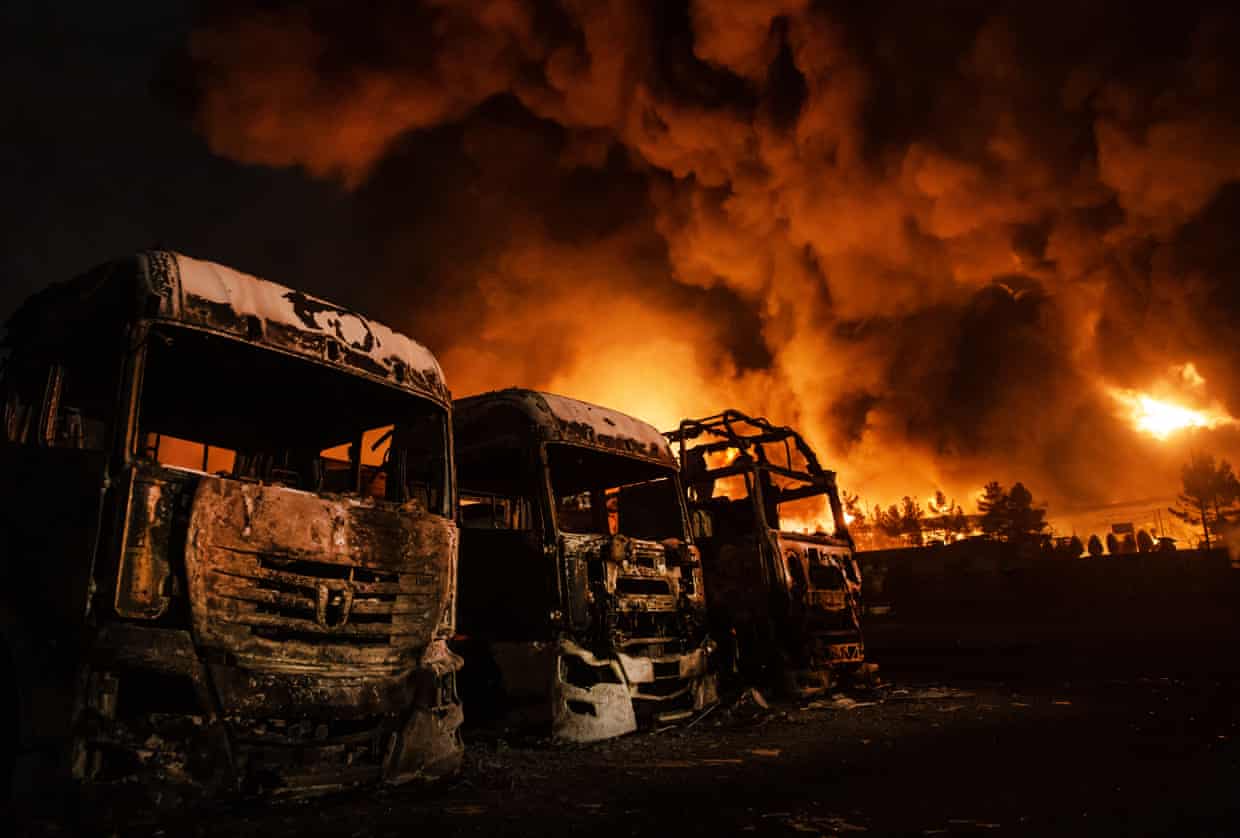
Oil prices surged past $100 a barrel for the first time since 2022 as fallout from the US-Israel war with Iran continued to rattle global markets and leading economies moved to tackle a worsening energy supply crisis.A weekend of escalating violence in the Middle East intensified concerns around a sustained supply crunch, propelling oil prices to their highest level in four years and triggering a deep stock market sell-off.At least five energy sites in and around Tehran were hit by strikes, prompting accounts of “apocalyptic” scenes in the Iranian capital. Kuwait’s national oil company also announced a precautionary production cut amid retaliatory attacks by Iran.The strait of Hormuz – one of the world’s most important trade arteries, through which about a fifth of global oil and seaborne gas tankers typically pass – has in effect been closed for a week
Why has the Iran war sparked fears of stagflation for the global economy?
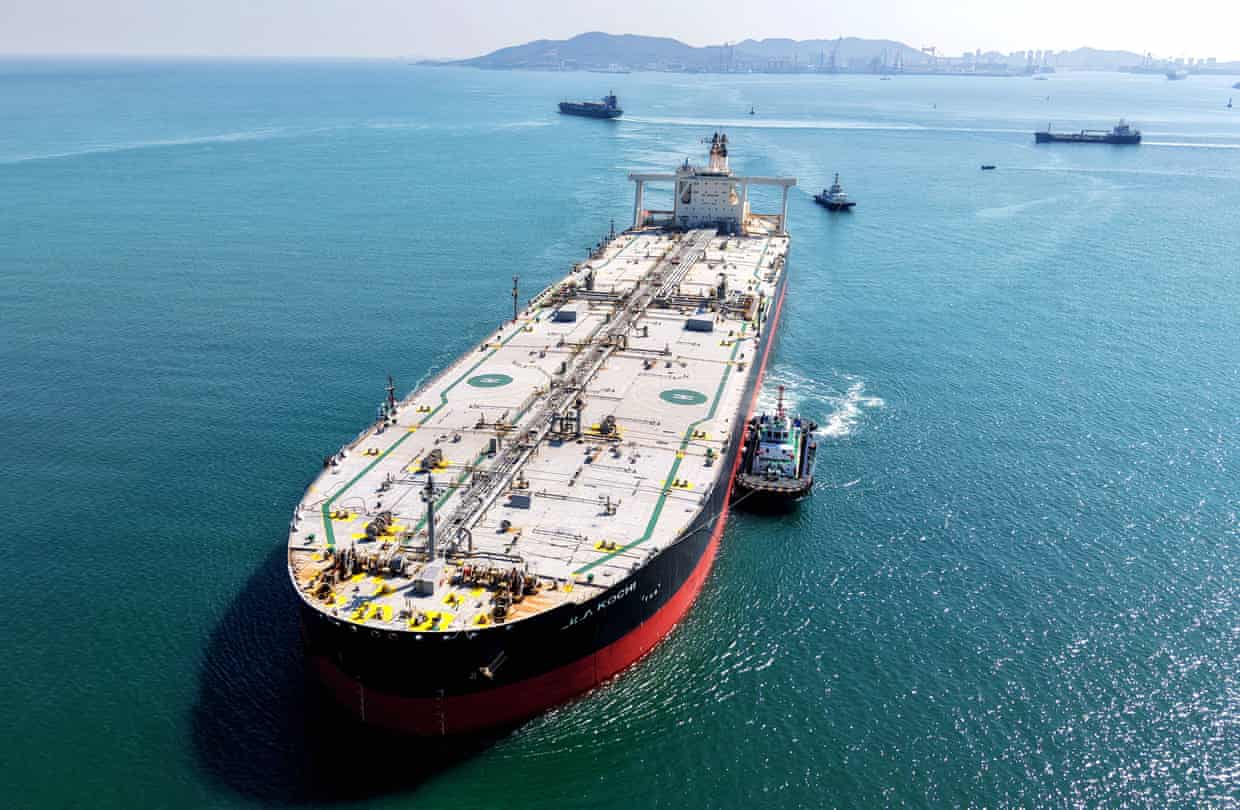
Oil prices continued to surge on Monday, triggering a stark sell-off across some of the world’s leading stock markets amid growing concern that the US-Israel war on Iran could set the stage for a global economic shock.The Middle East conflict has sparked an energy supply crisis that could risk driving up inflation and interest rates, according to economists, who believe growth is set to weaken while prices rise. Fears of stagflation – where economic activity stagnates, but inflation increases – loom large.Here’s what you need to know.The price of key oil benchmarks had already posted their highest weekly gains in six years by the time markets opened on Monday – when they soared to more than US$115 a barrel , surpassing $100 for the first time since Russia’s 2022 invasion of Ukraine
Average UK office attendance ‘settling’ at highest level since before Covid
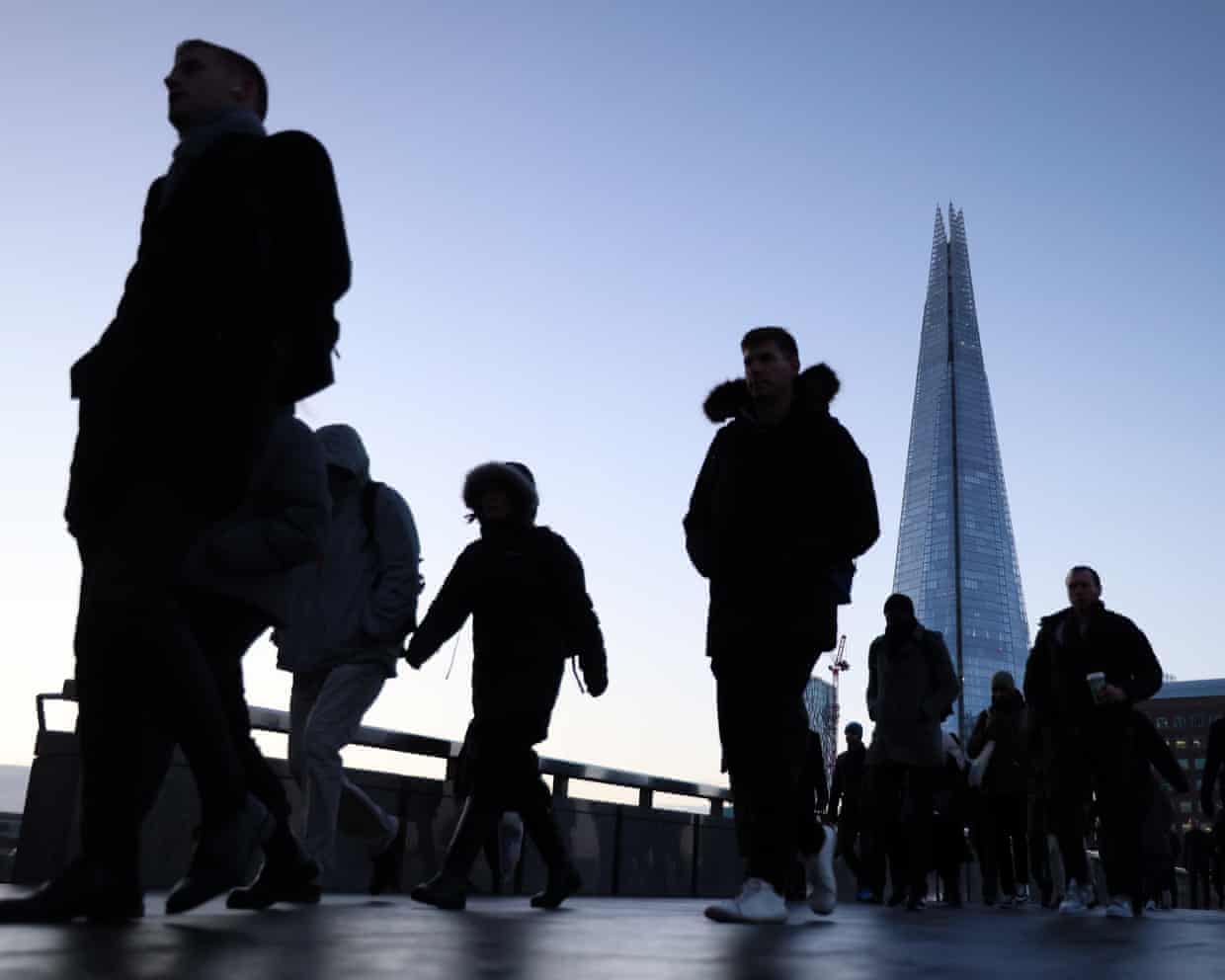
Workers are heading back to offices across the UK in droves, pushing office occupancy to the highest since before the Covid-19 pandemic, as an expert described the numbers as “no longer in freefall nor in recovery mode but settling”.Investment banks such as Goldman Sachs and JPMorgan Chasehave led the push with strict return-to-office mandates despite anger among many employees about being ordered back to the office five days a week. Companies in other sectors have also increased days in the office but many businesses, including law and accounting firms, still allow staff to work remotely two days a week.Average office attendance in the UK has been above 40% every week since early January, reaching 44.2% in the week to 13 February, according to Remit Consulting’s ReTurn report
Ending UK customs relief on low-value imports could push up prices, BCC says
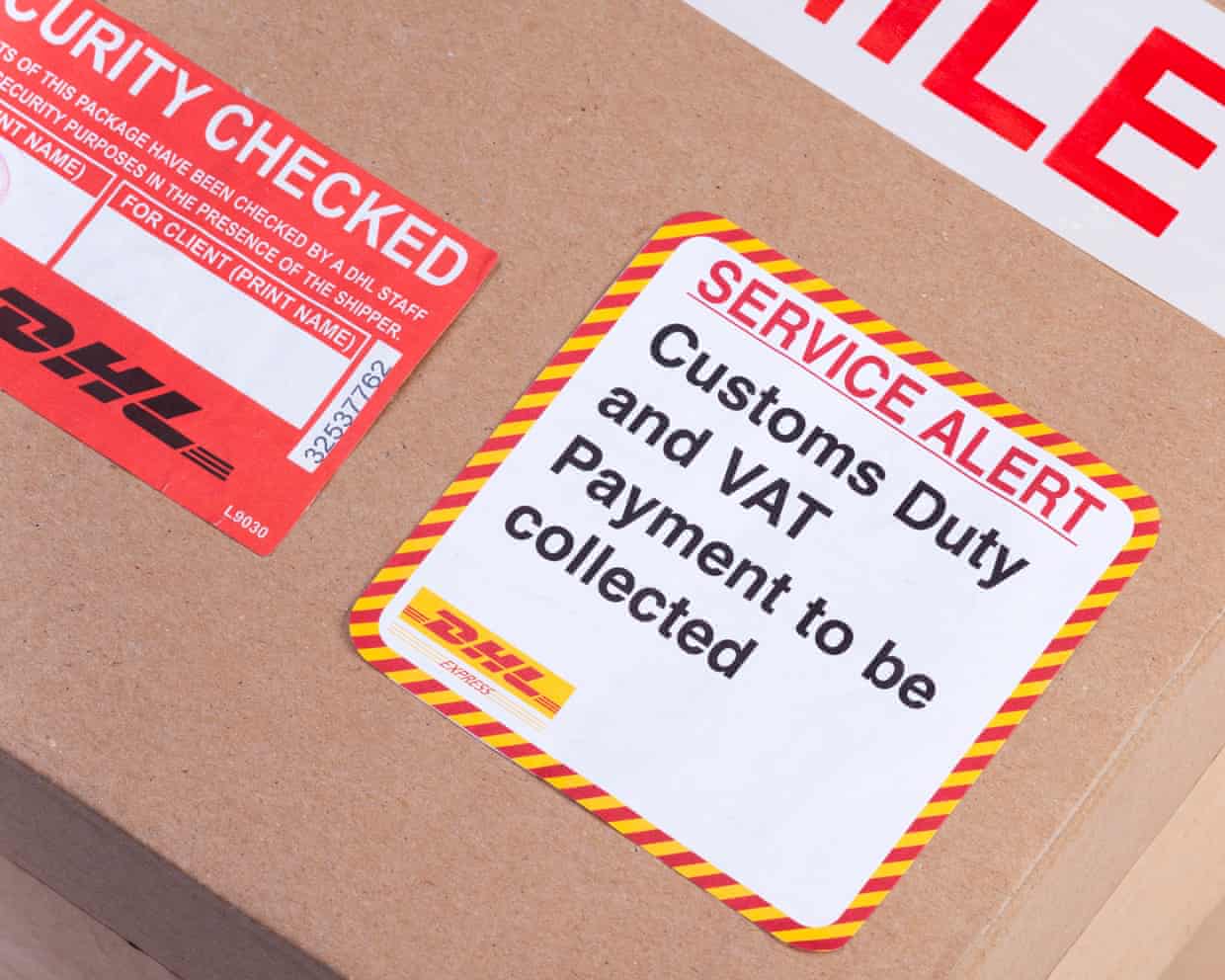
Removing the UK’s tariff exemption for low-value imports could push up prices and harm small companies and trade, a leading business group has said, as it called for a phased-in approach to ending the “de minimis” rules.The UK government plans to end the tax break on imports of goods worth less than £135, making them subject to customs duty, with the changes to take effect in March 2029 at the latest. The US removed its longstanding de minimis exemption on 29 August. Before that packages valued at less than $800 (£597) were allowed to be shipped into the US tariff-free.The European Union has said it will do the same, and introduce new handling charges for cheaper packages as well
Britain’s job market ‘floundering’ as companies remain cautious about hiring
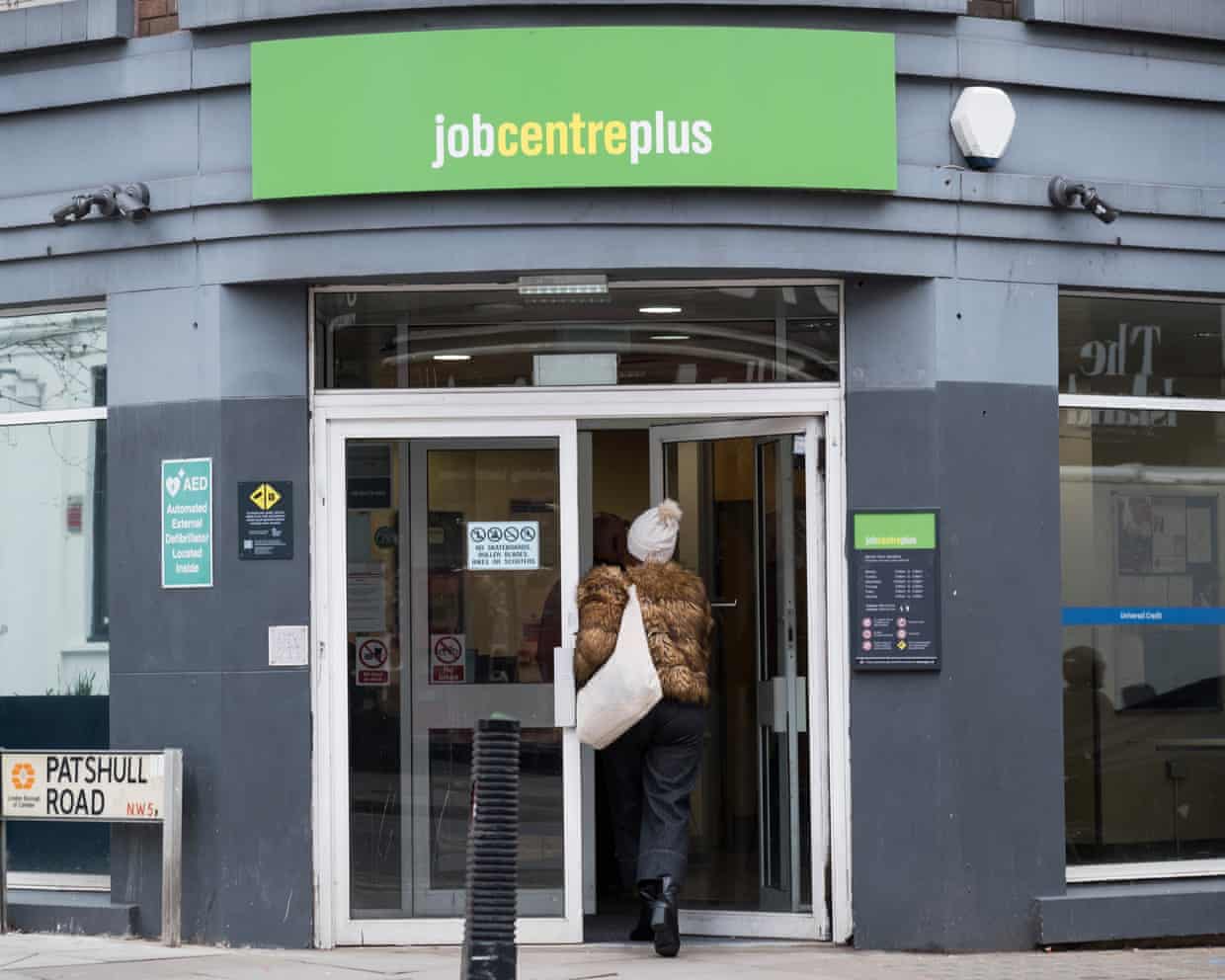
Britain’s jobs market is “floundering” amid weak hiring demand, with only limited signs of recovery, data has revealed.Companies remain cautious about hiring staff amid cost pressures and economic uncertainty, according to two reports released on Monday. They show the labour market continues to be in a fragile position.A monthly employment index from BDO, an accountancy and consultancy firm, is running at its weakest level in nearly 15 years. It has had its worst reading since March 2011, when the jobs market was still recovering from the financial crash

Has dinner been served with a side of romance? | Brief letters

Helen Goh’s recipe for lemon curd layer cake | The sweet spot

Women built, and still shape, our culinary culture every day

The future is rosy for English red wines
Rachel Roddy’s recipe for apple, honey and poppy seed cake | A kitchen in Rome

My whey: dairy milk back on menu as protein boom cuts demand for plant-based alternatives