UK economic growth forecast to slow next year as unemployment rises; £5.3bn infrastructure merger collapses – business live

Good morning, and welcome to our rolling coverage of business, the financial markets and the world economy.With the budget over, bar the inquest, attention is again turning to the health of the UK economy.We’ll get a healthcheck on Britain’s manufacturing sector this morning, and an assessment of the mortgage and credit market but first, there are a flurry of economic surveys to digest.KPMG have predicted that the UK economy will cool in 2026 as weak consumer sentiment and a slowing job market weighs on growth.They predict UK GDP will rise by 1.
0% in 2026, down from 1,4% in 2025, with unemployment rising next year too,That’s a weaker forecast than the Office for Budget Responsibility – which predicted last week that growth would fall to 1,4% in 2026 from 1,5% this year.
KPMG UK’s latest Economic Outlook also predicts the unemployment rate will rise to 5.2% in 2026, reflecting slower hiring, increasing participation and job cuts as companies look to automate some job fnctions.Wage growth is expected to slow, falling towards 3% by mid-2026 – something that might encourage the Bank of England to lower interest rates.Yael Selfin, chief economist at KPMG UK, said:“The outlook for growth in 2026 is subdued, reflecting the impact of a cooling labour market and weak household spending.But there are pockets of strength emerging in the form of data infrastructure and green energy investment.
The medium-term picture could improve further if planning reforms unlock housing delivery and uncertainty reduces for investors.“With ongoing headwinds continuing to weigh on household activity, consumer spending is likely to remain subdued over the coming year.Although the Autumn Budget avoided front-loaded tax hikes, the decision to maintain frozen tax thresholds until 2031 means that fiscal drag will persist.”The CBI also have downbeat news – they report that business sentiment and activity dropped further across the services sector in last three months.The CBI’s latest Service Sector Survey found that business volumes dropped again, marking over a year of declines.
Meanwhile, average selling prices were unchanged despite cost growth remaining elevated.Looking ahead, service sector firms expect volumes to keep falling over the next quarter.And to round off the gloom, the IoD Directors’ Economic Confidence Index has remained at a record low.The index was unchanged at -73 in November, matching October’s reading, but did inch up to -72 immediately after the budget.9am GMT: Eurozone manufacturing PMI report9.
30am GMT: UK consumer credit and mortgage approvals9.30am GMT: UK manufacturing PMI report3pm GMT: US manufacturing PMI reportChina’s factory activity unexpectedly contracted last month, new data today shows, with demand remaining soft.The RatingDog China General Manufacturing PMI, conducted by S&P Global, dropped to 49.9 in November, below analysts’ expectations of 50.5.
That suggests a very small dip in activity,“Manufacturing production growth came to a halt as new orders nearly stalled in November,” S&P Global and RatingDog said in a statement,Yao Yu, founder of financial technology company RatingDog, added:“Manufacturers reduced their workforce and purchasing volume, and became more cautious in inventory management,”Just in: A deal to create the largest listed UK infrastructure investment company has collapsed,The propsed combination of two UK infrastructure investment companies, HICL Infrastructure and the Renewables Infrastructure Group Limited (TRIG), would have created a new investment trust worth £5.
3bn.However, it has failed to win enough support following a revolt by investors in HICL, which had proposed the merger with fellow FTSE 250 member, TRIG.In a statement this morning, the two companies say the proposed combination will not proceed, adding:Both Boards remain convinced of the strategic rationale for the combination.However, following broad engagement with shareholders, the HICL Board determined that it cannot progress the transaction without a substantial majority of support from its own investors.HICL’s investments are focused on infrastructure in hospitals, schools and transport, while Trig invests renewable energy sources such as wind farms, solar and battery plants.
A group of HICL investors had opposed the deal, claiming it had been priced and structured to favour Trig.Trig’s board say they regret that investors won’t get to vote on the deal.Richard Morse, chair of TRIG, says:“Our focus now returns to delivering TRIG’s attractive standalone strategy.TRIG is a well-established platform with high quality assets, a competitive pipeline of opportunities, and deep renewables and energy storage expertise.We are uniquely placed to capitalise on the demand growth for low carbon, reliable power and to capture the commercial opportunities as economies across the UK and Europe electrify and decarbonise.
Doing so will allow us to deliver sustainable value and growth for our shareholders, with whom we will continue to engage on the path ahead.”Good morning, and welcome to our rolling coverage of business, the financial markets and the world economy.With the budget over, bar the inquest, attention is again turning to the health of the UK economy.We’ll get a healthcheck on Britain’s manufacturing sector this morning, and an assessment of the mortgage and credit market but first, there are a flurry of economic surveys to digest.KPMG have predicted that the UK economy will cool in 2026 as weak consumer sentiment and a slowing job market weighs on growth.
They predict UK GDP will rise by 1.0% in 2026, down from 1.4% in 2025, with unemployment rising next year too.That’s a weaker forecast than the Office for Budget Responsibility – which predicted last week that growth would fall to 1.4% in 2026 from 1.
5% this year.KPMG UK’s latest Economic Outlook also predicts the unemployment rate will rise to 5.2% in 2026, reflecting slower hiring, increasing participation and job cuts as companies look to automate some job fnctions.Wage growth is expected to slow, falling towards 3% by mid-2026 – something that might encourage the Bank of England to lower interest rates.Yael Selfin, chief economist at KPMG UK, said:“The outlook for growth in 2026 is subdued, reflecting the impact of a cooling labour market and weak household spending.
But there are pockets of strength emerging in the form of data infrastructure and green energy investment,The medium-term picture could improve further if planning reforms unlock housing delivery and uncertainty reduces for investors,“With ongoing headwinds continuing to weigh on household activity, consumer spending is likely to remain subdued over the coming year,Although the Autumn Budget avoided front-loaded tax hikes, the decision to maintain frozen tax thresholds until 2031 means that fiscal drag will persist,”The CBI also have downbeat news – they report that business sentiment and activity dropped further across the services sector in last three months.
The CBI’s latest Service Sector Survey found that business volumes dropped again, marking over a year of declines.Meanwhile, average selling prices were unchanged despite cost growth remaining elevated.Looking ahead, service sector firms expect volumes to keep falling over the next quarter.And to round off the gloom, the IoD Directors’ Economic Confidence Index has remained at a record low.The index was unchanged at -73 in November, matching October’s reading, but did inch up to -72 immediately after the budget.
9am GMT: Eurozone manufacturing PMI report9.30am GMT: UK consumer credit and mortgage approvals9.30am GMT: UK manufacturing PMI report3pm GMT: US manufacturing PMI report

Let’s not repeat the folly of PFIs for NHS buildings | Letter
In response to Lord Hutton’s letter (23 November) on NHS hospitals built under the private finance initiative (PFI), independent research into the design quality of PFI public buildings, by all of the auditing authorities in the UK, showed serious flaws and a significant “quality gap” when compared to traditional design-led procurement.In my 2007 book The Design Quality Manual: Improving Building Performance, I included results from all these reviews, starting with the Audit Commission’s 2003 report PFI in Schools. The design flaws were serious, including poor functionality, short-life materials, and non-compliance with building and safety regulations.PFI contracts tend to be led by building contractors rather than architects. So was the refurbishment of Grenfell Tower

Fears for UK security as Foreign Office moves to scrap unit on conflict and refugee crises
The Foreign Office has been warned that a plan to axe its dedicated unit on emerging conflicts and refugee crises is a “real error” that “undermines UK security” as the department grapples with swingeing cuts.The Foreign, Commonwealth and Development Office’s (FCDO) migration and conflict directorate, which employs about 100 civil servants, is being abolished at the end of this year and its work subsumed by the rest of the department.The directorate provides advice and technical support to governments and civil society groups in trouble spots, including Syria, South Sudan, Ethiopia, Yemen and the Philippines.It is slated to close despite Yvette Cooper, the foreign secretary, writing last week that the FCDO was “stepping up efforts” to support peace-building.The move is part of a wider restructuring that threatens 2,000 jobs – about a quarter of the workforce – and has damaged morale among diplomats

Your Party to have ‘collective leadership’ in win for Zarah Sultana
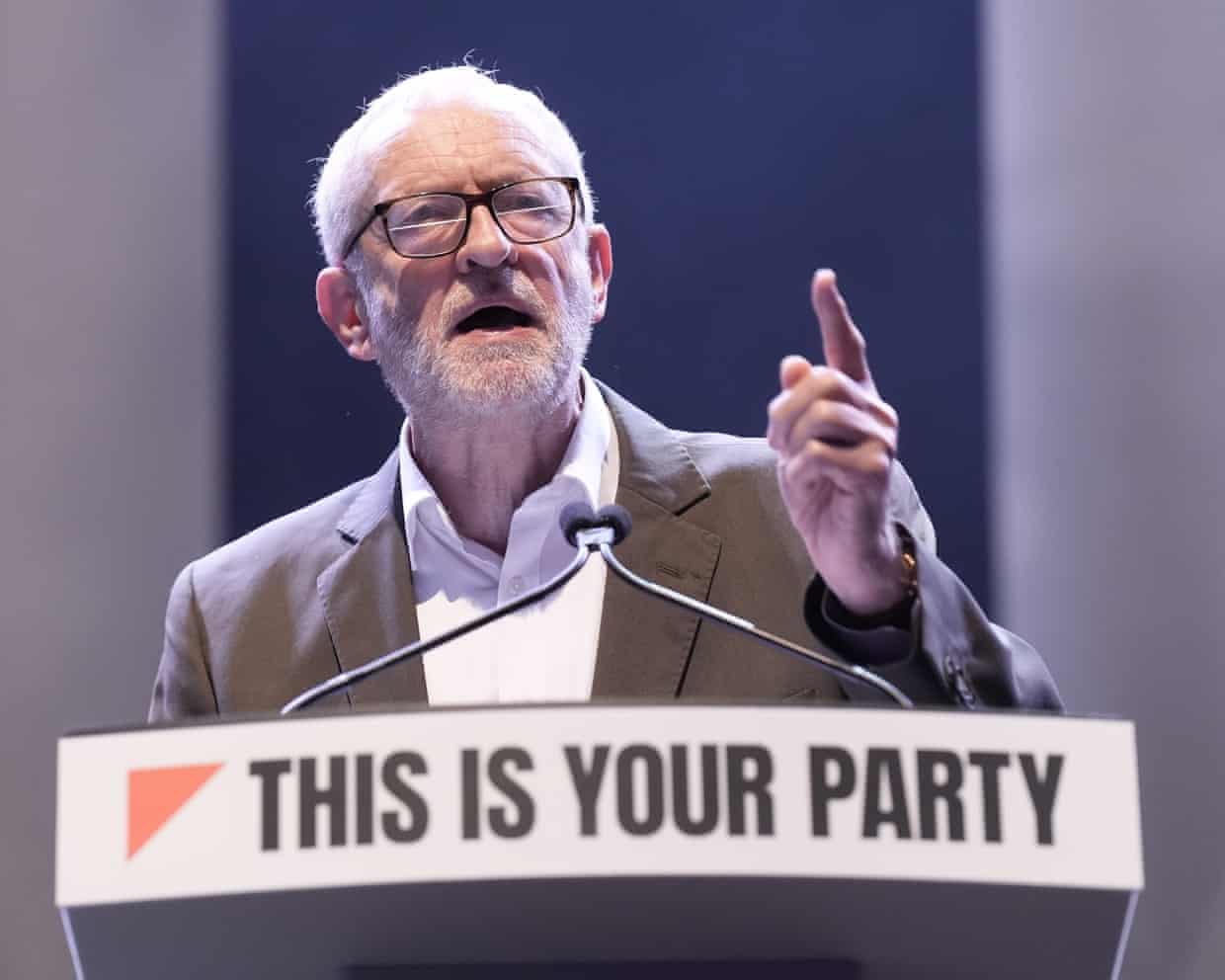
The new leftwing party headed by Jeremy Corbyn and others has voted narrowly for it to have a ‘“collective leadership” in a win for Zarah Sultana, who has been at loggerheads with the former Labour leader.The results were announced on Sunday after a chaotic start to its founding conference in Liverpool. Sultana, a former Labour MP who now sits as an independent, had boycotted the first day of the conference amid disagreements over how Your Party – its provisional name – should be run.In advance of the results of voting on the party’s constitutional arrangements, Corbyn had said: “It’s quite hard for the public to grasp things that there are sort of 10 people who run things.”However, members voted by 51
Rachel Reeves denies lying to public in run-up to budget
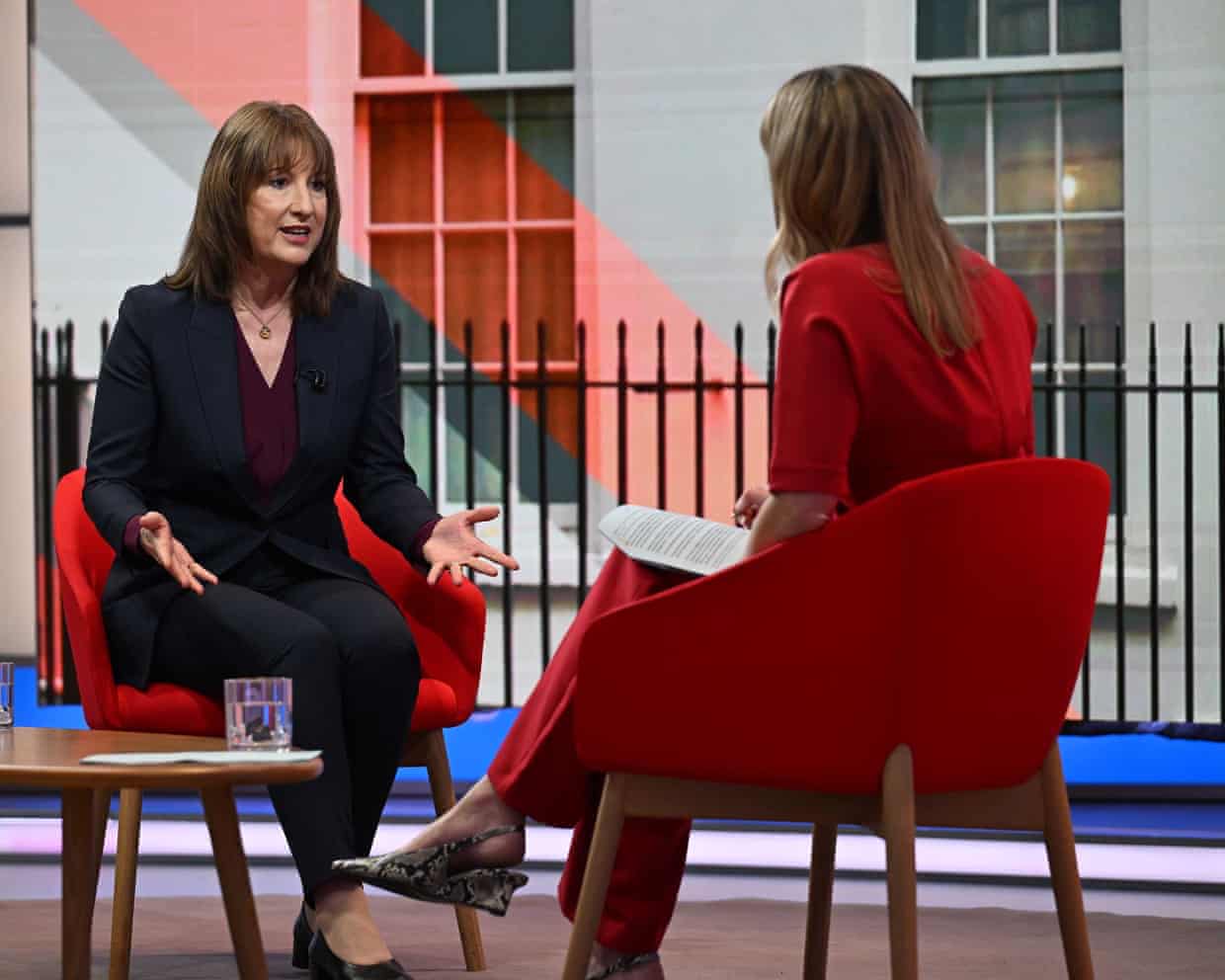
Rachel Reeves has denied lying to the public in the buildup to last week’s budget, insisting that she needed to raise taxes to a record level to ensure economic stability.The chancellor said on Sunday she had announced £26bn-worth of tax rises on Wednesday in part to build a buffer against her fiscal rules and reduce the risk of further tax increases in the future, and in part to protect public spending.Her messaging contrasted, however, with what she said before the budget, when she said tax rises would be necessary because of an expected decision by economic forecasters to reduce their growth expectations.In the end, the Office for Budget Responsibility (OBR) did downgrade its expectations for economic productivity, but said unexpectedly strong wage growth and tax receipts would more than make up for that.The OBR’s comments have kickstarted a political firestorm, which has led opposition politicians to demand Reeves’s resignation
Your Party’s first conference shows little sign of achieving fresh start
When the idea of a new leftwing party spearheaded by Jeremy Corbyn and Zarah Sultana was first mooted in the summer, it was so popular that hundreds of thousands of people expressed an interest in joining.Although it was quickly beset by arguments – its co-founders rowed bitterly over its initial leadership and funding model – many hoped this weekend’s inaugural conference would signal a fresh start.A sizeable chunk of the 2,500 delegates are former Labour members, disappointed by the policies of the current government and looking for a political home as they worry about the rise of Reform UK.As plans for the party’s first official gathering were finalised, Sultana and Corbyn looked to have buried the hatchet. Appearing at a leftwing festival in Manchester last month, Sultana jokingly compared the duo to the Gallagher brothers, saying: “I’m here to tell you the show is back on the road
Your Party conference thrown into chaos as Zarah Sultana boycotts first day
Zarah Sultana has boycotted the first day of Your Party’s inaugural conference, throwing the party’s first official gathering into chaos amid disagreements with co-founder Jeremy Corbyn over how the party should be run.Corbyn confirmed to journalists on Saturday that he preferred a single leader and is likely to stand for the role but Sultana said she would vote for collective leadership and that she did not believe parties should be run by “sole personalities”.In a sign of further division within the fledgling movement, a spokesperson for Sultana said she would not be entering the conference hall on Saturday in solidarity with delegates who were expelled over links to other leftwing parties, describing the process as a “witch-hunt”.The Guardian understands Sultana will run against Corbyn if members decide to elect one leader. Delegates in Liverpool will choose between electing a sole leader or a collective of lay members – those not already serving as MPs or councillors

Expect a tale of two holiday seasons as the well-off spend and the rest pull back | Gene Marks
Bakery chain Gail’s plans to open 40 more outlets as sales soar

Is gen Z’s love of fried chicken pushing Britain to ‘peak pizza’?

Net migration is plummeting. Why can’t Labour say so? | Heather Stewart
Harrods warehouse staff underpaid by thousands of pounds after agency error

Airbus issues major A320 recall after mid-air incident grounds planes, disrupting global travel