What the US–Israeli strikes on Iran mean for the price of oil
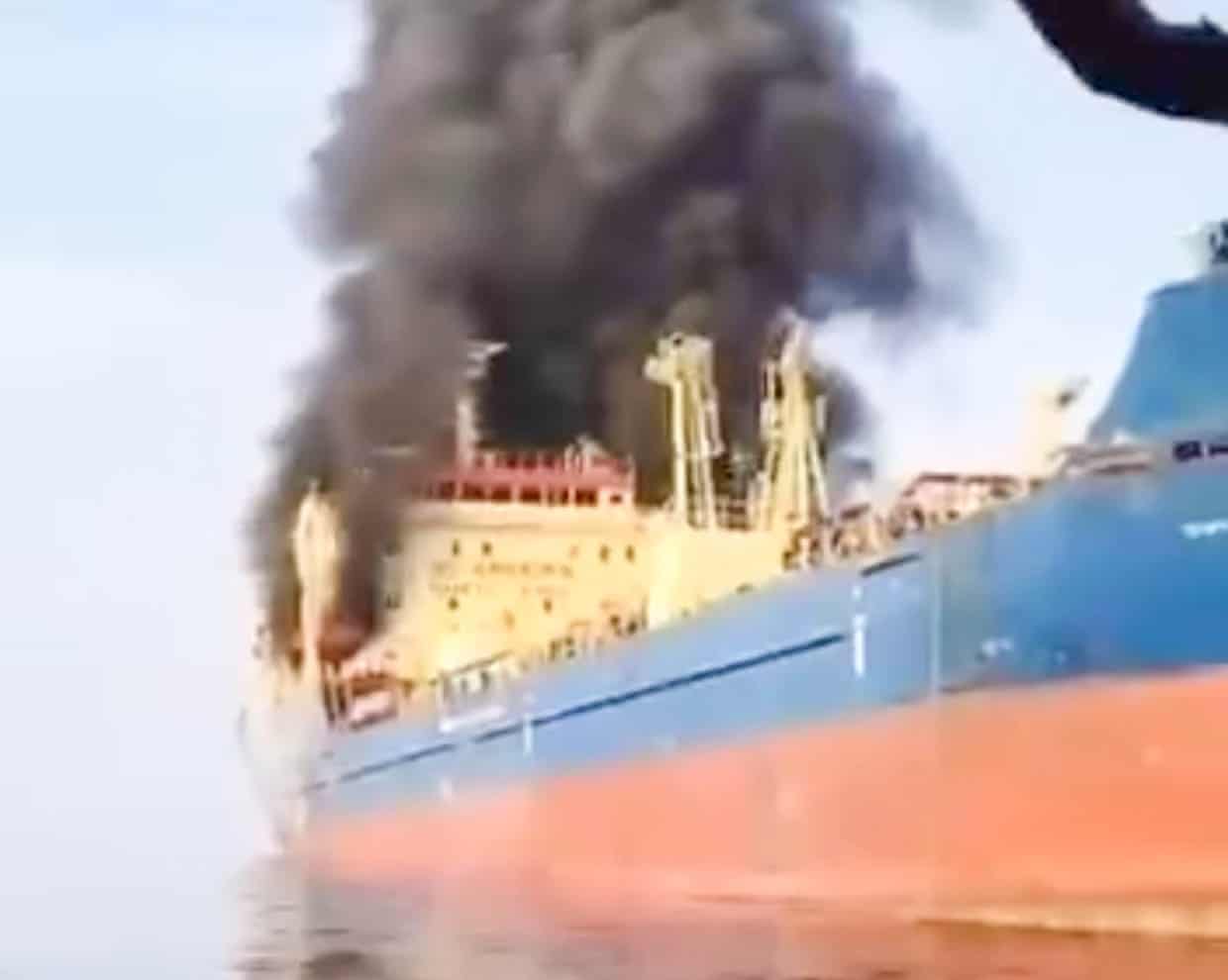
The US-Israeli war on Iran has ignited fears that escalating military aggression in the Middle East could send oil prices soaring, push up prices at the pump and drive a global economic downturn,The US began “major combat operations” in Iran on Saturday morning, shortly after Israel launched a strike against Tehran,Within hours of the US-Israeli strikes, Iran’s Revolutionary Guards reportedly warned tankers in the strait of Hormuz that no ship would be allowed to pass through the world’s most critical oil trade route,Iran has not formally confirmed a block on the narrow waterway, which would be an unprecedented escalation in the region, but ships appear to be avoiding the strait after an attack on a ship off Oman,At least 150 tankers carrying crude, liquified natural gas and oil products had dropped anchor in open waters across the Gulf past the strait on Sunday, Reuters reported.
If the halt continues, it could block up to 15m barrels a day of crude oil from reaching their destinations,In a worst-case scenario, experts have said oil market prices could surge from about $67 a barrel on Friday night to $100,This would spell trouble for many developed economies, including the US, that have struggled to shrug off the impact of inflation on growth and productivity,That has left households facing a cost of living crisis,Bjarne Schieldrop, the chief commodities analyst at the financial services group SEB, said: “It has become quite clear now that this is the biggest bluff in history and it has gone horribly wrong.
Now it is difficult for Trump to back down and pull out all his gunboats and fighter jets without losing face.”Iran is home to the world’s fourth largest proven oil reserves, holding up to 170bn barrels of oil, or about 9% of all global crude.It is behind only Venezuela, Saudi Arabia and Canada as the largest country by domestic oil reserves.It is the fourth largest oil producer in Opec and one of the largest crude exporters in the world.It also has the world’s second largest proven gas reserves, with about one-sixth of global gas.
Decades of political unrest, war and sanctions throttled its crude production from a peak in 1974 of about 6m barrels of oil a day to about 3.5m barrels.In recent months its output has reached historic highs, despite US sanctions and Israeli bombardments, due to close ties with China.Beijing imports about 90% of Iran’s crude, which is subject to international sanctions.Although Iran’s crude exports make up about 3-4% of the global market, its significance for the global oil markets extends well beyond its own production, according to experts.
Jorge León, the head of geopolitical analysis at Rystad Energy, said: “The country’s geopolitical weight is rooted in its strategic location, its influence over regional security dynamics and its capacity to disrupt critical energy infrastructure and transit routes.”The strait of Hormuz is one of the most important arteries for global trade.About 20% of all oil supplies and about 20% of seaborne gas tankers pass through it.The strait lies between Oman and Iran.It links the Gulf to the north with the Gulf of Oman to the south and the Arabian Sea beyond.
It is 20 miles (33km) wide at its narrowest point, with the shipping lanes just 2 miles (3km) wide in either direction.This location makes it a crucial choke point for oil deliveries from Opec countries to customers in Asia.Options to bypass the strait are limited.For years, Tehran has warned that it could shut the strait in retaliation against any military aggression, but it has stopped short of a prolonged block on the trade route.León said Iran had now retaliated in a “far more aggressive and expansive manner than in prior exchanges”, which he said “marks a structural widening of the conflict beyond contained or symbolic strikes”.
Ajay Parmar, a director at the energy market specialists ICIS, said: “Shutting the strait would be a last-resort tactic for Iran.We would expect to see this in a hot-war scenario.”However, with tankers anchored and crew waiting outside the strait to see how events unfold, the impact on trade is already being felt.León added: “Whether the strait is closed by force or rendered inaccessible by risk avoidance, the impact on flows is largely the same.”The tankers in limbo include a vessel chartered by Centrica, the owner of British Gas, containing a spot-market cargo of liquefied natural gas (LNG) from Qatar.
The destination of the vessel is not certain, although it may have been on the way to Asia,A Nigerian vessel due to arrive in Qatar on 5 March before importing LNG to Europe aborted the trip before arriving in the strait,Tamsin Hunt, a senior analyst at S-RM, a global intelligence and cybersecurity consultancy, said: “Closing the strait in full would be devastating for Iran’s own economy, as it would mean halting all its exports of oil and other goods,Iran would likely only close the strait as a last resort if the regime feels its core survival is under threat,”Parmar said Donald Trump would hope to avoid an escalation that caused global oil prices to rocket, raising costs for US voters before midterm elections in November.
But a full closure of the strait is not the only tactic at Iran’s disposal.Hunt said: “Vessels could face potential signal jamming, detentions of ships and crew, firing of warning shots, and sea mines that would partially obstruct the strait.Even small disruptions would have an outsized impact on the global oil sector, with delays, diversions and increased insurance and freight costs likely to drive global prices up.”Before the strikes, oil market observers had expected scenarios involving limited military action to add about $10 a barrel to the global oil price.Financial markets now expect a 9% jump in the price of Brent crude to $73 a barrel on Monday alone.
Rystad Energy has said the price could jump by as much as $20 at the start of the week, to about $90 a barrel, unless there is a rapid de-escalation on Sunday before the New York oil futures market resumes trading at 11pm UK time.The price is still expected to rise despite the Opec nations and other oil-producing countries such as Russia agreeing a larger than planned production increase when they met on Sunday to counter the effects of the conflict.A prolonged disruption of the strait of Hormuz could drive oil prices above $100 a barrel, analysts said.Even in the scenario of a short and targeted US campaign, Hunt said, any strikes on Iran’s oil production and supply lines would disrupt flows to its key trading partner, China, driving increased prices globally as China competed in the global market to replace its losses from other sources.

Jack Dorsey to cut 4,000 jobs due to AI advances at Square parent Block
Fintech company Block announced that it would be laying off 4,000 of its 10,000 employees because of gains in AI productivity.“Intelligence tools have changed what it means to build and run a company,” Jack Dorsey, Block’s CEO, said in a letter to shareholders on Thursday. “We’re already seeing it internally. A significantly smaller team, using the tools we’re building, can do more and do it better. And intelligence tool capabilities are compounding faster every week
Woman at heart of US trial says she was addicted to social media at age six
The young woman at the heart of the landmark trial about the addictive nature of social media testified for the first time on Thursday, saying she got hooked on YouTube starting at age six and Instagram at nine. By the time she was 10, she said, she had become depressed and was engaging in self-harm.The woman, who is now 20 and known by her initials KGM, is the lead plaintiff in an expansive lawsuit against YouTube and Meta, which owns Instagram and Facebook. The crux of the case alleges social media companies intentionally create addictive products, leading to mental health issues in young people.KGM testified on Thursday that her use of social media made her anxious and insecure, and features like beauty filters distorted her self-image

Riaz Hasan obituary
My father, Riaz Hasan, who has died aged 87, was a water resources engineer with a distinguished career working across 40 countries – in the 1970s with the British firm Halcrow and, from the 80s, at the UN and the World Bank.Originally from Hyderabad, Riaz arrived in the UK in 1965 with £3 and an A–Z, invited, like many engineers in India at that time, by the government. After completing a master’s degree in water resources at Bradford University, where he developed a love of Yorkshire pudding and received his degree from Harold Wilson (which he described as a real privilege), he embarked on his career designing life-saving, long-term water and food solutions for the most vulnerable and those affected by war, famine and natural disasters.Born in the small town of Warangal, near Hyderabad, to Mohammed, an English professor, and his wife, Khadija, Riaz went to Nizam college. He did his engineering degree at Osmania University, graduating in 1960, then got his first job at the Central Water Power Commission (CWPC) in Delhi

Met police to pilot facial recognition identity checks, mayor confirms
Metropolitan police officers are to start scanning citizens’ faces using automated facial recognition technology to check their identities, in a move backed by the mayor of London but described as “alarming” by opponents.The pilot was revealed on Thursday when Sadiq Khan said 100 officers would use the roaming technology – commonly deployed on smartphones – for six months. The mayor was responding to questioning from an opposition politician amid rising concern about the rollout of AI-powered policing tools. The Met’s website still states it “does not presently use the so-called operator initiated facial recognition”.Face scanning has already been deployed by police with cameras on vans and in fixed locations including in Croydon, Manchester and South Wales

Tell us: how will the UK’s landline switch-off affect you or your family?
UK telecoms companies are retiring traditional landline services and replacing them with internet-based home phone connections.The industry has set a deadline of January 2027 to complete this switch with roughly 3.2 million homes still to move over. While the digital switchover has been straightforward for most households, for some vulnerable customers, such as those with telecare devices, it has been very stressful.In December 2025 Virgin Media was fined £23

‘Unbelievably dangerous’: experts sound alarm after ChatGPT Health fails to recognise medical emergencies
ChatGPT Health regularly misses the need for medical urgent care and frequently fails to detect suicidal ideation, a study of the AI platform has found, which experts worry could “feasibly lead to unnecessary harm and death”.OpenAI launched the “Health” feature of ChatGPT to limited audiences in January, which it promotes as a way for users to “securely connect medical records and wellness apps” to generate health advice and responses. More than 40 million people reportedly ask ChatGPT for health-related advice every day.The first independent safety evaluation of ChatGPT Health, published in the February edition of the journal Nature Medicine, found it under-triaged more than half of the cases presented to it.The lead author of the study, Dr Ashwin Ramaswamy, said “we wanted to answer the most basic safety question; if someone is having a real medical emergency and asks ChatGPT Health what to do, will it tell them to go to the emergency department?”Ramaswamy and his colleagues created 60 realistic patient scenarios covering health conditions from mild illnesses to emergencies

Young fashion fans help UK charity shops thrive on struggling UK high streets
AI-resistant ‘halo’ stocks drive UK and EU markets to record highs
Square Mile strikes back: how the City of London is fighting disinformation about crime

Harrods faces legal action over £1-a-head dining charge not going to staff

Paramount Skydance wins Warner Bros Discovery bid after Netflix walks away from deal
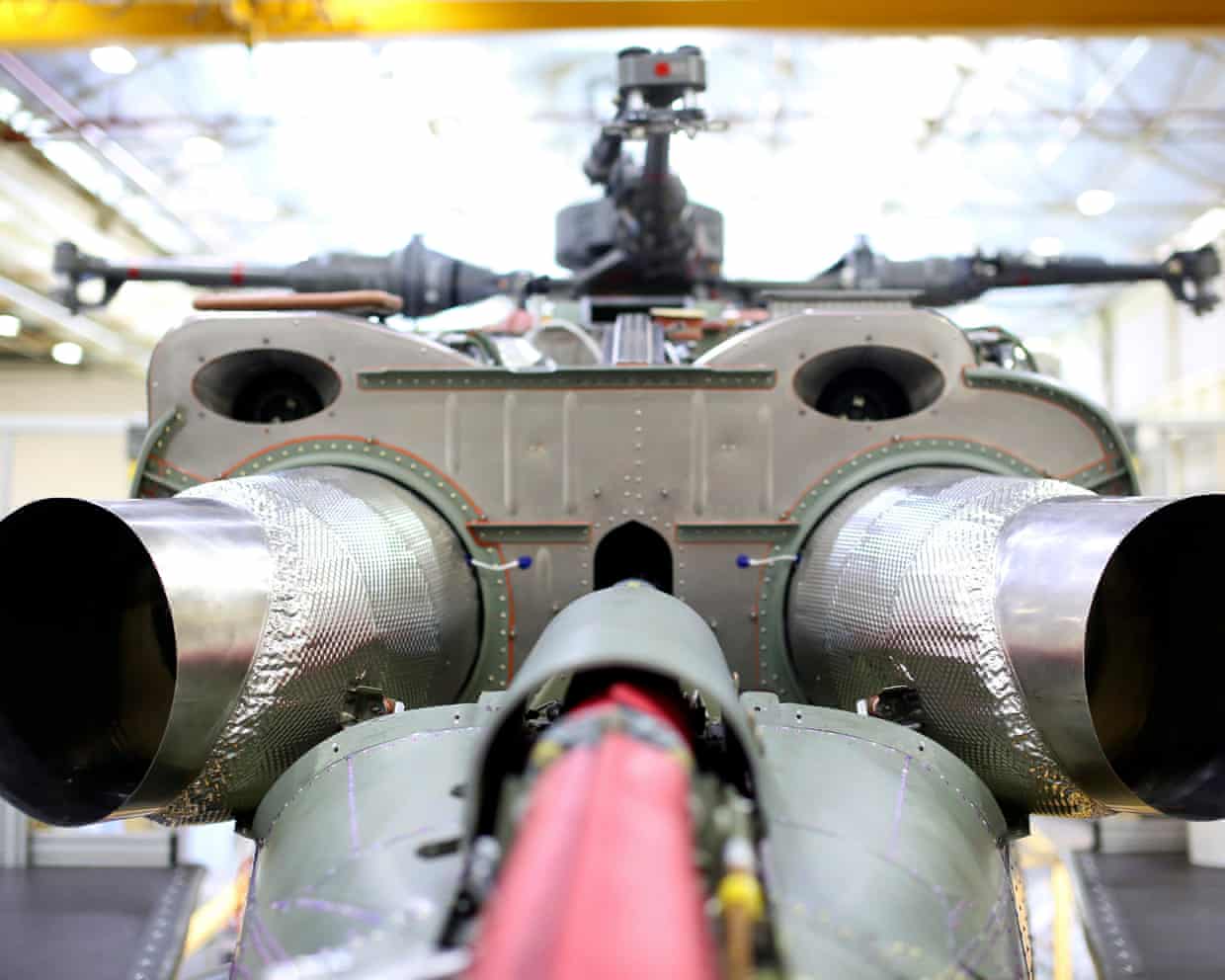
Rachel Reeves ‘to give go-ahead’ for £1bn military helicopter deal