Bank of England governor hits out at populism as Trump interferes in US Fed

The governor of the Bank of England has urged the world’s leading global institutions to fight back against the rise of populism, warning that it represents one of the biggest threats to improvements in living standards,In a thinly veiled response to Donald Trump’s attempts to interfere with the independence of the US Federal Reserve, Andrew Bailey said that he and the heads of other institutions had a duty to “challenge back” populist narratives,“Part of the purpose of international agencies is that from time to time they have to tell us what we don’t want to hear, let alone act upon,” he said,“Of course, they have to be accountable for the accuracy and quality of the assessment,But, accepting that, we have to call out messenger shooting.
”Bailey was among a group of 10 central bank governors – including the chair of the European Central Bank, Christine Lagarde – who this week offered “full solidarity” to the Federal Reserve chair, Jerome Powell, after he revealed he had been threatened with legal action,His comments also come amid rising geopolitical tensions and growing criticism of Trump after the US intervention in Venezuela and the president’s threats to take control of Greenland,In a speech delivered as world leaders prepare to head to Switzerland for the annual World Economic Forum meeting in Davos – widely seen as a critical moment for the future of international cooperation – the governor said countries turning inwards would undermine progress to raise living standards,“The rise of so-called populism makes the whole task harder,” he said,Economists and the chief executive of JP Morgan Chase, Jamie Dimon, have warned that politically driven attempts to influence the Fed and other leading central banks could ultimately push up inflation and interest rates, adding to cost of living pressures on households.
Bailey identified three defining features of populism: a tendency towards domestic production over international openness; attributing unfavourable conditions to “outside forces”; and fuelling decline in trust in domestic and international institutions,He said this included a populist tendency to deride domestic and international institutions as “distant, unresponsive and acting for the benefit of powerful and uncontrollable interests”,“For those of us who are institutionalised, the answer is that we have to challenge back, in deeds more than just words,But, we have to ensure our houses are in order too,” he said,The governor has previously faced criticism from Nigel Farage, the leader of the rightwing populist Reform UK party.
Farage has called for politicians to have greater influence on the Bank of England, which was made independent in 1997 by the then Labour chancellor, Gordon Brown,Late last year, Farage suggested he could replace Bailey as governor if he became prime minister,He has also called Bailey a “dinosaur” over his views on digital currencies,Liz Truss, the former prime minister, has also complained about UK institutions including the Bank, Treasury and the Office for Budget Responsibility, accusing them of being part of a shadowy “deep state” apparatus,Bailey said the gains of global cooperation were clear.
“The benefits of trade and openness in terms of specialisation and larger markets are very well known.So, too, is the need to have rules of the game and some form of commitment and coordination device to put these rules into effect and protect legitimate national interests,” he said.Economists typically view free trade as a cornerstone of long-term economic growth, arguing that it helps lower prices for consumers and supports productivity gains.However, the governor of the UK central bank, who also chairs the international Financial Stability Board – acknowledged that years of lacklustre economic growth and stalling progress living standards had made promoting global openness harder.“While it is true that openness supports growth and has reduced global poverty, it can have, and has had, distributional consequences in economies, and there has been an undermining of social capital so-called and domestic cohesion,” Bailey said.
He added that the challenges facing the world could not be overcome through increasingly isolationist policies,Bailey said there were four substantial headwinds facing rich countries: a pause between productivity-enhancing technologies that was holding back economic growth; ageing populations; rising demands for defence spending; and the climate crisis,While describing these pressures as a “powerful force to complicate the operation of the international system”, he argued that countries could overcome them through “robust economic openness” and greater global trade and cooperation,“We must be clear and agreed that a world without effective institutions is unlikely to be stable,” he added,

Not keen on feeble nolo wine? Try these instead
Are you a lover of oaky rioja, or maybe zingy Kiwi sauvignon blanc, and looking to find a non-alcoholic lookalike? To put it bluntly, I’m afraid you’re out of luck. Alcohol does much more than make you tipsy; it is the magic ingredient that gives so much of wine’s wondrous complexity, character and charm. Not only does it carry volatile compounds that make up wine’s endlessly fascinating combinations of scents and tastes, along with a sensation of warmth, it also creates that viscous body and texture – what’s rather grossly known in the trade as “mouthfeel” – of the liquid in your mouth, and the overall balance of all these factors in the wine.The Guardian’s journalism is independent. We will earn a commission if you buy something through an affiliate link
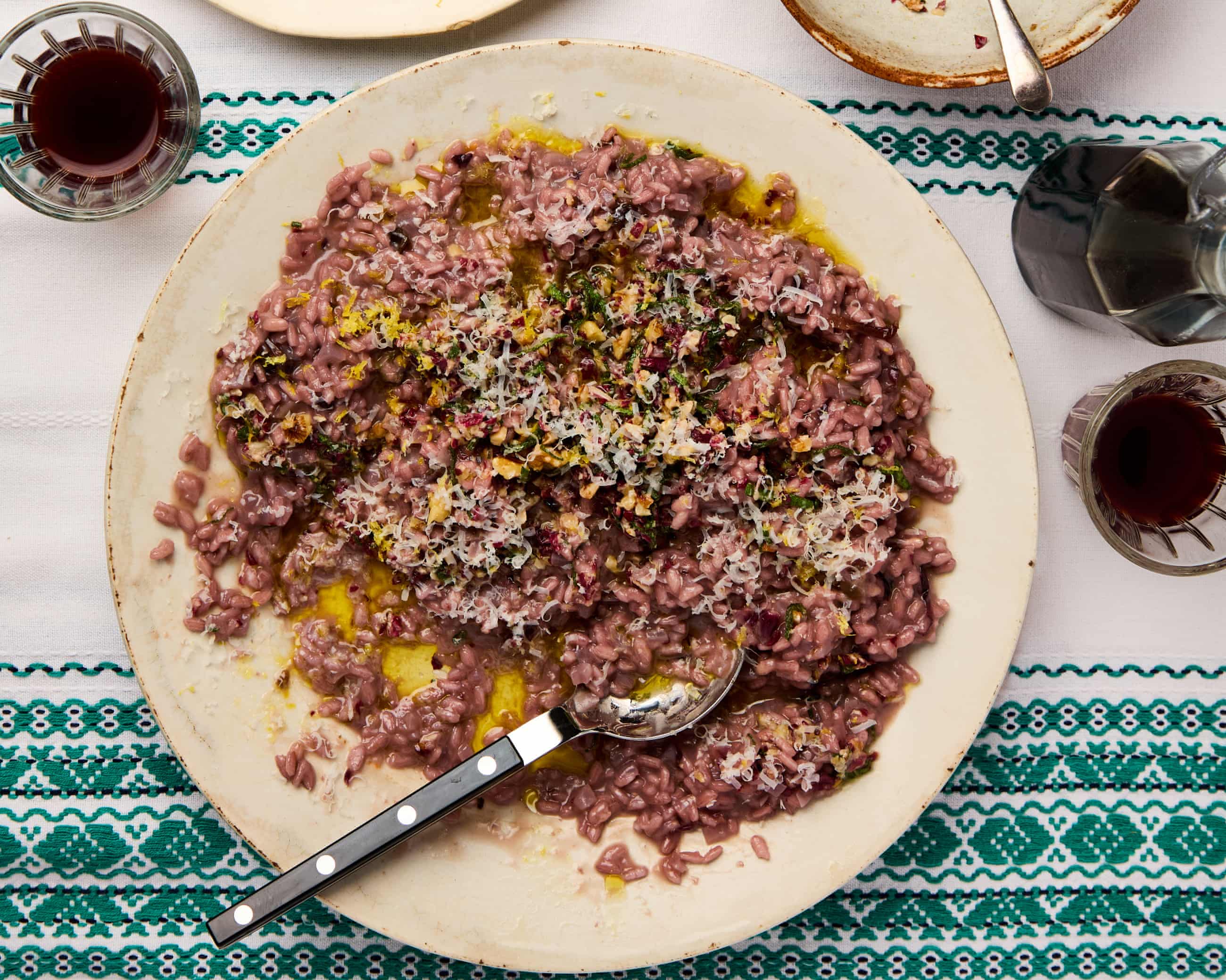
Doing dry January? Use languishing bottles of wine to make the ultimate comfort food
Whether you’re abstaining or just cutting back, a glass of red, white or rosé can elevate everything from risottos and stews to pasta and puddings Sign up here for our weekly food newsletter, FeastHands up, who is dry Januarying? While it’s not something I do explicitly, I do like to cut back a bit at the beginning of the year. The marathon that is Christmas socialising can be fun but relentless, and I imagine there are many others in the same boat. When it comes to wine, at least, the problem with cutting back is what to do with the rest of the bottle. Sure, I’ll have a glass or two if I fancy it one evening, but it’s pretty much a wasted bottle if you don’t finish the rest within a few days. Fear not – I have a plethora of recipes that will ensure you never need to waste a drop – enjoy a glass or two, then use the rest in the dish of your choice
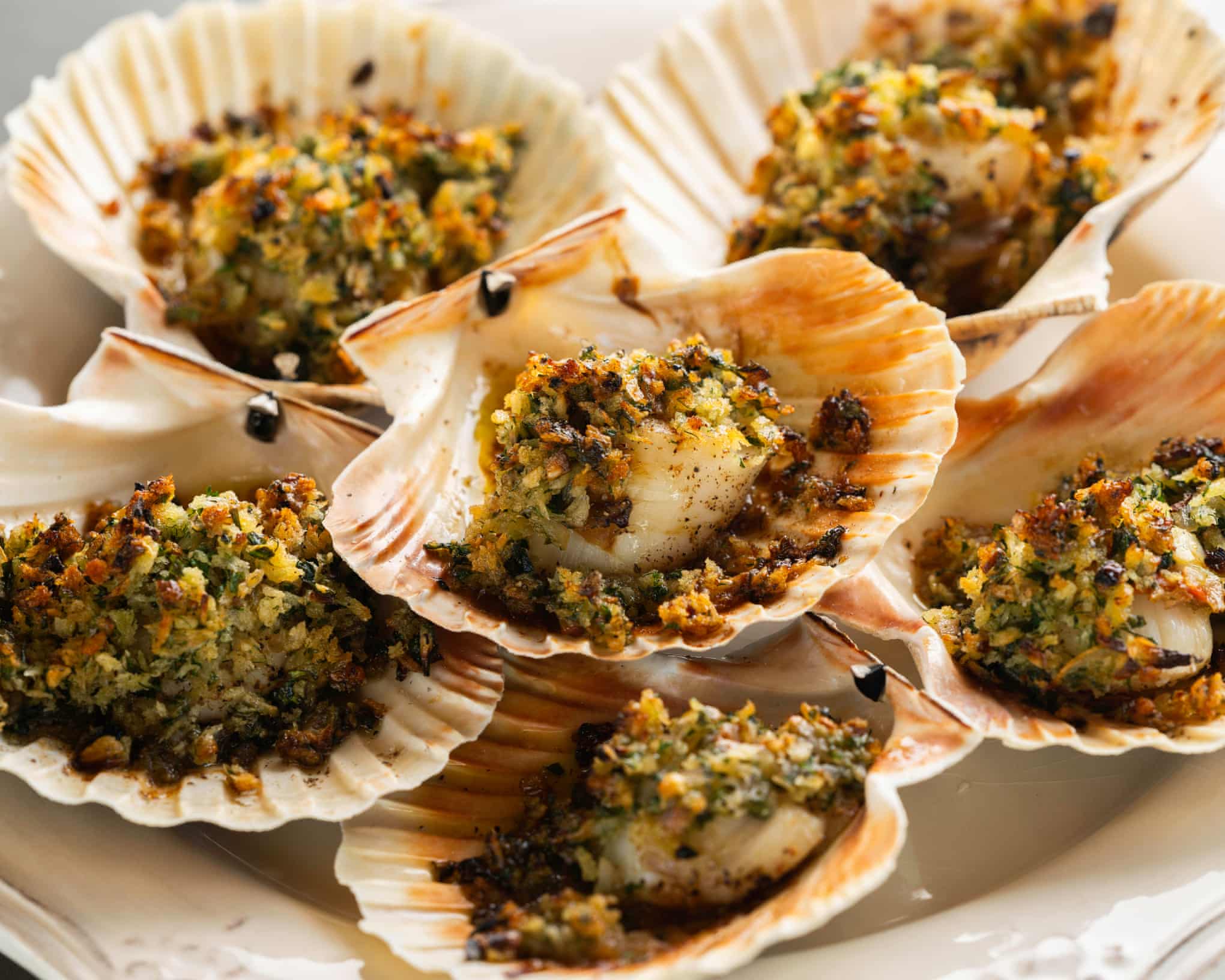
Mark Hix’s recipe for baked scallops with a herb crust
Sustainable fresh scallops are best treated simply, and this herby, garlicky breadcrumb topping ticks all the right boxesAs a kid growing up in West Bay, Dorset, I used to sit on the harbour wall and watch the small trawlers coming in with their catch. My friend Mark’s dad’s boat, along with all the others, would be stacked high with sacks of queenies that they’d dredged up only hours before, and Mark’s mum would pack us off to school with a tub each of queen scallop meat doused in Sarson’s vinegar and white pepper, to eat later as a playground snack. At the time, I thought nothing of it, but, looking back now, I realise quite what a luxurious schoolday treat this was.These days, however, our local scallop fishermen don’t fish for queenies much any more, because the time it takes to shuck and clean them is more or less the same as that for larger king scallops, so they’re no longer financially viable; also, instead of all those trawlers that Lyme Bay had in the past, it’s now mostly divers who fish more sustainably for king scallops, without demolishing the sea bed in the process. There are two main dive boats that fish out of Lyme Regis nowadays, operated by Jon Shuker and Ali Day, and they’ve pretty much cornered the local market
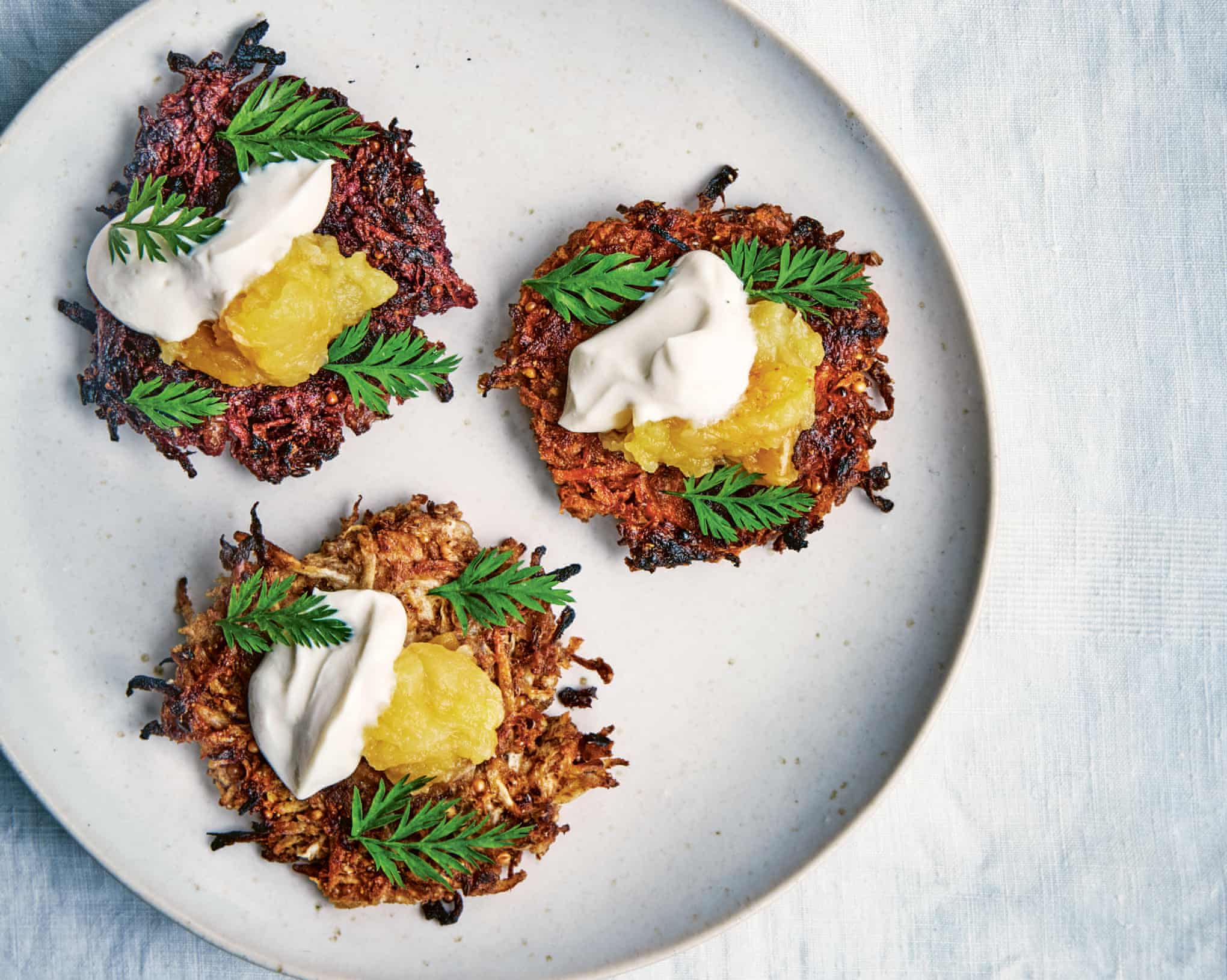
How to turn any root vegetables into latkes – recipe | Waste not
It’s not just potatoes that you can turn into these moreish fried cakes – just about any root veg will do the trickCrisp, savoury and satiating latkes are my idea of the perfect brunch and, rather than sticking to potatoes, I often make them with a mixture of root vegetables, using up whatever I have to hand – just 25-50g of any vegetable will make a latke – and adding some ground linseeds or flax, which gives breakfast some nutrition-boosting omega-3s. I usually have them with a poached egg for protein or apple compote and soya yoghurt.This is a great way to use up any tired root vegetables lurking in the crisper drawer, and a recipe I come back to again and again. Latkes are a traditional Jewish potato cake that work really well made with other root vegetables as well. If I have a few different coloured vegetables, I will grate and mix the vegetables separately to make multicoloured latkes, but it’s much simpler to mix them all together
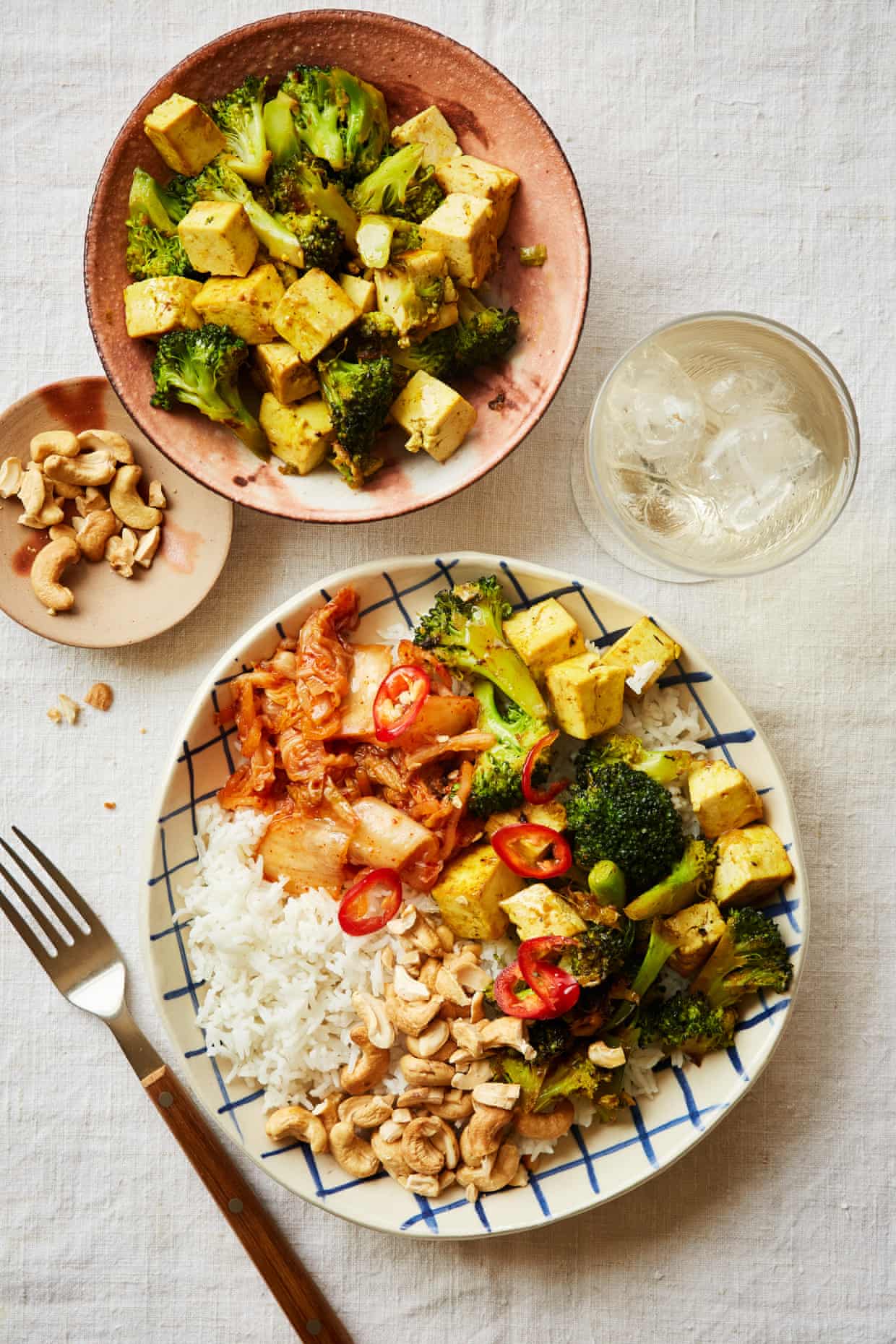
Eleven quick and easy summer weekday dinners, from pasta to Maggi goreng – recipes
(Pictured above)Rukmini Iyer’s recipe contains a microwave method for cooking rice, but I’ve successfully made basmati in a rice cooker countless times – just pop the whole garlic clove in with the rice grains. After that, it’s only a matter of stir-frying the cashews, broccoli and tofu. If you need more convincing, Iyer says this recipe was “an absolute hit with my children”. My own children happily mainline tofu and rice, and can be persuaded to have broccoli if I tell them they’re actually eating mini Christmas trees, so I believe her.There are many ways to level up your instant noodles, and this recipe follows a familiar formula: add greens for health and a fried egg for protein
January tips if you’re cooking for one | Kitchen aide
I really struggle with cooking for one, so what can I make in January that’s interesting but easy and, most importantly, warming?Jane, via email “There’s an art to the perfect solo meal,” says Bonnie Chung, author of Miso: From Japanese Classics to Everyday Umami, “and that’s balancing decadence with ease.” For Chung, that means good-quality ingredients (“tinned anchovies, jarred beans”), a dish that can be cooked in one pan (“a night alone must be maximised with minimal washing-up”) and eaten with a single piece of cutlery, “preferably in front of the telly and out of a bowl nestling in your lap”. Happily, she says, all of those requirements are met by miso udon carbonara: “It has all the rich and creamy nirvana of a cheesy pasta, but with a delicious, mochi-like chew that is incredibly satisfying.” Not only that, but you can knock it up in less than 10 minutes. “Melt cheese, milk and miso in a pan to make the sauce base, then add frozen udon that have been soaked in hot water

‘The dollar is losing credibility’: why central banks are scrambling for gold
Bank of England governor hits out at populism as Trump interferes in US Fed

ChatGPT to start showing ads in the US

Amazon workers at Coventry warehouse tested for tuberculosis after outbreak

Vergil Ortiz Jr sues Golden Boy in dispute tied to stalled Jaron Ennis talks

Lewis Hamilton to get new engineer as Adami replaced in Ferrari shake-up