VIP viewing: cinemas bet on luxury bars and beds to usher in a new film era
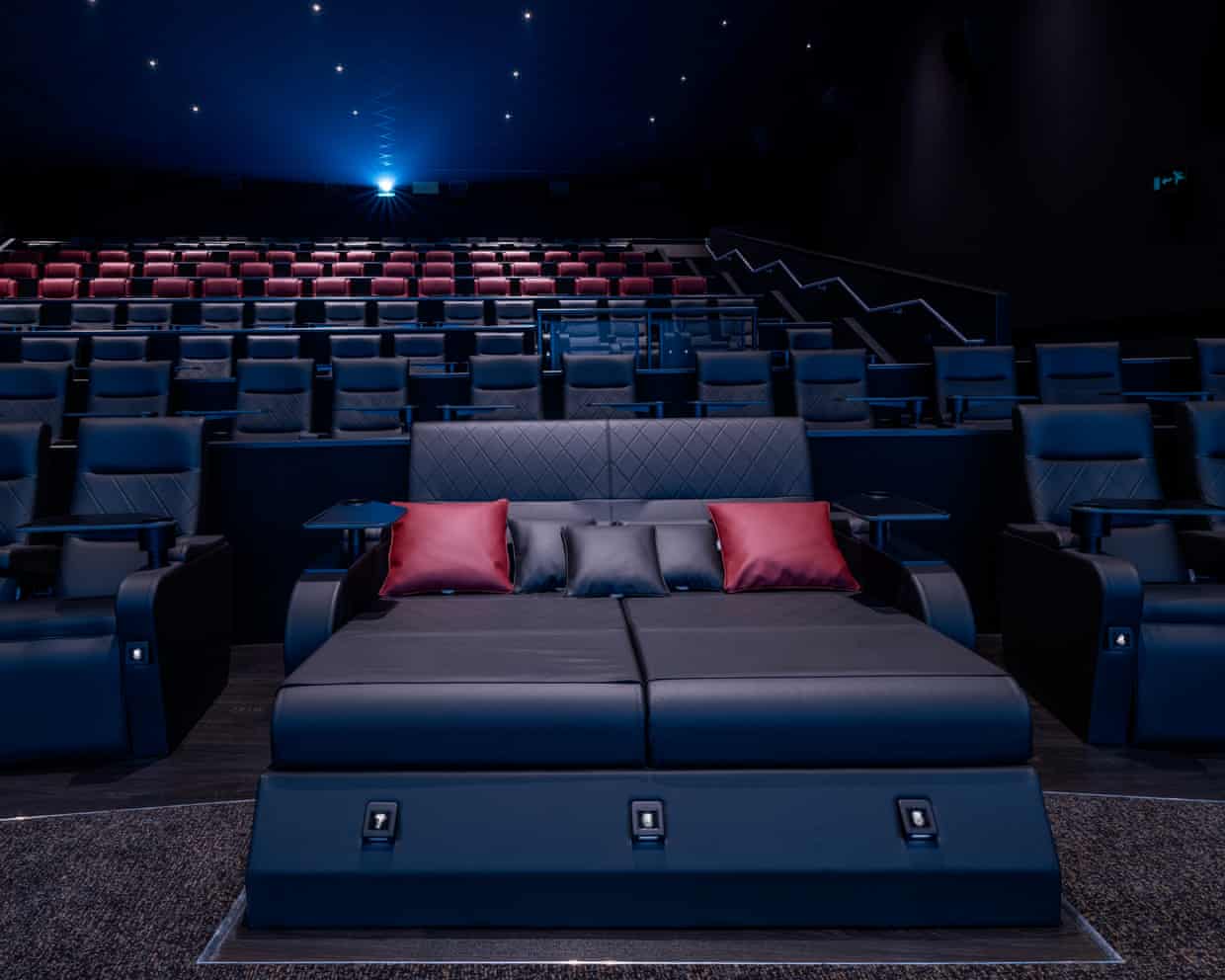
From champagne coolers to front row VIP beds, cinema owners are investing heavily in premium experiences as the industry gets its box office mojo back.As the third instalment in James Cameron’s blockbuster Avatar series pulls in the Christmas holiday crowds, the UK box office is expected to surpass £1bn in 2025 for the first time since before the global Covid pandemic.Amid financially testing times – with the pace of a hoped-for box office recovery derailed by the Hollywood actors’ and writers’ strikes – cinema owners have focused on reinventing the movie-going experience to win back film fans.“We are rolling out 200 of our Ultra Lux seats, which have a built-in champagne or wine cooler, each day across Europe,” says Tim Richards, chief executive and founder of the Vue cinema chain.“Our ‘worst’ seat in the house is a leather recliner, and it is amazingly comfortable.
We have been investing very heavily and to use an airline analogy, our new cinemas are business and first class – and that’s it – but at prices for everyone.”Its rival Odeon first launched its premium offering, under the Luxe brand, in 2017 and it now has 38 venues which the company says have become the “defining standard” for customers across its entire estate.Odeon has moved to super-charge its premium strategy with the introduction of Luxe Suite Pods, which it describes as a “private cocoon” with luxury seats that is proving a hit for date night and with families.It is also introducing VIP Beds, now in nine locations, which promise to “transform the front row into the best seat in the house”.“This is next level,” says Suzie Welch, managing director for UK & Ireland at Odeon.
“Over the last 18 months we have been looking at what we want to do next with Luxe, what we think our guests want next from their cinema experience.Innovations like the Luxe Suites and VIP Beds are about creating a different experience; families love them and they are great for an evening experience, like a date night.The focus is on how we can give people choice and experiences for all occasions.”The cost of seating in cinemas varies widely depending on factors including the time and day of the week, the type of film, sound and picture technology, and the location.Vue’s Ultra Lux recliner seats range from £10 to about £26.
Odeon’s range of Luxe seating runs from £7.50 to £35 for a VIP bed for three, and £28 for a Luxe Pod for two.The path to premium has been pioneered by Everyman, founded in 2000, where viewers can lounge on sofas and have food and beverages ordered to their seats.Its model is proving to be a runaway success post-pandemic, with Everyman’s latest results showing a 46% year-on-year increase in sign-ups to its membership programme in the first half, and revenues growing by a fifth.The chain has also seen admission numbers rise, despite an increase in ticket prices, with movie-goers spending more on food and drink.
“Everyman have led the way on premium for more than 20 years – comfy seats, food – other chains are catching on to that,” says Andrew Renton, director of research at Cavendish.“Smaller cinemas, a cosier feel and higher spend.”But the move to premium by mass-market chains – which include operators such as Vue introducing next-generation laser projectors to rival the experience offered by Imax – coincides with a significant shift in cinema-going habits.Cinema attendance has been well down since the pandemic, from 176m annual UK admissions in 2019 to 126m in 2024, as many film fans fell out of love with the big screen.While the push to premium may make film-going a more attractive prospect, cinema audiences are not expected to bounce back to pre-pandemic levels, even if the number of film releases return to pre-2020 levels.
The cost of living crisis has meant household bills have soared, making cash-strapped consumers much more selective about what they spend their extra income on.“It is probably the case that movie fans will continue to go less than they did,” says Renton.“However, they are willing to spend more on the occasion, as we have seen in other sectors, such as big ticket gigs like Coldplay and Oasis.”The cinema industry is also continuing to come to grips with the small screen revolution, prompted by the rise of Netflix, with consumers now awash with choice when it comes to in-home entertainment.Netflix’s co-founder, Reed Hastings, once succinctly summed up the intense battle for attention in the digital age when he said the company considered almost every activity to be a rival – half-joking that sleep was its biggest competitor.
Cinema companies are also trying to offer more than the traditional experience as they face extra competition from the rise of the experiential economy.The £98bn market for immersive experiences is booming, from The Greatest Showman-inspired Come Alive, the long-established Abba Voyage, and Crystal Maze, to more recent pop-ups linked to Minecraft, Jurassic World and Squid Game.“It comes down to what is the purpose of cinema becoming, because it is not just about the old model where it was about going to see a film as soon as it is released,” says Renton.“Now it is much more about experiential leisure.They realise that to continue to capture that going-out experience they have to make a bigger difference.
They are doing that through premiumisation.”While there have been flashes of pre-pandemic levels of commercial success, including most recently the Wicked films, the industry still lacks the blockbusters to realise its ambitions for a premium-led-experience recovery.Vue’s CEO, Richards, acknowledges that “2025 is still a period where we have seen 20% fewer movies released compared to the average of the three-year pre-pandemic period of 2017, 2018 and 2019”.However, he points to the increasing commitment to the big screen shown by the Silicon Valley giants as evidence of a healthy future.Apple’s release of F1, Brad Pitt’s highest-grossing film, has given the iPhone maker confidence in its big-screen strategy.
And after Amazon’s $8.5bn acquisition of MGM – the Hollywood studio behind the James Bond and Rocky franchises, as well as an extensive library ranging from Gone with the Wind to The Hobbit – the studio is scaling up and matching the output of traditional film studios with plans for 10 big releases in 2026 and a further 16 in 2027.“It takes 18- to 24 months-plus for a major production to go from being green lit to the big screen,” says Richards.“We are just really now starting to see the Hollywood machine rev up and get going again.”For now, the cinema industry is looking at a promising year ahead.
Big releases include Super Mario, more editions of Spider-Man, Avengers, Dune and Moana, a fifth Toy Story release and a third in the Jumanji franchise.The insights company Omdia estimates that the volume of releases of films of all budgets in the UK next year will hit 850, the most since 2019.“In totality, next year and in 2027 we will see the same number of releases, or an even greater number, than before the pandemic,” says Richards.“When the history books are written, this is the end of the post-pandemic period and new era of film.”

‘Nostalgic and calming’: lava lamps are groovy again as sales glow
Depending on your age, you may remember them from Doctor Who and The Prisoner in the 1960s, or from TFI Friday and the Big Breakfast in the 90s. Or if you’re young enough, you might not remember them at all. But now it seems lava lamps are back.Rising sales would suggest a third wave of the lava lamp phenomenon is on the horizon, thanks to the ongoing trend towards mid-century interiors and gen Z’s fascination with the late 90s and early 2000s.Cressida Granger, the managing director of the British lava lamp pioneers Mathmos, said there had been a surge in interest in its lamps

Security bosses warn of rise in UK building site thefts by organised crime
Thefts of tools and equipment from building sites are increasingly being carried out by organised criminal groups, according to security bosses, amid warnings that the crimewave could accelerate during the Christmas construction shutdown.Copper cables, tools and even telehandlers and diggers costing tens of thousands of pounds have been stolen in recent months, according to the security firm Kingdom Systems.Now there are concerns that there could be a spate of thefts during the annual closure of construction sites, which sometimes last as long as two weeks over the festive period.Criminals often exploit long winter-nights as they look to break into sites, hoping to make off with the most costly tools and equipment stored there.“Darkness helps thieves to move in the shadows,” said Paul Worsley, the chief services officer at Kingdom Services, which runs temporary CCTV for more than 100 construction sites across Scotland and northern England

S&P 500 and Dow hit record highs as Santa rally reaches Wall Street – as it happened
The fabled Santa rally has reached the New York stock exchange!The S&P 500 index of US company shares has hit a record high today, on a shortened Christmas Eve trading session. It touched a new intraday record high of 6,921.42 points, surpassing its previous peak in October.The rally comes as investors continued to bet on more interest rate cuts from the Federal Reserve next year.There’s also lingering relief that yesterday’s GDP report showed the US economy grew rather faster than expected in the July-September quarter

Alexander Wishart obituary
My father, Alexander Wishart, who has died aged 81, began at the foot of the banking ladder aged 16, eventually becoming general manager and director of Harrods Bank in the 1980s, and regional managing director of the Bank of Beirut (UK) in the 90s. He was a proud member of the Chartered Institute of Bankers in Scotland.Born in Edinburgh to Margaret (nee McDonald), a munitions worker, and Alexander Wishart, a draftsman and sergeant in the Royal Air Force, Alex grew up in Leith and the Edinburgh suburb of Colinton with his two younger brothers; he went to Leith academy and the Royal high school.Fascinated by aeroplanes, he wanted to join the RAF, but his father, a Battle of Britain and Siege of Malta veteran, instead arranged a meeting with the manager of the National Commercial Bank (later Royal Bank of Scotland) on Leith Walk. Alex began as a junior clerk and, in 1966, while working at the Shandwick Place branch, met Myra Thomson, a secretary, from Kirkcaldy

BP to sell majority stake in $10bn Castrol business to US investment firm
BP has agreed to sell a majority stake in its $10bn (£7.4bn) lubricants business Castrol to the US investment company Stonepeak, as the new chair, Albert Manifold, rapidly reshapes the under-pressure oil and gas company.Stonepeak will acquire a 65% stake in Castrol, in a deal that values the division at $10.1bn including its debt. The deal, in which BP will retain a 35% stake in the business through a joint venture, is expected to close at the end of next year, the company said on Wednesday
‘I’ll never say I’m popping to Jones’s’: shoppers yet to feel love for WH Smith’s high street replacement
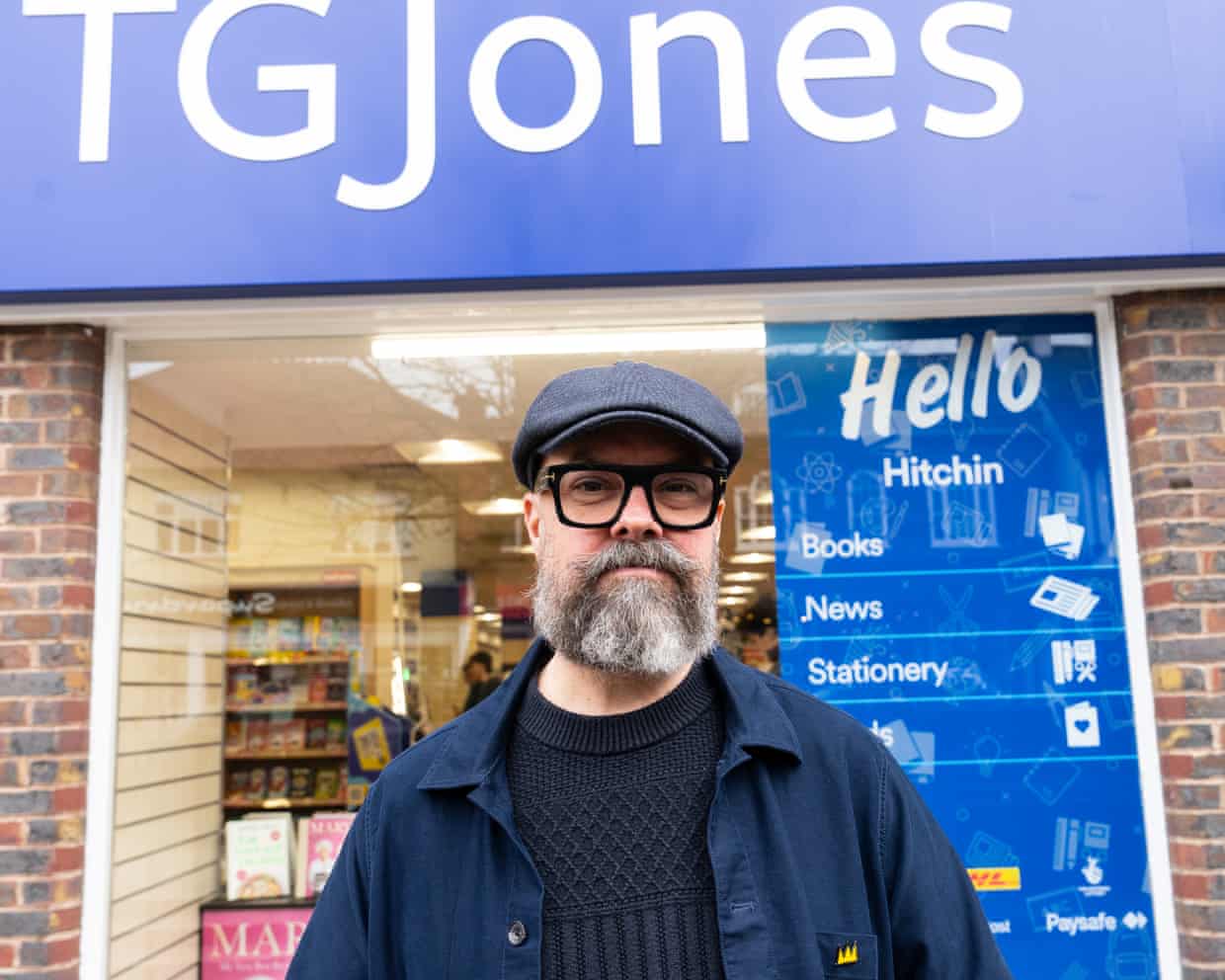
“It’s just the same.” Six months on from the sale of WH Smith’s high street business, the name above the door may have changed to TG Jones, but many shoppers have not noticed a splurge of investment or change.“The layout is the same and what they are selling is the same,” says Gillian Parsons as she exits TG Jones on a busy high street in the market town of Hitchin, Hertfordshire, where a steady flow of visitors are picking up cards, wrapping paper and the odd present in the week before Christmas.“Even the branding is similar,” says Jazz Minhas, another shopper. Others had not even noticed the name above the door had changed – such was the similarity of the signage, which sticks to a similar blue
Midwife leading Nottingham maternity inquiry charging NHS up to £26,000 a month
Motor neurone disease patients in England die waiting for home adaptations, campaigners say
People in poorest areas of England ‘more likely to need emergency care for lung conditions’

One in eight of 14- to 17-year-olds in Great Britain say they have used nicotine pouches

Christmas burnout: why stressed parents find it ‘harder to be emotionally honest with children’

‘We’ve got more in common than what divides us’: a Muslim-Jewish kitchen in Nottingham counters hate and hunger