Security bosses warn of rise in UK building site thefts by organised crime

Thefts of tools and equipment from building sites are increasingly being carried out by organised criminal groups, according to security bosses, amid warnings that the crimewave could accelerate during the Christmas construction shutdown,Copper cables, tools and even telehandlers and diggers costing tens of thousands of pounds have been stolen in recent months, according to the security firm Kingdom Systems,Now there are concerns that there could be a spate of thefts during the annual closure of construction sites, which sometimes last as long as two weeks over the festive period,Criminals often exploit long winter-nights as they look to break into sites, hoping to make off with the most costly tools and equipment stored there,“Darkness helps thieves to move in the shadows,” said Paul Worsley, the chief services officer at Kingdom Services, which runs temporary CCTV for more than 100 construction sites across Scotland and northern England.
“They use the Christmas period as an opportunity because construction sites close for a longer period and there is less chance of them being spotted by someone coming on to site.”Construction site thefts have soared amid the cost of living crisis, Worsley said, while the greater availability of battery-powered, cordless angle grinders has led to more thieves attempting to break the locks of buildings or storage cabins.The National Federation of Builders (NFB), a trade organisation that represents regional contractors and small- and medium-sized housebuilders, has calculated tool theft costs the industry almost £100m a year and has put traders and companies out of business.“I have never met a member who has not had an issue with tool theft or site theft,” said Rico Wojtulewicz, the head of policy and market insight at the NFB.“One member suffered two incidents of theft during last year’s Christmas period.
He said he is not looking forward to this year.”In the past, thieves have targeted copper cables, steel and piping.However, they are increasingly going after tools and equipment, which industry representatives believe signals the involvement of organised criminal groups.“They have the ability to get this equipment started, they know how to drive it,” said Worsley.“To move big plant equipment on, you have to know what you are doing.
”The Chartered Institute of Building (CIOB) is calling for greater deterrents for thieves,A bill proposing harsher sentences for those convicted of tool theft is making its way through parliament,“Many small- and medium-sized enterprises are already feeling the burden of increased costs and chasing payments, so the cost of having to replace their tools can be difficult to bear at any time, least of all Christmas,” said David Barnes, the head of policy and public affairs at the CIOB,Security companies say good lighting may deter some thieves, while they also advise that construction firms group containers or storage units in one area in the centre of a site away from fences, to allow better monitoring,

Midwife leading Nottingham maternity inquiry charging NHS up to £26,000 a month
The midwife leading the biggest inquiry into maternity failures in the history of the NHS is charging NHS England up to £26,000 a month for her advice through her company, the Guardian can reveal.Donna Ockenden, who has been chairing a review into maternity failings at Nottingham university hospitals NHS trust since 2022, is paid an £850 daily rate for every 7.5 hours she works.When asked about her monthly invoices of up to £26,000 for her advice, she said: “I am working long hours.”The monthly charges for “provision of independent advice” in connection with the review do not include the wider costs of the inquiry that are charged to NHS England (NHSE)
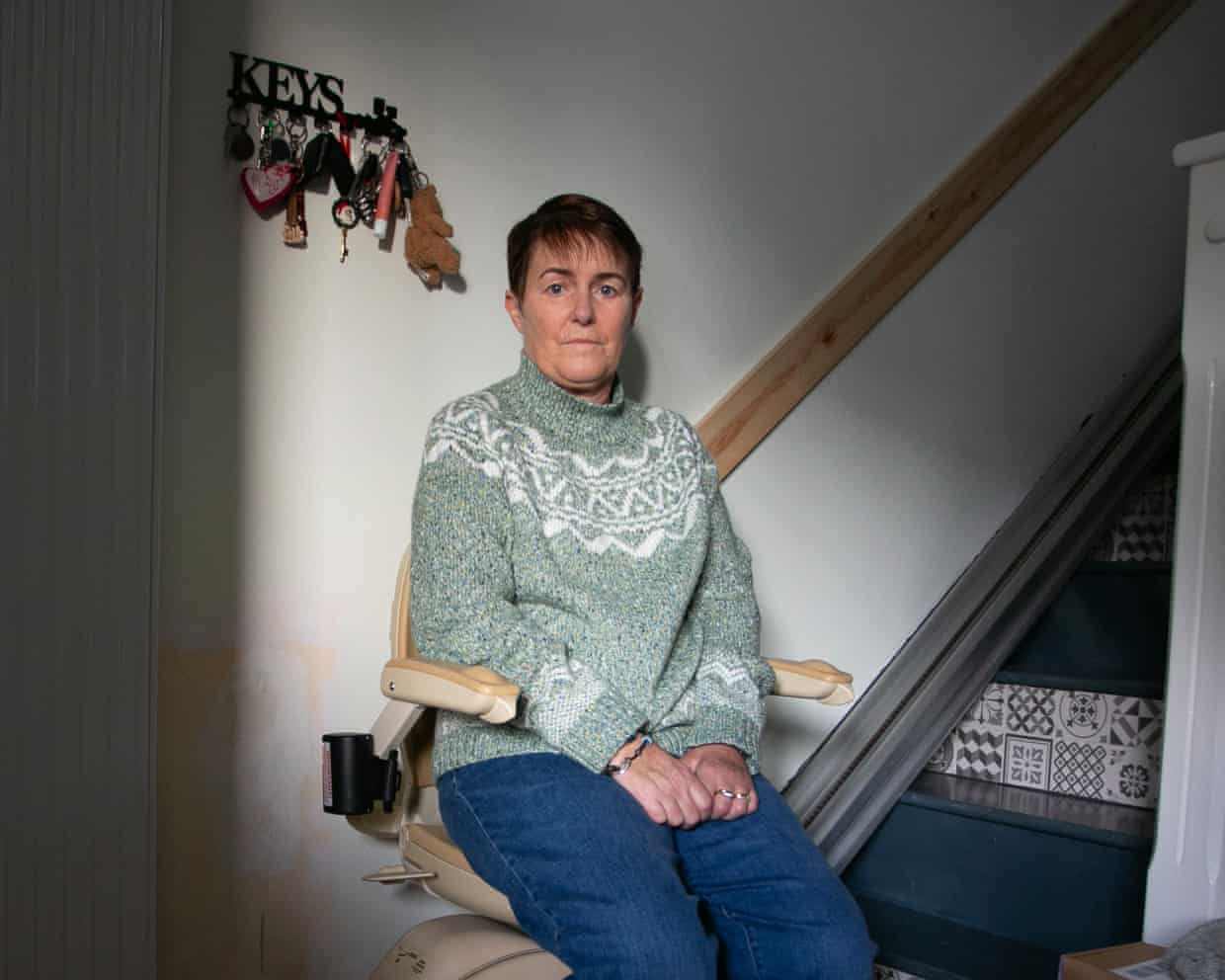
Motor neurone disease patients in England die waiting for home adaptations, campaigners say
People with motor neurone disease (MND) are dying waiting for grants to make their homes fit to live in due to a huge backlogs in applications, campaigners have said.The MND Association has found it takes an average of 375 days for people in England to get essential home adaptations through the government’s disabled facilities grant (DFG) due to growing delays in the system.But a third of people with MND die within a year of diagnosis, and about half die within two years, meaning they are spending the last months of their lives fighting for support, with many dying in unsafe and unsuitable homes.The charity’s chief executive, Tanya Curry, said: “For someone whose condition may progress dramatically in a matter of months, waiting a year or more for vital adaptations is equivalent to being denied them altogether.”Nicole Foster, 56, was diagnosed with MND in May and has spent her entire life’s savings, as well as money fundraised on her behalf, replacing her bathroom with an accessible one after she was told she faced a two to three-year year wait for DFG funding

People in poorest areas of England ‘more likely to need emergency care for lung conditions’
People from the poorest backgrounds in England with serious lung conditions are more likely to be admitted to hospital for emergency care than their more affluent counterparts, according to research.Analysis of NHS admissions data for November by Asthma + Lung UK found people from the most deprived backgrounds in England were 56% more likely to be admitted for emergency care, while 62% were more likely to be readmitted within 39 days of an emergency admission, which is linked with an increased chance of dying.The research also found that people in deprived areas were almost twice as likely to be admitted to hospital for a respiratory condition.One expert said the findings should act as a wake-up call to end the “postcode lottery”.The highest rates of chronic obstructive pulmonary disease (COPD) admissions per population are in deprived areas including Blackpool, Manchester, Hastings and Burnley

One in eight of 14- to 17-year-olds in Great Britain say they have used nicotine pouches
One in eight teenagers aged 14 to 17 have used nicotine pouches, a survey has found, adding to health experts’ concern about their growing popularity.Users hold the small sachets, which look like mini-teabags and are often flavoured, in their mouths to enjoy the release of the nicotine they contain. They are also known as “snus”.Unlike smoking the pouches do not raise the risk of cancer, but they have caused alarm because of the fear that users could become addicted to nicotine and suffer mouth and dental problems.A survey of 500 teenagers aged 14 to 17 in England, Scotland and Wales found that 13% have used a nicotine pouch, of whom 30% said they did so at least once a week

Christmas burnout: why stressed parents find it ‘harder to be emotionally honest with children’
Advent calendars, check. Tree and decorations, check. Teachers’ presents, nativity costumes and a whole new ticketing system for the PTA’s Santa’s grotto, check. But the Christmas cards remain unwritten, the to-do list keeps growing, and that Labubu doll your child desperately wants appears to have vanished from the face of the earth.If you’re feeling frayed in the final days before Christmas, you’re not alone

‘We’ve got more in common than what divides us’: a Muslim-Jewish kitchen in Nottingham counters hate and hunger
As antisemitism and Islamophobia rise, a community centre brings people together over shared meals, offering an antidote to food poverty, social isolation and divisionDonate to the Guardian Charity Appeal 2025 hereCommunities are our defence against hatred. Now, more than ever, we must invest in hopeIt’s 2.30pm on a Wednesday afternoon and the Himmah Hub, a community centre in Nottingham, is abuzz with activity. Crates of leftover supermarket food are being carried inside, trestle tables assembled, and volunteers are arriving to prepare meals that will be served in a few hours’ time to anyone who needs one – a queue has already begun to form outside.This is the Salaam Shalom kitchen, known as SaSh, a joint Muslim-Jewish project set up in 2015, and based on one of the core tenets of both faith groups: bringing people together through food

Former EU commissioner and activists barred from US in attack on European tech regulators

Elon Musk, AI and the antichrist: the biggest tech stories of 2025

Activist group says it has scraped 86m music files from Spotify

Chinese robotaxis due in London next year as Lyft and Uber reveal tie-ups

MPs question UK Palantir contracts after investigation reveals security concerns

Extremists are using AI voice cloning to supercharge propaganda. Experts say it’s helping them grow