Christmas burnout: why stressed parents find it ‘harder to be emotionally honest with children’

Advent calendars, check.Tree and decorations, check.Teachers’ presents, nativity costumes and a whole new ticketing system for the PTA’s Santa’s grotto, check.But the Christmas cards remain unwritten, the to-do list keeps growing, and that Labubu doll your child desperately wants appears to have vanished from the face of the earth.If you’re feeling frayed in the final days before Christmas, you’re not alone.
But research suggests this festive overload doesn’t just leave parents tired and irritable – it may also make it harder to be emotionally honest with their children.A longitudinal study tracking nearly 300 UK parents through the Christmas period found that as burnout rises, parents are more likely to suppress how they really feel in subsequent moments, with potential consequences for their own wellbeing and for how children learn about emotions.Parental burnout is a relatively new concept, describing chronic exhaustion, emotional distancing and loss of fulfilment tied specifically to parenting.It has been linked to depression, relationship conflict and impaired parenting, but most previous studies have relied on one-off surveys, offering only a snapshot of a problem that can fluctuate from day to day.To better understand how burnout unfolds, Dr Ziwen Teuber at the University of Luxembourg and colleagues recruited 293 UK parents – chosen in part for the country’s cultural and socioeconomic diversity – and tracked their experiences in real time across the festive season using brief smartphone surveys sent several times a day.
“We were particularly interested in the Christmas period because it’s a time when parenting stress often intensifies,” said Teuber.“Routines change, social expectations increase, financial pressure rises and parents often feel responsible for creating enjoyable holiday experiences for their children – amplifying stress, while simultaneously reducing the resources parents usually rely on for recovery.”Teuber expected that parents who expressed their real feelings would be better protected against burnout.She found that the more burned-out parents felt, the more likely they were to put on a brave face for their children.“Instead of sharing how they really feel, parents tend to suppress their emotions or display emotions they don’t actually feel – for example, pretending to be happy when they are exhausted or overwhelmed,” she said.
While this may feel helpful in the short term, “in the longer term it’s not beneficial – either for parents’ mental health or for parent-child interactions”.For instance, parents may risk storing up more stress for themselves, while their children miss out on learning that all emotions – including difficult ones – are normal and manageable, she explained.The research was published in Communications Psychology.A separate analysis of the same dataset, published as a preprint, found no significant gender differences in overall levels of parental burnout.However, mothers carried more of the cognitive load.
“They did more of the planning, organising and thinking about everything related to Christmas,” Teuber said,Patrik Bogdán, a psychologist at the University of Pécs in Hungary, who recently co-authored a review of the impact of parental burnout on family wellbeing, said the research challenged the assumption that good emotion-regulation skills alone protect parents,Even parents who know how to manage their emotions can struggle when stress accumulates faster than they can recover,“Christmas is often portrayed as a time of love, togetherness and slowing down, but for many families it is more accurately characterised by haste and increased demands,” Bogdán said,The myth of the “perfect Christmas”, he added, can further fuel self-criticism and emotional exhaustion.
Burnout is not a personal failing but “a natural response to prolonged life stressors”, Bogdán said.Anita Cleare, a UK-based parenting coach and author of The Work/Parent Switch, described parental burnout as an “occupational hazard” of modern family life.“When pressure to perform outstrips our resources, burnout is highly likely,” she said.The run-up to Christmas brings an endless list of expectations – Elf on the Shelf, nativity plays, teacher gifts, Advent calendars – yet the emotional detachment and disconnection that accompanies burnout “is the complete opposite of the happy family time we are trying to create”, said Cleare.“The point of Christmas is to relax and enjoy each other’s company and yet parents are so busy with the trimmings that we have no emotional bandwidth left with which to connect with our kids.
”Her advice is blunt: do less,“Take the short cuts that save time so that you have time to relax and enjoy being with your family,Children would rather snuggle on the sofa with you eating toast than have to sit at a table eating brussels sprouts,”Do less: Cleare said one of the biggest drivers of parental burnout is the pressure to “do Christmas properly”,“Parents don’t need every tradition.
You don’t have to have Christmas pyjamas and festive duvet covers just because other people do,” said Cleare.“Choose the traditions that have meaning for you, that create the experiences you want, and which embody your family values.And just do those.”Acknowledge stress instead of masking it: Teuber, said parents often suppress their real emotions to try to protect their children, but this can backfire.Calm, age-appropriate honesty – such as saying you feel tired or overwhelmed – helps children learn that difficult emotions are normal and manageable, while reducing emotional strain on parents themselves.
Build in moments of recovery: Burnout tends to worsen when parents have no opportunity to recover,Even short breaks – a walk, a lie-down, a few quiet minutes – can help prevent stress from accumulating across the day,“If it all gets a bit much, have a sentence you can say and a place you can retreat,For example: “I’m feeling a bit stressed, I’m going to go lie down for a few minutes and rest,” suggested Cleare,“Modelling to our children healthy coping strategies supports their emotional regulation as well as our own.
”Share the emotional and mental load: Both Teuber and Cleare emphasised the importance of partner support.Sharing Christmas planning, shopping and organising – or simply feeling emotionally supported – can significantly reduce pressure.Lower self-imposed standards: Bogdán said parental burnout often affects those who place the highest demands on themselves.“It is essential to understand that parental burnout is not a problem of “bad parents.On the contrary, it often affects those parents who strive hardest to meet the ideal of the perfect parent and who consistently place high demands on themselves,” Bogdán said.
“Over time, this persistent pressure to meet unrealistic standards can lead to exhaustion and burnout.Reducing excessively high self-imposed expectations is therefore a crucial step.”

Gold and silver hit record highs amid rate-cut bets and Venezuela tensions – business live
Today’s UK national accounts shows that the Household Saving Ratio decreased this quarter by 0.7 percentage points to 9.5%.That was due to a fall in non-pension saving, an indication that people put less money aside in the July-September quarter.The households’ saving ratio is estimated to be 9

Toy touts, random spins and frantic bidding: the murky side of live auction site Whatnot
Christmas is fast approaching, the shopping days are ebbing away, and in one corner of the internet, the rush to grab highly prized Pokémon trading cards is boiling over into a competitive frenzy.“Got any cheap Mew?” asks one buyer, deploying the frantic tone of an addict, albeit one craving a rectangle depicting a creature from the all-conquering Japanese media franchise.Yet more buyers are gathering for a “break” – a session in which they can bid for merchandise such as cards featuring Pokémon or elite footballers, drawn at random from a real or virtual box.This is the little-known but fast-growing empire of Whatnot, a “live auction” website and app startup that might best be described as a cross between eBay and the time-honoured cable TV shopping channel.Its stated mission, aside from profit, is to enable anyone to “turn their passion into a business and bring people together through commerce”
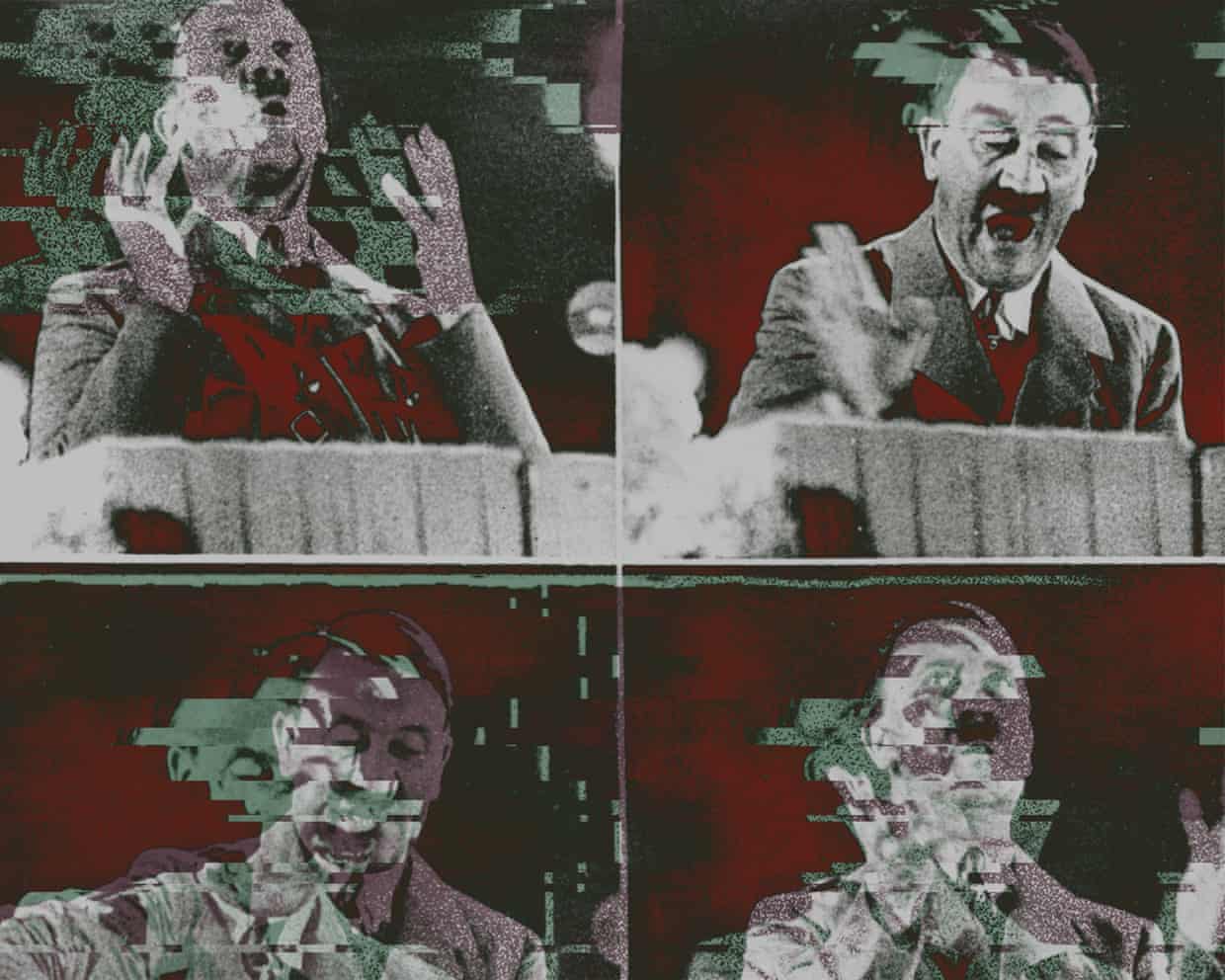
Extremists are using AI voice cloning to supercharge propaganda. Experts say it’s helping them grow
While the artificial intelligence boom is upending sections of the music industry, voice generating bots are also becoming a boon to another unlikely corner of the internet: extremist movements that are using them to recreate the voices and speeches of major figures in their milieu, and experts say it is helping them grow.“The adoption of AI-enabled translation by terrorists and extremists marks a significant evolution in digital propaganda strategies,” said Lucas Webber, a senior threat intelligence analyst at Tech Against Terrorism and a research fellow at the Soufan Center. Webber specializes in monitoring the online tools of terrorist groups and extremists around the world.“Earlier methods relied on human translators or rudimentary machine translation, often limited by language fidelity and stylistic nuance,” he said. “Now, with the rise of advanced generative AI tools, these groups are able to produce seamless, contextually accurate translations that preserve tone, emotion, and ideological intensity across multiple languages

A tape measure, a metal detector and a spirit level: 25 surprisingly useful things you can do with your phone
While many use our phones predominantly to doomscroll, smartphones have a range of little-known functions that could make life better and easier – from heart monitoring to even developing camera filmOur smartphones are magical things – far more than dopamine drip providers and a way to keep in touch with friends and family. Using the built-in features and easily available additional apps, there are plenty of clever things you can do with your smartphone.The iPhone’s Measure app uses augmented reality and the device’s camera to calculate everything from ceiling heights to room dimensions – handy for those DIY tasks that require a quick decision. And, good news for parents, Apple also points out that you can use it to measure a person’s height: the digital equivalent of etched markings on the wall.Metal detectors cost a pretty penny, but many modern devices have built-in magnetometers designed to help improve the accuracy of GPS within apps

Mitchell Starc urges ICC to take action on Snicko as confidence in system dwindles
Australian fast bowler Mitchell Starc has urged the International Cricket Council to step in and pay for a standard suite of umpiring technologies following a collapse of confidence in the Ashes’ decision review system during the Adelaide Test.The England team were left frustrated when a miscalibrated “Snicko” system cost them the crucial wicket of Alex Carey on the first day of the Test, and coach Brendon McCullum lodged a complaint in the wake of the decision.Day two only amplified calls for the system to be replaced after two more contentious decisions were made when Jamie Smith was at the crease, the first giving him a reprieve despite the batter appearing to glove the ball. Amid the Australians’ exasperation, Starc could be heard on the stump mic declaring Snicko should be “sacked”.Speaking after the Test, the fast bowler said he understands how fans, officials and broadcasters have become frustrated

NFL week 16: Steelers edge Lions in thriller, Jaguars stun Broncos, Panthers beat Bucs – as it happened
I don’t think there is anything I can add to that absolutely crackers ending. Pittsburgh survive by the skin of their teeth. Mike Tomlin confirms a 19th season without a losing record. Ironman. Goodnight

UK economy entering 2026 amid sharp private sector downturn, says CBI

Sir Alec Reed obituary

‘It can be quite a thankless job’: why driving examiners are quitting

Tinsel and Home Alone back in style as TikTok seeks comfort in #90sChristmas

‘RIP’: Australian media revels in ‘deeply lamented’ death of Bazball after Ashes woe

Wesley Plaisier claims ‘biggest victory’ in stunning upset of Gerwyn Price