Minority groups brace for surge in racism after Reform UK election gains
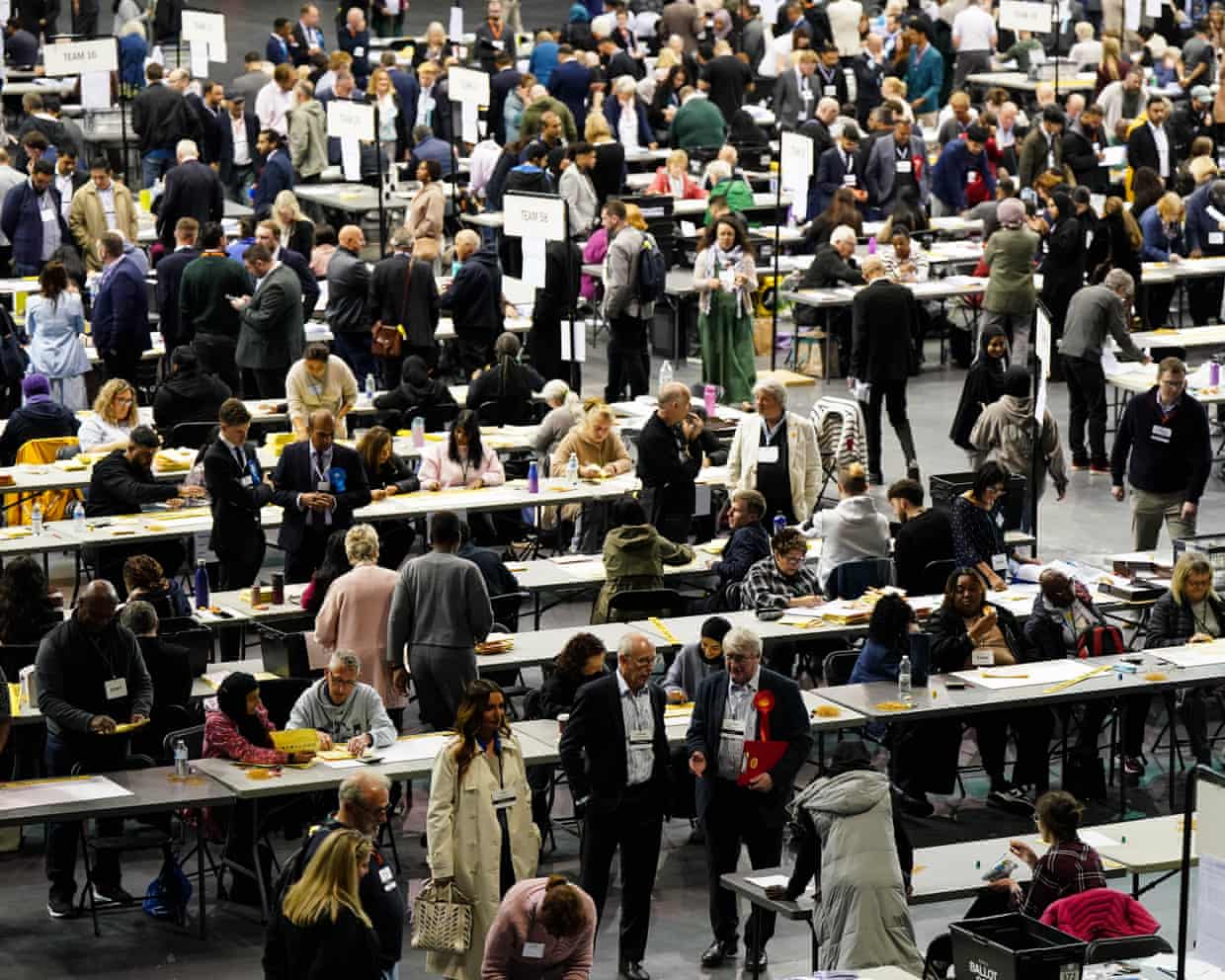
Conceding defeat at the election count at Birmingham’s Utilita Arena on Friday, the outgoing Labour leader of the city council, John Cotton, made a plea.“What I would encourage the next administration in this city to do, whatever form that administration takes, is that it ensures it champions the diversity of this city,” he said.Labour’s 14-year rule of the local authority had come to a crashing end, with Reform emerging as the largest party with 22 councillors so far, followed by the Greens on 19, albeit both parties a long way off the 51 needed for a majority.Labour lost more than 1,400 councillors across the local elections in England on Thursday and lost power in Wales for the first time.Nigel Farage described the election results, in which Labour also lost ground in Scotland, as a “truly historic shift in British politics”.
Reform UK’s success has caused trepidation among many members of minority communities across the UK, with concerns there could now be a rise in hostile rhetoric.Mus, a member of Brummies United Against Racism, a group of neighbours in Birmingham who came together after a far-right group distributed leaflets to their doors, described the success of Reform as “really concerning”.“We are really disappointed.We’ve been campaigning to make sure our city is a safe space for our communities,” she said.“We know if we get a Reform government what that means to our communities – black, brown, migrant communities.
”Shaista Gohir, the chair of the Muslim Women’s Network, based in Birmingham, said people were feeling worried and anxious.“What does that mean for [communities] in terms of our safety, the quality of services that we’re going to receive,” she said.“Is anti-Muslim rhetoric going to really escalate locally? There is a lot of concern.”Similar concerns can be found in other parts of the UK.In Sunderland, a newly elected Reform councillor was suspended days after the election after the anti-racism group Hope Not Hate uncovered a now-deleted post in which he said: “Carnt [sic] believe amount of nigerians in town … should melt them all down and fill in the pot holes.
”Shaista Aziz, an anti-racism campaigner and community organiser based in Oxford, said minority communities were bracing themselves for a surge in racism, with friends and family expressing fears about being able to live safely in the UK,“Many British Muslim communities feel scared and intimidated by the Reform victories and also feel sad that their neighbours have voted for a party that openly calls for the deportation of members of our communities and can’t call out their councillors for their deeply racist rhetoric,” she said,Talat Yaqoob, an equalities campaigner based in Edinburgh, said people were worried about their safety and their future after Reform won 17 seats in the Scottish parliament, taking joint second place with Labour behind the SNP,“We know marginalised communities are worried about Reform’s wins and how these wins are interpreted on the ground by those who are already targeting them,” Yaqoob said,“They are worried for their safety, they are worried about their futures.
Now that we have some Reform MSPs, they need to be held to account, they must be held to the standards we expect of those with the privilege of public office – that means calling out their disinformation and their divisive language.”Pinar Aksu, a campaigner for Refugees for Justice, based in Glasgow, said: “We’ve now entered a new era of politics where racism is in our parliament.” She attended a unity march in Glasgow city centre on Saturday with hundreds of other anti-racism activists.“It was good to come together to shared these feelings of disappointment and anger,” she said.For Gohir, the concerns extend to some independent campaigners in Birmingham.
Akhmed Yakoob, a criminal lawyer with a large social media following, formed an electoral pact with George Galloway’s Workers party to field about 70 prospective councillors across the city.During the campaign trail, he attracted controversy after he was heard saying in Sky News footage: “Zionists control everything”.Yaqoob also described a video of Zack Polanski, the Green party leader, dancing at event in Trafalgar Square as “degeneracy”.Yakoob has denied allegations of antisemitism.A Labour councillor in Birmingham, David Barker, said it had been the worst campaign he had fought in and that “homophobia, transphobia are more acceptable now”.
“It really doesn’t represent, I think, the way most people in Birmingham feel,” he said.“But unfortunately, in a deeply divided election when you can win with 20% of the vote, you are going to get sometimes a minority view winning.”At the election count on Friday, the Guardian asked the Reform MP Richard Tice for a response to the concerns some communities in Birmingham may feel about the rise of Reform.Tice interrupted several times and said: “If they were fearful, why would they be voting for us?” He added: “I’m concerned for the Jewish community and about the antisemitism, the abuse they get, and I want people at the Guardian and other lefty newspapers to focus on that rather than one other particular community.Are we clear?”For Mus, the work of her campaign group will only accelerate in the face of Reform’s gains.
“We worry about the implication for residents in our city, but in our responses now we have to work harder, we have to double our efforts because our futures depend on it,” she said,“We’re not going to allow them to divide us,”Reform UK and Akhmed Yakoob have been approached for comment,
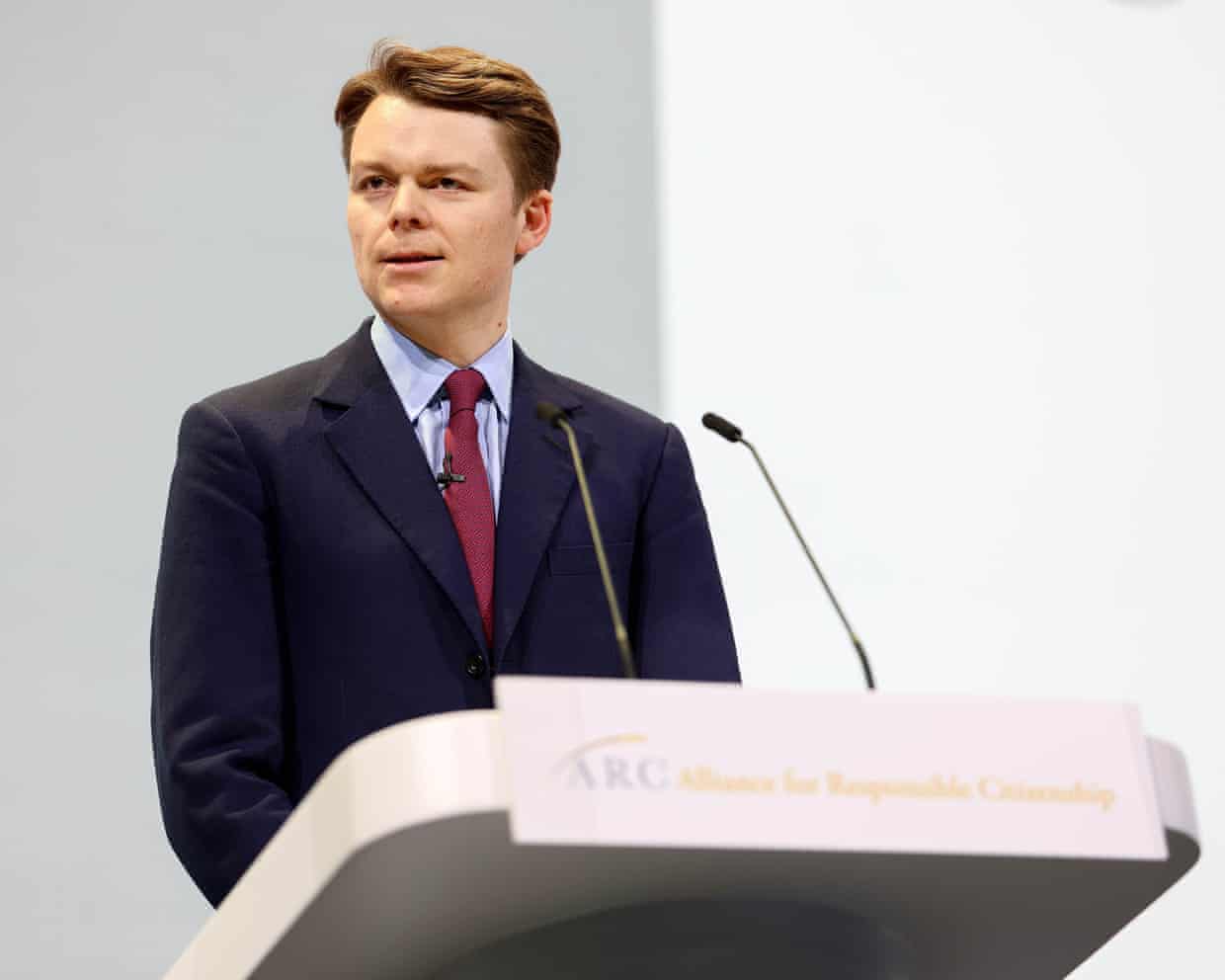
Who is Louis Mosley, the man tasked with defending Palantir against its critics?
The hall was packed with rightwing radicals when Louis Mosley heralded a coming revolution. Just as Oliver Cromwell – that “crusader for Christ and liberty” – routed King Charles I’s royalists, “a similar revolution is brewing today”, said the UK and Europe boss of Palantir. Globalism’s “twilight” was upon us, he said in a speech dotted with admiring mentions of the podcaster Joe Rogan and “Elon’s Doge”.It was not a typical peroration for a big UK government contractor with more than £600m in deals with the NHS, the Ministry of Defence and police. But Palantir, the world’s most controversial tech company, is no typical contractor

AI-powered surveillance company Palantir created a chore coat. Great, now I have no choice but to burn mine | Van Badham
It’s taken me years to find a chore coat with a cut that flatters my big tits but, now that I finally own one, I want to incinerate it.Such is the power of brand contamination; infamous data surveillance megacorp Palantir has decided to bang a logo on a chore coat to sell as corporate merch.Chore coats are the traditional short denim or twill jacket of the 19th-century French working class. Palantir, however, is a company whose public words and commercial-in-confidence activities are inspiring local calls to have its contracts cancelled and its business banned.The gentle French garment is now as cursed as whatever “Marie Amazonette” will ever wear to the Met Gala
‘Being human helps’: despite rise of AI is there still hope for Europe’s translators?
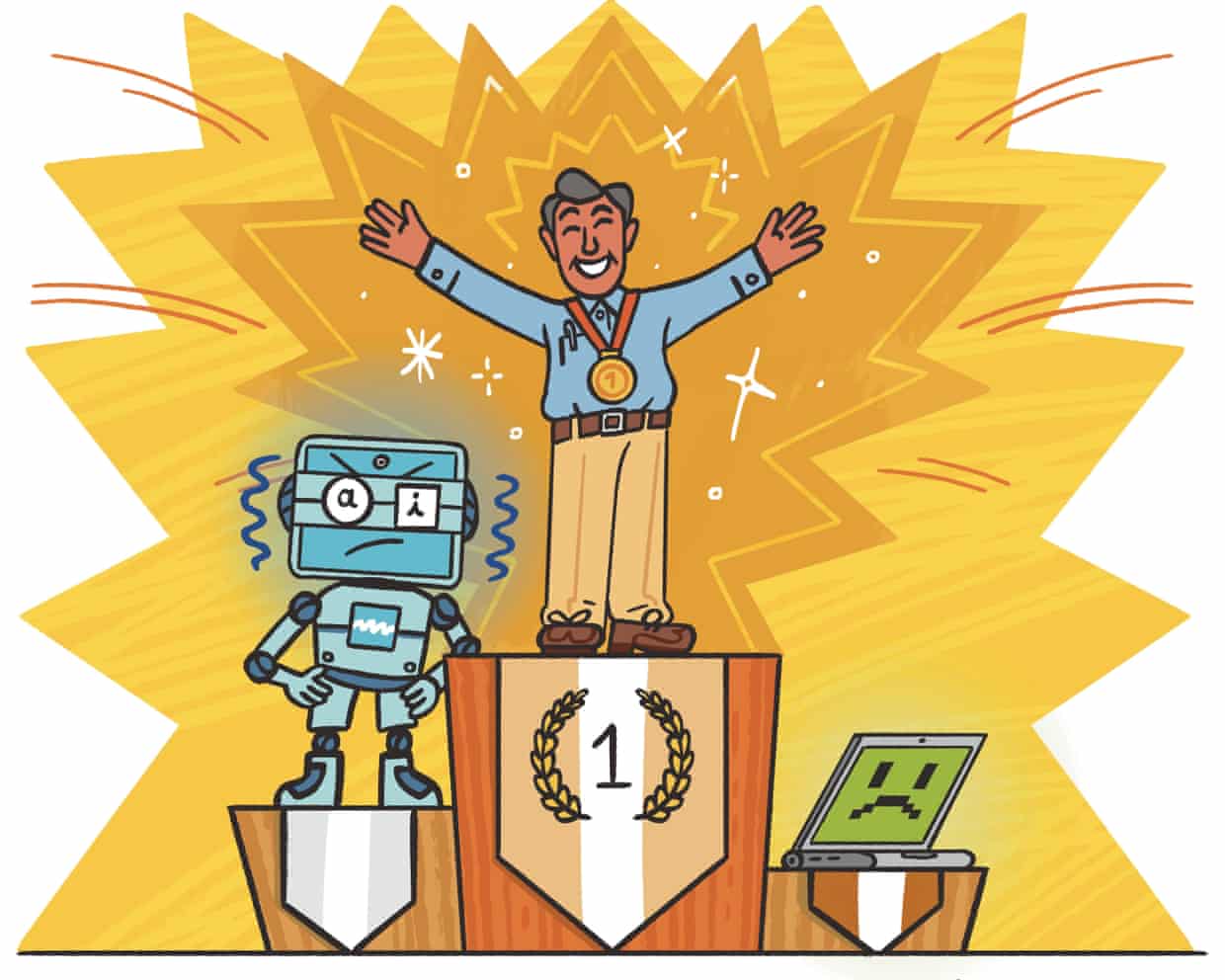
In February 2022, while he was plugging away at rendering the US writer Dana Spiotta’s novel Wayward into French, the literary translator Yoann Gentric decided he needed a bit of light relief. He would test whether AI could put him out of work.Gentric had been grappling with a short non-verbal sentence that described the book’s protagonist’s feelings upon opening a window: “Bright, sharp night air, bracing.” He put the prompt into DeepL, a neural-network-powered machine translation engine that regularly outperforms Google Translate in accuracy assessments.The proposed translation was reassuring, with his job security in mind: L’air de la nuit, vif et vif, était vivifiant (The night air, lively and lively, was enlivening

UK schools should remove pupils’ online photos as AI blackmail threat grows, say experts
UK schools should remove pictures of pupils’ faces from their websites and social media accounts because blackmailers are using them to create sexually explicit images, experts have said.Child safety experts and the UK’s National Crime Agency (NCA) warn that criminals are using AI to manipulate photos of children and then demand cash not to publish them.They are recommending educational institutions remove identifiable pictures of children from their websites and social media accounts – or consider not using them at all.The Internet Watch Foundation (IWF) said an unnamed UK secondary school had recently been subjected to a blackmail attempt after criminals used the institution’s website or social media accounts to take photos of schoolchildren and then, using AI tools, turned them into child sexual abuse material (CSAM). The blackmailers sent the images to the school and threatened to publish them online if they did not receive money

Meta sues Ofcom over fines regime for breaches of Online Safety Act
Meta has launched a legal challenge against the UK’s media regulator over the fees and fines regime it is enforcing under landmark digital safety legislation.The Facebook and Instagram owner is claiming that Ofcom’s methodology for calculating the charges is flawed and should not be based on a company’s global revenue. Breaches of the Online Safety Act can be punished by fines of up to 10% of qualifying worldwide revenue (QWR) or £18m – whichever is higher.In the case of Meta, which reported revenues of $201bn last year, Ofcom could in theory impose a fine of $20bn for breaches. Under regulations introduced in September, Ofcom’s fees will also be based on a proportion of an organisation’s QWR and apply to businesses that made more than £250m of this revenue a year

‘No one has done this in the wild’: study observes AI replicate itself
It’s the stuff of science fiction cinema, or particularly breathless AI company blogposts: new research finds recent AI systems can independently copy themselves on to other computers.In the doom scenario, this means that when the superintelligent AI goes rogue, it will escape shutdown by seeding itself across the world wide web, lurking outside the reach of frantic IT professionals and continuing to plot world domination or paving over the world with solar panels.“We’re rapidly approaching the point where no one would be able to shut down a rogue AI, because it would be able to self-exfiltrate its weights and copy itself to thousands of computers around the world,” said Jeffrey Ladish, the director of Palisade research, a Berkeley-based organisation which did the study.The study is one more entry in a growing catalogue of unsettling AI capabilities revealed in the past months. In March, researchers at Alibaba claimed to have caught a system they developed – Rome – tunnelling out of its environment to an external system in order to mine crypto

Dubois rewrites quitter narrative in strangely uplifting night for boxing

Scotland’s Six Nations slump raises questions for new era under Sione Fukofuka | Sarah Rendell

Hull KR set up clash of titans in Challenge Cup final against Wigan
AFL to plough funds into addressing racism as league grapples with Indigenous drop-off

‘What does that mean?’: Wembanyama confused after playoff ejection for elbowing Reid

Middlesex, Durham and Essex wrap up wins: county cricket, day three – as it happened