Cabinet ministers warn mutinous MPs about trying to oust Keir Starmer
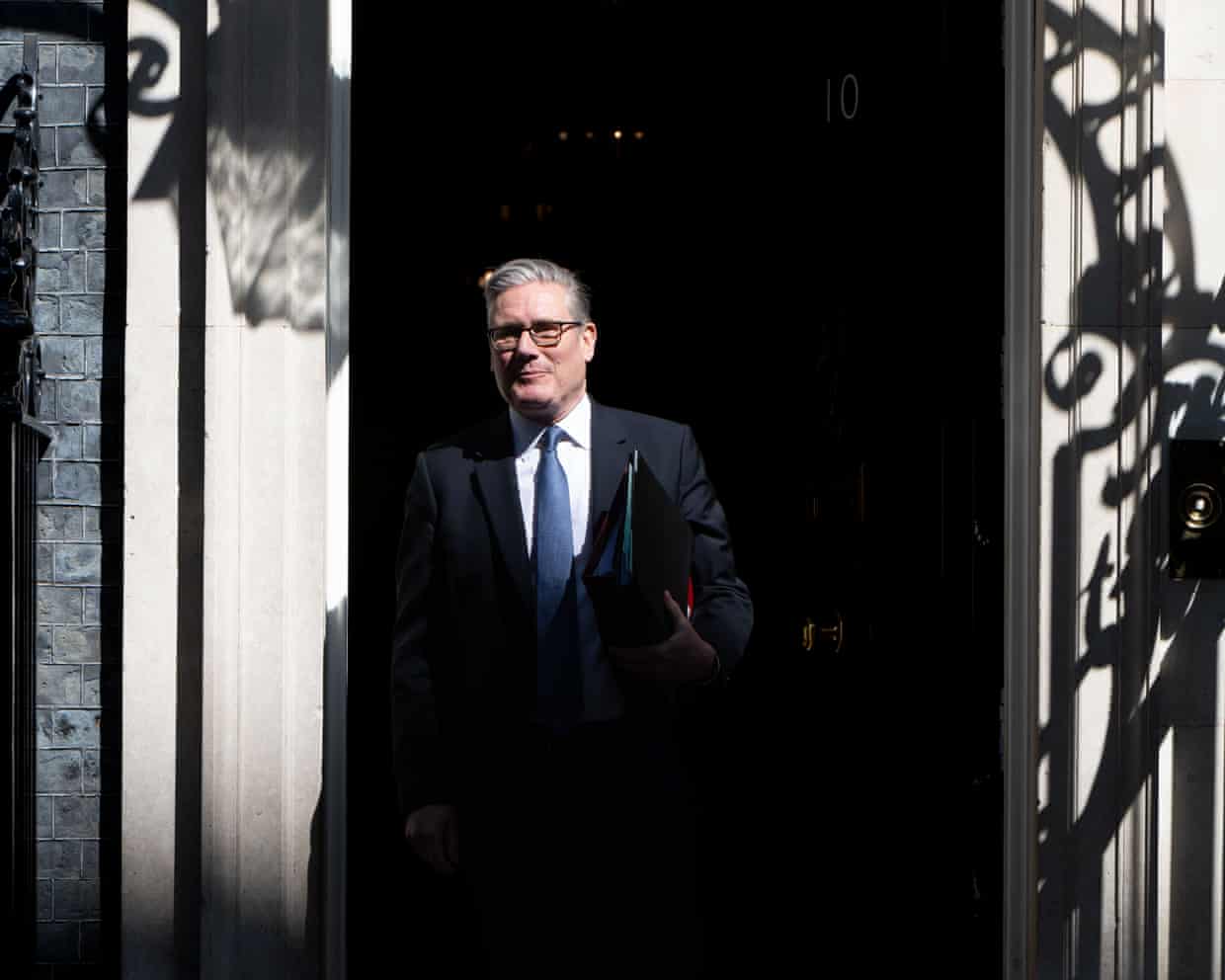
Cabinet ministers have told mutinous Labour MPs that any attempt to oust Keir Starmer after a potentially disastrous set of election results this week would unleash chaos for the party that would not be easily overcome.Several, however, told the Guardian that even with the prime minister’s determination to stay in Downing Street after Thursday’s vote, the mood on the backbenches was febrile and events could yet spiral out of control.They also admitted that – while they would discourage any coup against Starmer now, they did not expect him to lead the party into the next election.“When your personal brand is so poor, it is seldom retrievable,” one said.Labour faces losing more than 1,500 council seats across England, a struggle for second place in Scotland and the prospect of losing Wales after a century of domination, leaving thousands of angry local politicians who see themselves as victims of the government’s unpopularity.
Before they headed to their constituencies last week, MPs were gripped by speculation over Starmer’s future, with Angela Rayner, Wes Streeting and Andy Burnham – despite not being eligible – seen as likely successors.Some have argued Starmer should set out a timetable for his departure – and have suggested that a group of cabinet ministers might be prepared to tell him that his time was up if the results are as bad as predicted.The Guardian understands, however, that the appetite inside the cabinet for a leadership contest is severely limited, even among those ministers who believe that he will step down before the 2029 general election.“We have a role to play and we’ll certainly not want chaos,” one said.“That’s not in anybody’s interests.
”Another indicated there was no group in the cabinet that was planning to move collectively, and a third said: “I don’t want new leaders, plots, pacts, talk of orderly transitions which shut out the public,Will there be cabinet resignations or a move against Keir? There could be, but I won’t be part of it,”A fourth said that only Starmer would decide when he stood down,“He’s in no mood to be pushed around by colleagues,He’s not daft, he knows we need to improve our polling position.
”Several ministers warned of the danger of unintended consequences.“Those of us who are sane don’t really want a leadership contest or a timetable for Keir’s departure that undermines the party’s position, but we recognise that when the mood is febrile things can kick off,” one said.“We wouldn’t be thanked for picking our own leader three years out from the next election.It’s not that things are perfect, it’s just that it’s premature.”Neither Rayner, the former deputy PM, nor Streeting, the health secretary, are thought likely to move first.
Allies suggest they would only enter a contest if it were triggered by somebody else,Rayner also still has to resolve her tax affairs,Members of Labour’s national executive committee, which blocked Burnham from standing in the Gorton and Denton byelection in February, do not believe there is a route for him back to parliament, despite reports at the weekend,The best public interest journalism relies on first-hand accounts from people in the know,If you have something to share on this subject you can contact the Guardian's UK Politics team confidentially using the following methods:The Guardian app has a tool to send tips about stories.
Messages are end to end encrypted and concealed within the routine activity that every Guardian mobile app performs.This prevents an observer from knowing that you are communicating with us at all, let alone what is being said.If you don't already have the Guardian app, download it (iOS/Android) and go to the menu.Scroll down and click on Secure Messaging.When asked who you wish to contact please select the Politics (UK) team.
For end-to-end encrypted email correspondence you can create a free Proton Mail account and email us at guardian,politics,desk@protonmail,com,Finally, our guide at theguardian.
com/tips lists several ways to contact us securely, and discusses the pros and cons of each.Ed Miliband, the climate secretary, is said by colleagues to be more likely to try to act as kingmaker for Burnham rather than to go for the top job himself.One friend said he was determined to prevent Streeting from becoming leader.Downing Street has made clear that Starmer would fight any attempt to oust him, with allies saying any putative rivals should think carefully about both the instability any challenge would cause, particularly at a time of conflict and with difficult economic headwinds.They also played down the prospect of a reshuffle, regarded by some as potentially even more destabilising, suggesting Starmer would only undertake one if ministers resigned after the election results and he had to fill the gap.
Writing in the Observer at the weekend, Starmer said: “We have a choice.We could sink into the politics of grievance and division.Or we could rise to this moment – together – in a national effort that matches the scale of the threats and turbulence we face.“When the nation rallied together to deal with Covid, the last government could have channelled that spirit to build a better nation.But instead, they descended into political infighting and let the country slump back to the old status quo.
Not this time.”

AI facial recognition oversight lagging far behind technology, watchdogs warn
Britain’s biometrics watchdogs have warned that national oversight of AI-powered face scanning to catch criminals is lagging far behind the technology’s rapid growth.With the Metropolitan police almost doubling the number of faces they scan in London over the past 12 months and a rising use of the technology by retailers in the UK, Prof William Webster, the biometrics commissioner for England and Wales, said the “slow pace of legislation was trying to catch up with the real world” and “the horse had gone before the cart”.Dr Brian Plastow, who holds the same role in Scotland, warned the technology was “nowhere near as effective as the police claim it is” and said there was a “patchwork legal framework” throughout the UK. He said in England and Wales, police were “really just marking their own homework”.The watchdogs said new laws were needed to govern when and how police forces used live facial recognition technology, with a new regulator to clamp down on misuse

Guilty until proven innocent: shoppers falsely identified by facial recognition system struggle to clear their names
When Ian Clayton, a retired health and safety professional from Chester, popped into Home Bargains one February lunchtime, he was suddenly approached by a stern-looking member of staff.“Excuse me, can you please put everything down and leave the shop now?” she said. Clayton recalled how he was stunned, and it was only as he was briskly walked past the tills towards the exit that he stopped to ask what he had done.“You’ve come up on our system called Facewatch as a shoplifter,” came the reply. “There’s a poster in the window

How does live facial recognition work and how many UK police forces use it?
The Labour government thinks facial recognition technology is “the biggest breakthrough for catching criminals since DNA matching”. It wants all police forces to use it and recently announced 40 new vans rigged with live facial recognition cameras to be deployed in town centres across England and Wales.Supporters say it streamlines police work and catches criminals. Opponents fear it violates civil liberties and can be biased against minorities.The simplest systems check faces captured on CCTV, mobile phones, dashcams, social media and doorbell cameras against mugshots held on the police national database

UK ‘invention agency’ grants £50m of public money to US tech and venture capital firms
Britain’s “invention agency” has pledged £50m of UK taxpayer money to US tech companies and venture capital projects.Dreamed up by Dominic Cummings to fund “crazy” ideas, the Advanced Research and Invention Agency (Aria) is meant to “restore Britain’s place as a scientific superpower”.But a joint investigation by the Guardian and Democracy for Sale, an investigative website, has established that more than an eighth of the agency’s £400m in research and development funding over the past two years has gone to 14 US tech companies and venture capital groups, in some cases, with no clear return for the UK or Aria.One of these companies, Rain Neuromorphics, is also backed by the OpenAI chief executive, Sam Altman, and was reported to be near collapse last year, shortly after winning Aria money. It did not respond to a request for comment; two of its founders appear to have left the company
Under a cloud: the growing resentment against the massive datacentres sprouting across Australian cities
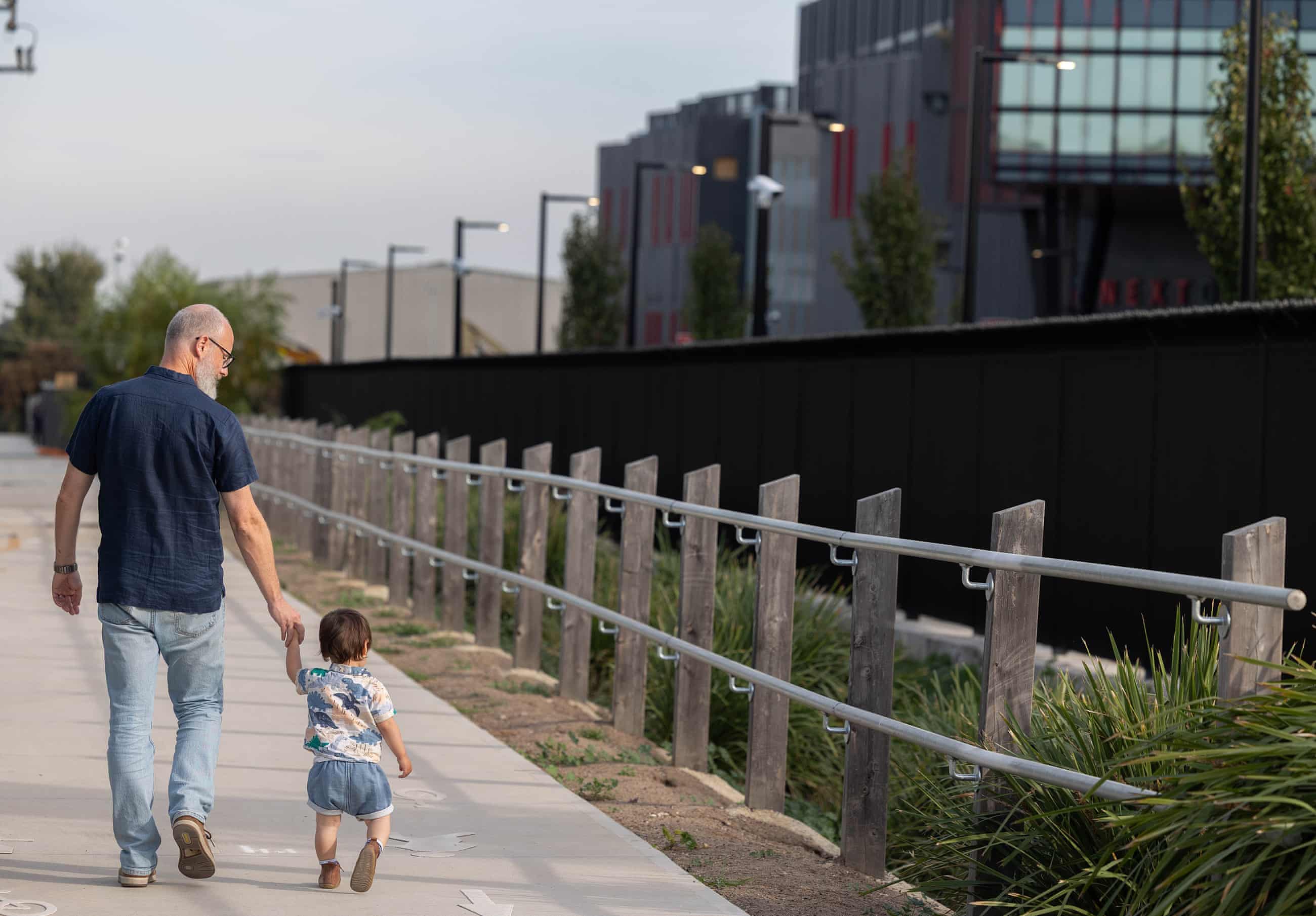
Residents say AI factories with unknown environmental impacts are being rushed into development as proponents argue Australia must ride the data boom or be left behindFollow our Australia news live blog for latest updatesGet our breaking news email, free app or daily news podcastWhen West Footscray resident Sean Brown takes his 19-month-old boy to the park, their walk passes an imposing new building cheerily spruiked as “Australia’s largest hyperscale AI factory”, a datacentre called M3.He hates it: the construction noise from its constant expansion, the looming towers and the insistent background hum, the exhaust from the growing array of diesel generators that can help power the ranks of servers inside.And he worries what it represents for his young child’s future.“He is growing – neurologically, pulmonarily, physically – in the shadow of a facility whose cumulative environmental impact … has never been assessed,” Brown says.“They’re building something which is, frankly, terrible for the community

Parents already have controls over smartphones – they should use them | Letters
A crucial facility seems to be missing from the coverage of smartphones in schools – and outside (I was wrong about the danger of smartphones in schools. It’s far, far worse than I thought, 22 April). Parental controls, which both Apple and Android have, enable downtimes to be set to ensure phones don’t work in school. They can also set downtimes for outside school and block inappropriate apps.We use these for our 14-year-old daughter to keep her safe and manage the addictive effects of phone use
HSBC hit by $400m UK fraud-related charge; Rachel Reeves ‘clashed with Scott Bessent’ over Iran war criticism – business live

Vodafone to take full control of UK mobile operator in £4.3bn deal

GameStop shares fall 10% after CEO skirts questions over eBay acquisition details

AI platforms reference Nigel Farage more than other leaders when prompted on UK politics, study shows
Carlton fined $75,000 for mishandling of Elijah Hollands’ mental health episode

These are the questions I would ask the Enhanced Games … if they would let me | Sean Ingle