Under a cloud: the growing resentment against the massive datacentres sprouting across Australian cities
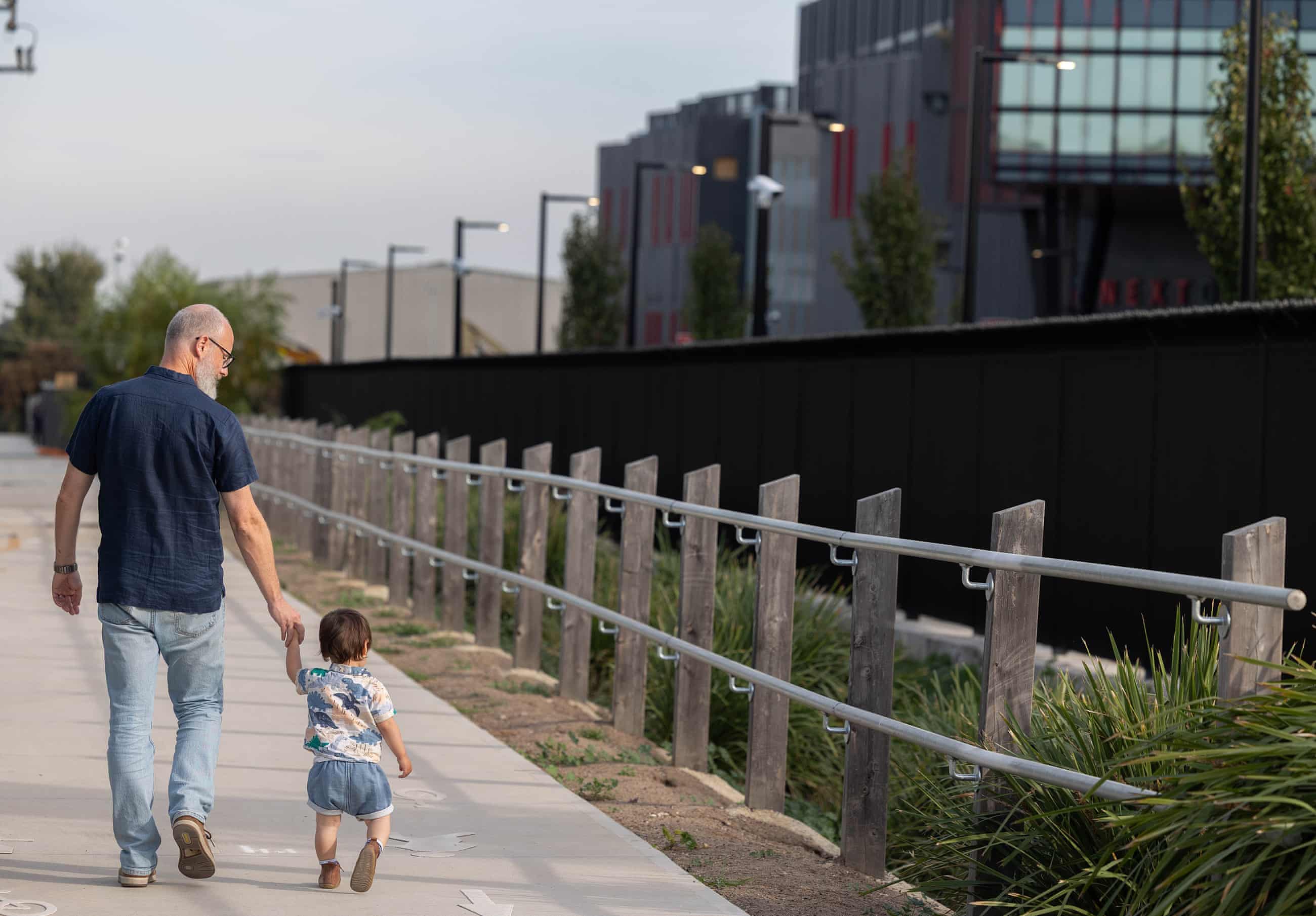
Residents say AI factories with unknown environmental impacts are being rushed into development as proponents argue Australia must ride the data boom or be left behindFollow our Australia news live blog for latest updatesGet our breaking news email, free app or daily news podcastWhen West Footscray resident Sean Brown takes his 19-month-old boy to the park, their walk passes an imposing new building cheerily spruiked as “Australia’s largest hyperscale AI factory”, a datacentre called M3.He hates it: the construction noise from its constant expansion, the looming towers and the insistent background hum, the exhaust from the growing array of diesel generators that can help power the ranks of servers inside.And he worries what it represents for his young child’s future.“He is growing – neurologically, pulmonarily, physically – in the shadow of a facility whose cumulative environmental impact … has never been assessed,” Brown says.“They’re building something which is, frankly, terrible for the community.
There’s no upside to it and it’s just getting worse.”The centre has already grown several times, fuelling the endless appetite of this age of digital services and generative AI.By the end of 2027, should fast-track planning approval be granted by the Victorian government, this datacentre less than 10km from the Melbourne CBD will have doubled in size again to cover 10 hectares, drawing 225MW of power and running 24/7.Diesel generators on the site are reportedly expanding from 40 today to 100 at completion.Eight months ago, NextDC’s chief executive, Craig Scroggie, posted a video of the M3 site on LinkedIn and said the speed and the scale of its expansion were “stunning”.
“We’re building Australia’s largest hyperscale AI factory purpose-built for the new AI era of accelerated computing,” he wrote.“This is how we build Australia’s digital future: speed, scale, sovereign, sustainable & secure.”Australia is under pressure to compete in the growing datacentre industry amid the promises of an AI boom.New investments are hailed as vital downpayments on the country’s economic future.But those living closest to these massive new data halls feel that their neighbourhood peace is being sacrificed on the altar of progress.
Guardian Australia spoke to residents in three states about their concerns, which are emblematic of the growing opposition to these developments across the country.Those living closest to datacentres argue they should be moved further away from residential areas in the country’s biggest cities.The M3 datacentre is “just a really inappropriate location for what is pretty much [an] intensive industrial building,” Brown says.“It’s right next to people’s houses.”Brown says the original zoning decisions did not take into account the sheer scale of the datacentres.
He works in the tech sector, and understands the need for datacentres,But he argues the datacentre boom needs to be planned better,“It’s like they’ve just gone: ‘Let’s just maximise this and don’t even consider the impact,” he said,A spokesperson for NextDC says the project is being delivered in accordance with local and state government processes and regulatory requirements, and it has processes in place to “manage and respond to feedback”,The Maribyrnong local council has expressed its opposition to the expansion, but it is now awaiting planning approval from the Victorian government.
A spokesperson for the Victorian planning minister, Sonia Kilkenny, said the proposal to expand the datacentre was under consideration and it would be inappropriate to comment further,Near Lane Cove River, 9km from the Sydney CBD, a proposal for a new 90MW datacentre named Project Mars is now being considered by the NSW government,It would be the fourth in the area: datacentres take up 40% of local industrial zones,The council argues the nearly 22,000sqm, three-storey centre exceeds height limitations and would be visually prominent next to bushland and residential zones,Local resident Daniel Bolger says it will sit next to what he calls “the lungs of Lane Cove: Blackman Park.
It used to be a tip, but was turned into a park and sporting hub “used by 50% of the suburb” each weekend, he says,“[Now] they’re going to put datacentres right next to it,”He says the council has been sidelined, and there are community concerns over the proximity to schools of the centres being developed, and the pure power draw,“This is the cluster issue,” Bolger says,The NSW planning minister, Paul Scully, says the public are encouraged to have their say during the consultation and a full merit-based assessment, including an assessment of energy needs, will be conducted before a decision is made.
“Datacentres are an important part of the infrastructure and digital architecture of modern economies,” he says.The developer, Goodman Property, did not respond to a request for comment.In Hazelmere, 15km east of Perth in Western Australia, community opposition is growing to a planned 15,000sqm, three-storey, up-to 120MW datacentre.“It’s huge.Bigger than a Bunnings warehouse,” Kate Herren, a local resident and a fundraising coordinator for the environmental group Trillion Trees Australia, says.
“The location we feel is wholly unsuitable for a proposal of [this] size and scale,”Walter McGuire, chair of the Bibbul Ngarma Aboriginal Association, says the Noongar people have a role and responsibility to care for the Mandoon Bilya (Helena River),“Giant datacentres belong in industrial areas, not on the banks of our rivers and wetlands,” he says,“[It] is a culturally significant river, and the wetlands that surround it … So we have grave concerns about its impact on the river and the surrounding ecosystem,”The proposal is now before the council.
A spokesperson for the City of Swan said it was unable to comment.A spokesperson for GreenSquareDC, the company behind the project, said it was in an established industrial area with major transport and power infrastructure.“We clearly understand there is interest in this proposal given its proximity to existing businesses and the local school,” the spokesperson says.“These considerations are taken seriously, and GreenSquare is committed to engaging constructively throughout the planning process.”Data Centres Australia’s chief executive, Belinda Dennett, says the industry is aware that construction of these centres can be confronting “particularly where industrial zoned land meets with residential areas”, but maintains developers meet strict environmental and building standards, and were seeking to minimise disruption.
She says Australia has a “significant opportunity” to benefit from datacentre investment, through new businesses and jobs,“These benefits will flow to the local communities that neighbour datacentres too,”On Friday, she told a NSW parliamentary inquiry into the sector that if Australia does not develop its own AI infrastructure, it will become “an importer of someone else’s technology, that has no Australian culture, values or laws built into that”,The alternative, she said: “we build that here and we have some say [and] control over what that looks like”,This article was amended on 3 May 2026.
An earlier version included a caption that incorrectly said a NextDC, rather than a Goodman Group, datacentre development proposal would put a campus next to the Blackman Park oval.

Why we care so much about preserving family recipes
“Chicken, leek, flour, a few more ingredients.” That was it: my grandma’s WhatsApp response to me earnestly asking if she’d mind sharing her time-honoured chicken pie recipe. She wasn’t being obtuse – well, not deliberately. She had simply never before committed a dish that was second nature to paper, let alone an iPhone screen.It wasn’t how she’d learned it and it wasn’t how I’d go on to learn it, either
When it comes to wines, it pays to look beyond the fashionable
The sommelier Honey Spencer, of Sune in east London, struck a real chord on Instagram earlier this year: “I’m so fucking sick of expensive wine,” she lamented. There followed an angry plaint about the “unrelenting rise” in the cost of bottles from “artisans making wine properly … and FORGET BURGUNDY”. In a difficult climate, this is “one of the hardest pills to swallow” for the restaurateur.The Guardian’s journalism is independent. We will earn a commission if you buy something through an affiliate link

Rachel Roddy’s recipe for spaghetti with crab, chilli, herbs and lemon | A kitchen in Rome
My copy of the River Cafe Cookbook is silver, having lost its original blue sleeve some years ago. Naked, the hardback cover is completely plain, so it is my handwriting of “River Cafe blue” along the metallic spine, even though there is little chance of mixing it up with the yellow softback River Cafe Cookbook Two or the emerald cover of River Cafe Cookbook Green.Blue was first published in 1996, a sobering fact, because that’s the same year I enrolled at the Drama Centre London, as well as the year when Pierce Brosnan took on rogue agent Alec Trevelyan (played by Sean Bean) in GoldenEye. That was Brosnan’s debut as James Bond and Dame Judi Dench’s first appearance as M. Brosnan trained at Drama Centre between 1973 and 1976, which is why, when I bought the blue book in 1996, I had good reason to imagine my future career as looking a little like that of Pierce, or Judi, or both

How to turn old pitta into spiced chips – recipe | Waste not
Three years ago, I helped my friend, the chef Sam Webb, set up Babette, a street food stall at Newquay Boathouse. Webb and his team make everything from scratch and, wherever possible, using only local Cornish produce, from their hot honey (sourced from the Rescued Bee) to pitta with freshly milled flour from Cornish Golden Grains; he also grows his own produce with fellow restaurateur Matt Comley at Gannel Valley Gardens.As you might expect, saving food waste is at the top of Webb’s agenda, which is how he came to create waste-saving pitta chips to serve with hummus. It’s a recipe I couldn’t resist, not least because they take minutes to cook. What makes Webb’s pitta chips unique is their wonderful seasoning of sumac, za’atar and sea salt just before serving

Why sweet, chewy dates go perfectly with chocolate – and the best ones to try
I first cemented the allure of the “chew” aged 14, working illegally as a chambermaid (I lied about my age) and finding a guest’s Gummy Bears laid open – a breach I heavily exploited. Recently this chew need has been sated by dates and their use in chocolate as a healthy caramel. Dates do have nutritional benefits over mere sugar: fibre, minerals, antioxidants and make a great pre-workout boost.The Guardian’s journalism is independent. We will earn a commission if you buy something through an affiliate link

The perfect birthday cake: tips for the best blow-out
What’s the best birthday cake?Katie, by email“My mum once made a cake with mini rolls made to look like cats with googly eyes and strawberry lace tails,” says Nicola Lamb, author of Sift and the Kitchen Projects newsletter. And that’s the whole point of a birthday cake, right? It should align with the recipient’s favourite thing: “That could even be a lasagne,” Lamb says. “I’m not at all prescriptive about what you stick a candle into.”Of course, some cakes are a safer choice than others. Take the Victoria sponge: “I don’t think anyone is going to have a problem with a plush vanilla sponge, jam and cream job,” Lamb says
‘We have let them come on to our ground’: Labour fights off Green gains in Leeds
Lucy Powell says Labour has ‘no magic bullet’ as MPs brace for heavy losses in local elections

Reform UK council backs release of beavers amid party row over rewilding

Reform frontbench promotes JCB’s pothole machine after firm’s £200,000 donation
Polanski takes combative approach as Greens enter media spotlight

Badenoch apologises after Bloody Sunday footage used in post defending UK veterans