Badenoch criticised for ‘peddling dangerous fantasy’ about North Sea oil drilling

Kemi Badenoch is “peddling a dangerous fantasy” about North Sea energy in her attempt to reverse a ban on new oil and gas licences, a leading campaign group has said.The Conservative leader is expected to call on the government to lift its suspension of the licences as part of a drive to reduce energy prices, as the party launches a new campaign aimed at boosting the fossil fuel sector.However, critics have questioned the efficiency of the policy, claiming it would be unlikely to cut household bills.Tessa Khan, executive director of the renewable energy campaign group Uplift described it as “vapid, political game playing at the expense of ordinary people”.“Kemi Badenoch is peddling a dangerous fantasy on the North Sea and is completely out of step with the UK public who just want an affordable supply of energy,” Khan said.
“More drilling will do absolutely nothing to lower energy bills, a fact that she knows and members of her Cabinet have admitted.”In 2023, when serving as energy secretary, Conservative MP Claire Coutinho admitted that new licences “wouldn’t necessarily bring energy bills down” but argued they would improve the “security” of supply.Coutinho now has the energy brief in Badenoch’s shadow cabinet.The Labour government last year decided to ban new oil and gas licensing, shifting its focus to homegrown renewable energy.Global oil prices have soared since the strait of Hormuz was in effect closed amid ongoing conflict in Iran, prompting concern about the longer term effect on energy costs.
Badenoch will launch her party’s “get Britain drilling” campaign on Monday on an oil rig off the North Sea, near Aberdeen,She has previously said that drilling in the North Sea is one few ways households can be protected from rising bills, a sentiment echoed by Reform UK leader, Nigel Farage,However, experts have consistently said that North Sea production is too small to influence global prices,The Guardian reported on Saturday that hundreds of new North Sea licences granted by the Conservatives between 2010 and 2024 have so far produced just 36 days of gas, according to research by Uplift and the energy consultancy Voar,However, Badenoch said: “Labour’s ban on new oil and gas drilling licences was stupid when they put it in their manifesto, in the middle of an energy crisis it’s completely crazy.
“Drilling our own oil and gas is about energy security, it’s about financial security, it’s about national security.“It’s more jobs, good for business and provides tax revenues that could be used to bring down bills.”Badenoch is also expected to call on the government to scrap the windfall tax on energy profits and lend more financial support to the fossil fuel industry.Khan described this as “tone deaf” at a time when the public is “incredibly anxious about their bills skyrocketing again”.She added: “Politicians who refuse to acknowledge the reality of the declining North Sea are endangering our security and economy.
Not only that, they are betraying workers who need long-term, secure jobs – which will only now come from renewables – not some pipe dream.”Greg Jackson, the chief executive of green energy company Octopus, argued that drilling for more gas in the North Sea “would have little effect on prices” because the UK is “highly integrated” with the European and global markets.“The USA is often cited as a case where a lot of drilling has kept prices lower,” he said.“On gas, they’re not as integrated with global markets as we are but their oil is – and as a result you see their petrol prices rising a lot during this crisis despite so much domestic production.“More UK oil and gas would give more security of supply if governments controlled exports, but I don’t think the drilling advocates are proposing that.
“And big picture – the oil and gas industry are never going to build ‘excess production’ so there’ll never be meaningful spare capacity in global fossil fuel supply, which is why whenever there’s a big supply shock it has such catastrophic effects on prices.”A Labour spokesperson said: “The awkward truth is Badenoch’s own shadow energy secretary admitted that new licences would not cut energy bills.“Energy bills will be falling this week thanks to the actions of a Labour government that the Conservatives opposed.“The Conservatives and Reform want to outsource Britain’s energy security to fossil fuel markets over which we have no control.Labour is taking back control with record investment in clean homegrown power.
”

‘It feels like they’re pulling figures out of the sky’: UK pet owners welcome crackdown on vet fees
The UK’s competition watchdog has ordered vets to cap written prescription fees at £21, and practices will have to publish price lists in a crackdown on rising fees.The Competition and Markets Authority also said a costcomparison website would be introduced to increase competition and drive down costs.These are just some of the measures due to come into force later this year.The Guardian spoke to pet owners in the UK about their experiences with vet bills. Many felt prices had increased so much that they were becoming difficult to afford
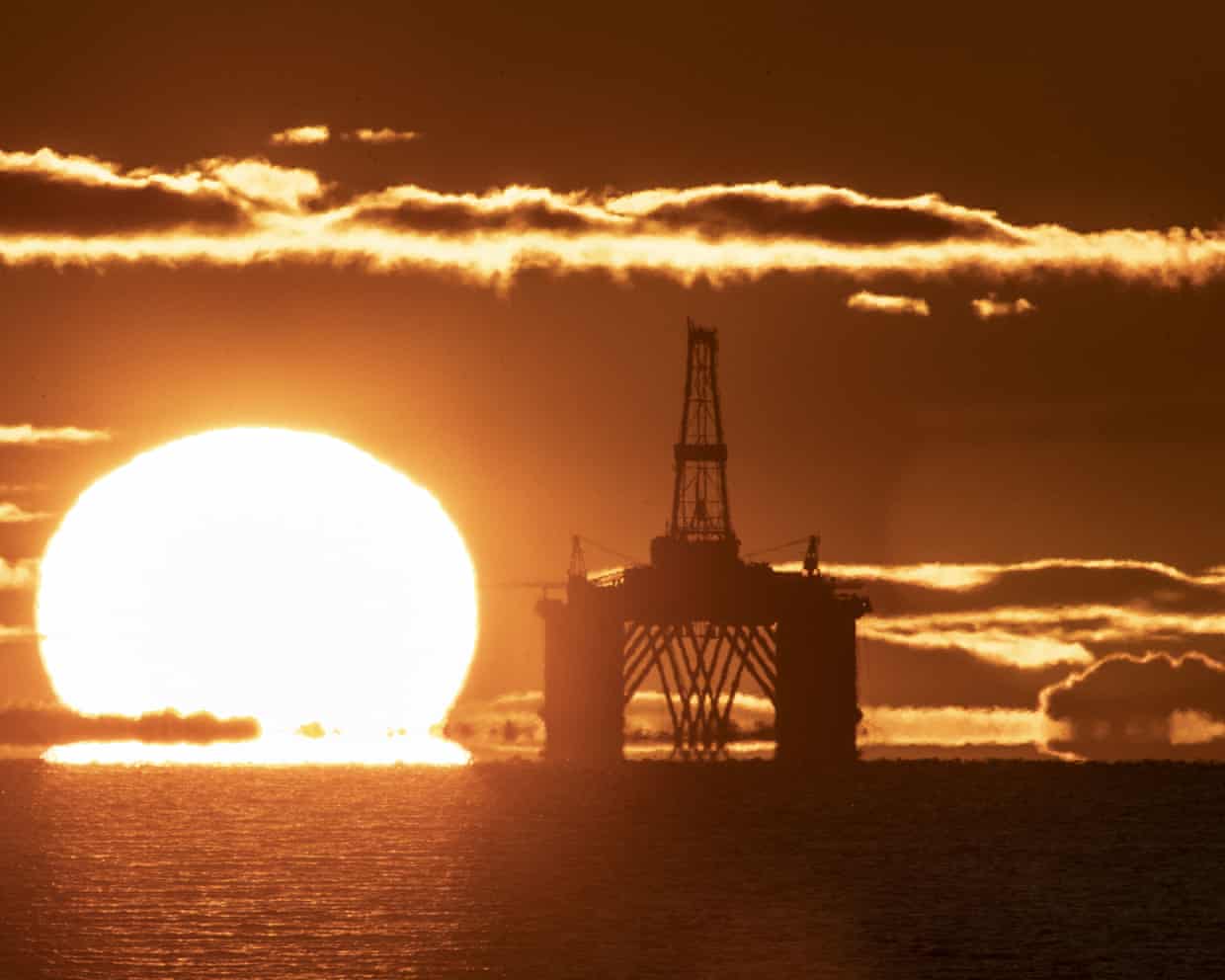
Hundreds of North Sea licences granted by Conservatives have ‘so far produced only 36 days worth of gas’
Hundreds of licences granted for new oil and gas projects in the North Sea under the Conservatives have so far produced only 36 days’ worth of gas, according to analysis.Research by the energy consultancy Voar and the campaign group Uplift found that between 2010 and 2024, the government handed out hundreds of new North Sea oil and gas licences in seven licensing rounds.This led to 20 new and relicensed fields that have the potential, over their lifetime, to produce enough gas to supply the UK for only six months. To date they have produced the equivalent of 36 days of extra gas.The findings cast doubt on claims by Reform UK and the Conservatives that new drilling licences in the North Sea would help to reduce energy bills and boost the UK’s energy security

UK ‘weeks away’ from medicine shortages if Iran war continues, experts say
Britain is “a few weeks away” from medicine shortages ranging from painkillers to cancer treatment if the Iran war continues, according to experts, while drug prices could also rise.The conflict has disrupted the supply of a myriad of crucial raw materials, including oil, gas, crop fertiliser and helium – and health essentials could be next.David Weeks, the Texas-based director of supply chain risk management at the analytics group Moody’s, said: “It’s the perfect storm. We have the conflict in the Gulf that caused the strait of Hormuz to shut down, and India is known as the pharmacy of the world. They produce a lot of the generic [off-patent] drugs and APIs [active pharmaceutical ingredients]

Wall Street hits six-month low and Dow falls into correction as Trump ‘appears to lose his grip on markets’ – as it happened
The US stock market has dropped to its lowest level since last September, as analysts warn that president Trump may be losing his grip on the markets.The S&P 500 index has dropped by 0.8% today to 6,425 points, adding to Thursday’s 1.75% fall on the benchmark US stock market index.The tech-focused Nasdaq index is down 1%, also at a six-month low
Lloyds bank faces £66m court battle with car loan customers
Lloyds Banking Group is facing a court battle with 30,000 aggrieved car loan customers who are to abandon the City regulator’s official redress scheme amid fears it will shortchange consumers and favour lenders.The claims law firm Courmacs Legal is planning to file a £66m omnibus claim on behalf of borrowers who believe they were financially harmed by car loan contracts set up by Lloyds’ motor finance arm, Black Horse.The grievances are part of a much wider car loans commission scandal, in which drivers were overcharged for their loans due to unfair commission arrangements between lenders and car dealers.However, the omnibus case, which is expected to be filed in the coming weeks, means consumers are deciding to pre-emptively waive their rights to the Financial Conduct Authority’s (FCA) estimated £11bn compensation scheme, even before the final details are due to be set out on Monday. That is despite claims law firms such as Courmacs taking a 28% cut of any potential payout
UK government borrowing costs hit 5% as Iran war fuels bond market sell-off
UK government borrowing costs have risen above 5% amid an intensifying global bond market sell-off fuelled by the Iran war.The yield – or interest rate – on 10-year debt hit its highest level since the 2008 financial crisis, rising 13 basis points to 5.081%, as investors acted on concerns about the economic fallout from the conflict.Borrowing costs also rose for the US and eurozone governments, underscoring growing turbulence in the global financial system after Donald Trump’s extension of a deadline for a peace deal failed to soothe jittery investors.Financial markets worldwide slumped on Friday, extending falls seen since the outbreak of the war, with losses in London and across major US and EU trading hubs

Millions of boomer small business owners will soon retire. Will their companies just disappear? | Gene Marks

One in five UK hospitality businesses fear collapse as costs surge

How Meta’s victim-blaming failed to sway jurors in landmark social media addiction trial

‘Soon publishers won’t stand a chance’: literary world in struggle to detect AI-written books

Mary Rand obituary

Alfie Barbeary’s late try earns Bath thrilling comeback victory against Sale