‘Soon publishers won’t stand a chance’: literary world in struggle to detect AI-written books

Recently, the literary agent Kate Nash started noticing that the submission letters she was receiving from authors were becoming more thorough – albeit also more formulaic,“I took it as a rise in diligence,” she said,“I thought it was a good thing,”But then she had what she described as her eureka moment: the letter with the AI prompt right at the top,“It read: ‘Rewrite my query letter for Kate Nash including a comp to a writer she represents,’” she said.
Once Nash had seen the prompt, she “couldn’t unsee AI-assisted or AI-written queries again”.The news last week that Mia Ballard’s “femgore” horror novel Shy Girl could be up to 78% AI-generated, however, has forced literary agents and publishers alike to consider whether sharp eyes alone can detect AI-generated work.“The question of how Shy Girl slipped through Hachette’s net is something the publisher has to answer themselves, but in reality, it was only a matter of time before this happened,” said Anna Ganley, the chief executive of the Society of Authors.Wildfire, a UK imprint of Hachette, had published Shy Girl in November 2025.It was due for US publication in April, but the controversy led to its UK discontinuation and US cancellation earlier this month.
Ballard has denied using AI to write Shy Girl, telling the New York Times, which first reported the story, that an acquaintance she hired to edit a self-published version of the novel had used it.An editor at one of the “big five” publishing houses said a “cold shiver went down my spine” when the Shy Girl story broke.“It really is a case of ‘there but for the grace of God go I,’” they said.“It’s an issue publishers are keenly aware of.We make it very clear to authors what we expect, we get them to sign contracts and we run their work through multiple AI detection tools, but we know all this is fallible.
“Hence the cold shiver: if an author is determined to use AI, then cover their tracks, there’s very little we can do.”Prof Patrick Juola, a US computer scientist known for his work on authorship attribution, agreed.“I don’t want to call AI detection tools a scam, but it’s a technology that simply doesn’t work.”He likened the failure to antibiotic resistance: “AI is a learning system continually upgraded by its manufacturers.If there was a detection technology that worked, then people would simply build better AI tools to fool it.
”Mor Naaman, a professor of information science at Cornell Tech and head of its social technologies research group, agreed.“AI learns very quickly how to avoid AI detection.We’re not quite there yet, but soon publishers won’t stand a chance,” he said.Already, the sophistication of the technology threw up an interesting point, said Nikhil Garg, an assistant professor at Cornell Tech’s Jacobs Institute.“Sophisticated authors who want to evade the detection tools know how to edit their text, test it against these tools and revise again,” he said.
“At some point, you have to ask: has it become their own work anyway, despite the AI?”Naaman agreed that while Shy Girl appeared to be an “egregious” example, there were increasingly grey areas.“We all work in an AI-hybrid world now.When does something become an AI-generated book, rather than just using AI like I use a spellchecker, to fix my grammar or maybe spark ideas?” he asked.If all this is true, the obvious question is: why does it matter if AI writes our books? After all, at one end of the spectrum, generic, formulaic books have always represented a sizeable proportion of any bookshop shelf.Why would it matter whether they were generated by humans or AI?And if AI did become sophisticated enough to write genuinely engaging books, does that matter, as long the literature is good?For Naamen, the reason it matters is cultural: AI may flood the page, but it cannot replace the messy, difficult work of being human – the very work that literature exists to reflect back at its readers.
“AI nudges users into a bland monoculture.It could never generate the truly diverse creativity of the human mind,” he said.The debate wasn’t about originality alone, he added, it was also about who gets to write, who gets to be read, and who ultimately shapes our culture.“AI subtly inserts specific viewpoints into its work that are driven by algorithms of all-too-powerful corporations,” Naamen said.“And if AI sucks up all the minor writing jobs and opportunities, then emerging authors are deskilled before they get the chance to create their really significant works.
”Earlier this month, Ganley launched the Human Authored scheme to identify works written by humans.It is, however, a system based on trust – that singularly human and inherently vulnerable value.But, as Nash says, in this era of deception, trust is more valuable than ever.“Readers trust writers.Writers need to continue to trust themselves over machines,” she said.
“The bond between reader and writer is likewise based on trust; the engagement can operate on many levels, but most of all, it must be meaningful.”

‘We’re quietly chirpy’: some Tories glimpse ray of hope, but others see abyss at May elections
“The Conservative party is coming back,” Kemi Badenoch declared at her party’s local election launch last week, surrounded by cheering supporters. And it’s fair to say that many of her MPs are, relative to their mood in recent years, quite cheery.To others in the Conservative family, though, this optimism appears disconnected from the reality of the situation facing the party. Even the MPs backing Badenoch agree that the Tories face heavy losses on 7 May, not just across English councils, but particularly in votes for the Scottish and Welsh parliaments, where in both they are expected to be reduced to a handful of seats.This is in part a factor of circumstance

Reform candidate in Wales steps down after apparent Nazi salute
A Reform UK candidate for the Welsh Senedd elections in May has announced he is standing down because of his mental health, after a photograph emerged of him apparently making a Nazi salute as an imitation of Adolf Hitler.The announcement by Reform comes a day after Nigel Farage defended Corey Edwards, its lead candidate for the Pen-y-bont Bro Morgannwg constituency, saying he may have instead been impersonating the John Cleese character Basil Fawlty.Reform has also experienced problems with candidate selection in Scotland, where four of its picks for elections there in May stood down or were suspended within a week of being announced by Farage.The photograph of Edwards, an ex-adviser to the Conservative former Welsh secretary David TC Davies, was published by the Nation.Cymru website and showed him raising his right arm, with a finger of his left hand under his nose
Former miners can finally speak the truth about Orgreave, says inquiry chair
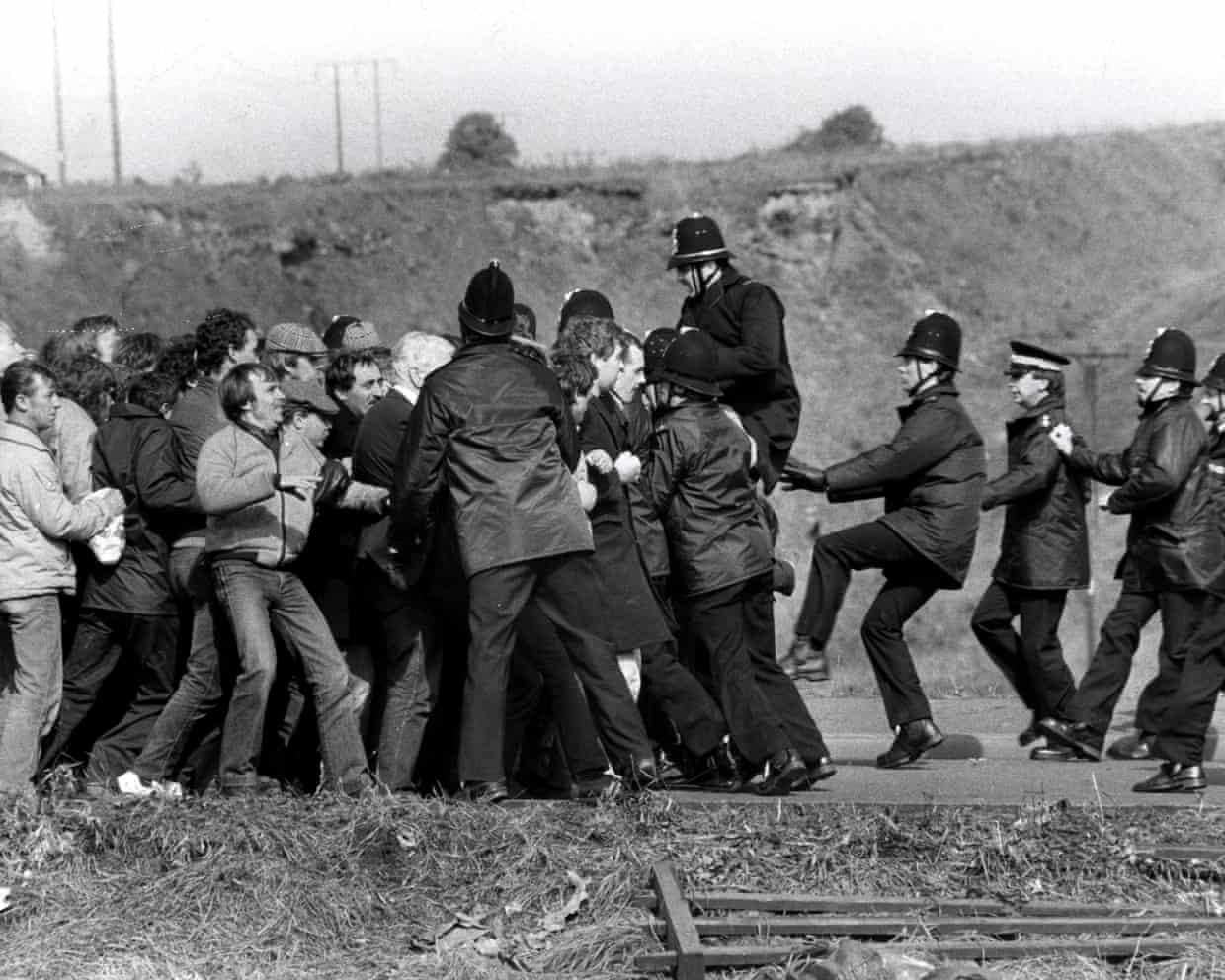
Former miners will finally get the chance to speak the truth about their experiences after four decades of silence during a public inquiry into infamous clashes with police at Orgreave, the inquiry’s chair has said.Pete Wilcox, the bishop of Sheffield, said only an inquiry could help South Yorkshire move on from the events of 18 June 1984, when striking miners unexpectedly found themselves in a pitched battle against thousands of police officers brought in from forces across the UK.The Hillsborough-style inquiry, officially launched by Sarah Jones, the policing minister, in parliament on Thursday, will examine how 6,000 police officers were deployed to a picket at Orgreave coking plant three months into a National Union of Miners strike over planned pit closures.About 8,000 people – miners and their families – were on the receiving end of what was described as heavy-handed policing, with witnesses and images from the day detailing how mounted police charged at the pickets and hit them with batons.Many were injured, some seriously, but it was the moral injury that the injustice caused in the minds of South Yorkshire miners and wider working-class communities that was the lasting effect
Police find no evidence of criminality in Gorton and Denton byelection
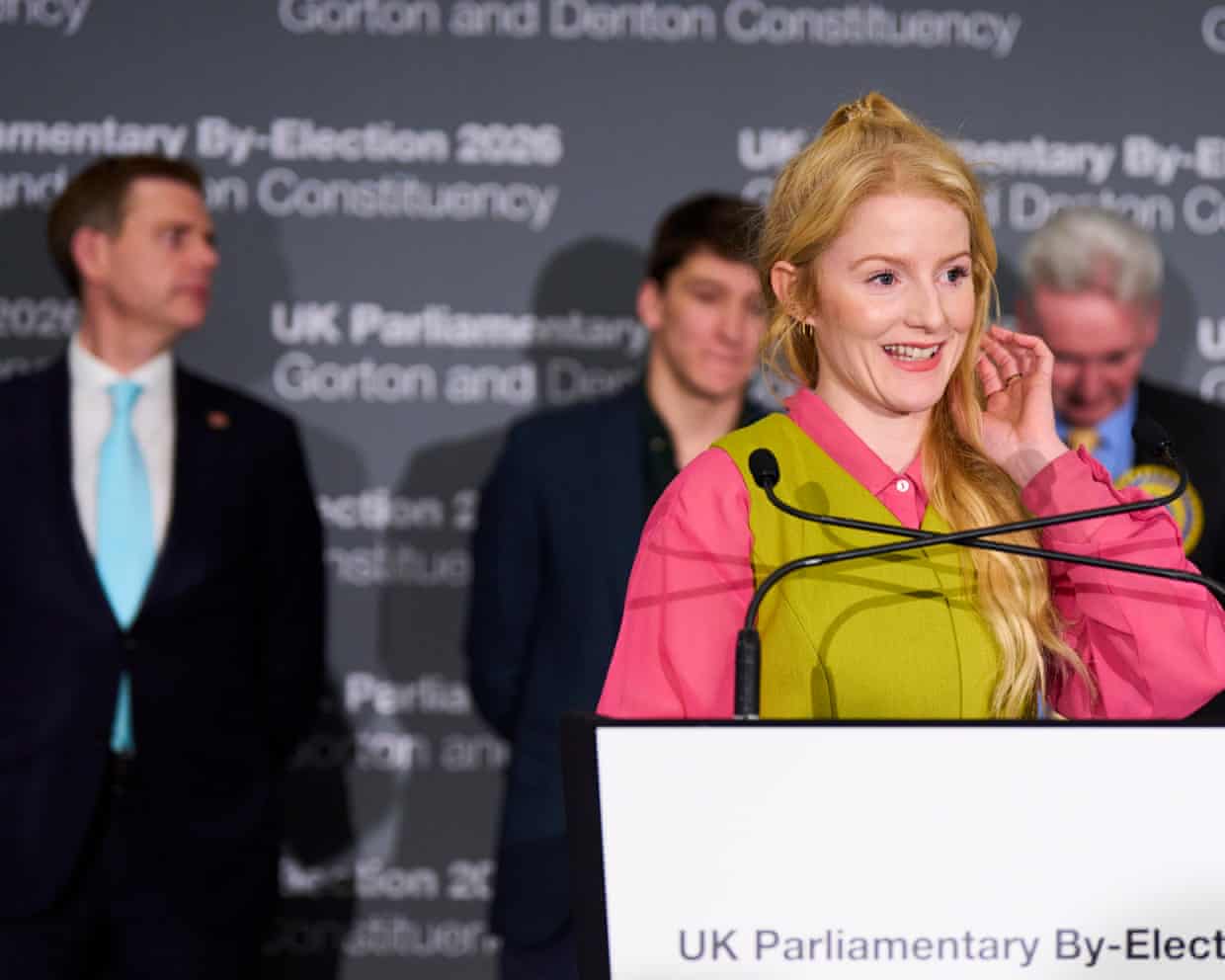
Police have found no evidence of criminality in the Gorton and Denton byelection after claims by Nigel Farage that it was “a victory for cheating”.Reform UK had asked Greater Manchester police (GMP) to investigate allegations of corrupt voting in the Greater Manchester contest, which the Green party won.The election observers’ group Democracy Volunteers said it had witnessed “concerningly high levels” of so-called family voting, where one family member dictates how others cast their ballot. However, GMP said on Friday its investigation had found “no evidence of any intent to influence or refrain any person from voting”.Four observers from Democracy Volunteers had given accounts to police of about 32 potentially suspicious voting habits

Reports Sadiq Khan could join Starmer’s cabinet dismissed by allies
Allies of Sadiq Khan have dismissed reports the London mayor could join Keir Starmer’s cabinet after being made a peer, although it remains possible he could join the Lords while keeping his current job.Downing Street said reports that Khan could become a peer after crucial elections in May across England, Scotland and Wales were “speculation”, while a Labour source also declined to comment.Any decision on a peerage was one for No 10, Khan’s allies said, but they ruled out the possibility cited by the Financial Times that Khan could be brought in to strengthen Starmer’s cabinet after joining the House of Lords.Khan spent a decade as a London MP before stepping down in 2016, having won the first of three consecutive election victories to be London mayor, a role where he has had some success in courting support beyond Labour’s core vote, such as Greens and Liberal Democrats, to defeat Conservative opponents.A role for Khan working closer with Starmer could be sold by No 10 as the prime minister making full use of Labour’s talents, particularly given that the London mayor has at times been critical of the government, for example warning after the Gorton and Denton byelection loss to the Greens that Labour must stop taking progressive voters for granted
Social media has led to a ‘complete rewiring of childhood’, says minister – UK politics live
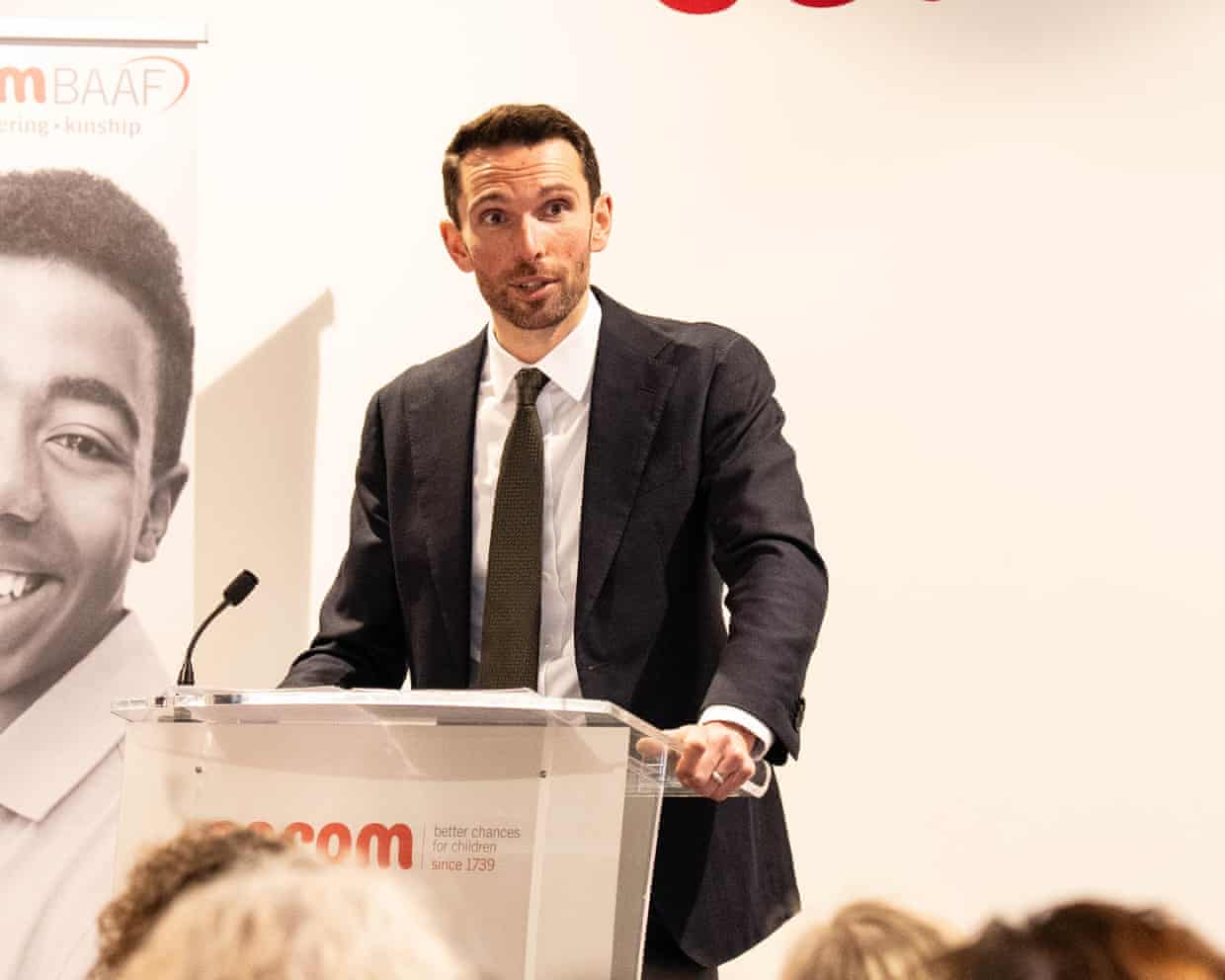
Josh MacAlister, the minister for children and families, said there has been “a complete rewiring of childhood” over the last decade due to social media and screen time.Speaking on the new government guidance for parents of young children, he told ITV’s Good Morning Britain: “We’re trying to help create some new social norms.“There’s no judgment. It’s much easier to say these things than it is to do them, I appreciate.”That’s all from us on the UK politics blog, thanks for following along
‘I decided not to jog here after dark’: new English council guidance prioritises women’s safety

What does new guidance in the UK say about screen time for children?

Starmer vows to ‘fight’ social media firms to protect children from addiction

Keep under-fives’ screen time to no more than an hour a day, UK advice says

More than 6m vapes and pods discarded weekly in UK despite single-use ban, study finds

UK government must urgently apologise for forced adoption, MPs say