Starmer’s liaison committee jaunt was largely soporific – just as he’d wanted | John Crace
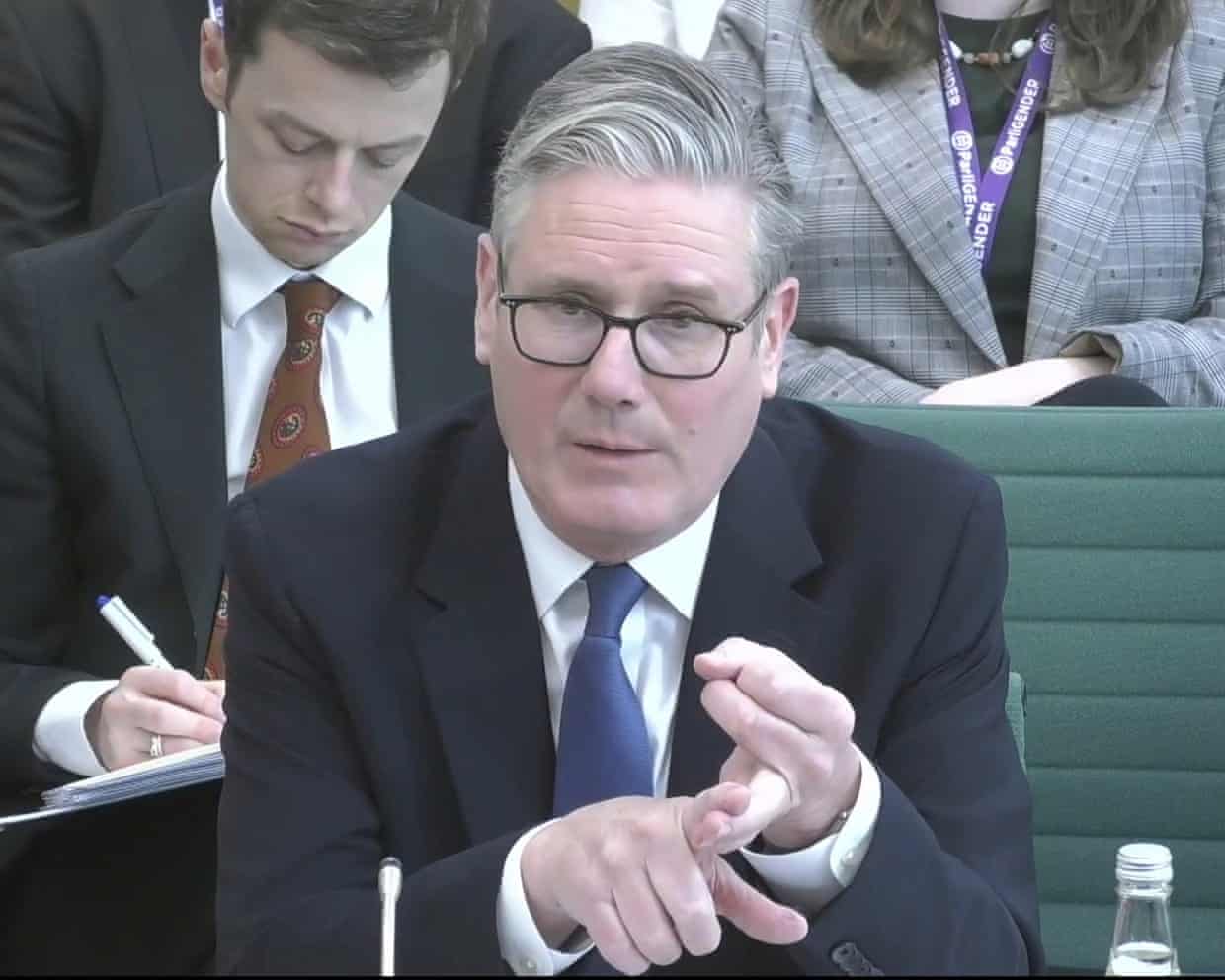
What a difference a week makes.At last week’s prime minister’s questions, Keir Starmer tried to persuade us he knew less than he did.His memory was so bad that he could barely remember who Peter Mandelson was, let alone why he had appointed him as ambassador to the US.Fast forward to Monday’s appearance before the liaison committee, the supergroup of select committee chairs, and Keir was desperate to convince us he knew more than he did.He had the inside track on Iran.
He was in control.He also wasn’t altogether convincing.Mind you, it’s hard not to feel some sympathy for Starmer.The whole point of being prime minister is that you’re expected to know more than the rest of us.And most of the time you do.
State secrets are your life blood,Only, just occasionally the veil slips,Having threatened to obliterate Tehran’s power plants just days earlier, on Monday morning Donald Trump announced on Truth Social – along with a strange witch reference – that he was going to delay the bombardment for five days as constructive talks with the Iranian regime were taking place,And no one – not even Starmer – has a clue what to think,Was this yet another example of Taco – Trump always chickens out – after Iran called his bluff and threatened to escalate the war still further? Was this the US president looking for a way out from a conflict that hadn’t worked out as planned? Or would he change his mind in a couple of days’ time and bomb Iran anyway? Both were equally possible.
Because not even The Donald knows what he is going to do in a few days’ or even hours’ time,He is a man of impulse,An amoral narcissist,Early on at the liaison committee, Starmer tried to reassure MPs that he had the bases covered,Insisting that he had prior knowledge of the recent discussions between the US and Iran.
But did he? Ordinarily you would think that Keir’s admission confirmed the talks had happened.But the reality is that the lead countries in the war have all acted in bad faith.Trump might have told Starmer about the negotiations but that doesn’t mean they happened.And equally the Iranians’ denial of any such exchanges doesn’t mean they didn’t.A little more reality slipped into the proceedings when Starmer said he had no idea of how long the conflict could go on for.
Without wanting to criticise the US president too explicitly, he did rather say it was all in Trump’s hands.The war could be over by the end of the week.There again it could drag on for months.But Keir was laser-focused – he’s often laser-focused these days – on doing all he could to de-escalate the situation.Starmer probably couldn’t say that much more in the circumstances, and the committee, made up almost exclusively of Labour MPs, decided not to push him too much on the things that were out of his control.
Instead, they chose to focus on Britain’s response so far,It made for a largely soporific 90 minutes,Exactly the effect Keir had been hoping for,Every prime minister aims to have come out of a meeting with the liaison committee having said nothing that makes news and having bored most people to death,The defence committee chair, Tan Singh Dhesi, briefly tried to liven things up by suggesting it had been embarrassing that the UK had not had a single warship in the area when the war started.
Not at all, replied Starmer.We had pre-deployed all sorts of military hardware to the Gulf.Just not the navy.And besides we had got HMS Dragon ready to sail in just six days compared with the usual six weeks.When you came to think of it, being only six days late for a war really wasn’t that bad.
After all, nothing much happens in the first week.Dhesi then pressed Starmer on Israeli reports that Iran now had missiles capable of reaching London.And we had no defence shield capable of preventing them.Keir was adamant that we were more than able to defend ourselves – he didn’t say whether he thought the Iranian missile capacity had been exaggerated.People shouldn’t worry too much about this, he said.
Besides, if a missile did hit London, those who were hit wouldn’t know a thing about it as they would all be dead.So best not to think of these things.The spikiest exchanges came with the lone Tory, Bernard Jenkin.Bernie wanted to know what had happened to the defence investment plan.Starmer snapped back that these things took time because the Conservatives had hollowed out the armed forces with 12 years of underfundment.
Whatever underfundment is,Jenkin was in no mood for jaw jaw,Churchill wouldn’t have been wringing his hands,Bernie wanted a scrap,With everyone.
Not just to fight them on the beaches, but to fight them everywhere.“You are at peace,” he said.“We are at war.” If Bernie had been in charge he would have built dozens of frigates in the last 18 months.As well as illegally reopening oilfields.
“This is an emergency.” If only he’d got around to pointing all of this out when his own party had been in power.Maybe it was because the room was stifling hot – someone had turned the radiators up full – but much of the rest of the proceedings passed without incident.Time and again, we were told of reports that would be with us in the fullness of time.No one asked about Mandelson.
Or whether the king’s state visit to the US should go ahead,Instead, Keir got to say that contingency plans for energy shortages and price hikes were under review and that while he judged the war to be unlawful for Britain, it was up to the US to make its own call on the legality,We had adopted the policy of collective self-defence and would take no part in offensive operations,Oh, and Britain would not be a haven for those guilty of crimes against humanity,That’s a relief.
The session ended with the committee chair, Meg Hillier, extending her sympathies to Starmer,Saying that it must be difficult having to deal with a US president who was so volatile,Code for mad,She didn’t mention the recent Saturday Night Live sketch that Trump had been reposting,There again, it hadn’t been that funny the first time.
Keir puffed up his chest.He knew that people were trying to undermine him but he would always protect the UK’s interests.He would never surrender.At that point, I thought I saw a tear well up in Bernie’s eye.
What levers could Rachel Reeves pull to help with rising prices?
Rachel Reeves updated MPs on Tuesday about the steps the government was taking to cushion the impact of the Iran war on consumers and the UK economy. The chancellor stopped short of announcing specific immediate support but said she was contingency planning for the tough months ahead.Here are some of the levers she could pull:Speculation has been rife since the effective closure of the strait of Hormuz sent oil and gas prices soaring, that the government may be forced to step in to protect households from a jump in utility bills.But Reeves gave the clearest indication yet that she has no intention of repeating the across-the-board subsidies introduced by Liz Truss in autumn 2022, which went on to cost the Treasury about £40bn, and were worth £1,350 to households in the top 10% of earners.Reeves said Truss’s approach had “left us with high levels of national debt, a cheque written then for a bill that is still being paid today”
Seven charts that reveal how unprepared Australia was for the fuel crisis
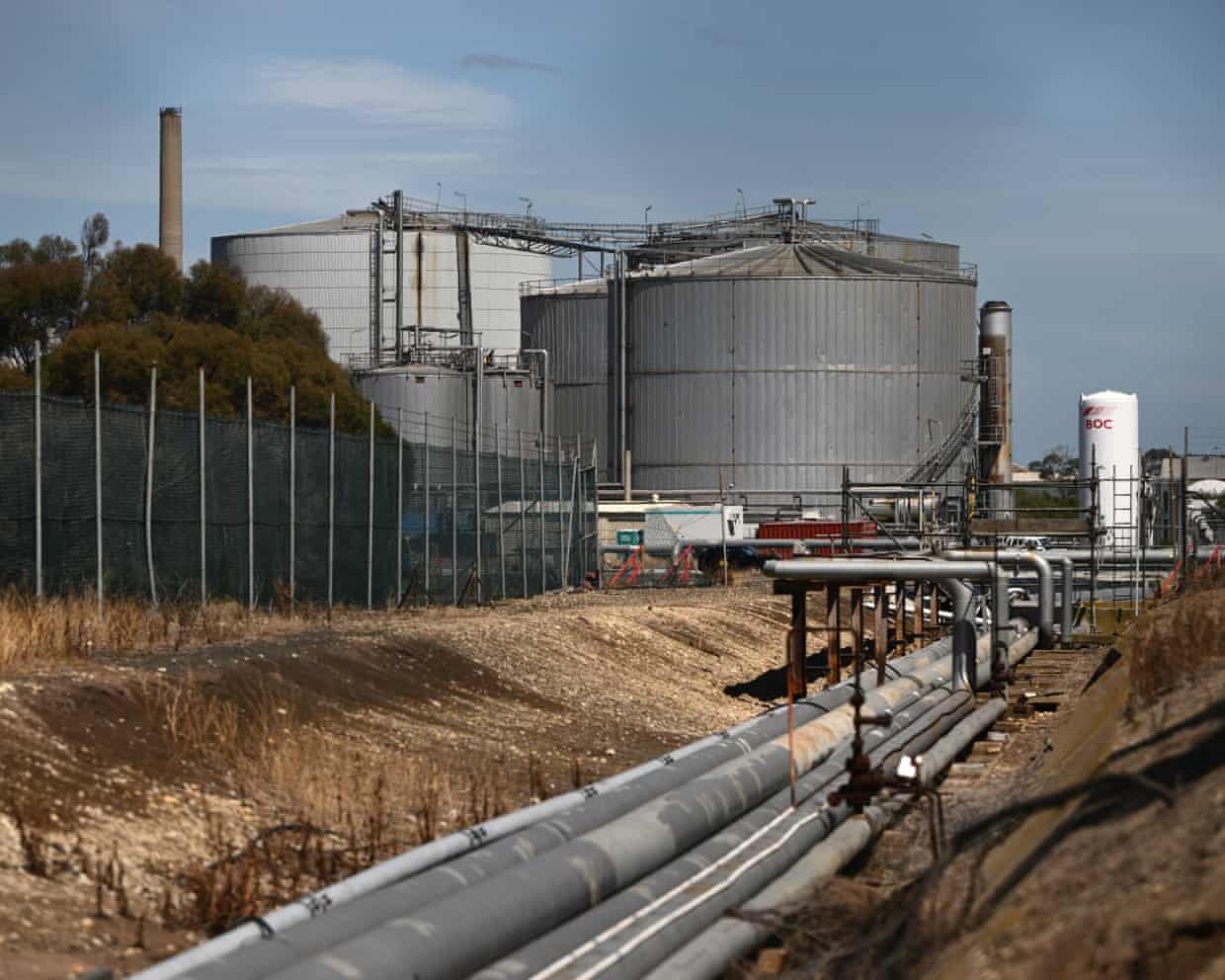
It’s been a bewildering few weeks since the start of the US-Israel war on Iran triggered a global energy shock that shows little sign of ending.Here are seven charts that tell the story so far.At the turn of this century, Australia produced 563,000 barrels of oil a day, with eight refineries supplying 98% of our total petroleum product needs.From that high point, oil and petroleum production has slumped to the point where the country relies on imports for 90% of its liquid fuel needs and oil production is at its lowest since the late 1960s.Over the past 25 years, the number of local refineries has also dropped:Mobil’s Port Stanvac refinery in South Australia was mothballed in 2003 (and permanently closed in 2009)Shell’s Clyde refinery was closed in November 2013Caltex closed its Kurnell refinery in Sydney in October 2014BP did the same with its Brisbane plant in mid-2015BP then closed its Kwinana refinery south of Fremantle in March 2021ExxonMobil’s Altona refinery in Melbourne was shuttered in August of the same year
UK manufacturers hit by sharpest rise in cost inflation since Black Wednesday in 1992
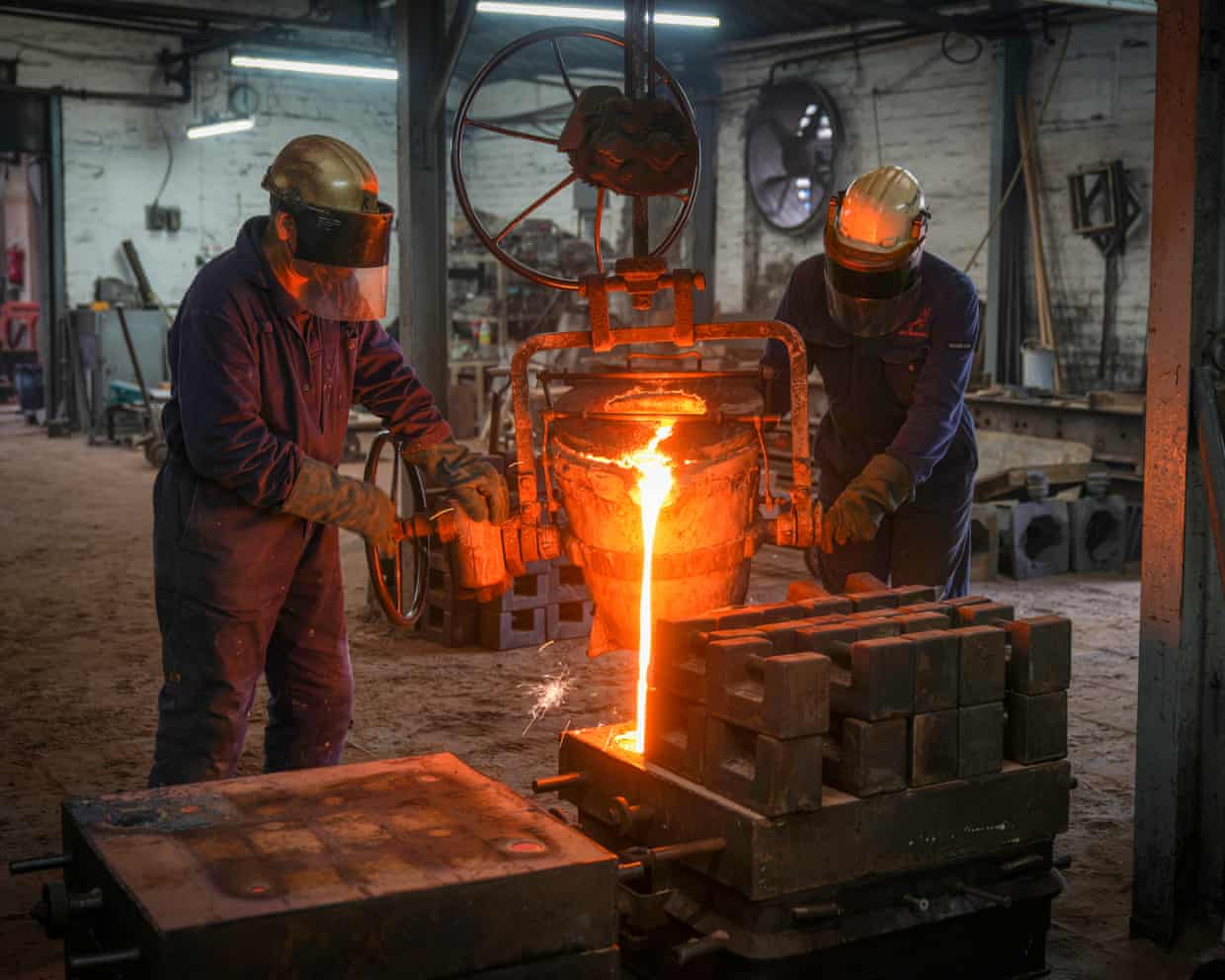
The UK’s manufacturers have suffered the sharpest one-month acceleration in costs since the aftermath of Black Wednesday in 1992 as conflict in the Middle East has driven up oil prices, new survey evidence shows.The closely watched purchasing managers’ index (PMI) lays bare the impact of the conflict on the UK economy, with growth slowing sharply across manufacturing and services and costs rising.Chris Williamson, the chief business economist at S&P Global Market Intelligence, which collects the data, said: “Output growth across manufacturing and services has slowed to a crawl as companies blamed lost business directly on the events in the Middle East, whether through heightened risk aversion among customers, surging price pressures, higher interest rates, or via travel and supply chain disruptions.“Inflationary pressures have surged higher on the back of rising energy prices and fractured supply chains.”Responding to the survey, Morgan Stanley warned the economy could potentially be dragged into “a pronounced UK recession” by the end of this year by high energy prices and interest rate hikes

Revolut warns it risks backlash over support for energy-intensive AI and crypto
The UK banking app Revolut has said it could face a backlash over its support for energy-intensive sectors such as crypto and AI, as it posted a 57% increase in profits for last year.The fintech, which can now launch as a fully fledged UK bank after a five-year wait for regulatory approval, warned in its 2025 annual report that such activities posed a “reputational risk”. Revolut offers crypto trading.Cryptocurrency mining, particularly for bitcoin, and AI datacentres demand large amounts of power, with competition for electricity supplies only getting steeper since the US-Israel war on Iran sent energy prices soaring over the past month.The company also reported a £1

Estée Lauder in talks on merger with Jean Paul Gaultier owner Puig
The US cosmetics company Estée Lauder is in talks over a potential merger with the Spanish group Puig, the owner of brands including Jean Paul Gaultier and Rabanne, to create a $40bn fashion and beauty giant.Estée Lauder is one of the world’s biggest manufacturers of skin care, makeup and fragrances with a portfolio that includes Clinique, Bobbi Brown and Tom Ford Beauty.Puig, which floated on the Madrid stock market two years ago, owns brands including Charlotte Tilbury, Carolina Herrera and Dries van Noten.Both brands confirmed that they were holding discussions over a potential “business combination”, but gave no detail on the possible structure of the merger.“No final decision has been made and no agreement has been reached,” Puig said

UK vets face crackdown over fees as pet owners ‘left in the dark’ on bills
The UK’s competition watchdog has ordered vets to cap prescription fees at £21 and proposed a cost comparison website, after finding consumers had faced huge price rises and been “left in the dark” over bills.The Competition and Markets Authority (CMA) said public satisfaction with the cost of services was “low” after a two-and-a-half-year investigation into the £6.7bn market found “there is not strong competition between veterinary businesses”, with large chains dominant.The watchdog said vets must now tell pet owners that medicines may be cheaper online, and let them know they can get a prescription and that this could save them money.Written prescription fees will be capped at £21 for the first medicine and £12

Mr Motivator urges government to treat ’bed poverty’ as a national crisis

Property company denies trying to mass-evict tenants before England’s no-fault evictions ban
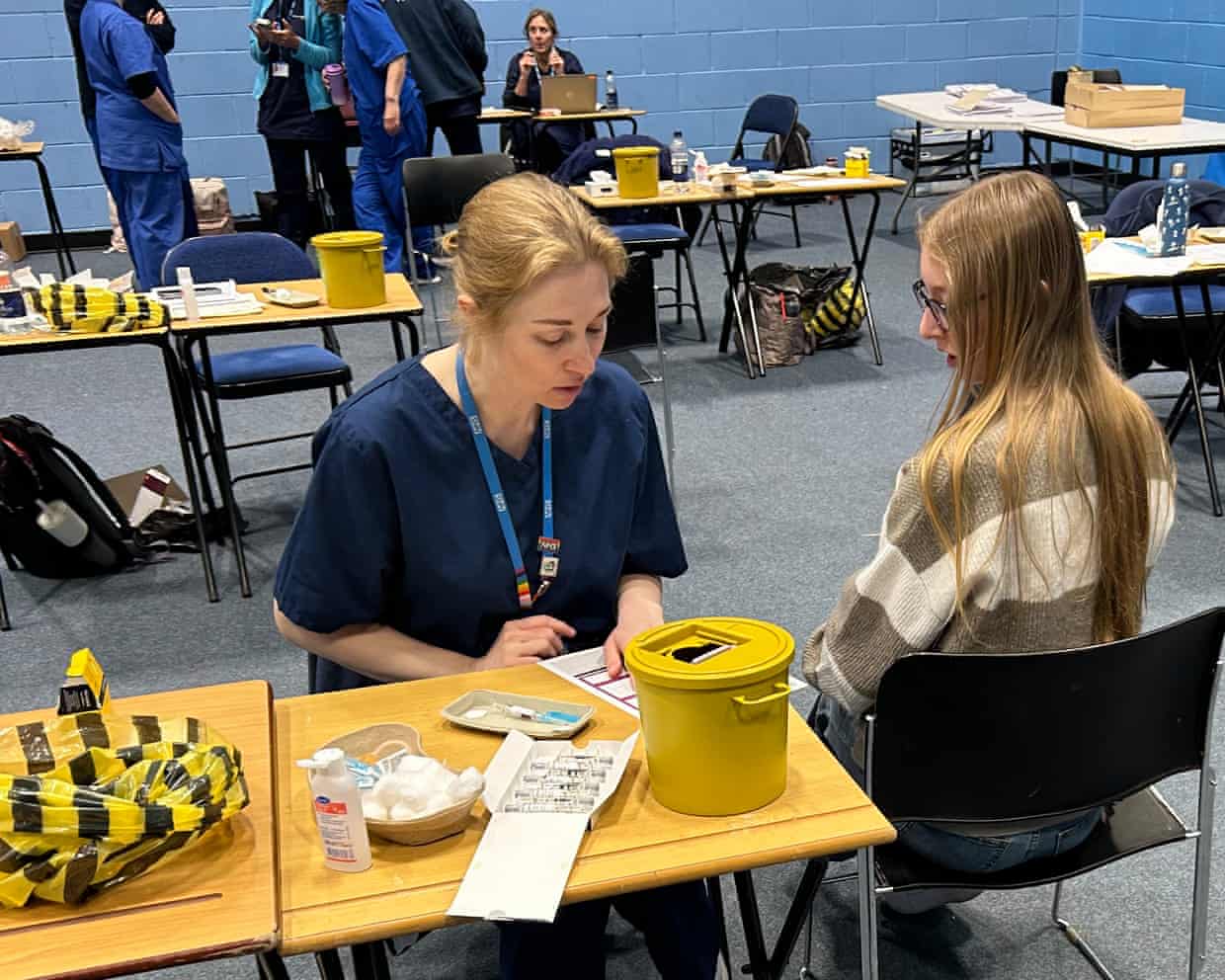
No new meningitis cases linked to Kent outbreak found, health agency says

‘Not just a Jewish service’: Hatzola ambulances serve whole community, say volunteers
There must be more support for young people who are seeking jobs | Letters
Those who view voyeuristic nightlife videos are the issue | Letters