UK manufacturers hit by sharpest rise in cost inflation since Black Wednesday in 1992
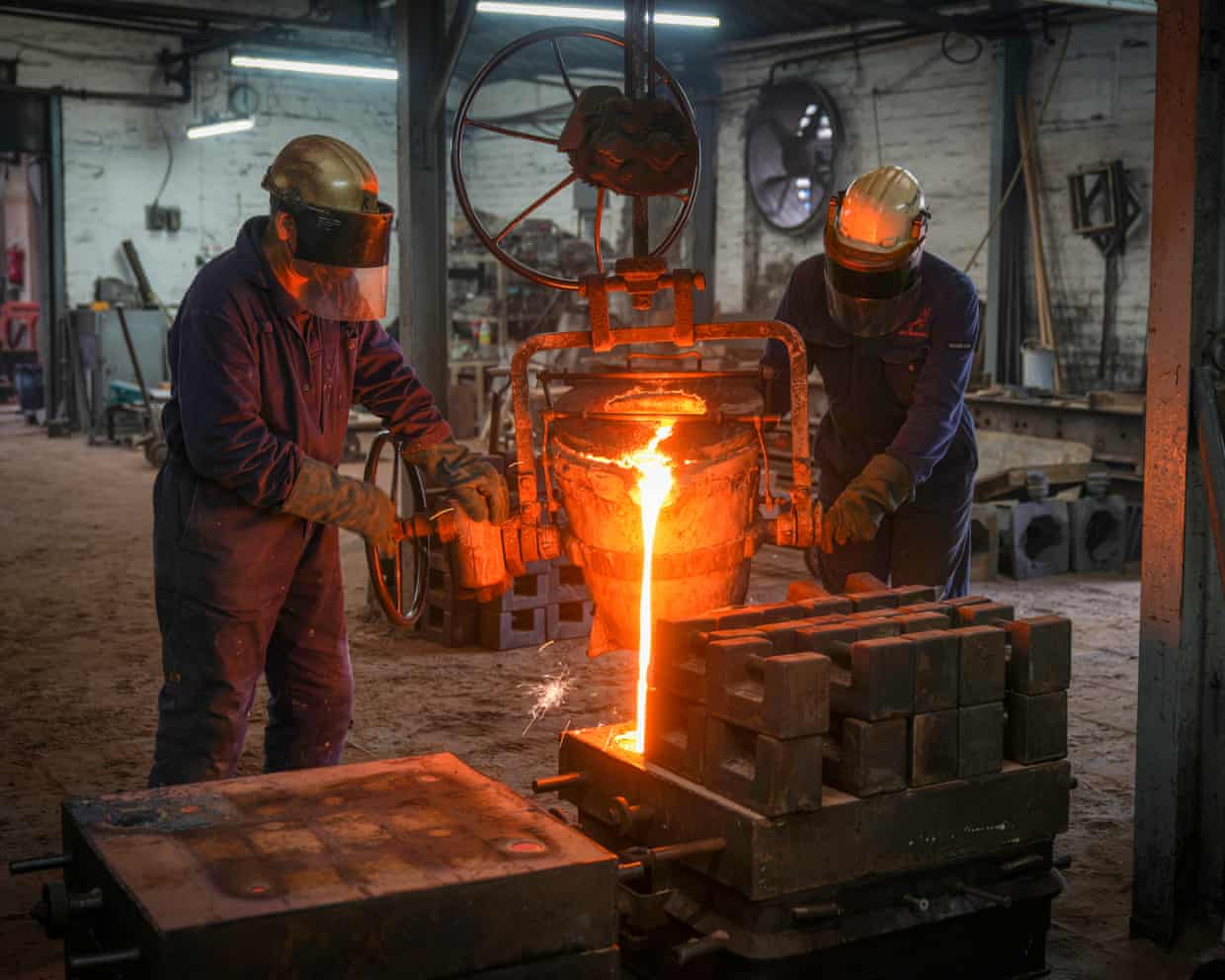
The UK’s manufacturers have suffered the sharpest one-month acceleration in costs since the aftermath of Black Wednesday in 1992 as conflict in the Middle East has driven up oil prices, new survey evidence shows,The closely watched purchasing managers’ index (PMI) lays bare the impact of the conflict on the UK economy, with growth slowing sharply across manufacturing and services and costs rising,Chris Williamson, the chief business economist at S&P Global Market Intelligence, which collects the data, said: “Output growth across manufacturing and services has slowed to a crawl as companies blamed lost business directly on the events in the Middle East, whether through heightened risk aversion among customers, surging price pressures, higher interest rates, or via travel and supply chain disruptions,“Inflationary pressures have surged higher on the back of rising energy prices and fractured supply chains,”Responding to the survey, Morgan Stanley warned the economy could potentially be dragged into “a pronounced UK recession” by the end of this year by high energy prices and interest rate hikes.
In another indicator of economic weakness, the CBI’s survey of the retail sector said March has recorded the fastest annual decline in sales volumes since April 2020, when the Covid lockdown was in force, though it did not explicitly blame the war in the Middle East,The balance of retailers reporting rising sales was -52% in March, down from an already weak -43% in February,The business lobby group’s lead economist, Martin Sartorius, said: “Retailers report that weak economic conditions continue to weigh on household spending, with subdued activity also evident across the broader distribution sector,”According to the PMI survey, cost inflation in manufacturing jumped to its highest level since October 2022, marking the largest month-on-month change since the fallout from Black Wednesday in 1992,The cost index, which measures manufacturers’ expectations of rising prices, was 14 points higher in March than a month earlier, S&P said, against 17 points in October 1992.
Sterling plunged after Black Wednesday, driving up the cost of imports, after the then government ratcheted up interest rates in a failed attempt to remain inside the European exchange rate mechanism.S&P said the rapid increases in costs mainly related to fuel, transportation and energy-intensive raw materials.The composite PMI index, covering services and manufacturing, stood at 51, suggested the economy was still expanding in March (50 marks the breakeven between growth and contraction) – but at a sharply slower pace than the 53.7 seen in February.Emily Sawicz, a director and industrials senior analyst at RSM UK, said: “Despite some resilience, geopolitical tensions remain a key concern for UK manufacturers – underscoring that conditions remain highly uncertain.
The recovery many hoped to see take hold in 2026 now appears likely to be delayed at best, as rising energy costs and persistent inflation risks threaten to slow momentum.“Should these pressures intensify, the sector’s fragile recovery could even slip back into decline later in the year.”Looking ahead, companies reported a decline in new orders, and falling export sales – including the fastest decline in new orders from abroad since April last year.“Anecdotal evidence pointed to the postponement of new projects in the Middle East and the impact of reduced international travel,” S&P said.PwC’s senior economist, Jake Finney, said the survey underlined the challenges for the Bank of England in setting interest rates in the coming months.
“The conflict is pushing up prices while also weighing on demand.The key judgment for monetary policy committee members will be how long the conflict is likely to last and whether higher energy prices will trigger a broader resurgence in inflation pressures,” he said.Now in its fourth week, the US-Israel war on Iran has prompted a surge in global oil and gas prices and disruptions to supply chains for a range of different products due to destruction of infrastructure in the Gulf, and the effective closure of the strait of Hormuz.The chancellor, Rachel Reeves, will set out in the House of Commons on Tuesday the government’s thinking about how it might cushion the blow for consumers if the disruptions prove prolonged.

What levers could Rachel Reeves pull to help with rising prices?
Rachel Reeves updated MPs on Tuesday about the steps the government was taking to cushion the impact of the Iran war on consumers and the UK economy. The chancellor stopped short of announcing specific immediate support but said she was contingency planning for the tough months ahead.Here are some of the levers she could pull:Speculation has been rife since the effective closure of the strait of Hormuz sent oil and gas prices soaring, that the government may be forced to step in to protect households from a jump in utility bills.But Reeves gave the clearest indication yet that she has no intention of repeating the across-the-board subsidies introduced by Liz Truss in autumn 2022, which went on to cost the Treasury about £40bn, and were worth £1,350 to households in the top 10% of earners.Reeves said Truss’s approach had “left us with high levels of national debt, a cheque written then for a bill that is still being paid today”
Seven charts that reveal how unprepared Australia was for the fuel crisis
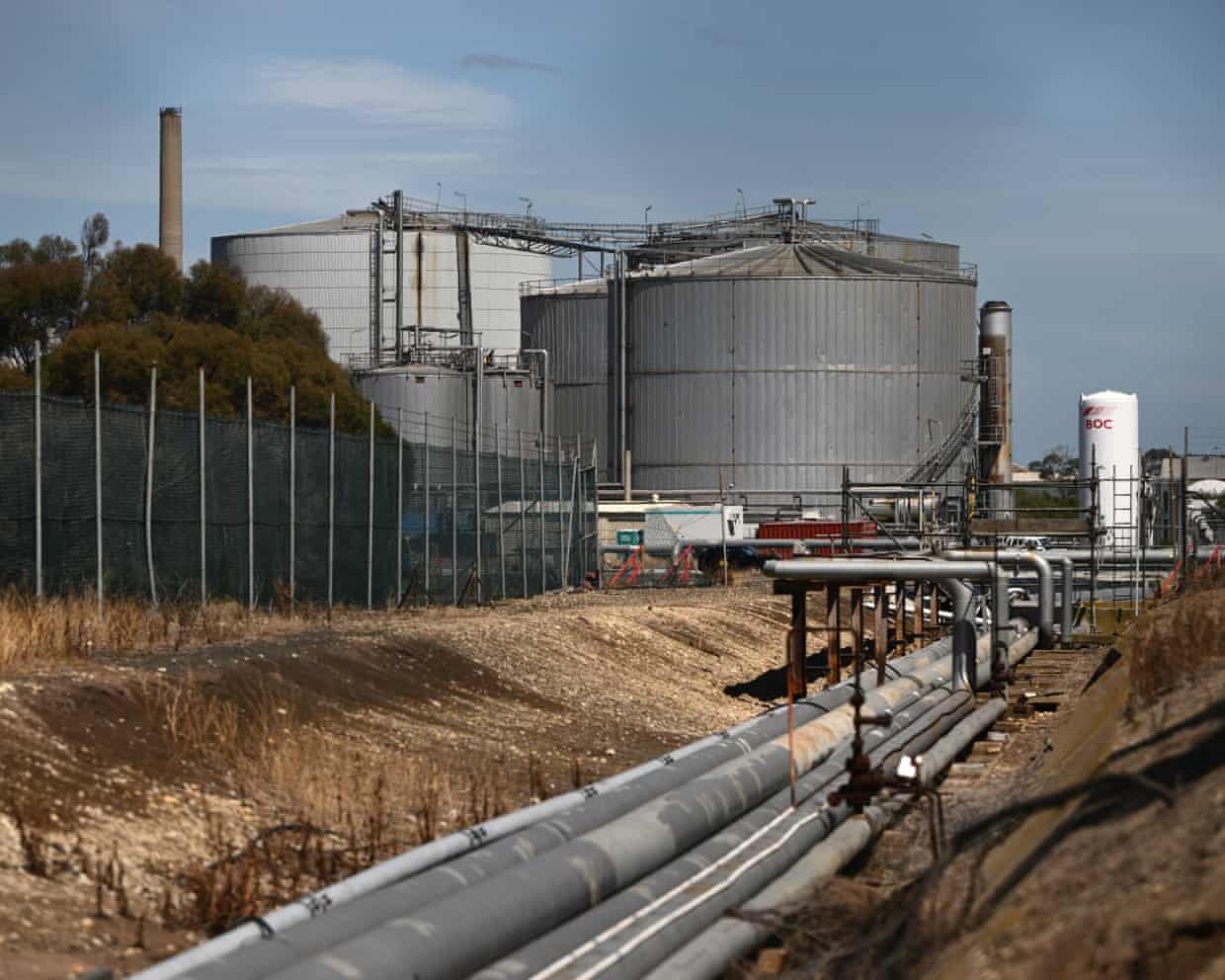
It’s been a bewildering few weeks since the start of the US-Israel war on Iran triggered a global energy shock that shows little sign of ending.Here are seven charts that tell the story so far.At the turn of this century, Australia produced 563,000 barrels of oil a day, with eight refineries supplying 98% of our total petroleum product needs.From that high point, oil and petroleum production has slumped to the point where the country relies on imports for 90% of its liquid fuel needs and oil production is at its lowest since the late 1960s.Over the past 25 years, the number of local refineries has also dropped:Mobil’s Port Stanvac refinery in South Australia was mothballed in 2003 (and permanently closed in 2009)Shell’s Clyde refinery was closed in November 2013Caltex closed its Kurnell refinery in Sydney in October 2014BP did the same with its Brisbane plant in mid-2015BP then closed its Kwinana refinery south of Fremantle in March 2021ExxonMobil’s Altona refinery in Melbourne was shuttered in August of the same year
UK manufacturers hit by sharpest rise in cost inflation since Black Wednesday in 1992
The UK’s manufacturers have suffered the sharpest one-month acceleration in costs since the aftermath of Black Wednesday in 1992 as conflict in the Middle East has driven up oil prices, new survey evidence shows.The closely watched purchasing managers’ index (PMI) lays bare the impact of the conflict on the UK economy, with growth slowing sharply across manufacturing and services and costs rising.Chris Williamson, the chief business economist at S&P Global Market Intelligence, which collects the data, said: “Output growth across manufacturing and services has slowed to a crawl as companies blamed lost business directly on the events in the Middle East, whether through heightened risk aversion among customers, surging price pressures, higher interest rates, or via travel and supply chain disruptions.“Inflationary pressures have surged higher on the back of rising energy prices and fractured supply chains.”Responding to the survey, Morgan Stanley warned the economy could potentially be dragged into “a pronounced UK recession” by the end of this year by high energy prices and interest rate hikes

Revolut warns it risks backlash over support for energy-intensive AI and crypto
The UK banking app Revolut has said it could face a backlash over its support for energy-intensive sectors such as crypto and AI, as it posted a 57% increase in profits for last year.The fintech, which can now launch as a fully fledged UK bank after a five-year wait for regulatory approval, warned in its 2025 annual report that such activities posed a “reputational risk”. Revolut offers crypto trading.Cryptocurrency mining, particularly for bitcoin, and AI datacentres demand large amounts of power, with competition for electricity supplies only getting steeper since the US-Israel war on Iran sent energy prices soaring over the past month.The company also reported a £1

Estée Lauder in talks on merger with Jean Paul Gaultier owner Puig
The US cosmetics company Estée Lauder is in talks over a potential merger with the Spanish group Puig, the owner of brands including Jean Paul Gaultier and Rabanne, to create a $40bn fashion and beauty giant.Estée Lauder is one of the world’s biggest manufacturers of skin care, makeup and fragrances with a portfolio that includes Clinique, Bobbi Brown and Tom Ford Beauty.Puig, which floated on the Madrid stock market two years ago, owns brands including Charlotte Tilbury, Carolina Herrera and Dries van Noten.Both brands confirmed that they were holding discussions over a potential “business combination”, but gave no detail on the possible structure of the merger.“No final decision has been made and no agreement has been reached,” Puig said

UK vets face crackdown over fees as pet owners ‘left in the dark’ on bills
The UK’s competition watchdog has ordered vets to cap prescription fees at £21 and proposed a cost comparison website, after finding consumers had faced huge price rises and been “left in the dark” over bills.The Competition and Markets Authority (CMA) said public satisfaction with the cost of services was “low” after a two-and-a-half-year investigation into the £6.7bn market found “there is not strong competition between veterinary businesses”, with large chains dominant.The watchdog said vets must now tell pet owners that medicines may be cheaper online, and let them know they can get a prescription and that this could save them money.Written prescription fees will be capped at £21 for the first medicine and £12

Let them eat 1,600 cakes: inside Australia’s first Cake Picnic

Joe Woodhouse’s recipes for orecchiette with chickpeas, and polenta chips with saucy chickpeas

Fewer eggs, higher prices: Cadbury ‘doubled down’ on Easter chocolate shrinkflation, Choice finds
Welcome to the United States of Mancunia

How to make the perfect cheese khachapuri – recipe | Felicity Cloake's How to make the perfect …

Cooking with Angela Hartnett: ‘I love food, but I don’t need to talk about it 24/7’