Missing money, shipped chips and a 350,000% profit: key takeaways on AI ‘phantom investments’
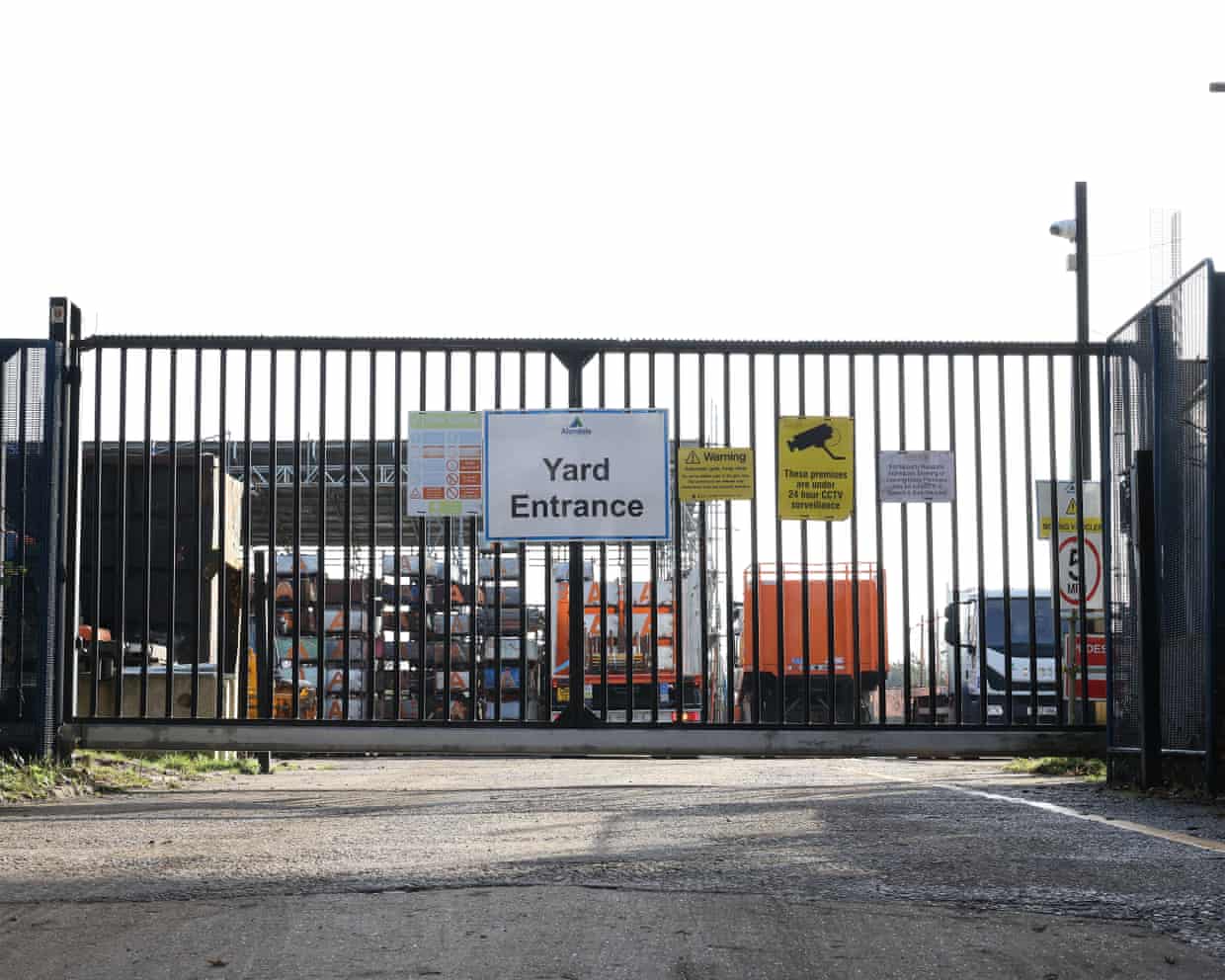
A Guardian investigation has examined a series of massive AI investments announced by the government over the past two years, comparing what was promised with what has so far been delivered.The investigation centres on two companies backed by the chipmaker Nvidia and central to the UK’s AI plans, Nscale and CoreWeave.It has found that large, promised sums do not represent real investments into the UK’s economy, that new datacentres are not in fact new, and that a giant supercomputer set to be online later this year is still being used by a construction company in Essex.Here are some of the key details at a glance.The Guardian visited a site in Essex that is supposed to host “one of the most powerful AI computing centres ever built”, built by Nscale.
The government and Nscale say this supercomputer is supposed to be up by the end of this year.The site is still being used as a scaffolding yard by a different company.While Nscale said more than a year ago that it had already bought the site, land records seem to show that it is not registered as the owner of the land.Nscale is very unlikely to finish constructing a “top tier” supercomputer there this year.The Guardian asked the government about key investments worth billions of pounds, including from Nscale and CoreWeave.
The government said that these numbers came from the companies themselves, and that it had no mechanism in place to audit them.It could not say what these investments involved: equipment, capital or something else.Asked about a contract it said had been signed to build the supercomputer in Loughton, the government did not answer.Instead, it said the entire related investment, $2.5bn, did not involve a formal contract, but an intention to commit capital.
Nscale and CoreWeave have both indicated that a large part of their massive investments will take the form of Nvidia chips, which they will buy and place inside datacentres in the UK.From there, these chips will be rented out to users in the UK, including US tech companies.So, for example, Nscale’s $2.5bn “investment” in the UK may in large part mean that Nscale plans to buy a massive number of chips from Nvidia – chips made in Taiwan by a US company – put these in a datacentre in the UK, and from there rent them to Microsoft.This does not mean $2.
5bn will be injected into the British economy,As another example, in 2024, CoreWeave and the government announced a £1bn investment that, as it was described, would bring two new datacentres to the UK,CoreWeave said this would create jobs,New datacentres were not built,Instead, CoreWeave put Nvidia chips into existing UK datacentres.
It has said these chips and associated logistical and personnel costs are the bulk of its investment.This was an “industry-standard” approach, it said.This January, the government said that CoreWeave was going to partner with the Scottish firm DataVita to build an “AI growth zone” with between 500MW and 1GW of private wire renewable energy.CoreWeave’s investment here is £1.5bn, which, again, is not a figure the government has checked.
1GW of renewable energy is the output of an entire nuclear reactor, or of Scotland’s largest offshore windfarm, which has an area of roughly 1,100 square miles.DataVita has said this will be private wire energy; that is, it will bypass the public grid.There are no plans on file for DataVita to build a nuclear reactor or gigantic windfarm in Lanarkshire.CoreWeave was one of the biggest tech IPOs of last year – with its share price nearly quadrupling in the months after its stock floated on the market, amid soaring AI rhetoric.Now, however, the company is being sued by shareholders who alleged it concealed vital information about delays in its datacentre buildout, which caused the stock to fall when the information came out.
CoreWeave said it was aware of the suit, adding that the claims were without merit and it would defend itself vigorously.Whether or not the allegations are true, some of CoreWeave’s early, pre-IPO investors are likely to have made a fortune in the months after it went public.Nscale, meanwhile, allocated a number of its shares at a price of 1p in October.Today, after the company raised a $2bn funding round on a valuation of $14.6bn, these shares are worth many times that.
An analyst who examined the figures told the Guardian: “It’s kind of a 350,000% return on investment.” Shareholders could make a fortune when Nscale does a public offering – how much depends on the AI hype at that time.

US stock markets close on high after Iran war drove oil prices above $100 a barrel
US stock markets closed on a high after oil prices swung wildly on Monday, reaching a four-year high in the morning that rattled Asian and European markets before settling down once Donald Trump said the US-Israel war with Iran is “very complete”.After surging past $100 a barrel on Monday morning, oil prices came down to $85 a barrel by the time that US stock markets closed in the afternoon. US stocks leaped at a report from a CBS News reporter that Trump thinks “the war is very complete, pretty much” because “they have no navy, no communications, they’ve got no air force”.The Dow closed at a 230-point jump, while the S&P and Nasdaq closed at 0.83% and 1

We may not be running out of gas but we still need a serious strategic gas reserve | Nils Pratley
Alarmed that Great Britain has only enough gas in storage to cover two days of consumption? Actually, Michael Shanks, the energy minister, is right that the bald statistic is not a reason to run for the hills. But he would help his case if he admitted that the long era of running a “just-in-time” approach to gas supplies looks increasingly unworkable.Shanks is obviously correct that Great Britain does not source its supplies from storage. About 75% of our gas comes from the North Sea – from domestic fields and via the 725-mile underwater Langeled pipeline from Norway – and neither source is affected by the war in Iran.As for imported liquefied natural gas (LNG), typically about 18% of supplies today, the market is disrupted now that Qatar, about a fifth of the global market, is not producing
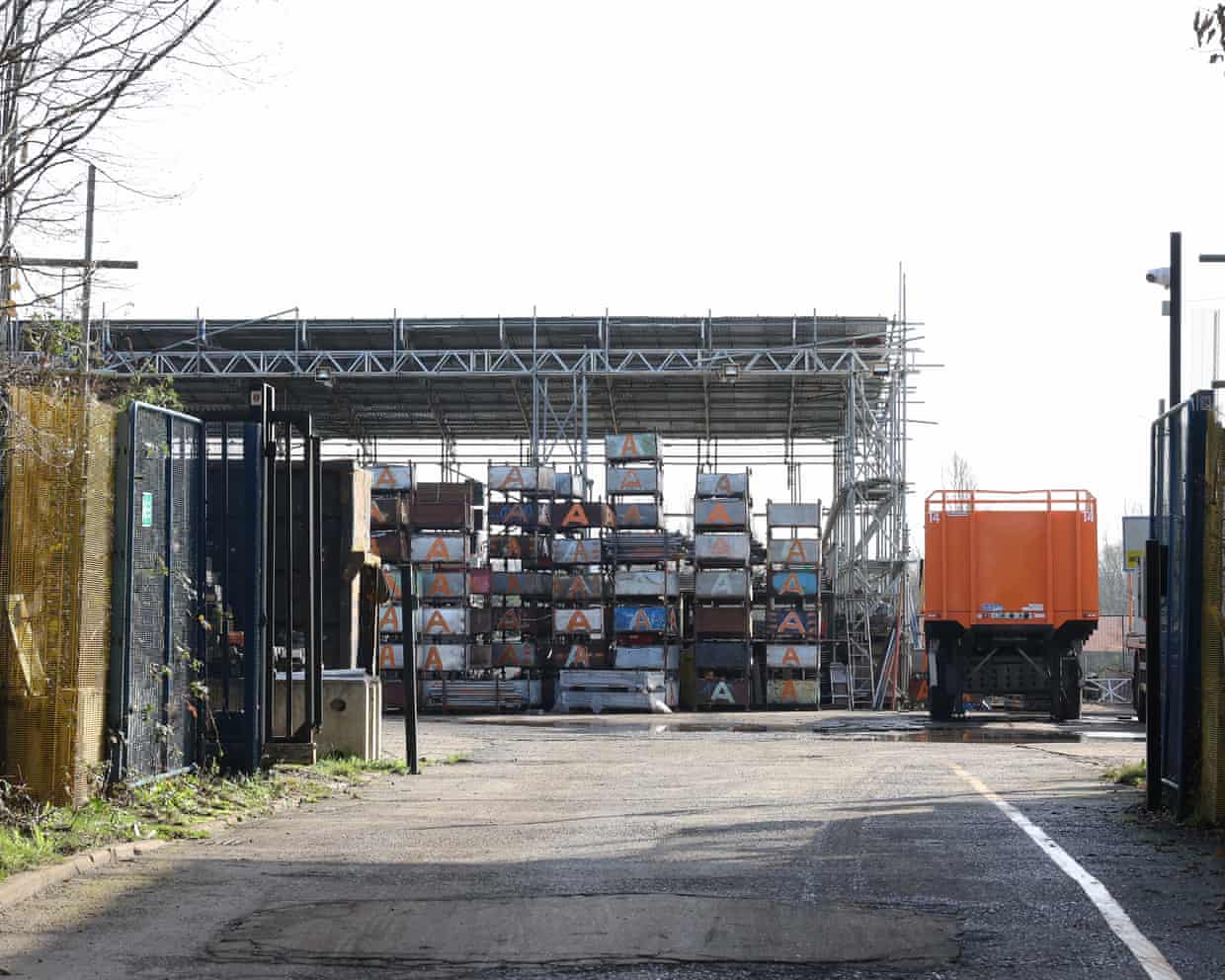
From press release … to scrap metal site: the Essex ‘supercomputer’ that’s still a scaffolding yard
The press releases announcing a gleaming supercomputer on the outskirts of north London depict a glass and concrete building, rising from a tree-lined street. Accompanied by images of glowing blue robot faces, it looks like the centre of a technological revolution.By the end of this year, that artist’s impression is supposed to be a reality.But when the Guardian visited last month, there was no sign of it. Instead, the four-acre plot in Loughton was a depot stacked with pylons and scrap metal under a corrugated roof, while flatbed lorries drove in and out stacked with poles

Revealed: UK’s multibillion AI drive is built on ‘phantom investments’
Exclusive: Rented datacentres and ‘supercomputer’ site that’s still a scaffolding yard raise questions for Starmer’s push to ‘mainline AI into veins of economy’From press release … to scrap metal site: the Essex supercomputer that’s still a scaffolding yardA multibillion-pound drive to “mainline AI into the veins” of the British economy is riddled with “phantom investments” and shaky accounting, a Guardian investigation has found.Since 2024, successive Conservative and Labour governments have proclaimed massive deals to build new datacentres, create thousands of jobs and construct a supercomputer.The investments – led by two firms linked to AI giant Nvidia - have been touted as a cornerstone of the government’s promise to use tech to turbocharge the economy.On Monday, former UK deputy prime minister Sir Nick Clegg and former Meta chief operating officer Sheryl Sandberg were announced as new board members at one of the firms, NScale. Nscale also said it had raised a $2bn funding round, sending its valuation soaring to $14

Dolphins take $99m hit on Tagovailoa and sign Willis; Tampa’s star WR Evans heads to 49ers
The Miami Dolphins are moving on from Tua Tagovailoa, the quarterback they drafted with the fifth overall pick in 2020 in hopes of turning the franchise’s fortunes around.“As we move forward, we will be focused on infusing competition across the roster and establishing a strong foundation for this team as we work towards building a sustained winner,” Dolphins general manager Jon-Eric Sullivan said in a statement on Monday.The move will cost the Dolphins an NFL record $99m in dead money against the salary cap. ESPN reported that the move will be designated after 1 June, meaning the Dolphins will spread the hit to their salary cap across two years ($67.4m in 2026, $31

‘Revolutionary’: Ukrainian para-biathlete wins silver using ChatGPT as his coach
Team Ukraine have hit the ground running at the Winter Paralympics, standing second in the medal table after three days of competition. Their resolve and determination has been inspirational to many, but one athlete has revealed a secret weapon in their search for a competitive edge.Maksym Murashkovskyi, who won silver in the men’s visually impaired biathlon on Sunday and did not miss a shot, has been working with OpenAI’s large language model. “For the past six months, I have been training with ChatGPT,” he said. “It was not only tactics
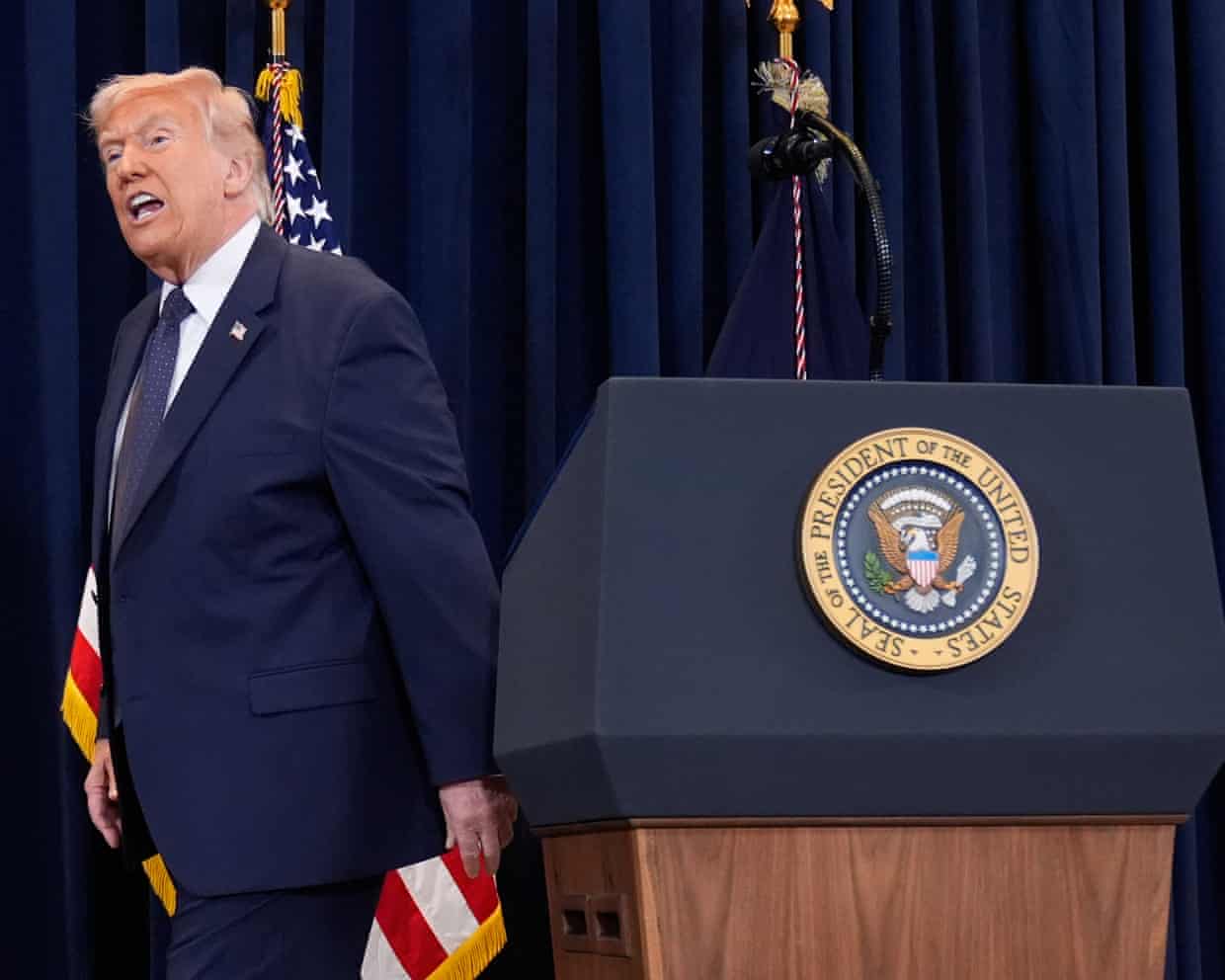
Oil prices drop sharply after Trump moves to reassure markets over Iran war
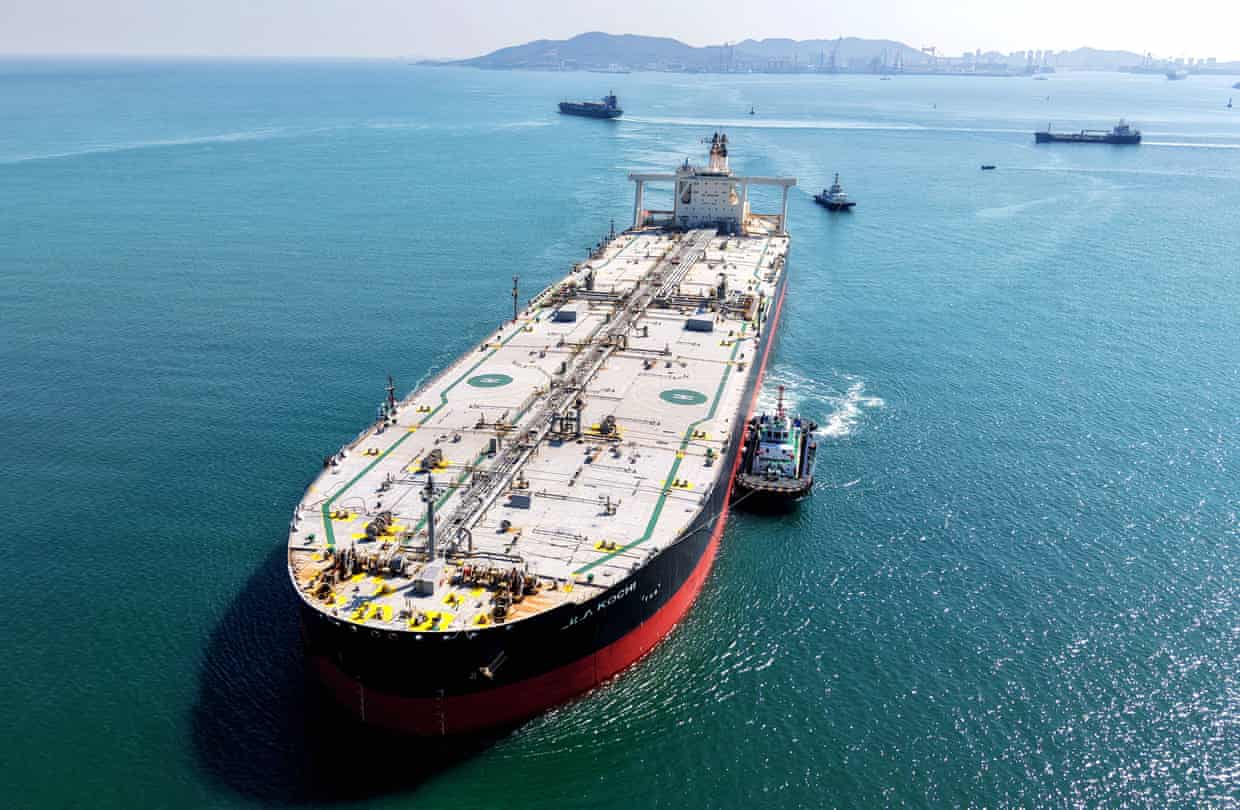
Why has the Iran war sparked fears of stagflation for the global economy?

X suspends 800m accounts in one year amid ‘massive’ scale of manipulation attempts

AI firm Anthropic sues US defense department over blacklisting

NBA cancels Atlanta Hawks’ theme night with strip club Magic City after backlash

‘We believe in the plan’: England vow to double down on kick-heavy style against France